

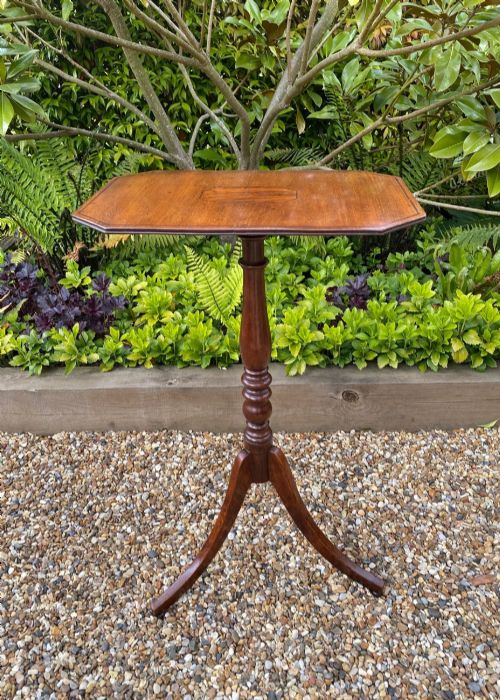
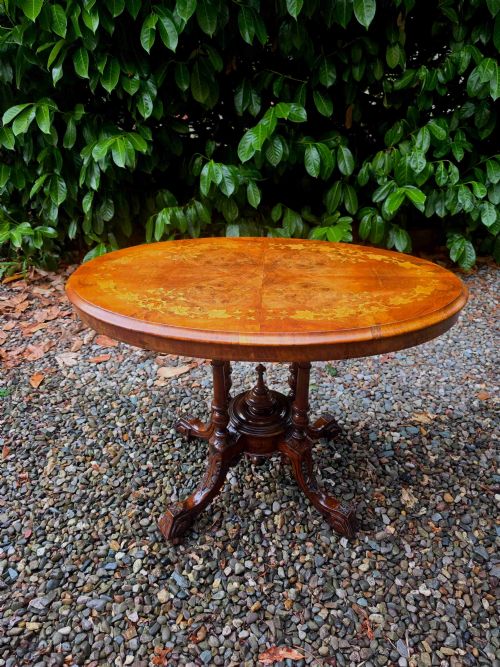
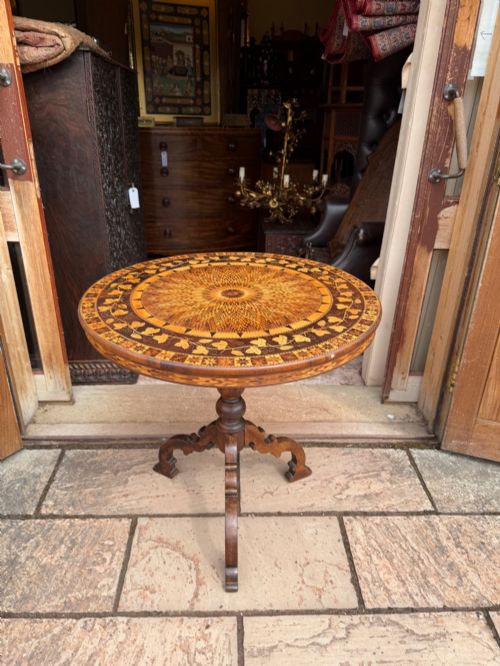
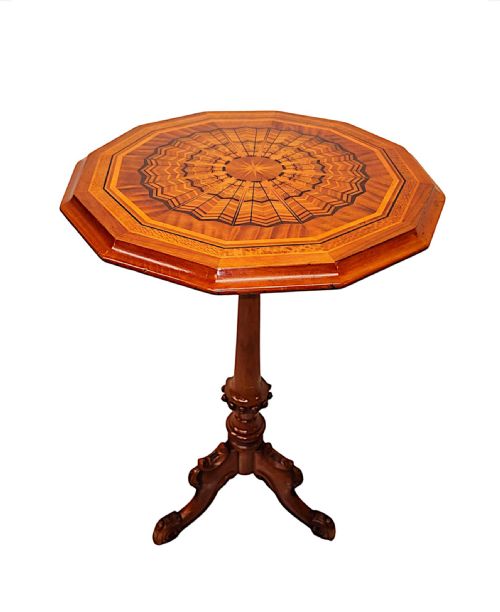
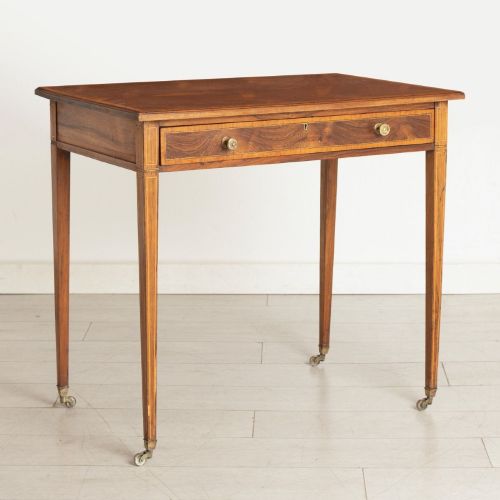
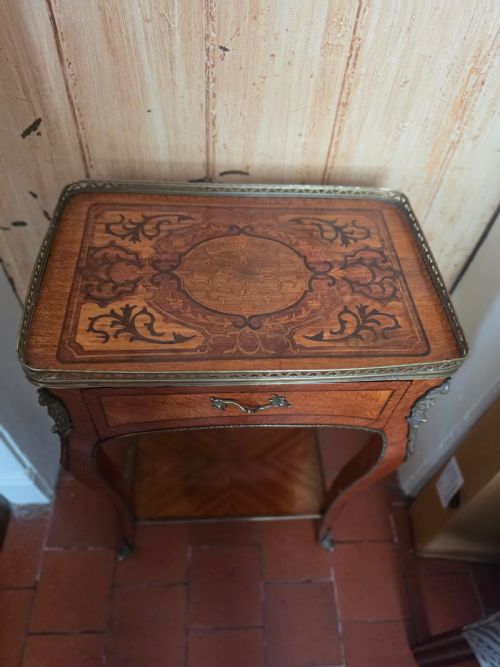
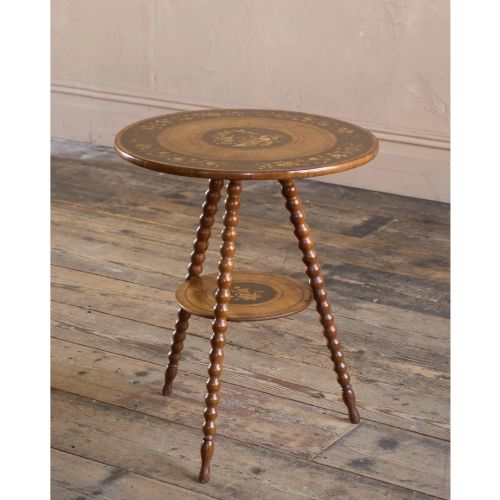
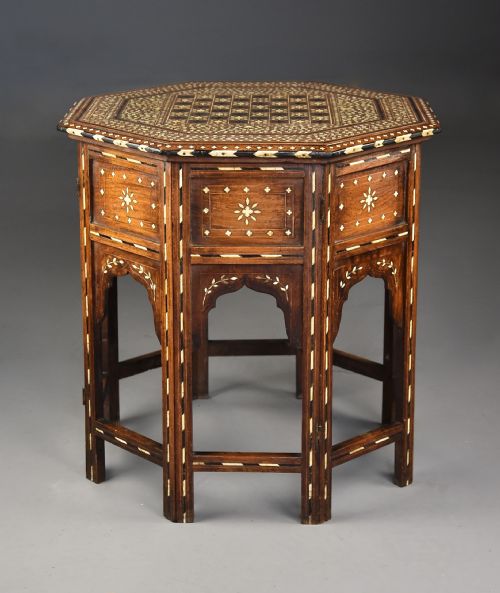

Victorian Inlaid Lamp Table
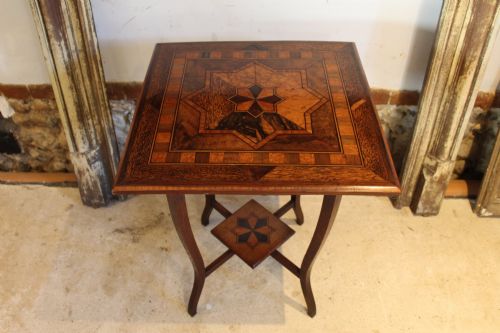
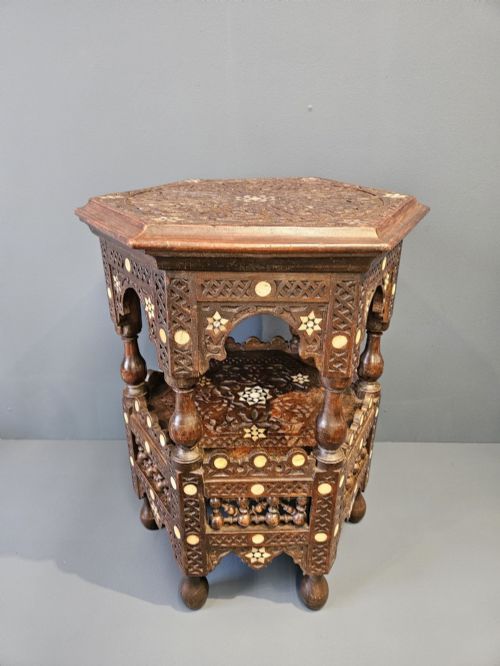
When you search for a victorian inlaid lamp table, you discover compact timber furniture designed to hold task lighting alongside seating.
Victorian Inlaid Lamp Table
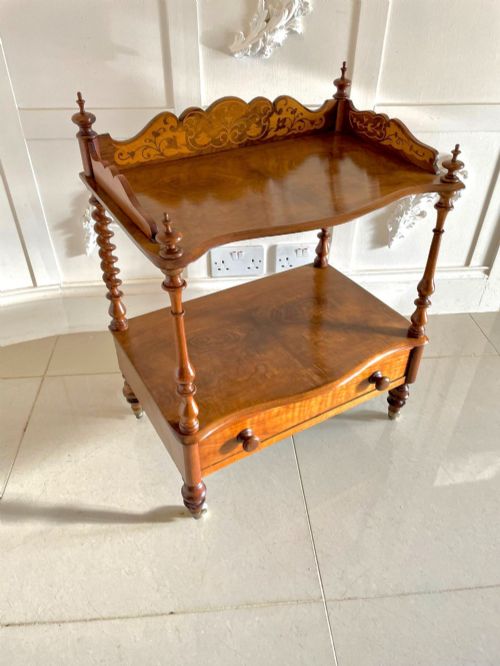
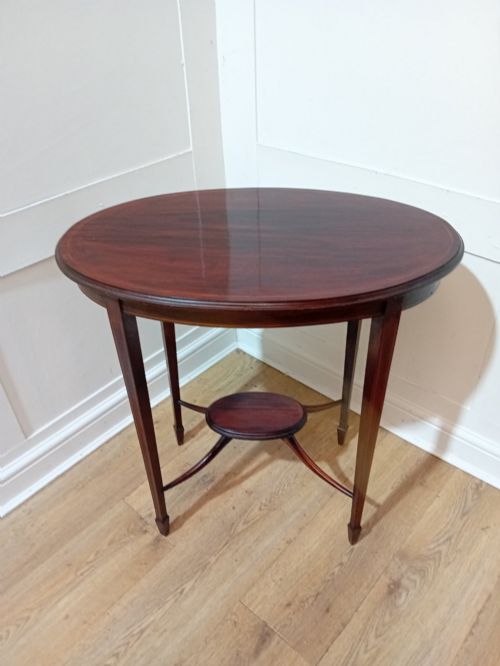
A victorian inlaid lamp table typically takes the form of a small occasional, side, or wine table designed to sit beside a chair or sofa. These items originate predominantly from the nineteenth century, spanning periods from the eighteen fifties to the late eighteen nineties, with Edwardian examples also appearing.
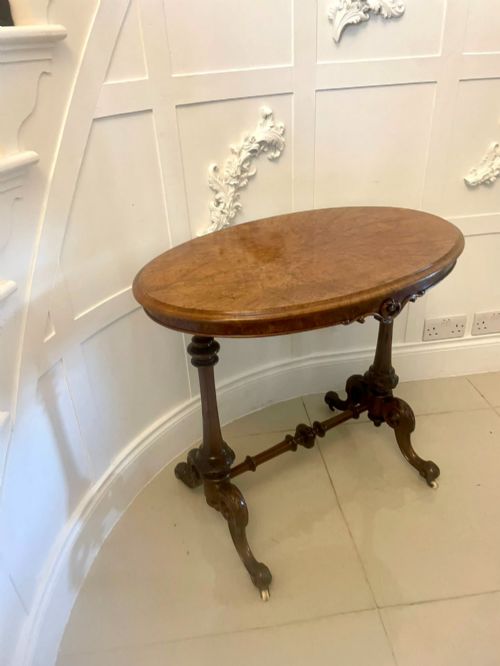
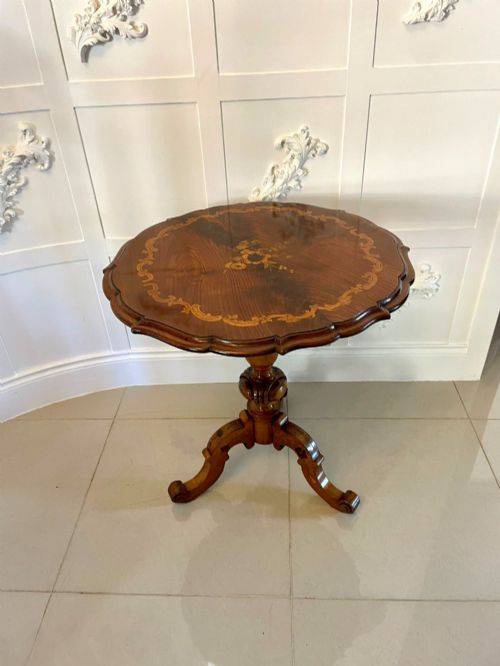
The dominant material encountered is burr walnut, frequently embellished with intricate wood inlay or marquetry. Tables emerge in circular, oval, octagonal, and kidney-shaped formats, supported by pedestals, pillar bases, or slender legs.
Buyers also encounter related forms such as Sutherland tables, nest of tables, and occasional tables adapted for domestic illumination during the Victorian era.
How they were made
Cabinet makers utilised dense native and exotic timbers such as walnut, mahogany, rosewood, and satinwood as foundational bases. These surfaces received delicate contrasting veneers and detailed marquetry using various coloured woods, brass, and bone.
Joinery methods combined traditional framing with turned pedestals, carved tripod legs, or occasional bobbin turnings. Surfaces were finished with polishes that highlighted the natural figuring of burr walnut and mahogany.
Listings feature circular, oval, octagonal, and kidney-shaped tabletops constructed from walnut, mahogany, rosewood, and satinwood.
What varies in quality
Quality rests in the precision of the marquetry and the selection of timber veneers. Tables utilising highly figured burr walnut or cabinet work from established makers demonstrate superior workshop competence.
Structural integrity, the crispness of carved details, and the complexity of the inlaid motifs separate standard production pieces from exhibition grade examples.
Gillows·Collinson and Lock·Edwards and Roberts
The Victorian Inlaid Lamp Table Glossary
- Marquetry inlay
- The art of forming decorative patterns using thin slices of wood veneers on a solid ground. This technique creates pictorial or geometric designs across the tabletop.
- Burr walnut
- Timber taken from a tree growth where the grain has grown in a deformed manner, producing intricate swirling patterns. It provides highly decorative surfaces for Victorian tabletops.
- Occasional table
- A small, movable table designed for minor utility rather than a specific permanent function. These pieces fill gaps in nineteenth-century reception rooms.
- Pedestal table
- A table supported by a central pillar rising from a footed base. This construction allows maximum legroom around the perimeter of the top.
- Specimen wood
- Furniture constructed from or inlaid with multiple distinct varieties of timber. Makers arranged these differing natural colours to display botanical diversity.
Victorian Inlaid Lamp Table: Frequently Asked Questions
Where should I place a lamp table?
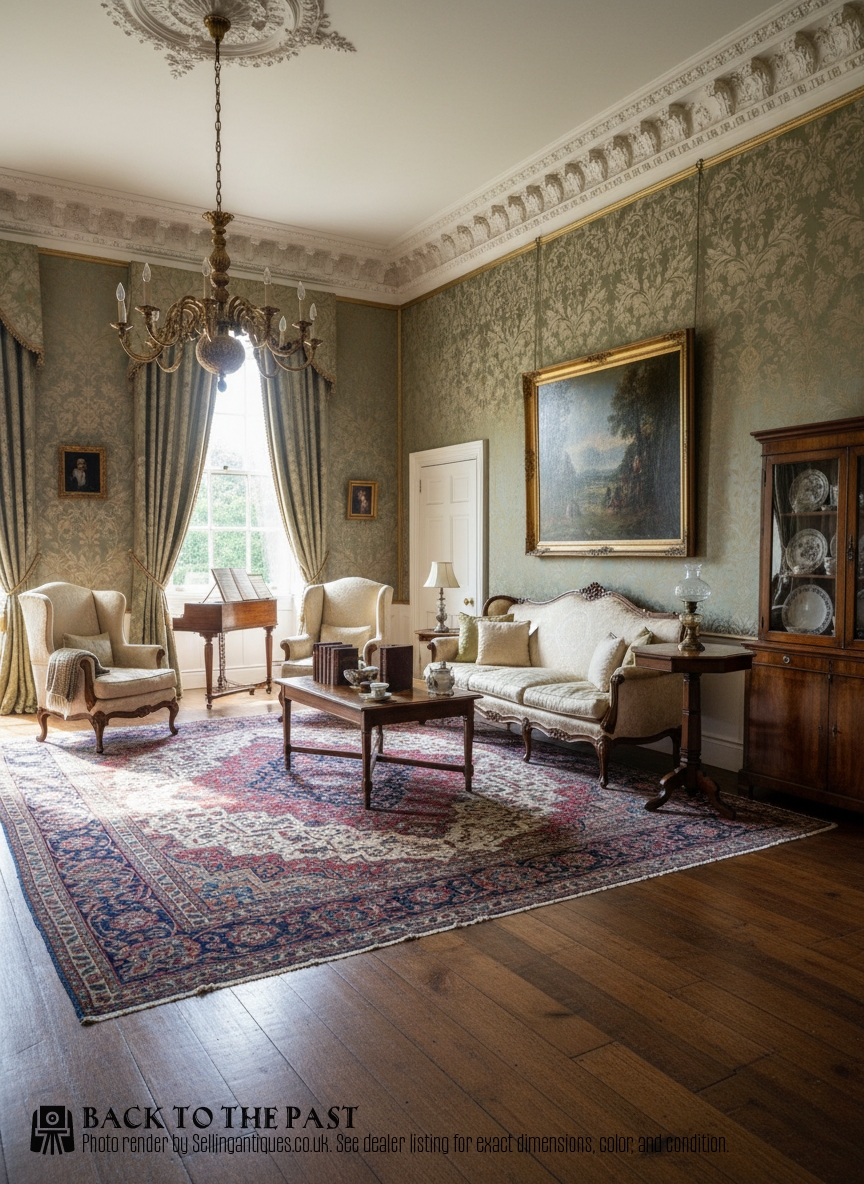
These tables suit placement beside armchairs, reading seats, or sofas where illumination is required. Their compact footprint allows them to fit into corners or beside larger furniture without dominating a room.
Historically, they held oil lamps or candles, but today they easily accommodate modern electric table lamps and small decorative objects.
How do I identify a Victorian piece?
Examine the timber selection, construction methods, and decorative motifs characteristic of the mid to late nineteenth century. Burr walnut veneer and floral marquetry dominate this specific aesthetic.
Check underneath the tabletop and inside any drawers for period timber shrinkage, hand-cut joinery, and appropriate fixings that indicate nineteenth-century manufacture.
What is the difference between a lamp table and a wine table?
Lamp tables generally feature broader tops designed to support lighting apparatus securely alongside seating. Wine tables often present smaller, tilting circular tops historically used for holding drinks during social gatherings.
Both forms belong to the wider category of occasional tables produced throughout the Victorian period.
Can I use these tables for daily living?
Victorian occasional tables function well in contemporary homes as bedside stands, plant pedestals, or side surfaces. Their robust timber construction handles everyday placement of books, cups, and lamps.
Protecting the polished surface from moisture and direct heat preserves the delicate marquetry inlay and veneer over time.