



Geometric Inlay Side Table
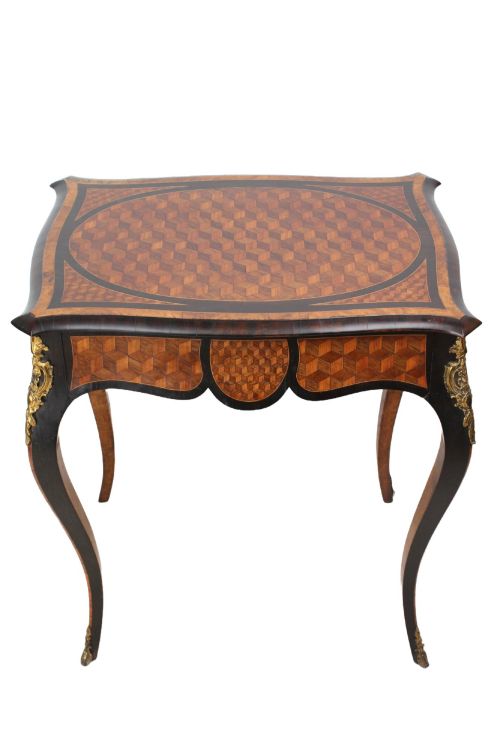
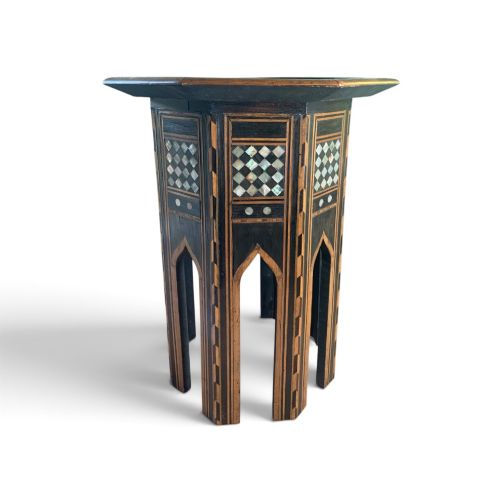
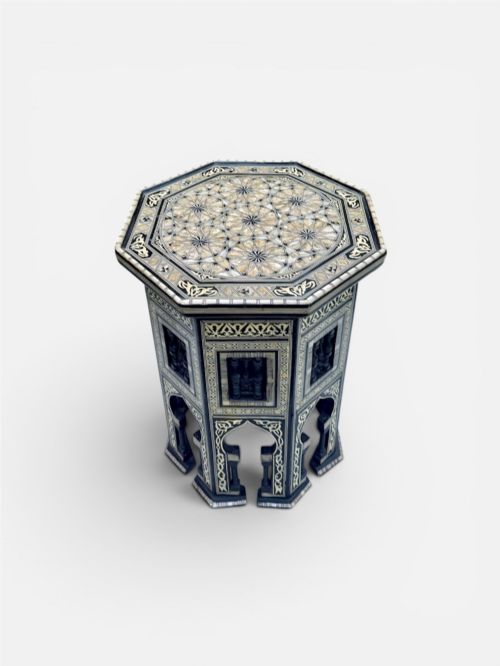
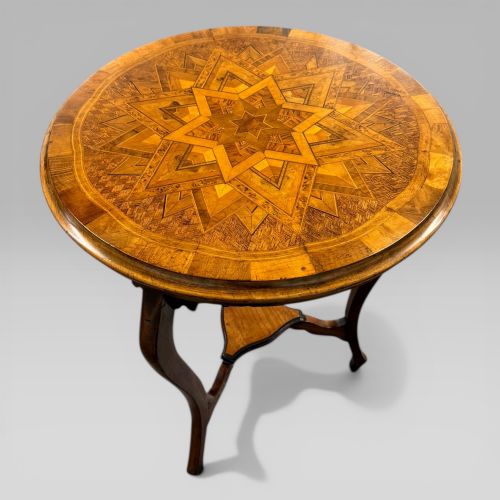
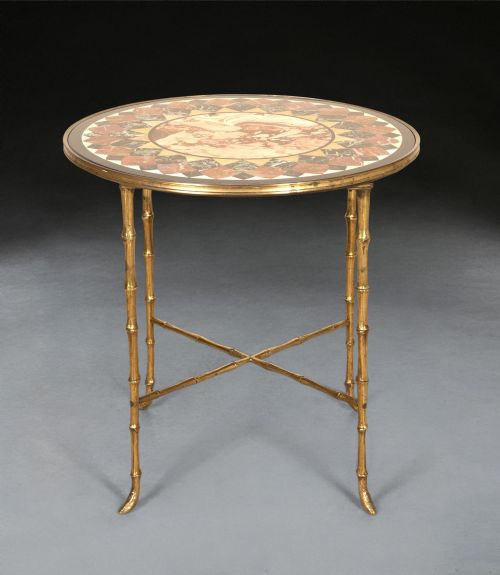
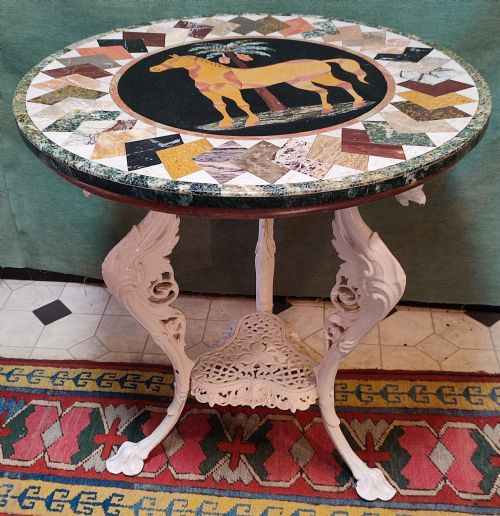
A geometric inlay side table brings patterned woods, bone or mother-of-pearl together in a compact surface designed for daily placement beside a chair.
Geometric Inlay Side Table
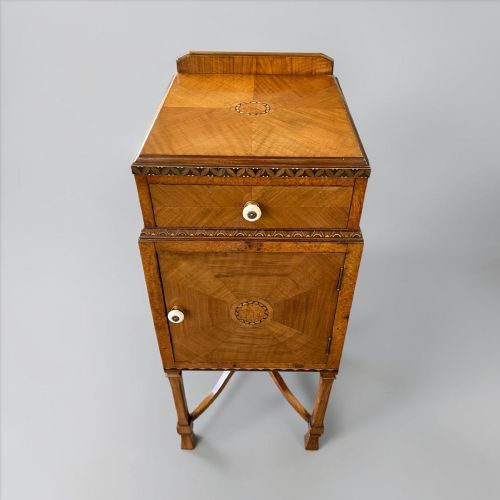
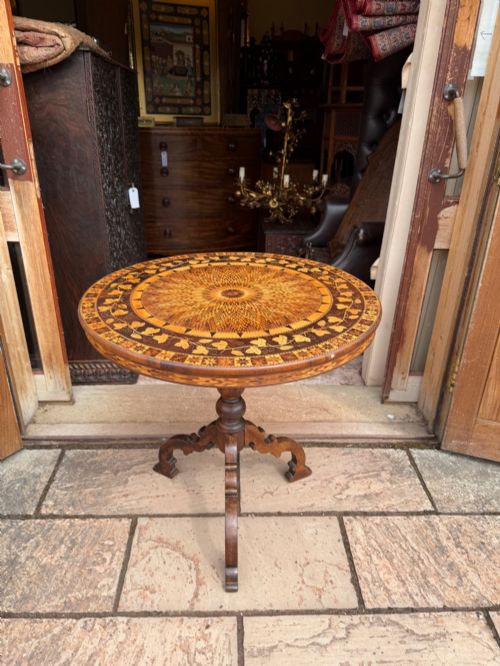
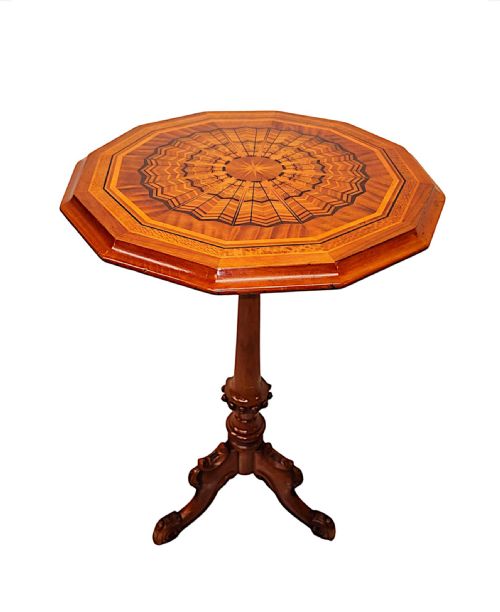
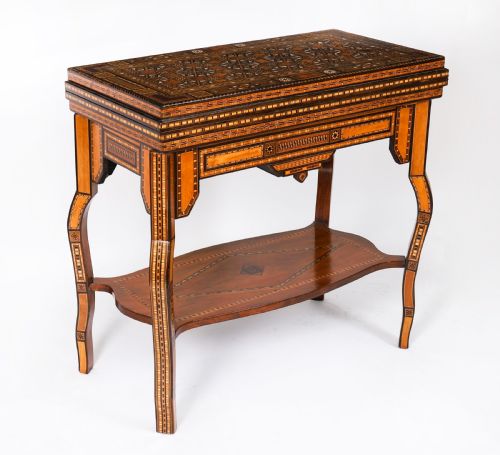
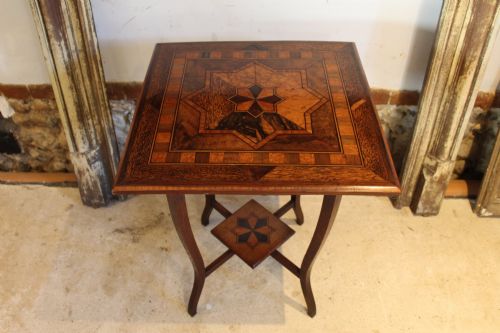
A geometric inlay side table spans centuries of cabinetmaking, with nineteenth-century Victorian and Edwardian examples appearing most frequently alongside earlier seventeenth-century pieces. These surfaces take forms such as occasional tables, centre tables, games tables, and bedside tables.
Makers utilised various stylistic influences, ranging from Moorish Revival and Italian Sorrento ware to Louis XV Revival and Liberty style. The underlying forms rely on woods like walnut, rosewood, mahogany, oak, and fruitwood to support intricate surface decoration.
How they were made
Cabinetmakers constructed these tables using a timber base of mahogany, walnut, oak, or fruitwood, onto which distinct decorative elements were applied. Surface patterns were formed by meticulously cutting and fitting veneers of contrasting timbers.
Decoration often incorporated organic materials such as bone and mother-of-pearl, alongside specialist stone surfaces like specimen marble. These components were carefully embedded into the wooden matrix to create detailed geometric and parquetry designs.
Some nineteenth-century tables cleverly doubled as smokers' cabinets, hiding tobacco storage beneath intricately geometric lids.
What varies in quality
The standard of a geometric inlay side table depends upon the precision of the veneer work and the complexity of the geometric arrangement. Tighter joints between individual tiles of wood, bone, or shell indicate superior craftsmanship by the maker.
Choice of materials also dictates standing, with denser native and exotic timbers paired with specialised inlays elevating the construction. The integration of the decorative top with the structural base reflects the overall competence of the workshop.
JAS Shoolbred·Gillows·Anton Seuffert
The Geometric Inlay Side Table Glossary
- Parquetry
- Geometric mosaic woodwork arranged in repeating patterns of triangles, squares, or diamonds. This technique forms the primary decorative surface on many tables.
- Sorrento ware
- Italian woodwork characterised by intricate inlaid views and geometric motifs, typically executed in various fruitwoods. Originating in southern Italy, this style heavily influenced nineteenth-century occasional tables.
- Specimen wood
- Timber collected from numerous different tree species, often native or exotic, used specifically for its contrasting natural colour. These woods are assembled to showcase varied grains and tones within a single top.
- Moorish Revival
- An architectural and decorative style popular in the nineteenth century that incorporated Islamic design elements. Tables in this taste frequently feature hexagonal forms with dense mother-of-pearl and bone inlay.
- Occasional table
- A small, light table intended to be moved about a room as needed for temporary use. These pieces often served as lamp or display tables.
Geometric Inlay Side Table: Frequently Asked Questions
Where should I place a geometric inlay side table?
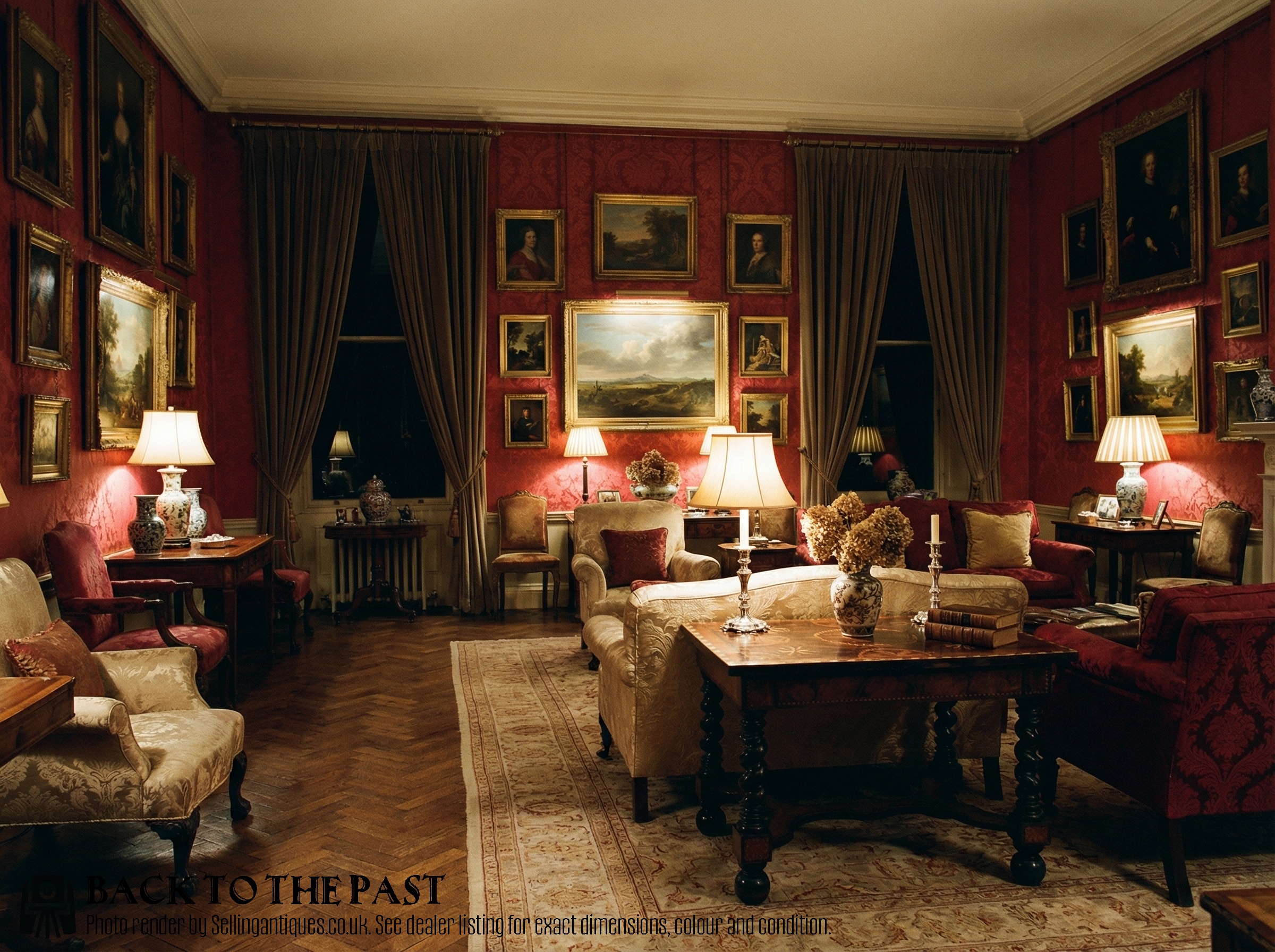
These compact tables suit living rooms or hallways where their patterned surfaces can be viewed from above. They function effectively beside a chair or sofa as a stable spot for a lamp or small objects.
Because prolonged direct sunlight can affect delicate veneers and natural inlay materials, positioning them away from intense windows preserves the timber and shell work.
How do I clean a patterned wooden top?
Dust the surface regularly with a soft, dry cloth to prevent grit from settling between the inlaid sections. Avoid using wet cloths or harsh chemical polishes that might seep into joints.
Applying a traditional wax polish sparingly helps maintain the lustre of the wood and protects the older finishes. Buff gently along the grain where possible.
What is the difference between parquetry and marquetry?
Parquetry uses geometric pieces of wood to create repeating abstract patterns like cubes, hexagons, or chequered designs. It forms the structured surfaces seen on most geometric inlay tables.
Marquetry employs veneers to create pictorial scenes, floral arrangements, or figurative motifs. While both techniques involve fitted wood, parquetry relies strictly on geometric repetition.
Are these tables sturdy enough for daily use?
Nineteenth-century and earlier tables were built using traditional joinery designed to support everyday objects such as books and lamps. Their structural stability depends on the soundness of the base frame and legs.
Occasional tables are relatively lightweight by design, so care should be taken not to overload them or subject them to excessive weight.