


Dutch Side Table
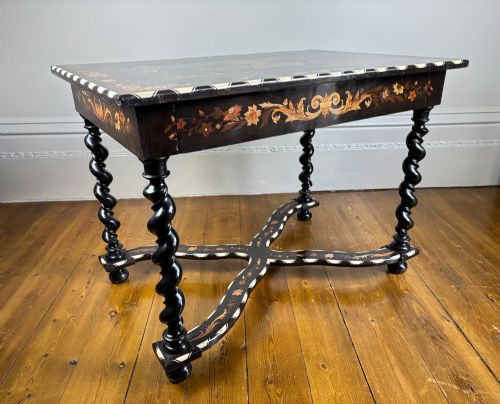
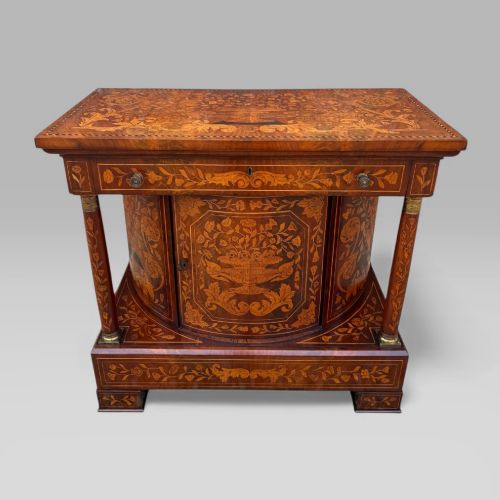
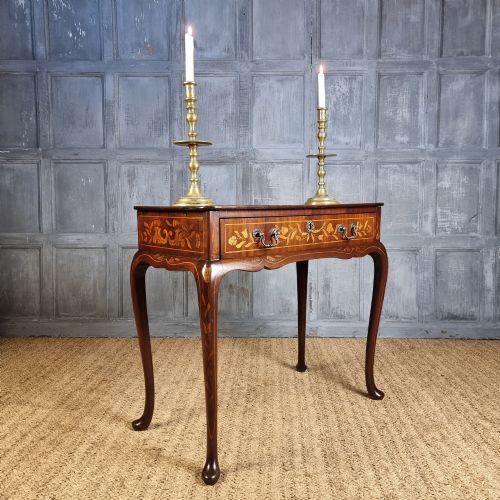
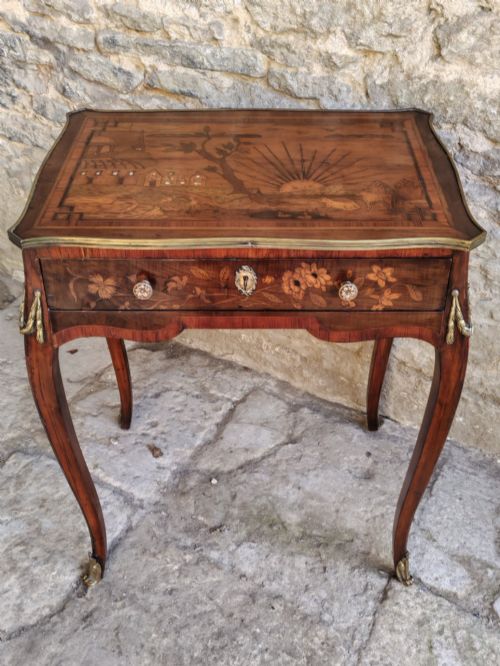
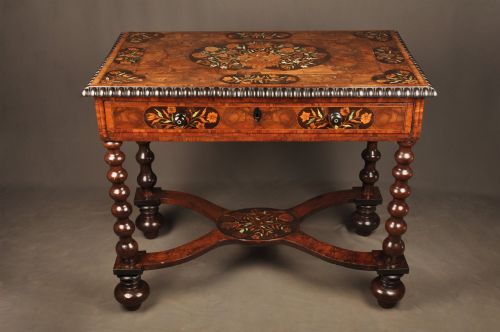
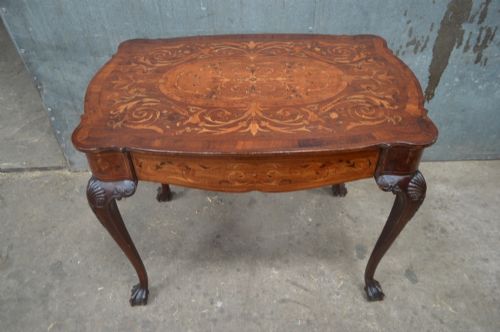
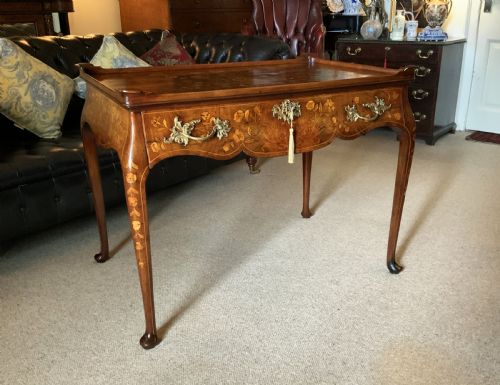
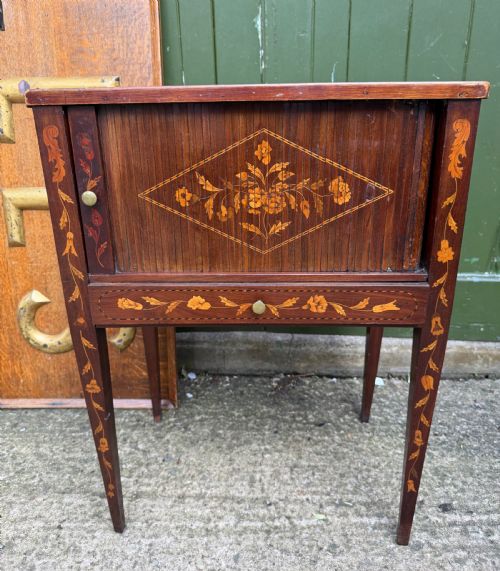
A dutch side table brings dense floral marquetry, rich walnut, and elegant serpentine lines into a room, offering practical surface space with distinct continental character.
Dutch Side Table
When searching for a dutch side table, buyers encounter a versatile category of domestic furniture spanning from the seventeenth century through the Victorian era. These pieces appear most frequently as small console tables, card tables, and bedside cabinets rather than large dining surfaces.
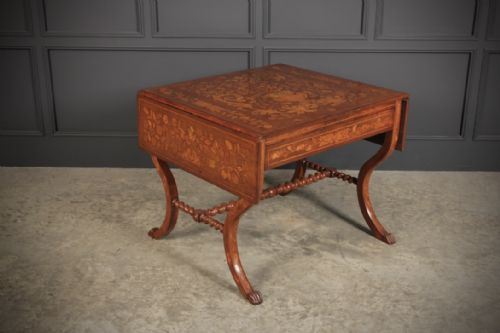
The selections available range from sturdy oak and plain walnut examples to richly figured pieces decorated with elaborate floral marquetry in fruitwoods, bone, and ebony. Forms adapt to domestic needs, including demi-lune console tables, drop-flap designs, and multi-purpose card tables with fold-over tops.
Originating across different periods including the Georgian era and the late nineteenth century, these tables reflect shifting European tastes while maintaining traditional cabinet-making craftsmanship. Regional variations display specific characteristics, from the sweeping curves of Dutch Baroque to restrained neoclassical geometry.
Materials and Construction
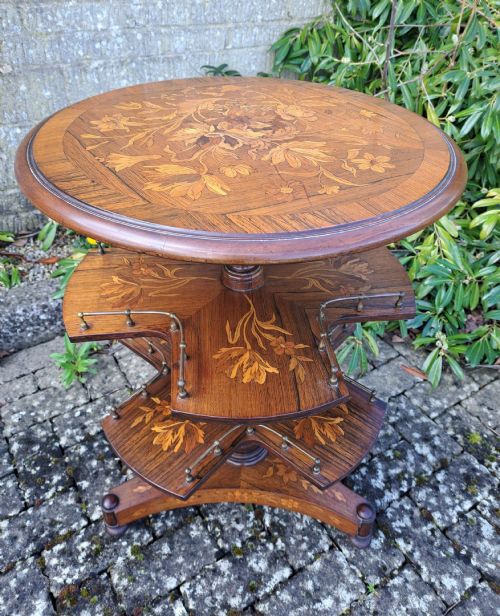
Cabinet-makers relied heavily on solid oak and walnut as foundational structural timbers, often applying rich veneers of mahogany, burr-walnut, and fruitwood across the main body. The most elaborate surfaces utilise intricate marquetry and parquetry, cutting floral motifs and geometric patterns from contrasting woods like fruitwood and satinwood.
Some eighteenth-century floral tabletops hide secretive birds perched among the marquetry leaves, patiently waiting for observant buyers to spot them.
Assessing Quality
Quality rests upon the precision of the marquetry and the choice of timber figure, where denser floral detail and crisper execution distinguish superior pieces from simpler utilitarian items. The natural grain of walnut, mahogany, and burr-walnut should display deep patination and careful matching across the top surface.
Construction integrity defines the longevity of these tables, visible in the tightness of dovetail joints, the smoothness of drawer operations, and the stability of serpentine or demi-lune frames. Secondary woods used inside drawers and carcases should match the period of the exterior shell rather than showing modern replacements.
Peter Ghyczy
The Dutch Side Table Glossary
- Marquetry
- Decorative veneer applied to furniture structures in patterned wood, forming elaborate pictorial designs such as flowers and birds. This technique requires meticulous hand-cutting of various coloured timbers.
- Demi-lune
- A half-moon shape characteristic of console tables designed to sit flush against a wall. These tables often feature fold-over tops or tambour fronts.
- Parquetry
- Geometric mosaic woodwork used for floors and table tops, constructed from small blocks of timber. It creates repeating patterns distinct from flowing floral marquetry.
- Lowboy
- A small dressing or side table featuring one or more rows of drawers beneath a flat top, raised on slender legs. They frequently appear in figured walnut or oak.
- Serpentine
- A furniture front or edge curving outward at the centre and inward at the sides, creating an undulating silhouette. This contour demands advanced woodworking skill.
Dutch Side Table: Frequently Asked Questions
How do I date a dutch side table?
Dating relies upon examining the underlying construction timber, secondary woods, and stylistic motifs. Seventeenth and eighteenth-century examples often display walnut or oak carcases with heavy floral marquetry, whereas nineteenth-century pieces may incorporate mahogany and machine-cut veneers.
Hardware and foot styles provide additional chronological markers. Brass feet, ball-and-claw feet, and specific dovetailing techniques help narrow down the decade of manufacture when combined with overall design proportions.
Were these tables used for dining?
These tables served primarily as decorative serving surfaces, bedside cabinets, or card tables rather than primary dining furniture. Their compact proportions made them ideal for hallways, drawing rooms, and intimate parlours.
Fold-over top varieties functioned as gaming tables for cards, while console versions stood against walls beneath mirrors or artwork to display decorative objects and lighting.
How do I care for marquetry surfaces?
Marquetry surfaces require protection from direct sunlight and extreme humidity fluctuations to prevent veneers from lifting or cracking. Natural beeswax applied sparingly helps nourish the old timber without building up heavy synthetic residues.
Avoid placing hot or wet items directly on the polished wood. Use soft, dry cloths for routine dusting to preserve the delicate fruitwood, bone, and ebony inlays.
What is the difference between a console and a side table?
A console table is specifically designed to stand against a wall, sometimes requiring wall attachment for complete stability due to its front-heavy shape. Traditional side tables stand independently on four legs and can float more freely within a room's layout.
Both forms share similar sizing and surface purposes, though console variants more frequently feature demi-lune or serpentine tops adapted for architectural placement.