


Black Marble Side Table
A black marble side table delivers striking surface contrast and enduring weight, bringing substance and rich geological pattern to a room.
Black Marble Side Table
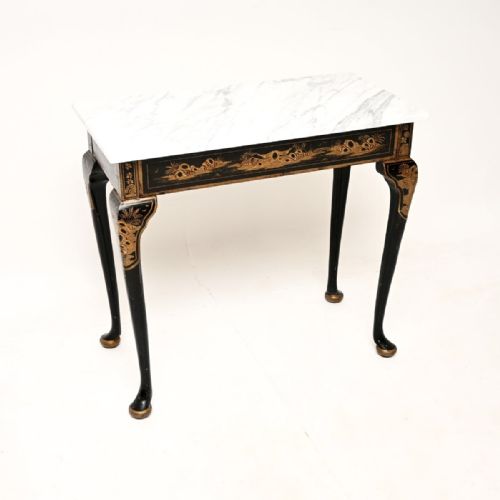
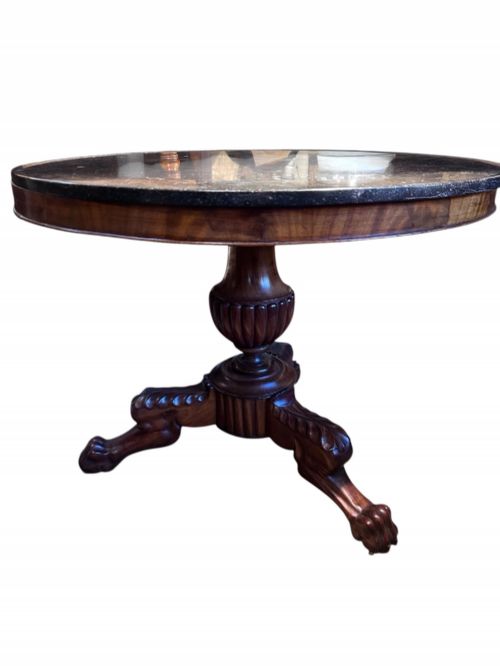
A black marble side table brings together a heavy stone top and a supportive base formed from mahogany, walnut, ebonised wood, or iron. When searching for a black marble side table, buyers encounter nineteenth-century French guéridons, Victorian pedestal forms, and twentieth-century Art Deco designs.
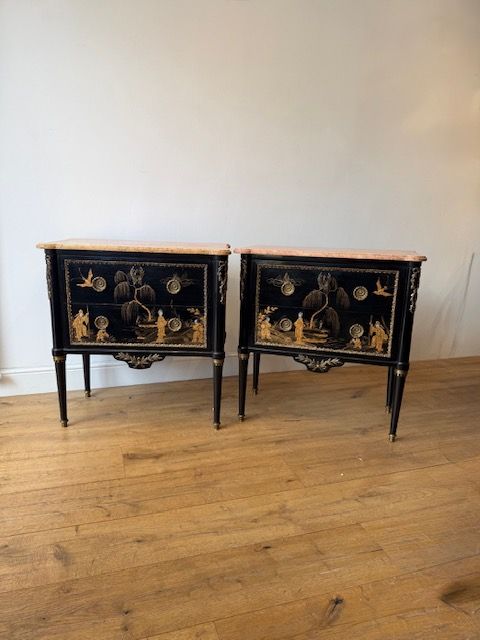
The selection ranges from compact occasional tables and bedside cabinets to slender café tables and console tables designed to stand against a wall. Many pieces originate from French workshops, English country houses, and continental workshops dating from the Regency period through to the 1930s.
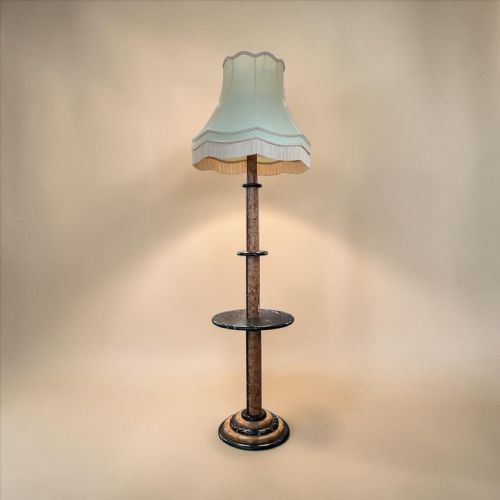
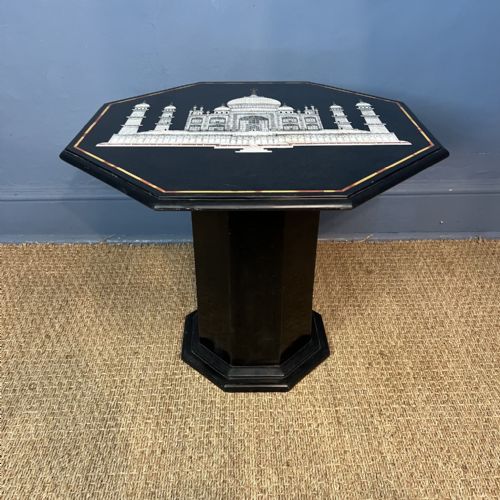
Top surfaces feature solid black marble, fossiliferous varieties, inlaid pietra dura work, or specimen stone arranged in geometric patterns. These tables serve practical functions as lamp stands, plant holders, and bedside supports while anchoring a room's decorative scheme.
Materials and construction methods
Craftsmen shaped heavy marble slabs using saws, hand-polishing the stone to achieve a matte or high-gloss finish that highlights natural mineral veining. Bases were constructed from native and exotic timbers such as mahogany, satinwood, elm, and pine, often joined with traditional mortise and tenon techniques.
Metal components including brass galleries, bronze mounts, and iron frames provided structural support and decorative contrast to the dark stone. Ebonisation involved staining cheaper woods to imitate heavier ebony, a technique widely utilised on Victorian and continental frames.
Inlaid pieces incorporate pietra dura work, setting contrasting marbles and semi-precious stones directly into the stone surface. Painted and parcel-silvered or gilded finishes were frequently applied to wooden columns and tripod bases in the French Empire and Regency styles.
Black Marble Side Table Retail Price Guide 2026
Typical asking prices for black marble side table among the pieces listed under this phrase on Sellingantiques today, from the lower quarter to the upper quarter. They describe what is for sale here now, not the wider market.
Listings feature 19th-century French guéridons alongside Victorian ebonised stands, Art Deco lamp tables, and Regency console tables.
Assessing quality and craftsmanship
The grade of the marble slab sets the baseline for quality, with fine, unblemished stone and intricate specimen or pietra dura work commanding greater appreciation. Thickness of the top and the precision of its edge moulding reveal the skill invested by the mason.
Structural integrity depends upon the joinery of the wooden or iron base and how securely it supports the considerable weight of the stone. Superior examples display crisp carving on wooden mounts, original patination, and harmonious proportions between the heavy top and the slender supporting legs.
Krieger of Paris
The Black Marble Side Table Glossary
- Guéridon
- A small French table, typically round and supported by a single central column or three legs. These versatile tables frequently feature marble tops and date from the nineteenth century.
- Pietra dura
- An artistic technique where carved and polished coloured stones are fitted together to form a picture or geometric design on a marble surface.
- Console table
- A table designed to be fixed against a wall, often supported by two front legs or brackets with a heavy marble top.
- Ebonised wood
- Timber stained or painted black to simulate ebony, popular during the Victorian period for accentuating dark stone tops.
- Specimen marble
- A tabletop composed of various coloured marbles arranged to showcase different geological specimens.
- Ormolu
- Gilded bronze mounts applied to the wooden frames and bases of decorative furniture.
Black Marble Side Table: Frequently Asked Questions
How do I clean a marble top?
Use a soft cloth dampened with warm water and mild, pH-neutral soap to wipe the surface clean. Avoid acidic cleaners, vinegar, and abrasive pads, which permanently etch and dull the polished stone.
Dry the surface thoroughly with a microfiber cloth to prevent water spots. Applying a specialist marble sealer periodically helps protect the dark stone from staining.
Where should I place a console table?
A console table works best placed against a flat wall in a hallway, drawing room, or dining area. Because these tables are shallow, they provide a display surface without obstructing walking routes.
Pair a wall-mounted console with a mirror or place a table lamp upon the surface to create a balanced focal point.
How can I tell a nineteenth-century table apart from a later reproduction?
Examine the underside of the tabletop and the interior joinery for tool marks, timber shrinkage, and hand-cut fixings. Nineteenth-century pieces typically exhibit heavier stone slabs and genuine patination on the wood and metal components.
Look closely at the fixings securing the marble to the base, as modern screws and machine-milled brackets differ from older fastening methods.
Can I use an occasional table as a bedside cabinet?
Compact occasional tables and guéridons fit well beside a bed, providing a stable surface for a reading lamp and books. The marble top offers practical resistance against spilled water or glass rings.
Ensure the table height aligns comfortably with the top of the mattress for daily convenience.