
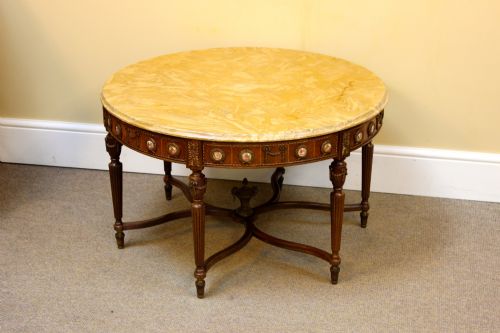


Round Marble Coffee Table
A round marble coffee table brings solid stone and classical proportions into a sitting room, offering a sturdy surface that anchors the entire seating arrangement.
Defining the round marble coffee table
A round marble coffee table is a low surface designed for living spaces, combining a circular stone top with a supportive wooden, brass, or gilt metal base. These pieces draw on classical revival styles, Art Deco geometry, and mid-century design to suit various domestic interiors.
The versions most commonly found here span from the Edwardian period and the 1920s through to the 1950s. They range from French Chateau and Empire Revival forms to Italian Rococo Revival and Hollywood Regency aesthetics.
Many examples function as central or side tables adapted for modern living, retaining the original stone slabs and timber frames recorded in past and present inventories.
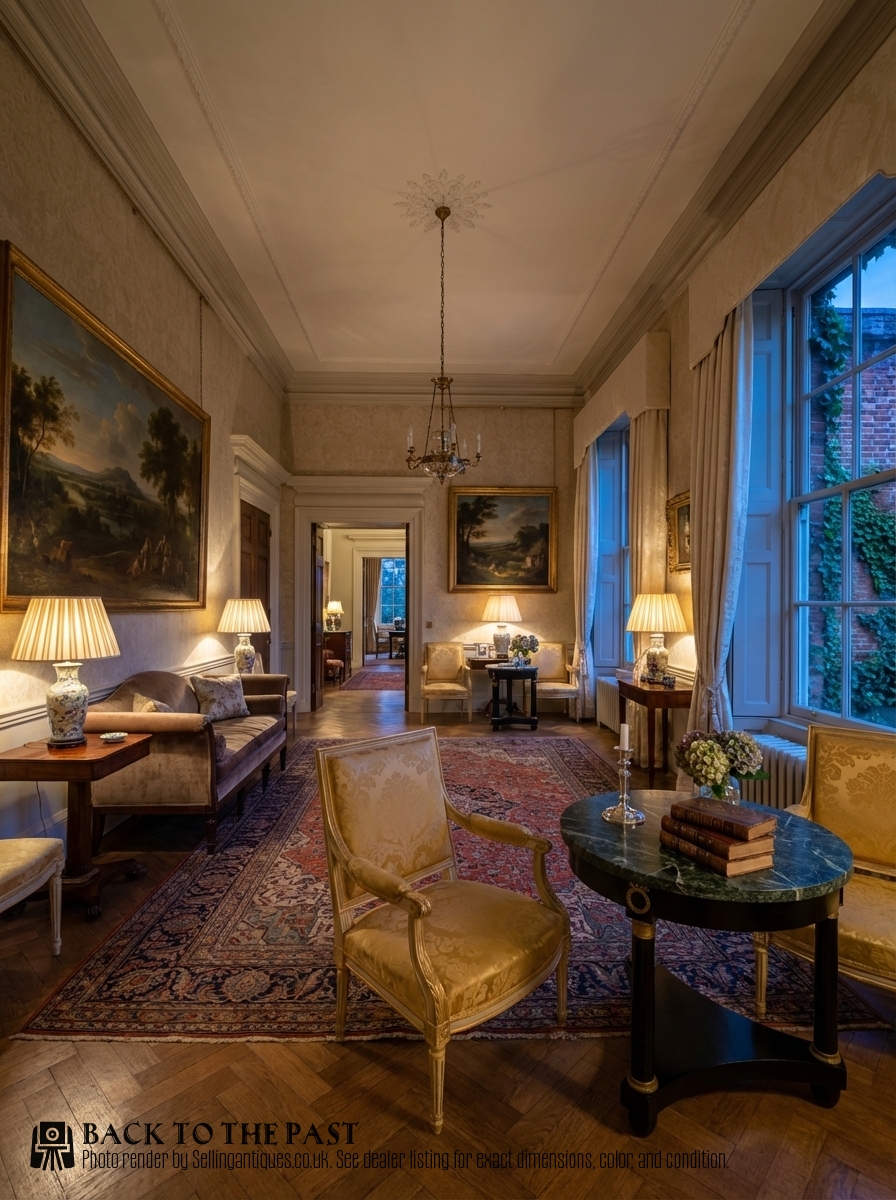
Materials and construction
Makers shaped these tables using natural marble for the tops, paired with structural frames of mahogany, walnut, ebonised wood, and standard timber. Metal elements such as brass, copper, and gilt metal provide structural support and decorative detailing.
Joinery techniques follow traditional cabinet-making standards, securing heavy stone tops onto wooden aprons or metal mounts. Surface treatments include polished wood finishes, ebonisation, and gilded accents that highlight the natural veining of the marble.
Retail Price Guide 2026
Typical UK retail prices for round marble coffee table, calculated from the Sellingantiques database of over a million retail prices indexed since 2003. This retail price guide relies exclusively on Sellingantiques data; no external sources or auction records are used, so the figures do not describe the wider market.
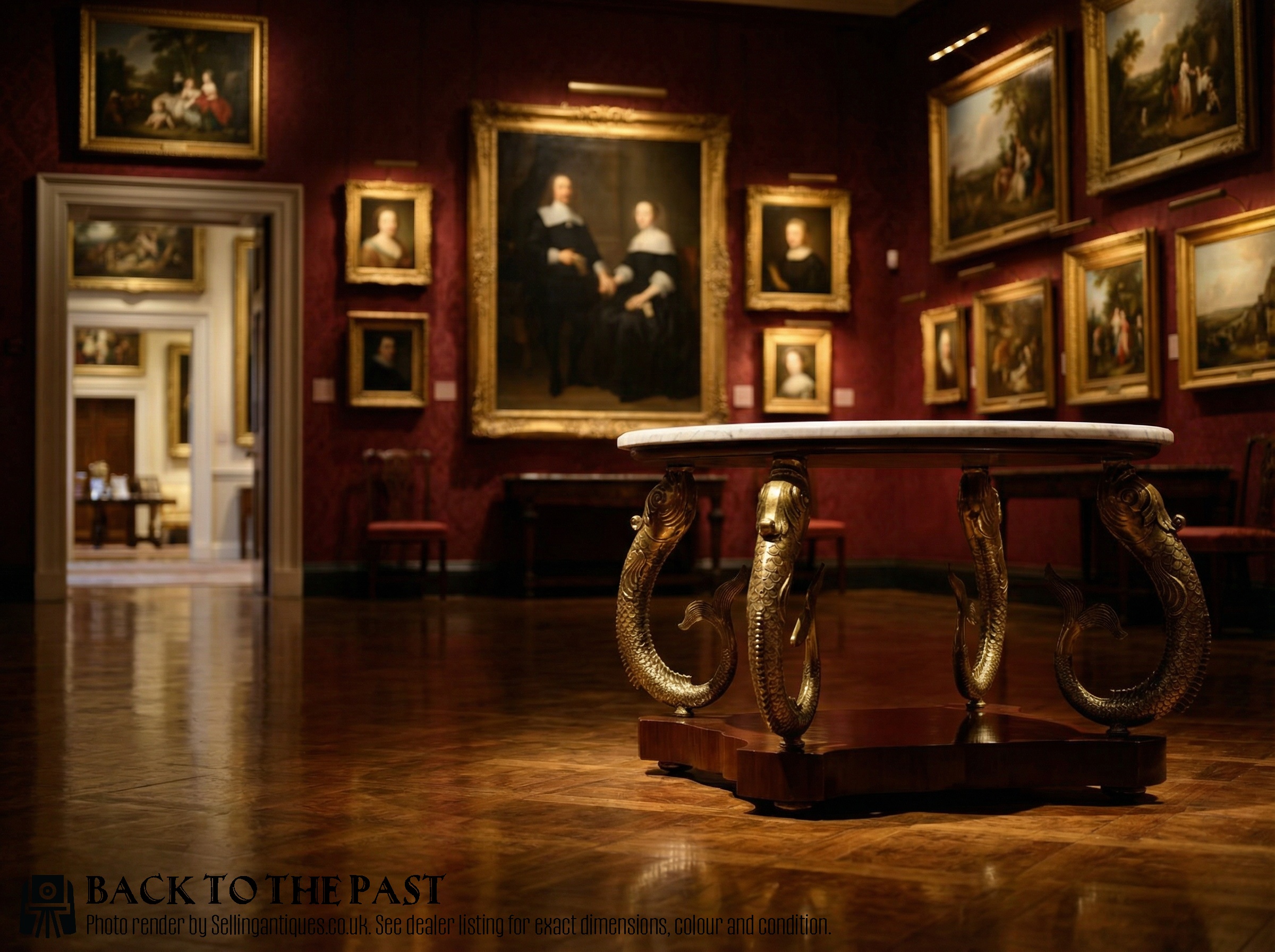
Dolphins occasionally swim beneath your coffee cup, carved in gilt metal to hold up the heavy stone above.
Distinctions in quality
Quality rests in the selection and preparation of the materials, particularly the depth and movement of the marble veining matched to the refinement of the timber or metal base. Finer examples display harmonious proportions between the heavy top and the supporting legs, such as classical columns or cast metal dolphins.
The execution of decorative details, from hand-carved wood to chased gilt metal mounts, separates standard production pieces from higher-tier commissions. Superior construction ensures the heavy stone top remains securely balanced and supported without timber distortion.
B Battioli Varese
The Round Marble Coffee Table Glossary
- Marble
- A metamorphic rock prized for decorative tops due to its distinctive veining and cool, smooth surface. It provides a durable, heat-resistant table surface.
- Gilt metal
- Metal treated with a gold-coloured finish or plating to mimic solid gold decorative mounts. It appears frequently on revival and Hollywood Regency frames.
- Ebonised wood
- Timber treated with a dark finish to imitate expensive ebony. This technique gained popularity in various antique revival periods for dramatic contrast.
- Apron
- The structural wooden piece beneath the table top that connects the legs and supports the inset stone. It often carries decorative carvings or mouldings.
Frequently Asked Questions
How do I clean a marble top?
Wipe the surface with a soft, damp cloth and mild, neutral soap. Avoid acidic cleaners or vinegar, which etch stone.
Dry the table thoroughly with a soft towel to prevent water spots and maintain the polished finish.
Are these tables heavy?
Yes, the combination of solid stone slabs and hardwood or metal bases creates substantial weight. This makes them stable in living spaces but requires care when moving.
Lifting the top separately from the base, where possible, assists with safe relocation.
Will heat damage the stone?
Natural marble withstands moderate warmth, but extreme thermal shock can crack the material. Using coasters and mats protects the polish from hot cups and dishes.
Quick temperature changes from hot vessels directly on cold stone pose the main risk.
How do I date these tables?
Dating relies on stylistic markers, such as Art Deco geometric lines or Edwardian revival carving details. Construction methods and secondary timbers also indicate the manufacturing era.
Comparing the base design with documented period styles narrows the age.