






Regency Style Coffee Table
These pieces for a regency style coffee table offer low proportions derived from nineteenth-century forms, built to suit modern rooms.
Regency Style Coffee Table
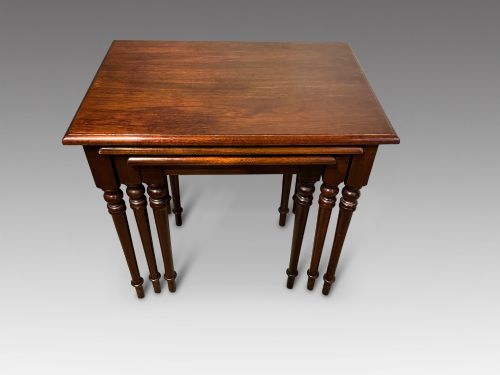
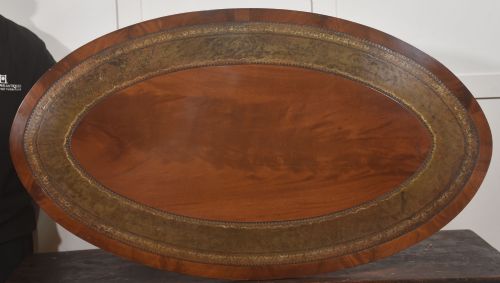
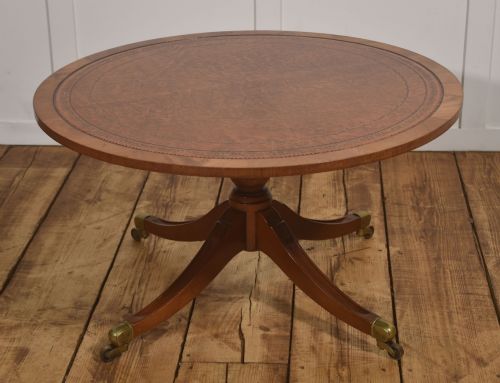
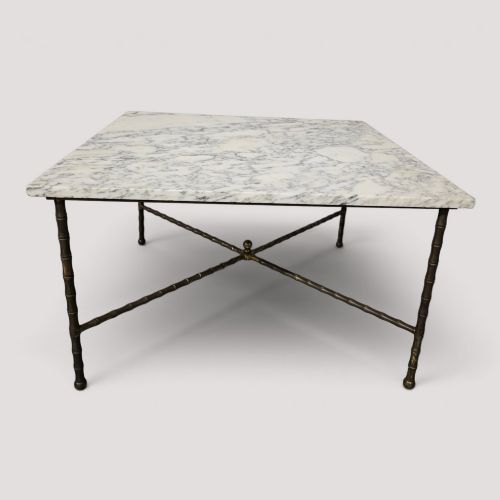
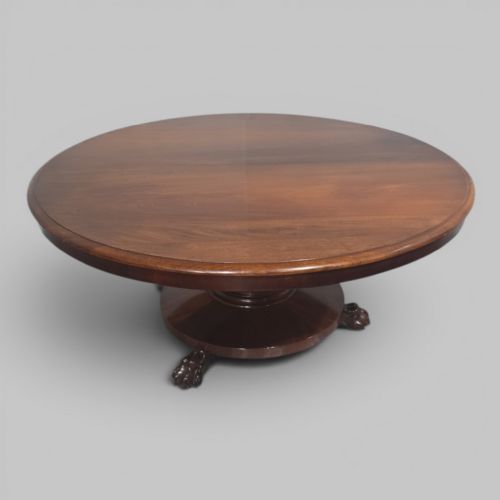
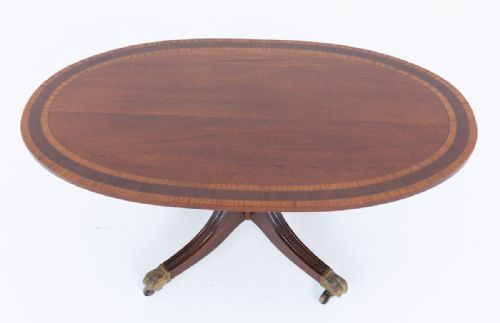
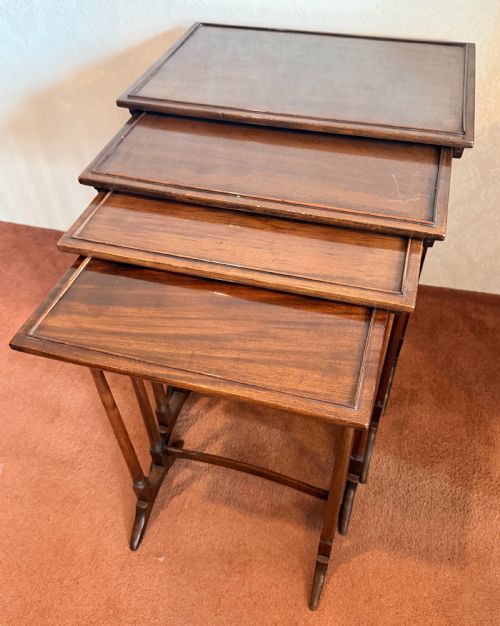
A regency style coffee table brings classical lines and turned supports into a lower format suited to contemporary seating. You will find rectangular, oval, and drum shapes alongside nests of four and occasional tables adapted from older forms.
The selections span genuine nineteenth-century pieces alongside revival works from the Edwardian era and the nineteen-twenties. Mahogany remains the dominant timber, often enhanced by rosewood, satinwood, or leather inserts.
Makers drew on Georgian and Regency vocabulary, applying brass mounts, inlay, and painted finishes to low tables, tray tables, and centres. The variety ranges from simple occasional pieces to substantial rosewood or flame mahogany centre tables.

Materials and construction
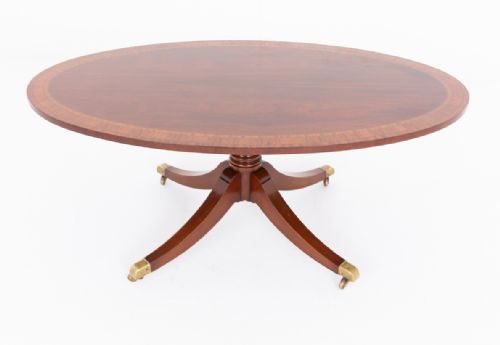
Cabinet makers built these tables primarily in solid mahogany and walnut, frequently applying decorative veneers such as flame mahogany or oyster yew to the top surfaces. Timber selection governed the visual weight, with dense hardwoods offering stable ground for detailed edge moulding and crossbanding.
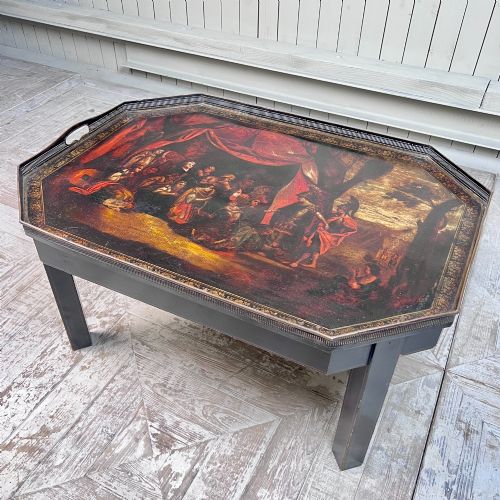
Secondary materials played a structural and decorative role, including brass for castors and paw feet, gilt metal, and inset leather writing surfaces. Lacquer, tole, and painted finishes appear on tray tables and papier-mâché pieces, introducing contrasting textures.
Joining techniques relied on traditional framing and dovetailing, particularly in nest of tables and drawer-fitted drum designs. Turned pillars, sabre legs, and platform bases distributed weight evenly across low floor clearances.
Regency Style Coffee Table Retail Price Guide 2026
Typical asking prices for regency style coffee table among the pieces listed under this phrase on Sellingantiques today, from the lower quarter to the upper quarter. They describe what is for sale here now, not the wider market.
Pieces span the nineteenth century, Victorian era, and nineteen-twenties revival periods.
Distinctions in standard
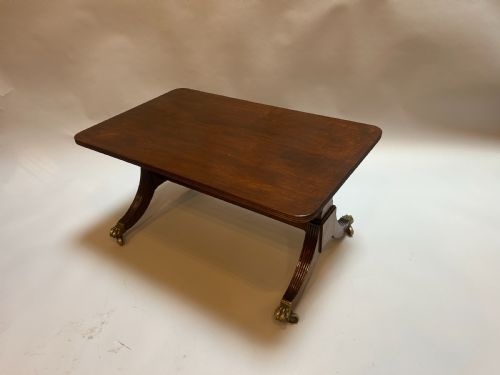
Quality rests in the selection of timber veneers and the crispness of carved details such as reeded legs or brass lion paw feet. Tables with matched flame mahogany or finely inlaid satinwood borders represent more ambitious workshop output than plain variants.
Structural integrity separates fine cabinet work from simpler production, seen in the tight fit of nested tables and the smooth rotation of drum top mechanisms. Superior examples maintain balanced proportions where the brass hardware and leather inserts integrate seamlessly into the timber frame.
Peter Ghyczy
The Regency Style Coffee Table Glossary
- Regency style
- A design aesthetic looking back to the British Regency and George IV periods, defined by classical restraint, scroll supports, and dark woods.
- Drum table
- A round occasional table with a deep frieze resembling a drum, often containing drawers and standing on a central pillar.
- Oyster veneer
- Cross-sections of branches or small stems laid in patterns resembling oyster shells, popular in seventeenth-century and later revival furniture.
- Nest of tables
- A set of graduated tables designed to slide one beneath another, saving floor space when not in use.
- Tole
- Enamelled or painted metal, frequently tin, used to form removable trays set atop table frames.
Regency Style Coffee Table: Frequently Asked Questions
What is a regency style coffee table?
It is a low table styled after nineteenth-century classical furniture, often featuring mahogany, turned legs, or brass accents.
These pieces adapt older dining or centre table designs into proportions suited for modern sitting rooms.
How do I use a nest of tables?
A nest provides flexible surface space that you can expand when entertaining and stack away compactly.
Individual tables pull out to hold drinks or books beside seating areas without cluttering the room.
Are these tables from the nineteenth century?
The selection includes both nineteenth-century originals and later revival pieces from the early twentieth century.
Revival furniture often replicates earlier Regency and Georgian proportions using traditional timber construction.
How do I care for a leather top?
Leather inserts require gentle cleaning with a dry or slightly damp cloth, avoiding harsh chemical solvents.
Applying occasional leather dressing preserves the supple texture and protects the surface from drying out.