

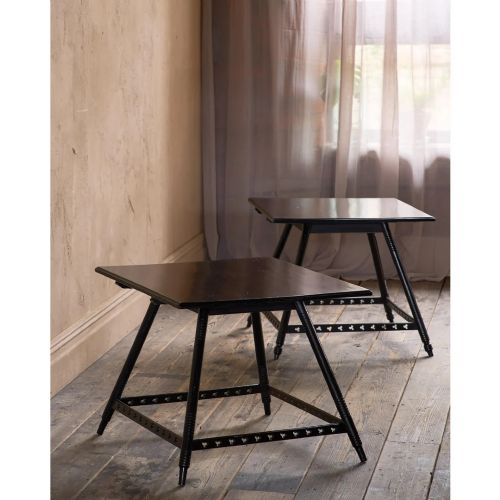


Splayed Leg Coffee Table
A splayed leg coffee table brings low, elegant nineteenth-century proportion into a modern room, offering stability and refined timber grain.

Splayed Leg Coffee Table
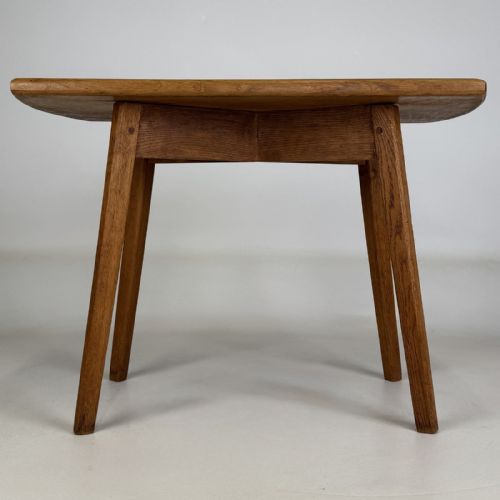
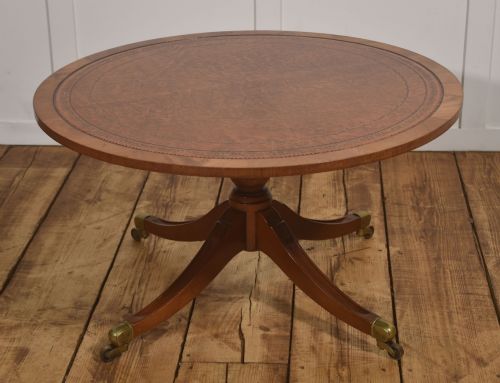
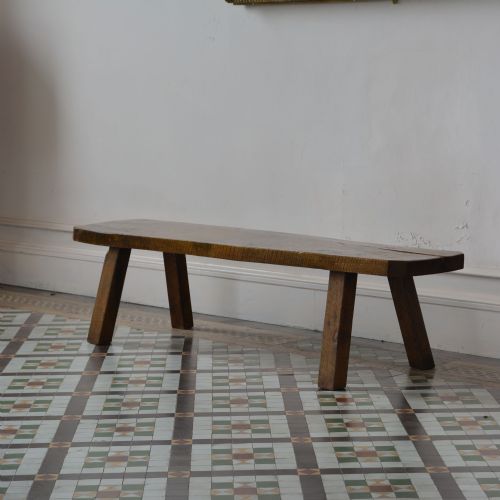
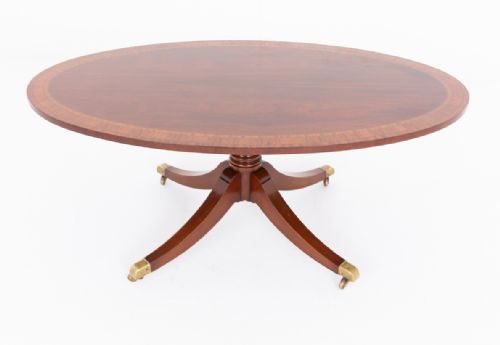
A splayed leg coffee table appears primarily in Regency and nineteenth-century styles, built low to the ground for daily use. These tables take forms such as oval shapes and traditional rectangular coffee table layouts.
The pieces on this page span the Regency era and the nineteenth century, including later revival pieces. Mahogany dominates the selection, frequently enhanced by contrasting inlaid details.
Proportions remain understated yet purposeful, designed to sit comfortably before low seating. Buyers find both strict period pieces and Regency style interpretations among the current selection.

How They Were Made
Cabinet makers utilised solid mahogany and striking flame mahogany veneers to construct these tables, selecting timber for deep natural figures and rich warmth. Satinwood and brass additions provide fine contrasting detail against the dark primary wood.
Inlay work requires precise hand-cutting and fitting into prepared channels within the timber surface. Splayed legs demand careful joinery to angle outward securely while supporting the top without wobble.
Splayed Leg Coffee Table Retail Price Guide 2026
Typical asking prices for splayed leg coffee table among the pieces listed under this phrase on Sellingantiques today, from the lower quarter to the upper quarter. They describe what is for sale here now, not the wider market.
Some tables stand ready to hold your morning tea while subtly showing off tree fork patterns that look like flickering campfires.
What Varies in Quality
The distinction between standard examples and superior pieces rests on timber selection and decorative restraint. Flame mahogany with intense natural movement and crisp satinwood inlay elevates an ordinary form into a masterwork of cabinet making.
Construction fidelity dictates longevity, particularly at the joints where splayed legs meet the underside of the top. Superior tables display seamless integration of brass mounts and precise geometric inlay rather than heavy-handed decoration.
The Splayed Leg Coffee Table Glossary
- Flame mahogany
- A highly figured timber grain derived from the fork of the mahogany tree, creating a distinctive flickering flame pattern. Cabinet makers placed these veneers symmetrically to catch the light.
- Satinwood
- A pale, hard exotic timber utilised for stringing and contrasting inlay work on dark tables. It provides a bright golden accent against deep brown mahogany.
- Regency style
- A design aesthetic drawing from the early nineteenth century, characterised by classical restraint and clean lines. Revival pieces later recreated these classical proportions.
- Splayed leg
- A support structure angled outward from the vertical centre for stability and visual grace. This geometry prevents heavy proportions in low furniture.
Splayed Leg Coffee Table: Frequently Asked Questions
What is a splayed leg coffee table?
A splayed leg coffee table is a low nineteenth-century table featuring legs that angle outward for stability and aesthetic lightness. These pieces draw on Regency design principles.
They utilise timbers like mahogany and flame mahogany, often incorporating inlay work.
How do I style a mahogany coffee table?
A mahogany coffee table works well with both traditional and contemporary interiors through its warm timber tones. Keep surfaces uncluttered to let the grain and inlay show.
Pair the low profile with upholstered seating of a similar period or clean modern lines.
What is flame mahogany?
Flame mahogany is a highly decorative veneer cut from the branch junctions of the tree. The resulting grain creates a dramatic, shimmering pattern resembling fire.
Cabinet makers used this timber for prominent surfaces on fine tables.
How do I spot Regency style?
Regency style relies on classical symmetry, restrained ornament, and dark timbers offset by light wood inlay or brass. Proportions remain clean and uncluttered.
Revival pieces from later in the nineteenth century often replicated these exact classical forms.