


Dutch Neoclassical Furniture
Dutch neoclassical furniture brings sober architectural dignity and rich timber figure into an interior.
Dutch Neoclassical Furniture
Dutch neoclassical furniture encompasses case pieces and tables designed under classical influence during the eighteenth and nineteenth centuries. These items serve both as practical storage and as sculptural centerpieces within a room.
The chests of drawers and commodes encountered most frequently on this page combine generous proportions with restrained classical geometry. Buyers also find corner cabinets, wardrobes, and side tables that reflect these balanced styles.
Examples date primarily from the eighteenth century through to the nineteenth century, including pieces assigned to the Georgian period or circa eighteen hundred. They originate from Dutch workshops utilising regional timber traditions and marquetry techniques.
How these pieces were made
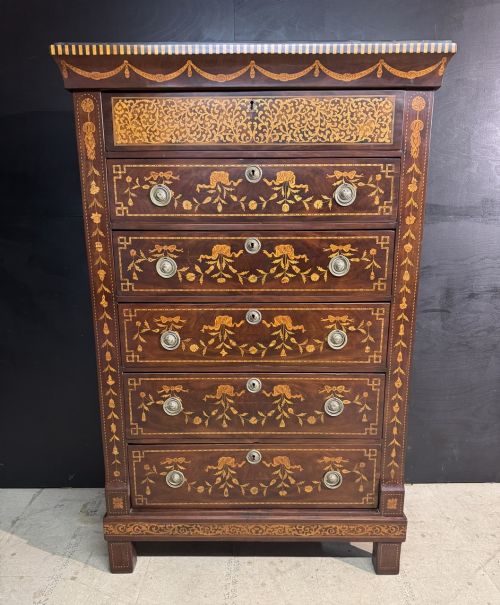
Cabinetmakers constructed carcasses from dense structural timbers including oak, walnut, and mahogany, often applying burr elm or satinwood veneers across prominent surfaces. Fruitwood inlay and boxwood create precise geometric or floral marquetry patterns.
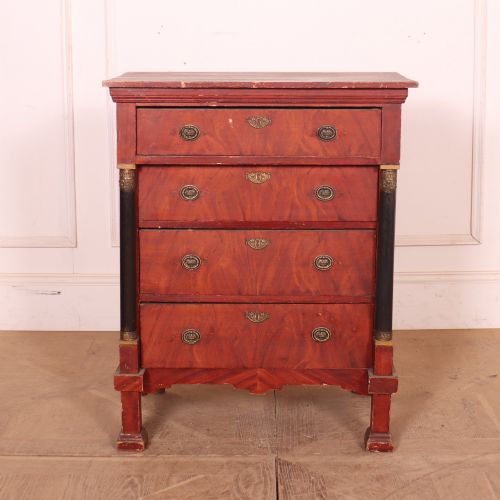
Marble tops provide durable and decorative surfaces on commodes, whilst brass hardware such as feet and handles finish the primary timber structures. Ebonised wood details offer sharp visual contrast against lighter panels and painted wood finishes.
Materials appearing across current pieces include marble, brass, painted wood, mahogany, walnut, fruitwood inlay, ebonised wood, and boxwood.
What varies in quality
The refinement of the timber figure and the complexity of the fruitwood inlay dictate the visual success of a piece. Finer examples display meticulous alignment in marquetry panels across drawer fronts and doors.
Structural integrity relies on the quality of the primary carcase timbers and the preservation of original marble tops or brass feet. The depth of hand-carved detail and the subtlety of painted wood finishes further distinguish superior specimens.
The Dutch Neoclassical Furniture Glossary
- Marquetry
- Decorative veneer work forming pictures or patterns by using thin slices of wood. This technique requires considerable skill to fit various timbers precisely.
- Commode
- A low chest of drawers or cabinet designed in the French taste but adapted by Dutch makers. These pieces often feature marble tops and shaped fronts.
- Demi-lune
- Half-moon shape applied to the plan of small tables or cupboards. The curved profile suits corner placement or narrow hallway spaces.
- Tambour
- Flexible shutter formed of narrow strips of wood glued to canvas backing. This allows cabinetmakers to enclose curved cupboard fronts smoothly.
- Ebonised
- Wood treated to imitate ebony through staining or painting dark. The finish provides dramatic contrast against lighter fruitwood inlays.
Dutch Neoclassical Furniture: Frequently Asked Questions
What is Dutch neoclassical furniture?
Dutch neoclassical furniture consists of eighteenth and nineteenth century domestic pieces influenced by classical architecture and design. These items favor symmetrical lines and refined proportions over earlier baroque exuberance.
Makers utilised local and imported timbers, applying sophisticated marquetry and contrasting veneers to create functional objects with strong decorative presence.
How do I identify a commode?
A commode is a low chest of drawers, often fitted with a marble top and standing on short supports. Eighteenth century examples frequently feature shaped fronts and elaborate marquetry.
They function well in living spaces and bedrooms as both storage units and display surfaces for lamps or decorative objects.
Where do these pieces fit best?
These cabinets and tables suit traditional and contemporary interiors alike, providing warmth through natural wood tones and classical silhouettes. Chests of drawers anchor bedroom schemes while corner cabinets utilise awkward angles in dining rooms.
Their restrained ornament allows them to sit comfortably alongside twentieth century design without overwhelming a room.
What woods were commonly used?
Dutch makers worked with oak, walnut, and mahogany as primary structural timbers. They enhanced surfaces using burr elm, satinwood, and fruitwood veneers.
Boxwood served for fine stringing lines in marquetry, whilst ebonised wood provided dark framing elements and contrast.