


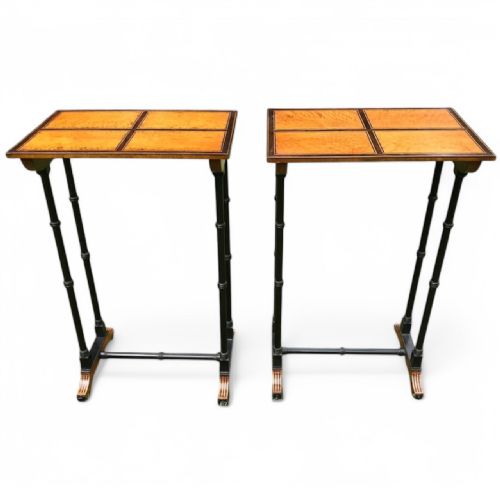
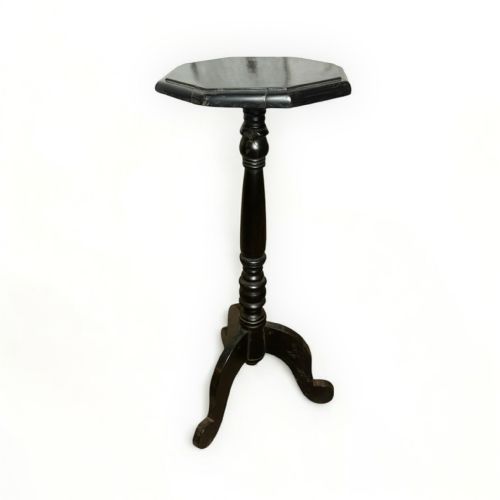


Ebony Accent Table
An ebony accent table brings deep contrast and dark timber grain into a room, serving as a compact surface for lamps and small objects.
Ebony Accent Table
When you search for an ebony accent table, you find a variety of smaller support furniture designed for specific corners, hallways, and reception rooms. The forms include side tables, occasional tables, and centre tables originating from different periods across the nineteenth and early twentieth centuries.
The versions you are most likely to meet on this page span Victorian, Edwardian, and Art Deco eras, alongside distinct regional iterations. Makers utilised both solid dark timbers and lighter woods dressed with dark accents to create these versatile surfaces.
Styles range from French Louis XV and Regency designs to Anglo-Indian Colonial craftsmanship. These tables function practically as lamp stands or display surfaces while introducing strong tonal elements to an interior.
How they were made
Construction relies heavily on dense exotic hardwoods combined with structural carcases of mahogany, walnut, or teak. Artisans shaped solid ebony or applied ebonised finishes to alternative timbers, creating a uniform dark surface.
Many examples incorporate intricate decorative techniques such as bone inlay, brass mounts, and contrasting veneers including satinwood, rosewood, and amboyna. Carved details and geometric patterns define the execution of Anglo-Indian and colonial pieces.
Elephants carved into tripod bases ensure your afternoon tea comes with an unexpected safari.
What varies in quality
The distinction between ordinary and exceptional pieces rests on the integrity of the timber and the precision of the joinery. Solid ebony construction or choice exotic veneers demonstrate a higher tier of craftsmanship than basic ebonised softwood.
Surface detailing separates standard production from masterwork. Finely executed bone inlay, hand-chiselled brass mounts, and balanced proportions elevate the status of an occasional table significantly.
Maison Millet·Gillows
The Ebony Accent Table Glossary
- Ebonised wood
- Timber treated with stain, dye, or polish to imitate the deep black appearance of genuine ebony. This technique allowed cabinetmakers to achieve high-contrast decorative schemes without using costly solid exotic timber throughout.
- Occasional table
- A small, movable piece of furniture designed for a specific, transient purpose rather than permanent placement. These useful items appear in various shapes throughout nineteenth and twentieth-century interiors.
- Bone inlay
- Decorative fragments of bone set flush into the surface of wood to create intricate geometric or floral patterns. This technique appears frequently on Anglo-Indian and colonial tables.
- Specimen wood
- A collection of diverse timbers used together within a single piece of furniture to display varied natural grains and colours. Cabinetmakers arranged these contrasting pieces in geometric marquetry or banded borders.
Ebony Accent Table: Frequently Asked Questions
What is an ebony accent table used for?
These tables provide a convenient surface for small lamps, books, and decorative objects in living spaces and hallways. Their compact dimensions allow them to fit into tight corners or beside seating without dominating the room.
Historically, homeowners placed them where a larger piece of furniture would prove impractical. Today, they serve a similar function while adding period character to an interior.
Are these tables made of solid ebony?
Some examples feature solid ebony construction, particularly smaller octagonal or tripod designs. However, many pieces utilise ebonised wood or employ ebony merely as a veneer or accent alongside mahogany, walnut, or exotic specimen woods.
Examining the underside and interior joints helps reveal whether the dark finish is a surface treatment or the natural timber throughout.
How do I date a Victorian ebony table?
Dating relies on examining the timber preparation, construction methods, and stylistic cues present in the piece. Victorian examples often blend revival styles like French Louis XV with dark ebonised finishes or burr walnut accents.
Matching the construction marks and secondary woods to known periods helps narrow down the decade of manufacture.
What is Anglo-Indian furniture?
Anglo-Indian furniture refers to pieces made in India during the colonial period, frequently intended for export to British homes. These items combine traditional local carving skills and materials like teak and bone inlay with European furniture forms.
Octagonal tables and intricate elephant motifs are common characteristics of this distinct regional tradition.