





Empire Style Drawers
Empire style drawers bring grand architectural lines and rich timbers into a room, offering both strong storage and classic neoclassical presence.
Empire Style Drawers
Empire style drawers encompass formal case furniture designed with classical restraint, structural symmetry, and significant presence. When searching for empire style drawers, a buyer encounters everything from early nineteenth-century commodes to later revival pieces.
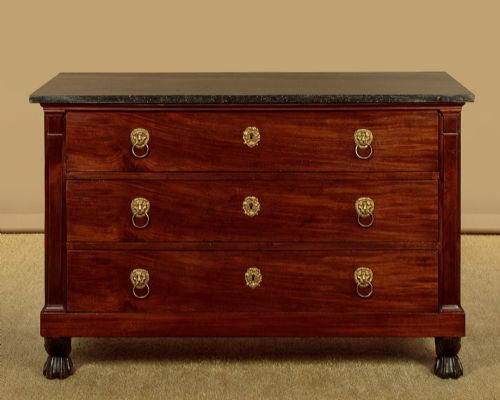
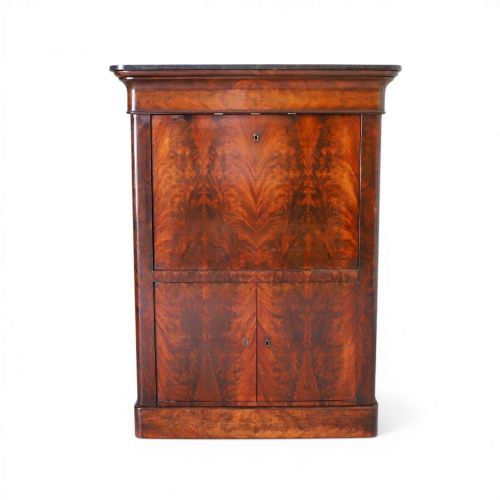
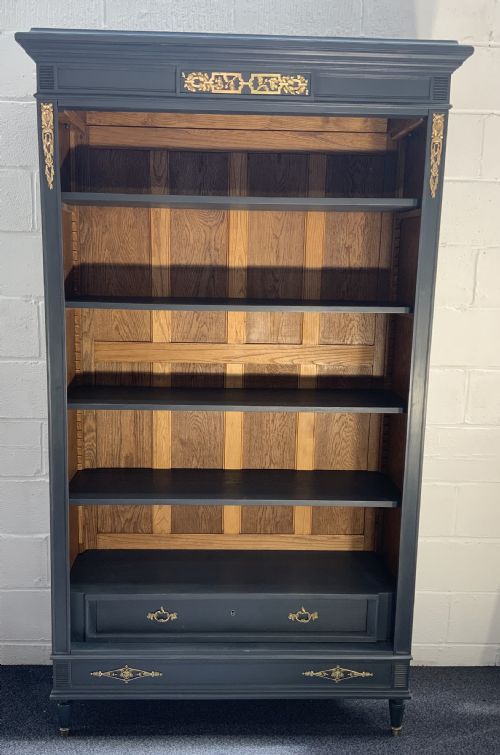
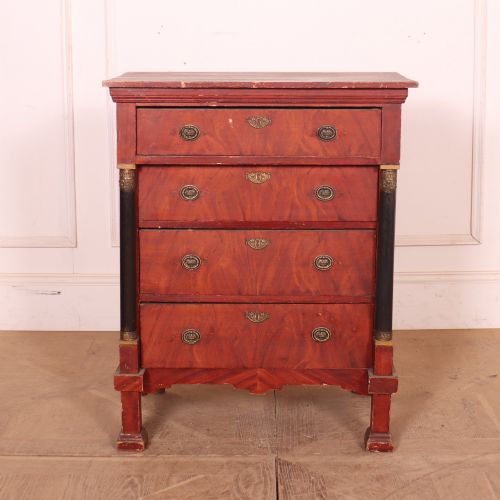
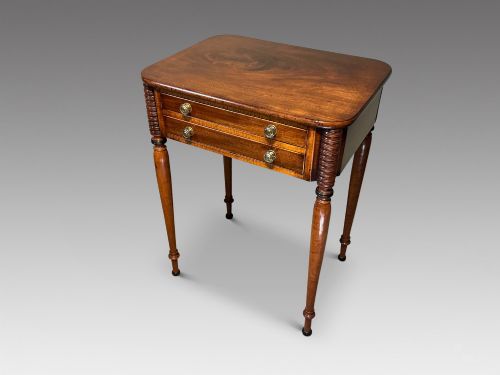
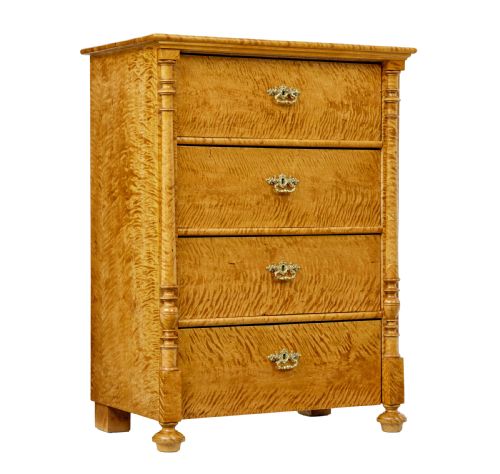
The pieces on this page appear primarily as chests of drawers, tall commodes, and secrétaires originating from France, Sweden, Italy, and the Netherlands. Mahogany and walnut versions dominate the selection, alongside distinctive birch and painted finishes.
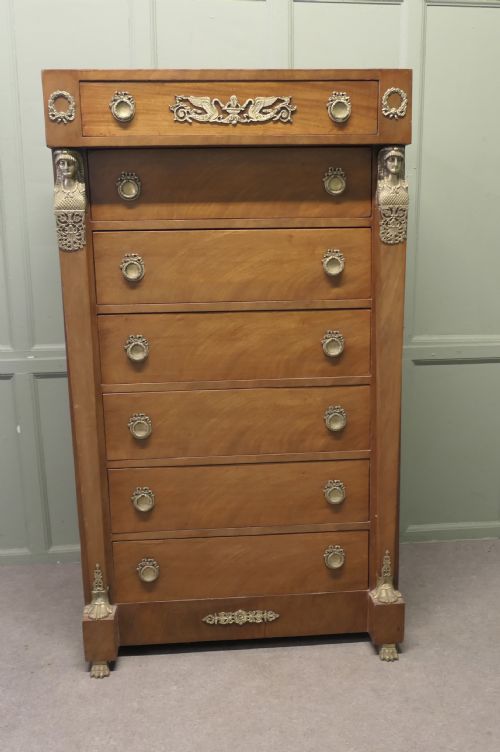
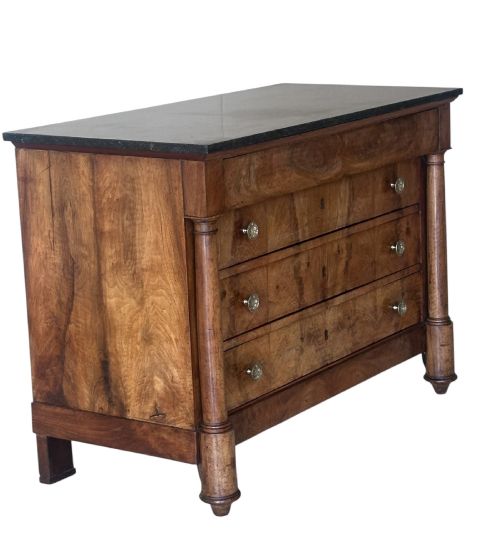
Tall chests and marble-topped commodes represent the most common forms available to the collector. These units provide deep storage behind disciplined, rectilinear facades often accented by prominent column supports.
How they were made
Cabinetmakers built these pieces using solid and veneered timbers such as mahogany, walnut, burr elm, and birch over sturdy oak or pine carcases. The choice of wood dictated the visual weight of the furniture, with dense dark mahoganies contrasting against pale tiger birch.
Surface embellishments relied heavily on cast brass and gilt metal mounts applied to corners, key escutcheons, and drawer pulls. Many commodes feature heavy fossil marble or plain marble slabs fitted flush to the top surface.
Construction techniques prioritized stability to support heavy stone tops and large timber drawers, incorporating secret compartments and drop-front writing surfaces in select secretaire models.
Listings feature pieces spanning the eighteenth century through to the nineteen-twenties, incorporating oak, mahogany, walnut, and birch.
What varies in quality
The standard of timber selection and veneer matching defines the upper tier of these pieces, where grain patterns flow symmetrically across multiple drawer fronts. Lesser examples utilise plain or poorly matched veneers that lack visual depth.
The crispness and weight of the brass or gilt bronze mounts distinguish superior pieces from standard production. Finely chased mounts integrate seamlessly into the architectural framework of the furniture rather than appearing merely applied.
Internal construction, including drawer linings and the integrity of marble tops, separates exceptional cabinet work from utilitarian regional examples.
The Empire Style Drawers Glossary
- Commode
- A low chest of drawers or cabinet, typically originating from French tradition. These pieces often feature marble tops and structured, multi-drawer fronts.
- Secrétaire à abattant
- A tall cabinet featuring a drop-front writing surface that conceals a fitted interior of small drawers and compartments. This form combines desk utility with vertical storage.
- Gilt bronze
- Copper alloy cast and finished with a gold-toned mercury amalgam or chemical coating. It provides the decorative mountings characteristic of neoclassical furniture.
- Biedermeier
- A Central European style emphasising utilitarian comfort and clean lines without excessive ornamentation. Furniture from this tradition utilises native timbers like birch and walnut.
- Cartonnier
- A specialised tall chest designed originally to hold papers and documents. These pieces offer numerous shallow drawers within a narrow upright carcase.
Empire Style Drawers: Frequently Asked Questions
How do I identify true period pieces?
Authentic period pieces from the early nineteenth century display traditional construction methods, hand-cut dovetails, and period-appropriate timber shrinkage.
Revival pieces from later decades often utilise machine-sawn elements and standardised hardware while maintaining the classical aesthetic.
Where should I place a commode?
These substantial chests suit principal reception rooms, grand hallways, or spacious bedrooms where their architectural proportions can anchor the space.
Ensure adequate floor clearance and avoid placing marble-topped surfaces in direct, damp sunlight.
How do I care for marble tops?
Wipe marble surfaces regularly with a soft, damp cloth and neutral soap to prevent staining from liquids or acids. Avoid abrasive cleaners that dull the polished stone finish.
What is the difference between French and Swedish pieces?
French versions frequently employ dark tropical hardwoods like mahogany alongside heavy gilt bronze mounts for a dramatic visual impact.
Swedish interpretations often utilise lighter timbers such as birch or painted surfaces to achieve a brighter, more restrained aesthetic.