




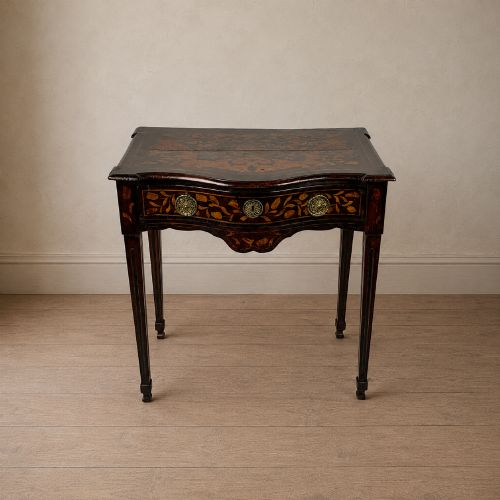
Dutch Baroque Table
A Dutch baroque table brings rich marquetry and ebonised timber into a room, offering both bold presence and historic utility.
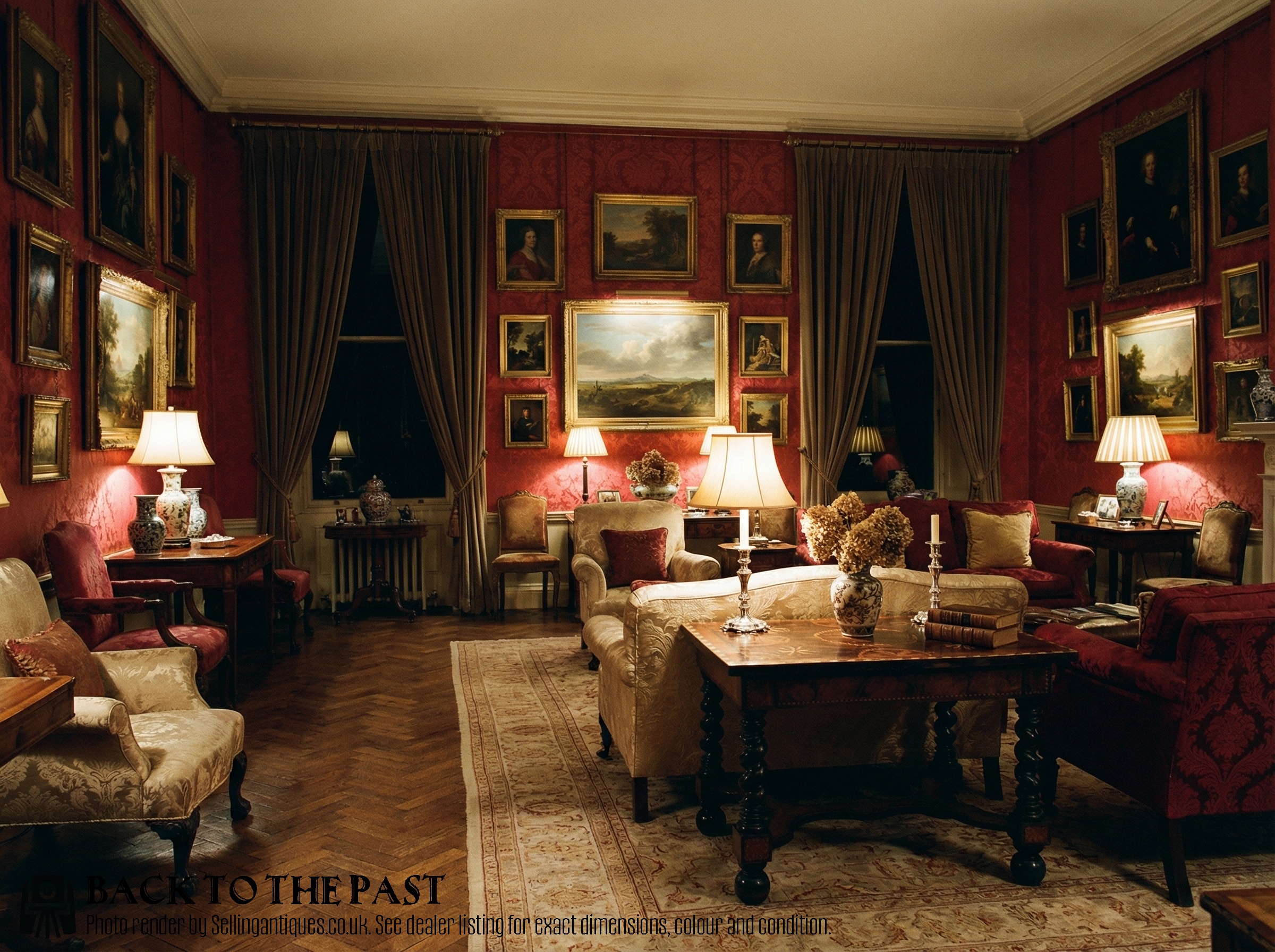
Dutch Baroque Table
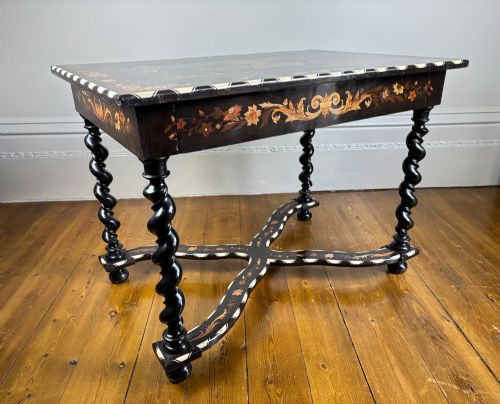
A dutch baroque table encompasses diverse forms ranging from side tables and centre tables to card tables, games tables, dressing tables, and desks. Buyers frequently encounter examples from the seventeenth century, eighteenth century, and nineteenth century, alongside later revival pieces.
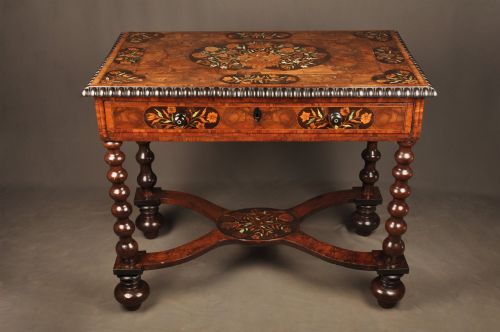
The material vocabulary spans walnut, oak, and fruitwood, often enhanced by elaborate marquetry veneers, parquetry, bone inlay, and ebonised wood. These pieces reflect regional craftsmanship traditions rooted in the Netherlands and Flanders.
Construction and material techniques
Cabinetmakers utilised solid timbers such as oak and walnut to build robust structural frames, applying fruitwood marquetry and parquetry veneers to tabletops and drawer fronts. Detailed bone inlay and ebonised wood provided striking visual contrast against the lighter wood tones.
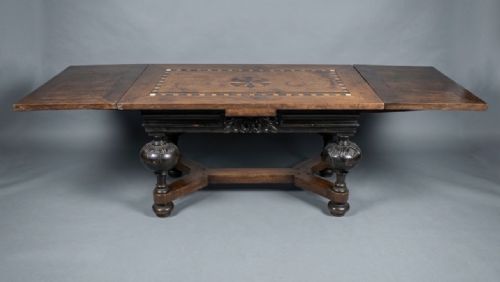
Joinery methods varied from draw leaf mechanisms in seventeenth century examples to serpentine shaping and specialised folding leaves found on later card and games tables.
Current listings span the seventeenth, eighteenth, and nineteenth centuries, featuring walnut, oak, ebonised wood, and fruitwood marquetry.
Distinctions in craftsmanship and design
Quality rests in the precision of the marquetry and the integrity of the timber. Finer examples display meticulous floral or geometric veneer work that remains flush with the surrounding wood, while lesser pieces show simpler surface decoration.
The sophistication of the form also dictates standing, with complex folding actions on games tables or heavily carved structural elements demonstrating a higher level of workshop skill.
The Dutch Baroque Table Glossary
- Marquetry
- Decorative veneer work arranged in intricate pictorial or floral patterns across a surface. This technique defines the visual character of many regional tables.
- Parquetry
- Geometric wood patterns created by fitting small veneer pieces together. It frequently appears on tabletops alongside floral marquetry.
- Ebonised wood
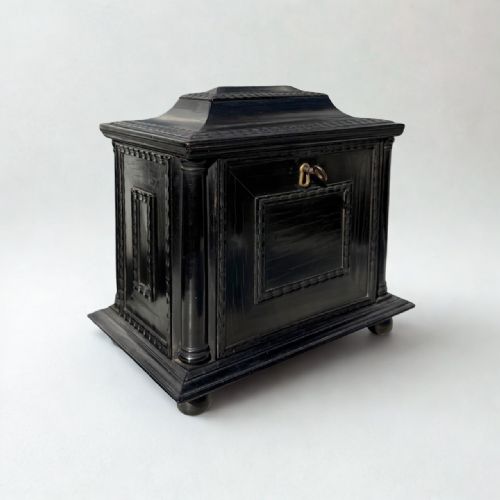
- Timber treated to resemble ebony, providing dark accents that frame lighter marquetry sections. It is common on seventeenth and nineteenth century pieces.
- Draw leaf table
- A dining or side table fitted with sliding leaves beneath the main top that extend to increase surface area. This mechanism dates back to seventeenth century examples.
Dutch Baroque Table: Frequently Asked Questions
What rooms suit a dutch baroque table?
These pieces fit naturally into studies, hallways, or living rooms as centre tables, side tables, or writing desks.
Their decorative surfaces make them effective focal points against plain walls.
How do I care for marquetry surfaces?
Keep wooden surfaces away from direct sunlight and excessive heat sources to protect the delicate fruitwood veneers.
Apply gentle wax polishes sparingly to maintain the natural sheen of the timber.
Are games tables still functional?
Folding card and games tables retain their hinged mechanisms for opening the playing surface.
Treat the older timber joints with care when operating the leaves.
How do I distinguish revival periods?
Nineteenth century revival pieces often combine traditional motifs with machine-cut veneers and distinct structural proportions.
Seventeenth and eighteenth century pieces display hand-cut marquetry and heavier gauge timber construction.