
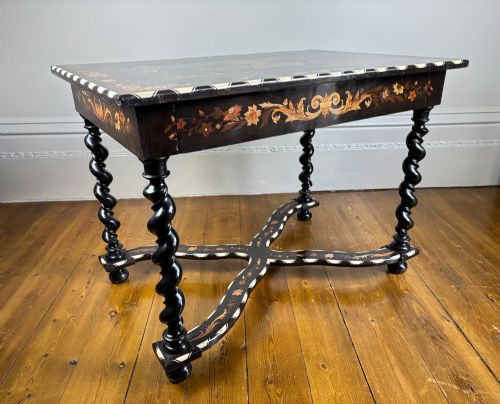
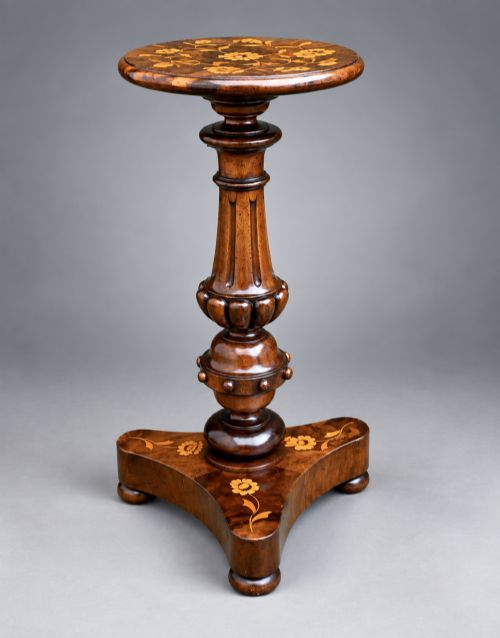
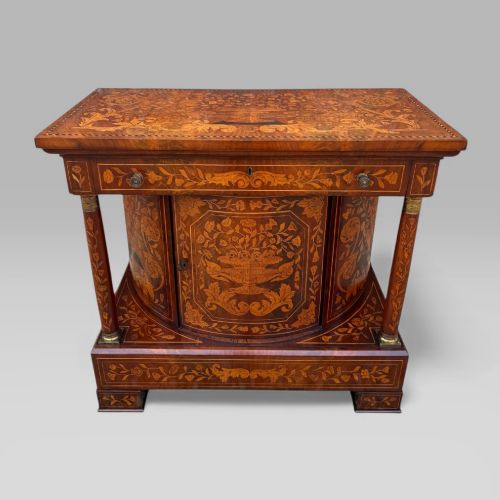
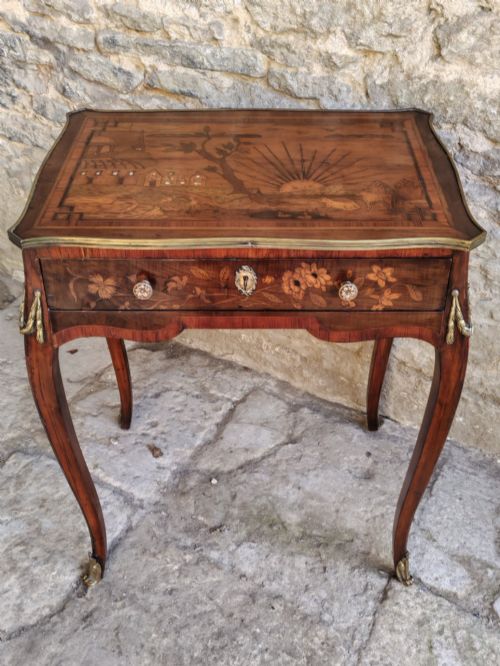

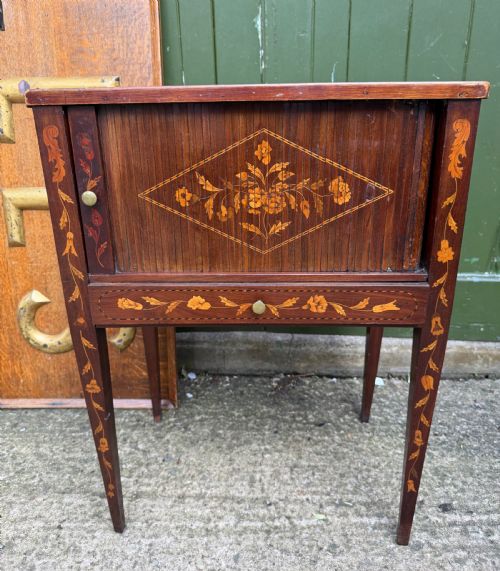


Dutch Floral Inlay Table
A Dutch floral inlay table brings intricate botanical marquetry and historic craftsmanship straight into a room.
Dutch Floral Inlay Table
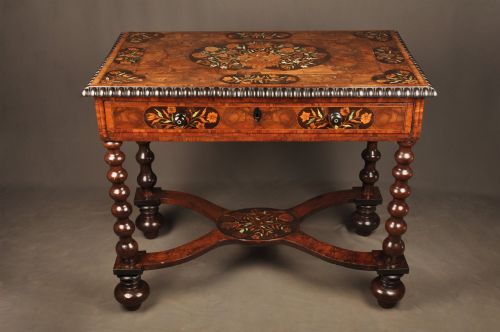
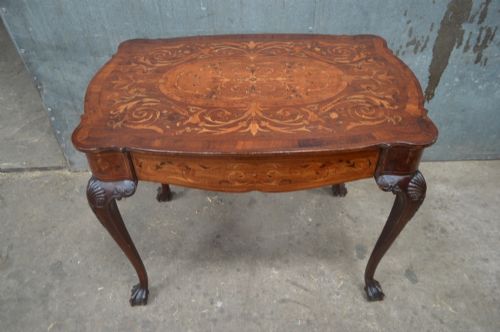
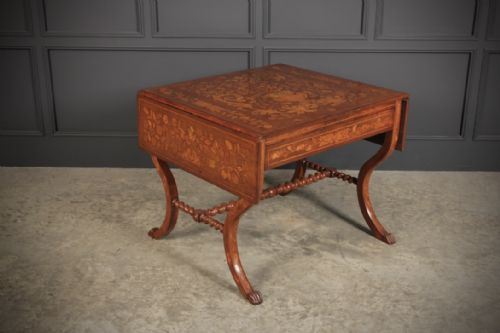
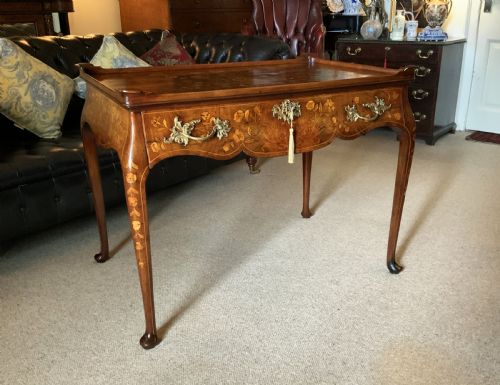
A dutch floral inlay table is a surface decorated with elaborate marquetry depicting flowers, foliage, and sometimes birds, spanning the seventeenth through the nineteenth centuries. Buyers encounter diverse forms here, most commonly side tables, card tables, console tables, and dressing table mirrors.
The aesthetic bridges several historical movements, including Dutch Baroque, Rococo, Neo-Classical, and nineteenth-century revivals. Walnut and mahogany serve as the primary timbers, providing a dark, stable ground for lighter floral veneers.
Makers utilised fruitwood, boxwood, and bone inlay to create vibrant, multi-coloured botanical scenes across tabletops, drawer fronts, and mirror frames. These pieces functioned as high-status display surfaces and refined furniture in affluent households.
How they were made
Cabinetmakers constructed the carcases using solid timbers such as walnut and mahogany, often forming serpentine or rectangular shapes. Marquetry panels were assembled separately by cutting contrasting veneer woods together to ensure precise fit.
Artisans employed fruitwood, boxwood, and bone to render the intricate petals, stems, and leaves of floral designs. Fine engraving on the wood veneer added depth and shading to the floral motifs before gluing them to the main structure.
The object types recorded here include side tables, card tables, console tables, centre tables, desks, and dressing table mirrors.
What varies in quality
The precision and artistic merit of the marquetry dictate the upper tier of these pieces, where floral arrangements display realistic shading and intricate botanical detail. Simpler geometric borders or repetitive floral repeats occupy the more standard end of the scale.
The choice of primary timber and secondary veneers also influences the standing of a piece, with richly figured walnut and contrasting fruitwoods marking superior execution. Structural integrity, from the crispness of the carving to the stability of folding table mechanisms, separates master workshops from lesser production.
The Dutch Floral Inlay Table Glossary
- Marquetry
- A technique where decorative veneers are applied to a wood structure to form intricate pictures or patterns. In these pieces, it primarily depicts floral and bird motifs.
- Fruitwood
- Dense timber derived from fruit-bearing trees, utilised for its warm tones and fine grain. Craftsmen used it extensively in floral inlays for contrasting colour.
- Serpentine
- A furniture edge or front that curves outward and then inward in a wave-like motion. This contour appears frequently on eighteenth-century side tables.
- Boxwood
- A pale, dense wood favoured for fine inlay work and contrasting details. It provides bright highlights within floral marquetry compositions.
- Console table
- A wall-mounted or bracketed table supported by legs, designed for display. These pieces often feature elaborate floral tops.
Dutch Floral Inlay Table: Frequently Asked Questions
How do I clean a marquetry surface?
Dust gently with a dry, soft cloth to prevent abrasive particles from scratching the delicate veneers and inlays.
Avoid using harsh chemical polishes or excessive moisture, which can loosen the old glues holding the fruitwood and bone elements in place.
Were these tables used for dining?
Most surviving examples functioned as decorative side pieces, card tables, or console surfaces rather than heavy dining furniture.
The intricate floral marquetry was intended to be seen and admired when the room was dressed for company.
How do I distinguish eighteenth from nineteenth-century pieces?
Eighteenth-century examples often align with Baroque, Rococo, or Neo-Classical movements, showing organic timber patination and hand-cut marquetry.
Nineteenth-century items frequently reflect revival styles, sometimes incorporating ebonised finishes or mass-produced decorative elements alongside traditional inlays.
Can I use a card table for daily card games?
While these folding tables were originally built for games, modern use should be gentle to protect the antique wooden hinges and veneer.
Ensure the leaves are supported correctly when opened to avoid putting undue stress on the inlaid top.