

Antique Stacked Tables
Antique stacked tables deliver practical surface space that disappears into a single footprint when not in use.
Antique Stacked Tables
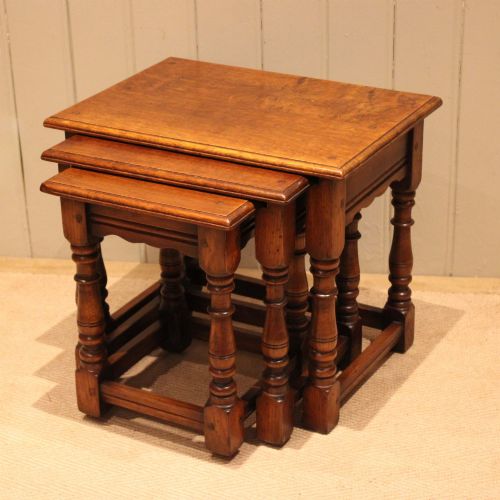
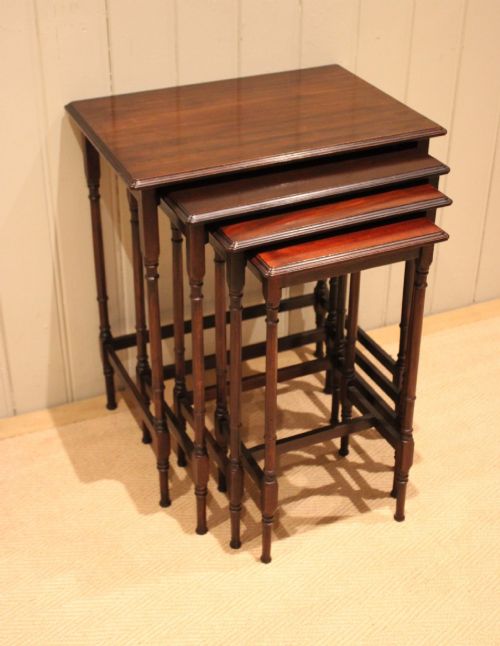
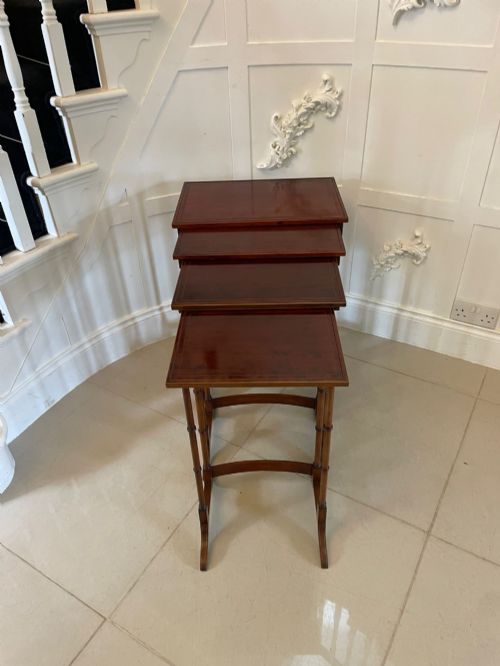
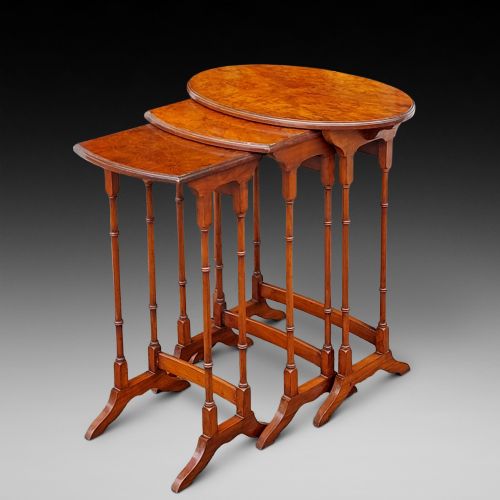
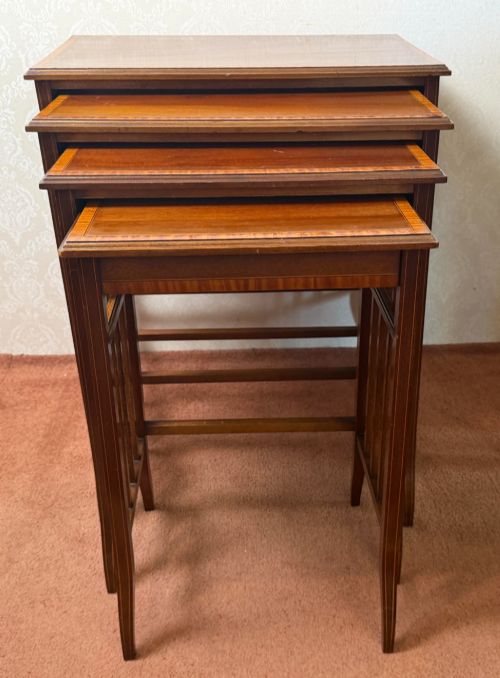
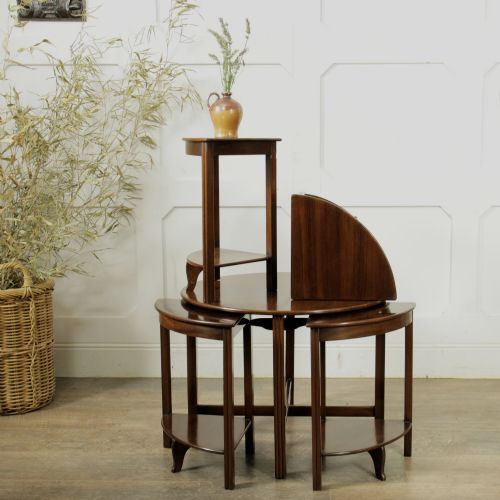
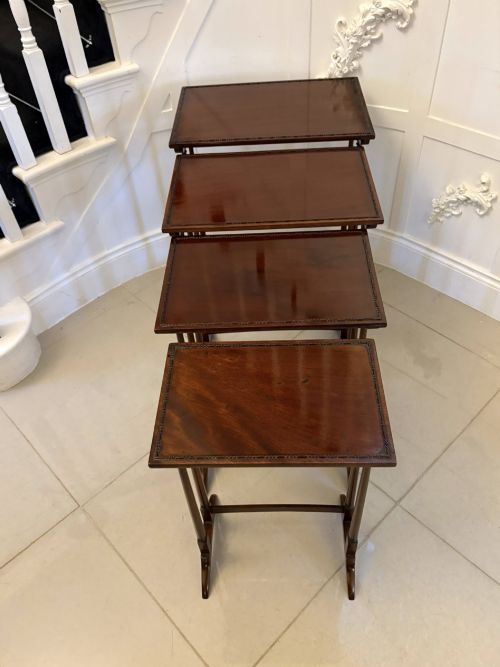
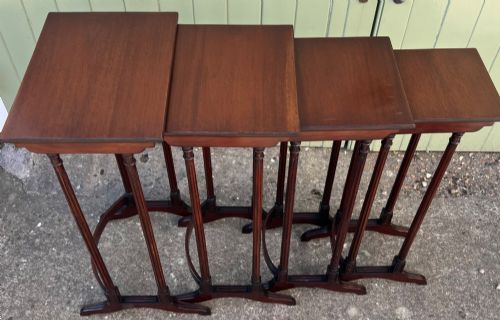
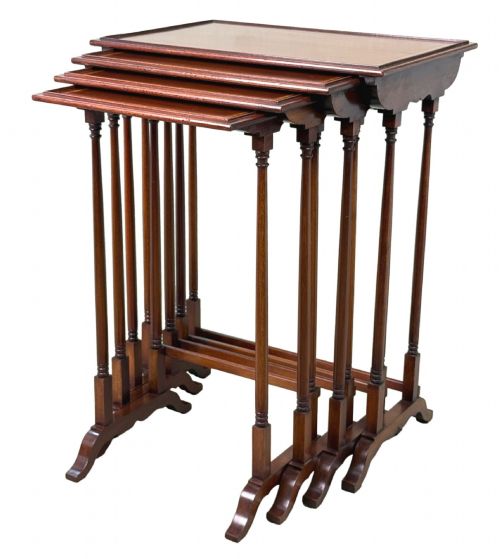
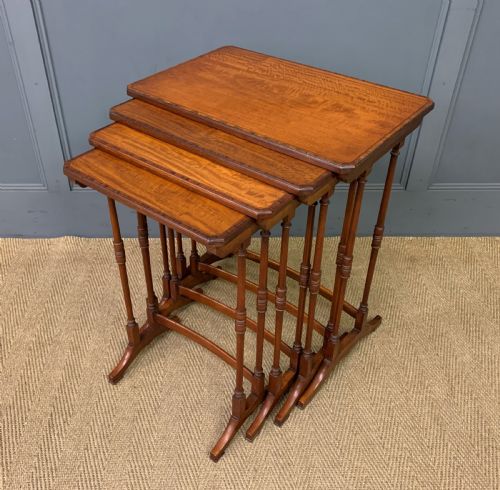
When you search for antique stacked tables, you encounter sets of graduated tables designed to slide neatly beneath one another. These pieces primarily appear as sets of three or four, though circular arrangements and larger groupings emerge across the selection.
The available pieces span the nineteenth and early twentieth centuries, drawing heavily on Edwardian, Victorian, and Regency periods. Makers throughout these eras constructed them as occasional tables for tea, writing, or needlework.
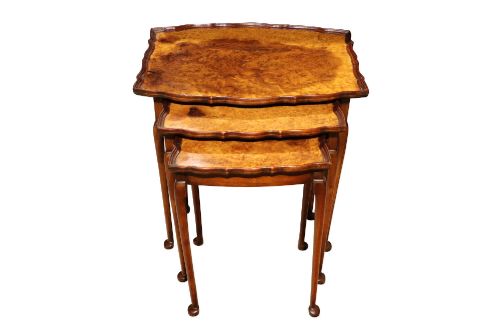
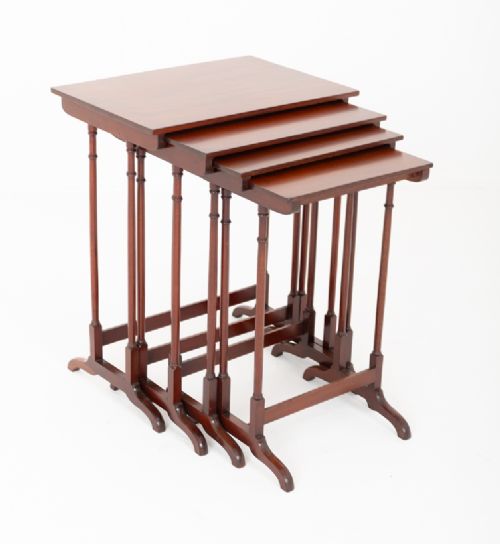
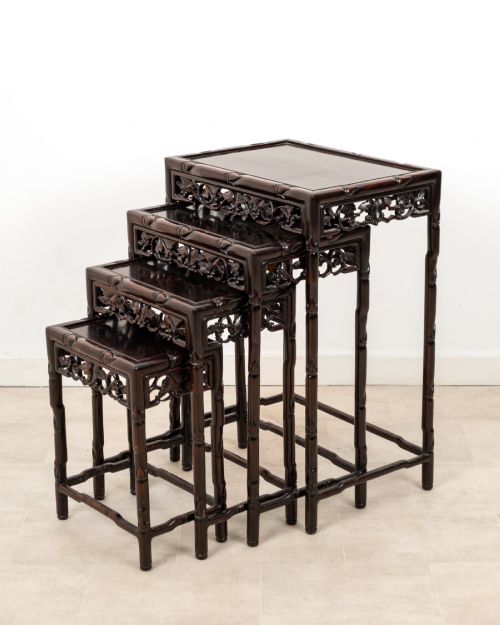
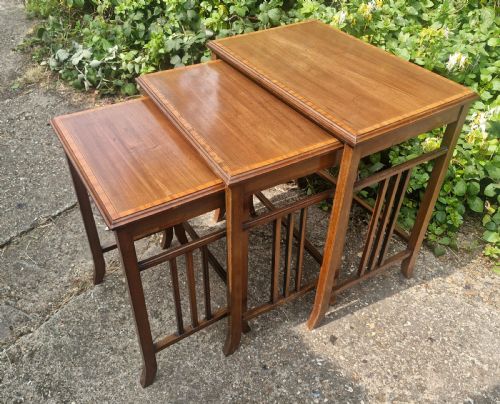
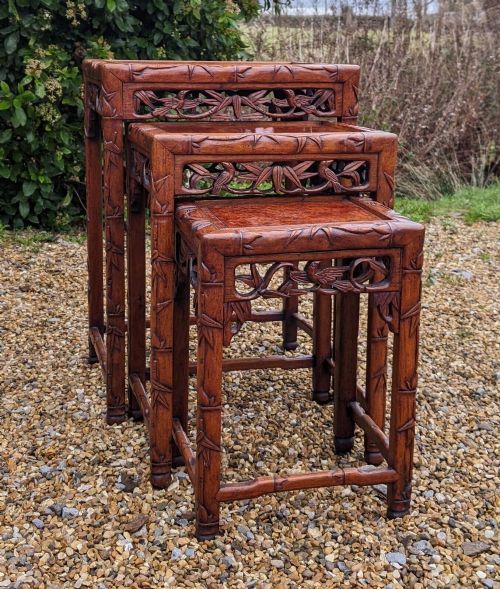
Design variations range from simple rectangular tops on square tapered legs to serpentine satinwood surfaces and carved hardwood oriental forms. Most examples rely on mahogany, rosewood, or walnut frames to achieve their nested layout.
How they were made
Cabinetmakers relied on dense timbers like mahogany, rosewood, and walnut for the structural frames, often pairing them with contrasting satinwood or boxwood veneers. These woods provided the necessary strength for slender legs that had to support smaller surface areas without warping.
Construction techniques focused on tight tolerances so that each table could slide smoothly into position beneath the next. Joinery on the frames and legs prioritised stability, frequently incorporating cross banding and delicate inlay work to define the borders of the tops.
Antique Stacked Tables Retail Price Guide 2026
Typical asking prices for stacked tables among the pieces listed under this phrase on Sellingantiques today, from the lower quarter to the upper quarter. They describe what is for sale here now, not the wider market.
Some Edwardian sets include up to five tables, creating a puzzle where only the most patient guest rebuilds the tower correctly.
What varies in quality
The distinction between standard utility sets and finer examples rests on the crispness of the timber selection and the precision of the joinery. Superior pieces utilise figured burr walnut, rosewood, or detailed satinwood inlay rather than plain surfaces.
Construction details such as uniform clearance between tiers and the retention of original polish separate workshop standards. The slenderness of the legs combined with overall rigidity dictates how successfully a set withstands regular movement.
Émile Gallé·Heal's
The Antique Stacked Tables Glossary
- Quartetto
- A matched set of four tables designed to nest together. This term appears frequently in nineteenth-century and Edwardian descriptions.
- Cross banding
- A strip of veneer applied to the border of a table top with the grain running at right angles to the centre. It creates a decorative framing effect on mahogany and satinwood surfaces.
- Serpentine
- A curved shape resembling a snake, featuring a convex centre flanked by concave curves. This contour appears on the edges of finer Edwardian tabletops.
- Inlay
- The technique of inserting contrasting woods or shell into depressions carved into the primary timber. It defines the decorative borders on many Edwardian and Victorian pieces.
Antique Stacked Tables: Frequently Asked Questions
How were antique stacked tables used?
These tables served as flexible furniture in nineteenth and early twentieth-century drawing rooms, deployed only when guests required extra surfaces for tea or small items. The graduated sizing allowed servants to scatter the tables around a room individually before returning them to a single column.
Their primary function was space-saving convenience paired with formal entertaining. Owners kept them tucked against a wall or beside a chair until needed for social gatherings.
How do I tell Edwardian sets from Victorian ones?
Edwardian sets frequently display lighter satinwood inlay, boxwood stringing, and bright mahogany or burr walnut veneers. The styling often references earlier Georgian or Sheraton aesthetics with a lighter touch on the structural framework.
Victorian versions tend to feature denser, darker mahogany timbers with heavier structural proportions and minimal inlay. The construction prioritises robust daily utility over delicate decorative surface work.
What does quartetto mean on a listing?
Quartetto simply designates a matching set of four tables designed to slide sequentially beneath the largest principal surface. The term derives from musical quartets and gained widespread use among cabinetmakers during the nineteenth century.
Seeing this label confirms that the listing contains the full complement of four graduated pieces rather than a partial set of two or three.
How should I care for veneered nested tables?
Protect the thin satinwood or walnut veneers by avoiding direct sunlight and excessive humidity changes that can cause lifting. Dust the surfaces regularly with a dry cloth and apply a quality wax sparingly to maintain the polish.
Exercise care when sliding the tables in and out of their stacked position to prevent scratching the inner legs and the undersides of the tops.