





Chinese Lacquer Occasional Tables
Chinese lacquer occasional tables bring rich hand-applied finishes and intricate decorative schemes directly into modern rooms.
Chinese Lacquer Occasional Tables
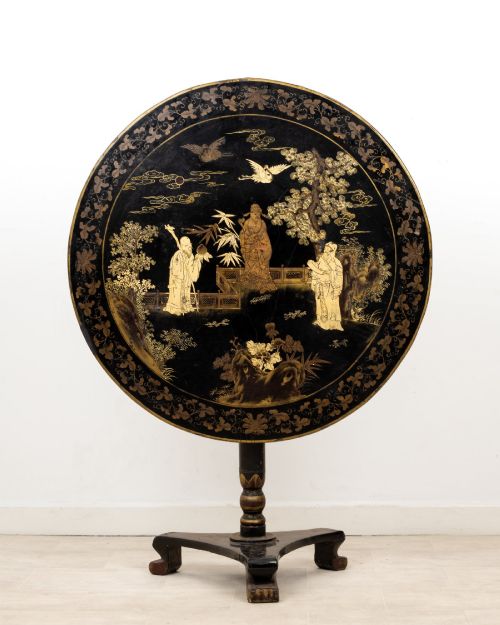
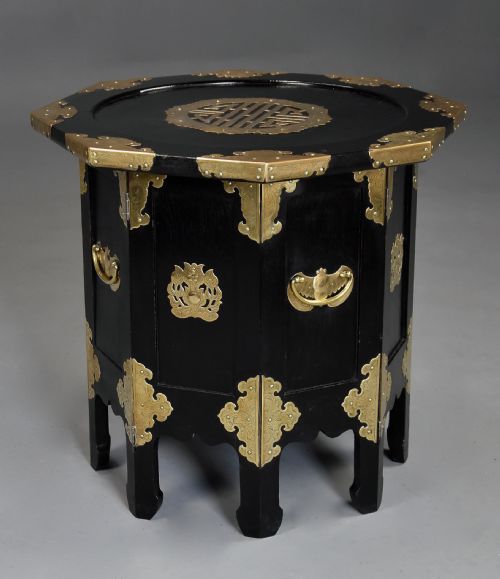
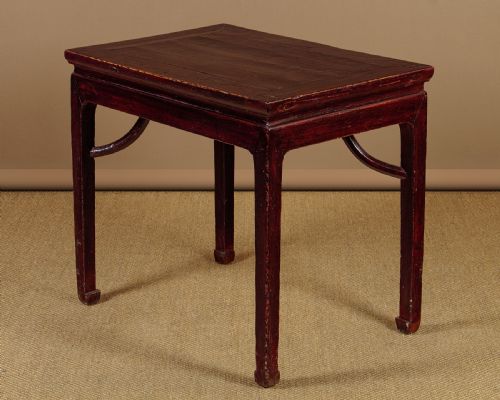
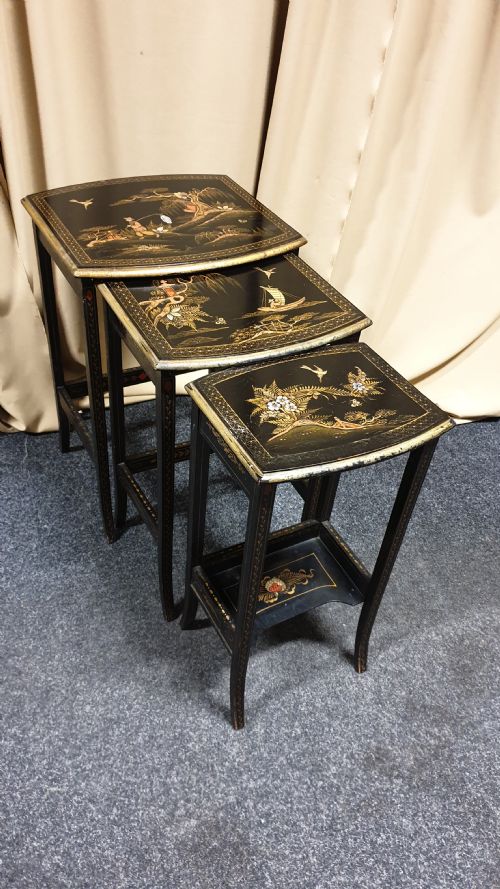
Chinese lacquer occasional tables encompass a diverse group of portable surface furniture created across several centuries, from the 18th century through the Edwardian period and the early 20th century. When exploring chinese lacquer occasional tables, buyers encounter forms ranging from nests of four tables and tripod stands to side tables, sewing tables, and low coffee tables.
The aesthetic vocabulary spans traditional Chinese provincial work, Qing Dynasty design, and the distinct visual language of Chinese export items produced for Western markets. Many examples incorporate Chinoiserie decoration, rendering scenes of figures, landscapes, and flora upon deep dark or red lacquer surfaces.
The construction materials reflect both traditional Asian joinery and Western-influenced adaptations, utilising foundational woods such as elm and ebonised wood alongside specialised decorative mediums.
How they were made
The construction relies heavily on native timbers like elm and general wood frames coated in successive layers of natural resin lacquer to achieve a smooth, durable sheen. Artisans enhanced these dark or red lacquer grounds using gold leaf, gilt paint, and contrasting mother-of-pearl inlay.
Certain variations incorporate unexpected natural materials and hardware, such as rootwood structures fitted with deep quartz tops, brass accents, or specialised ebonised wood finishes. Surface ornamentation frequently employs detailed Chinoiserie painting techniques applied by hand across table tops and aprons.
The recorded periods span the 18th century, 19th century, Victorian, Edwardian, and the early 20th century up to 1910.
What varies in quality
The refinement of the painted Chinoiserie decoration dictates much of the visual success, distinguishing master-hand pictorial work from simpler repetitive motifs. The depth, stability, and smoothness of the lacquer finish itself show significant variance depending on the number of coats applied and the preservation of the underlying timber.
Structural integrity across multi-tiered forms, such as nests of tables or tilt-top mechanisms, separates standard utility pieces from finer decorative examples. The integration of delicate inlays like mother-of-pearl or the precise fitting of quartz and brass elements also marks the distinction between ordinary and exceptional craftsmanship.
The Chinese Lacquer Occasional Tables Glossary
- Lacquer
- A durable glossy finish applied in numerous coats using natural resin, providing a deep protective and decorative surface. It forms the primary visual characteristic of these tables.
- Chinoiserie
- European artistic interpretation and imitation of Chinese and East Asian artistic traditions, frequently featuring narrative scenes and pagodas. This style dominates the surface decoration of many export pieces.
- Nest of tables
- A set of graduated tables designed to fit neatly beneath one another when not in use. They appear frequently in configurations of three or four.
- Cinnabar
- A bright scarlet mineral form used to create rich red carved lacquer surfaces. Pieces featuring this technique display deep sculptural relief.
- Rootwood
- Furniture formed from the gnarled underground growth or roots of trees, retaining organic contours. It results in rustic, sculptural supports for inset stone tops.
Chinese Lacquer Occasional Tables: Frequently Asked Questions
How do I care for antique lacquer tables?
Keep these surfaces away from direct sunlight and excessive heat sources to prevent the lacquer from drying out or cracking. Dust gently with a soft, dry cloth and avoid harsh chemical cleaning products.
Maintain stable indoor humidity levels to protect both the wooden frames and the delicate surface finishes from expansion and contraction.
Were nests of tables made in China?
Nests of tables were produced both in China for export markets and by European makers adopting Eastern decorative motifs. They gained immense popularity during the Victorian and Edwardian eras.
The graduated sizing allowed multiple surfaces to occupy a minimal footprint until pulled out for entertaining.
What is Chinese export lacquer?
Chinese export lacquer refers to items manufactured in China specifically to satisfy European and American taste during the 18th and 19th centuries. These pieces often combined traditional local craftsmanship with Western furniture forms like work tables and sewing cabinets.
The resulting designs bridged two distinct aesthetic traditions while maintaining high standards of decorative painting.
How can I date an old lacquer table?
Dating relies on observing the framing timber, the style of the base construction, and the specific characteristics of the decorative motifs. Earlier 18th century and 19th century pieces often show hand-mixed pigments and traditional joinery methods.
Later Victorian and Edwardian interpretations frequently incorporate ebonised wood or machine-milled components alongside stylistic nods to the Qing Dynasty.