
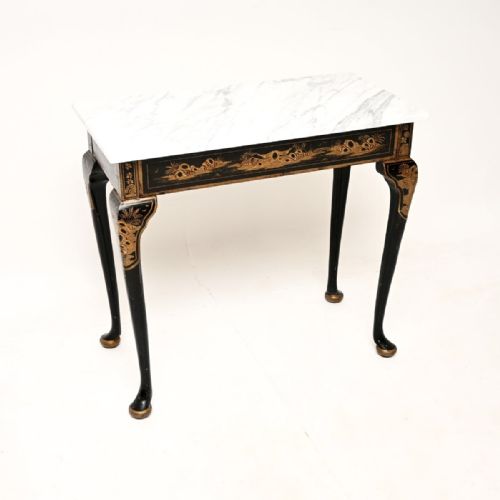
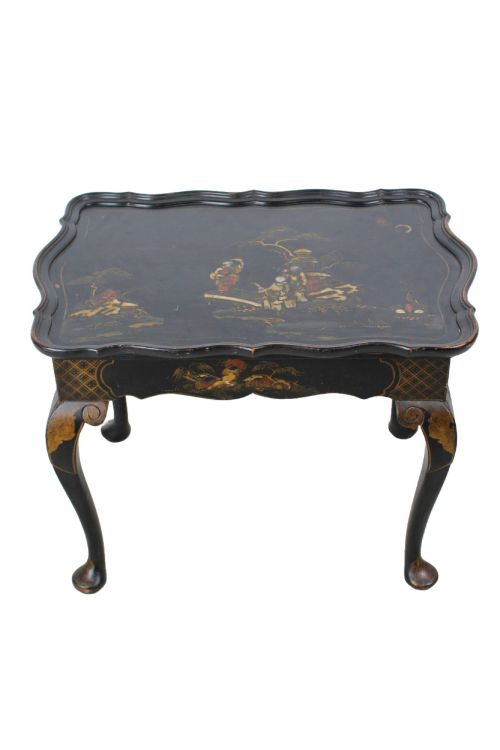
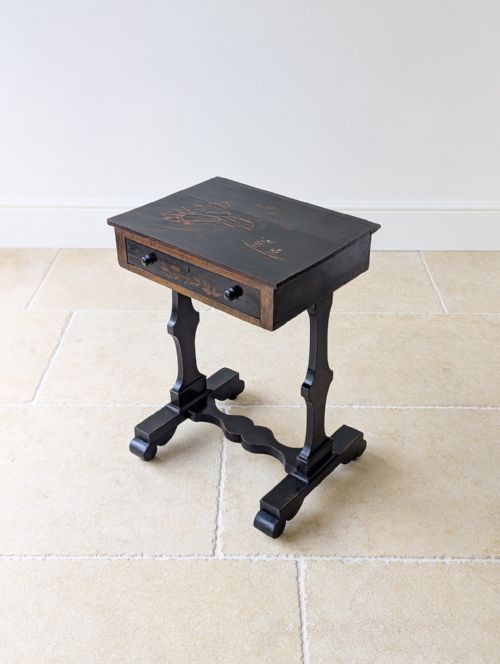
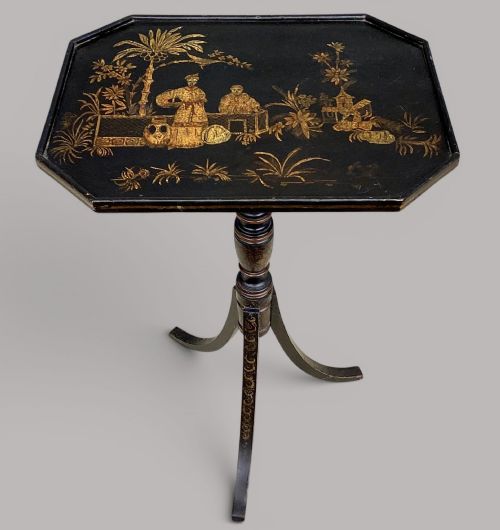


Gilt Chinoiserie Side Tables
Gilt chinoiserie side tables bring together black lacquer, gold leaf, and decorative Asian-inspired motifs on compact timber frames.
Gilt Chinoiserie Side Tables
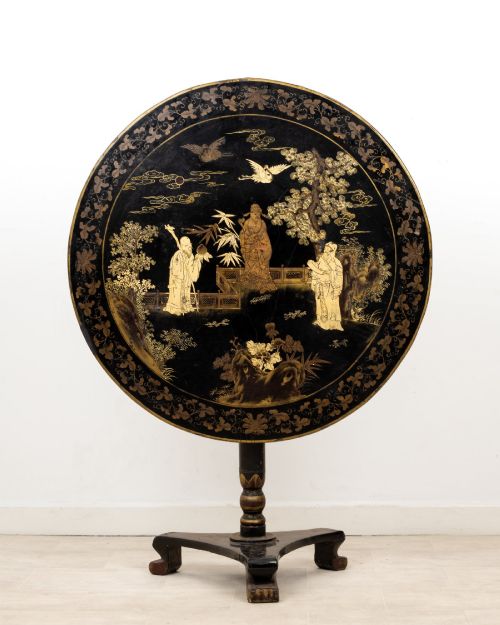
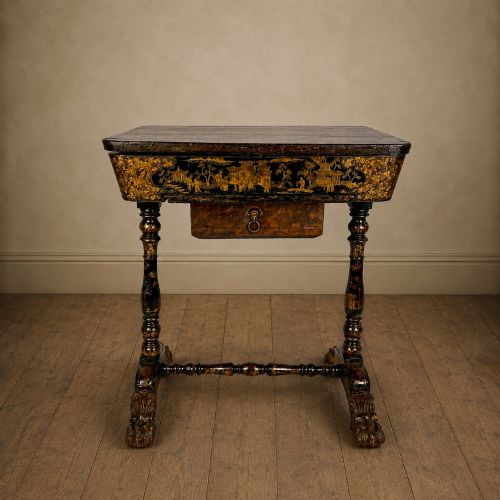
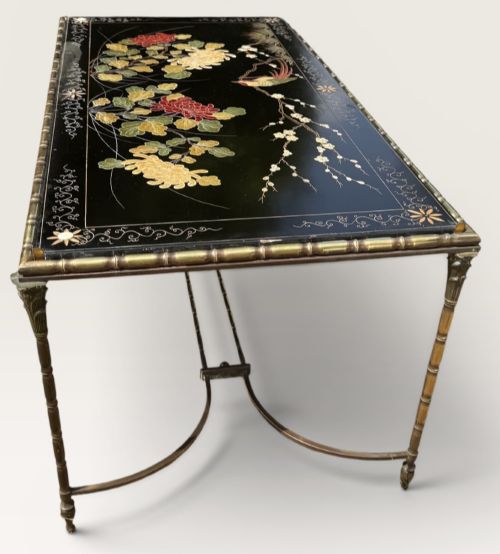
Gilt chinoiserie side tables encompass an array of occasional, coffee, and work tables finished with distinctive orientalist painted or lacquered decoration. These pieces frequently emerge from nineteenth-century workshops, alongside Regency, Edwardian, and later twentieth-century interpretations.
The forms span simple wine tables, nests of four tables, and tray tables designed to sit upon folding or fixed stands. Buyers encounter ebonised timber surfaces carrying hand-painted motifs in gold and red pigment, often depicting figures, landscapes, or floral arrangements.
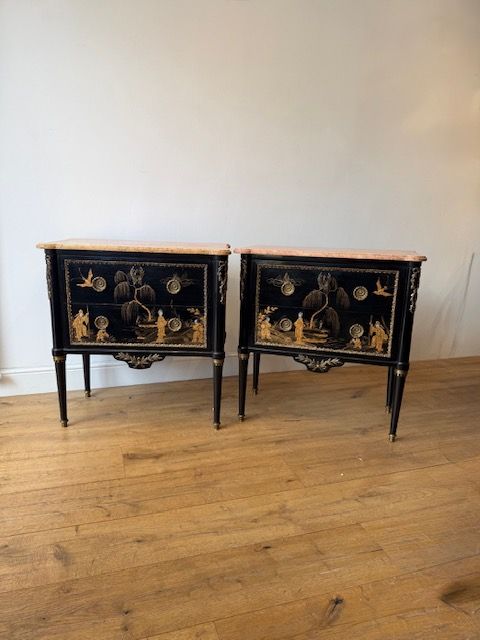
Originating both from British cabinet makers influenced by the Brighton Pavilion and from Chinese export workshops, these tables served fashionable drawing rooms. The selection includes marble-topped console tables, tilt-top occasional pieces, and compact work tables fitted for sewing.
How They Were Made
Construction relies upon seasoned woods such as timber and papier-mâché, providing stable foundations for layers of dark lacquer. Artisans built up these surfaces through repeated application and polishing before executing the final ornamentation.
Gold leaf and metallic paints create the characteristic gilt highlights, often combined with black, ebonised, or red grounds. Cabinet makers incorporated brass fittings, marble slabs for tops, and collapsible stands for tray tables.
Listings feature pieces from the 18th Century through the 1930s, incorporating materials such as lacquer, brass, and papier-mâché.
What Varies in Quality
The refinement of the hand-painted decoration separates standard production from exceptional examples, with finer pieces displaying intricate brushwork and depth in their gilt and coloured motifs. The handling of figures, foliage, and landscape elements reveals the artisan's skill.
The integrity of the lacquer finish and the stability of the underlying timber structure dictate the durability of the piece. Superior examples retain their original painted surfaces and harmonious proportions across multi-tiered or nested forms without excessive restoration.
Maison Bagues
The Gilt Chinoiserie Side Tables Glossary
- Chinoiserie
- European decorative style reflecting Chinese artistic influences, popular across various centuries. It employs imaginary oriental landscapes, figures, and motifs on furniture and decorative objects.
- Lacquer
- A durable resin finish applied in multiple layers to wood or papier-mâché. It forms a hard, glossy surface capable of taking rich painted and gilt decoration.
- Papier-mâché
- A composite material made from paper pulp or reinforced sheets mixed with glue, pressed into moulds. It provided a lightweight, smooth base for lacquered trays and tables.
- Ebonised
- Timber treated with stain or pigment to imitate ebony. This dark finish creates a high-contrast background for gold leaf decoration.
- Tilt-top
- A tabletop hinged to a central pillar, allowing the surface to fold vertically when not in use. This mechanism saved space in smaller nineteenth-century rooms.
Gilt Chinoiserie Side Tables: Frequently Asked Questions
How are gilt chinoiserie side tables cleaned?
Dust surfaces gently with a dry, soft microfibre cloth to protect the delicate lacquer and gilt decoration. Avoid liquid cleaners, chemical sprays, or abrasive cloths that can damage the painted finish.
Keep these tables away from direct sunlight and radiators to prevent the lacquer from cracking or warping. Use coasters to protect the surface from moisture and heat.
What rooms suit a chinoiserie tray table?
Tray tables work well as flexible occasional surfaces beside armchairs or sofas in drawing rooms and studies. Their removable tops and folding stands offer convenient placement for drinks or books.
In bedrooms or hallways, smaller occasional tables function as display surfaces for lamps or decorative objects. Their compact footprints allow them to fit into narrow spaces.
How do I identify a Regency period table?
Regency pieces often feature ebonised frames, tripartite bases, and distinct neoclassical proportions combined with oriental motifs. Look for craftsmanship consistent with early nineteenth-century cabinet making techniques.
Later Edwardian and twentieth-century revivals frequently imitate these earlier forms but employ different interior construction methods and secondary timbers.
What is a nest of tables?
A nest consists of graduating tables designed to slide neatly beneath one another to save floor space. They became popular during the nineteenth century for entertaining.
Sets typically comprise four tables, allowing hosts to pull them out individually when serving guests tea or refreshments.