





Chinoiserie Nest of Tables
These chinoiserie nest of tables combine space-saving cleverness with hand-painted oriental scenes, offering versatile side tables that store neatly together.
Chinoiserie Nest of Tables
A chinoiserie nest of tables comprises a set of graduating occasional tables designed to slide one beneath another when not in use. The form appears primarily across the nineteenth century, the Edwardian period, and into the nineteen-twenties.
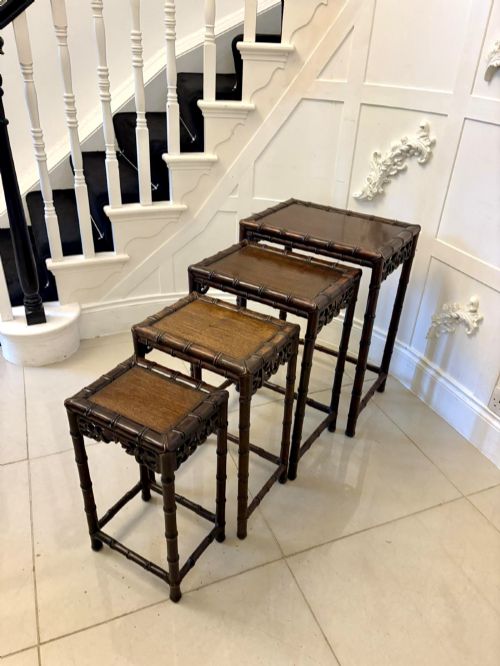
Sets commonly consist of three or four tables. The evidence shows examples built in Queen Anne style, French chinoiserie, and oriental carved faux bamboo.
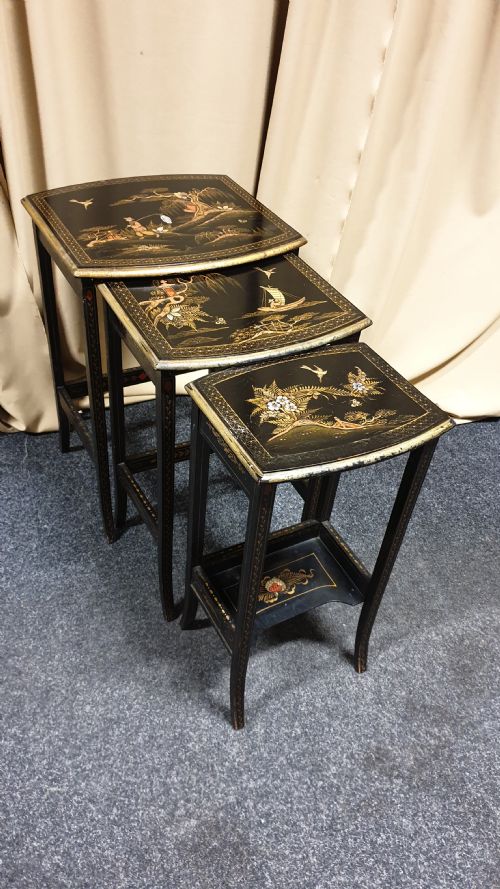
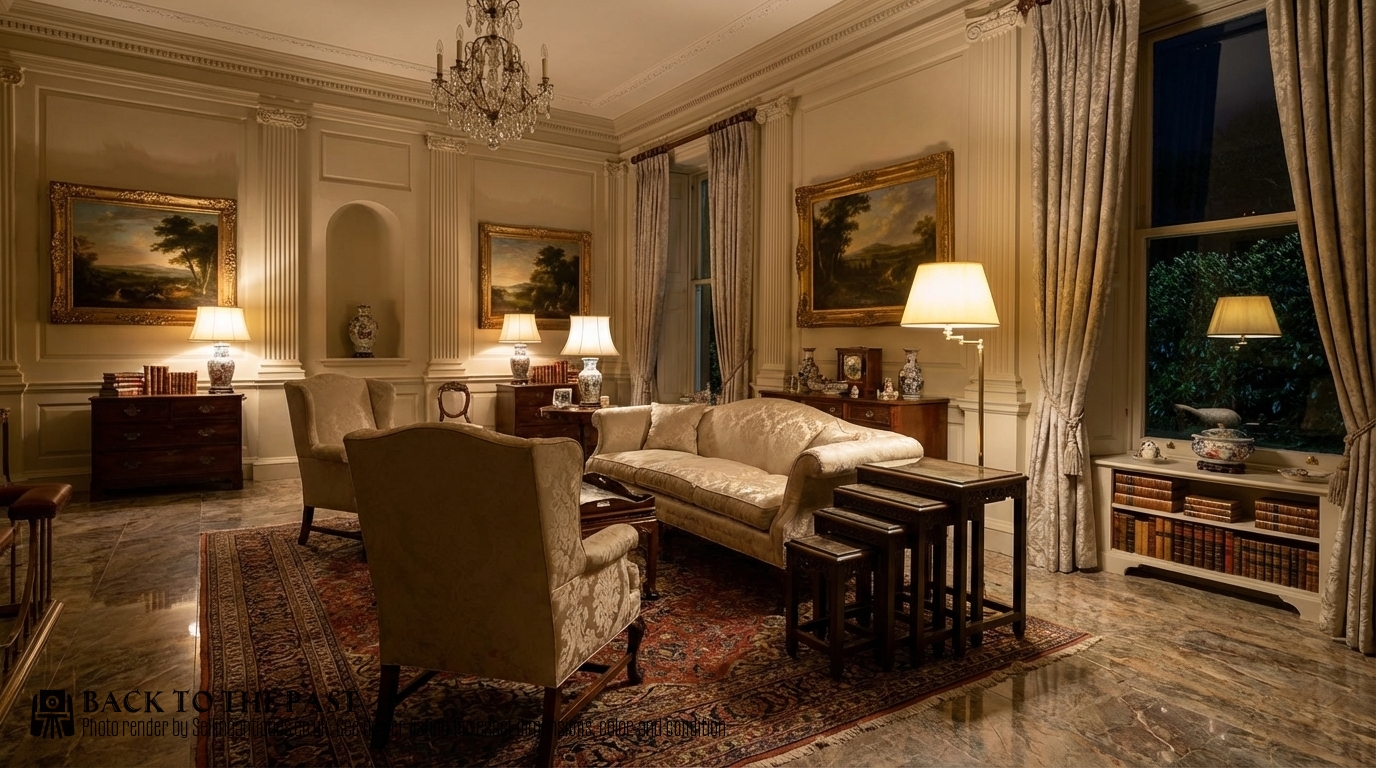
Tables function as lamp tables or side tables within a room. Buyers encounter pieces finished with black lacquer, red lacquer, or hardwood.
How they were made
Construction relies heavily on wood, hardwood, and lacquer applied over a structural core. Artisans build the framework to support multiple graduating tiers that slide together precisely.
Decoration involves hand painting, enamel, and relief carved dragon motifs on tops and friezes. Gold leaf, gilding, and gilt paint highlight the oriental scenes against the dark lacquer grounds.
Chinoiserie Nest of Tables Retail Price Guide 2026
Typical asking prices for chinoiserie nest of tables among the pieces listed under this phrase on Sellingantiques today, from the lower quarter to the upper quarter. They describe what is for sale here now, not the wider market.
What varies in quality
Quality rests in the execution of the lacquerwork and the crispness of the hand-painted or gilt details. Finer examples display intricate pictorial scenes with careful layering of gold leaf and enamel.
Structural integrity also separates standard sets from superior ones, visible in how smoothly the graduating tables slide and nest together. Hardwood construction and carved elements like relief dragons indicate higher grade production.
The Chinoiserie Nest of Tables Glossary
- Chinoiserie
- European decorative art reflecting Chinese artistic influences. This style utilises motifs such as pagodas, figures, and landscapes rendered in lacquer and gold.
- Lacquer
- A durable resin finish applied in multiple coats to furniture. It provides a smooth, glossy surface suitable for painting and gilding.
- Quartetto
- A nineteenth-century term for a set of four graduating tables designed to nest together. These pieces often feature slender legs and decorated tops.
- Japanning
- European imitation of Japanese and Chinese lacquerwork. The technique involves layering dark varnishes and metallic powders to simulate oriental finishes.
- Faux bamboo
- Wood turned and carved to imitate natural bamboo stalks. This style appears frequently on nineteenth-century bamboo-turned occasional furniture.
Chinoiserie Nest of Tables: Frequently Asked Questions
How were nesting tables used historically?
These tables served as versatile furniture for entertaining guests in drawing rooms and parlours. Servants brought them out individually to hold tea, lamps, or writing materials.
Once the gathering ended, the smaller tables slid back beneath the largest one to save floor space.
What periods do these tables date from?
The selection includes pieces originating from the nineteenth century, late Victorian eras, and Edwardian periods up to nineteen-twenty. Makers produced them in various regional interpretations including French chinoiserie and Queen Anne styles.
Edwardian examples often feature black lacquer with gilt highlights, while nineteenth-century versions sometimes incorporate hardwood or faux bamboo.
How do I distinguish between black and red lacquer?
Black lacquer provides a dark, reflective background that makes gold leaf and painted oriental scenes stand out sharply. Red lacquer creates a bolder, warmer visual impact while using similar gilt pictorial decoration.
Both finishes require careful handling to preserve the delicate painted surfaces over decades of use.
Are these tables sturdy enough for daily use?
Sets built from solid hardwood or sturdy lacquered timber handle everyday placement of lamps and cups reliably. The graduating design means the smaller tables have lighter frames, so they suit moderate domestic use.
Placing them away from direct sunlight preserves the lacquer and gilt paint finishes.