


Gilt Chinoiserie Occasional Tables
These gilt chinoiserie occasional tables bring lacquer, gold leaf, and hand-painted figures into rooms through side tables, nests, and tilt tops.
Gilt Chinoiserie Occasional Tables
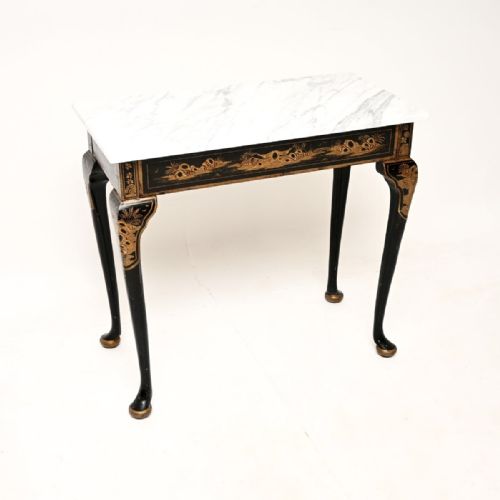
Gilt chinoiserie occasional tables encompass small movable furnishings designed for serving, display, or card games, heavily represented on this page by nests of four tables, side tables, wine tables, and work tables. Buyers seeking these pieces encounter a diverse range of forms spanning the eighteenth century through the Edwardian period and the early twentieth century.
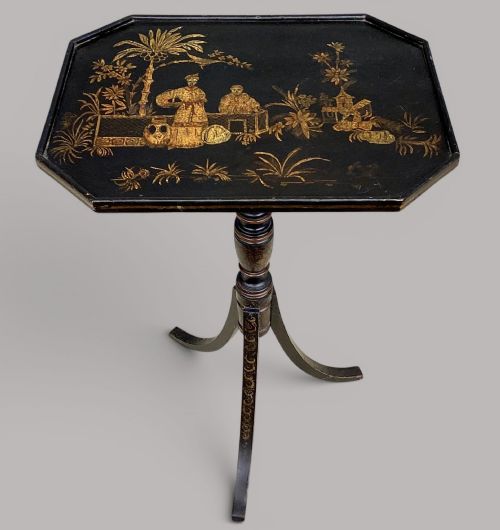
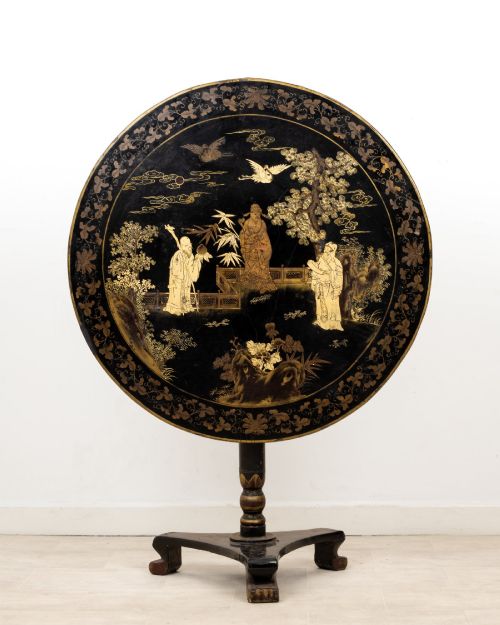
The aesthetic merges European furniture forms with decorative motifs inspired by East Asian art, creating surfaces dominated by black or ebonised lacquer embellished with gold leaf and red paint. Examples include tilt-top tables supported on tripartite bases, multi-tiered lamp tables, and papier-mâché tray tables resting on folding stands.
Origins stretch from English Sheraton and Regency workshops to French interpretations and Chinese export production, uniting varied periods under distinct decorative schemes. Buyers most frequently meet nineteenth-century examples and Regency pieces alongside Edwardian revivals and items dated around nineteen ten.
How they were made
Construction relies primarily on wood, lacquered wood, and papier-mâché, providing stable foundations for intricate surface decoration. Artisans applied layers of lacquer to wooden carcases or moulded paper pulp into rigid tray forms before building up the decorative schemes.
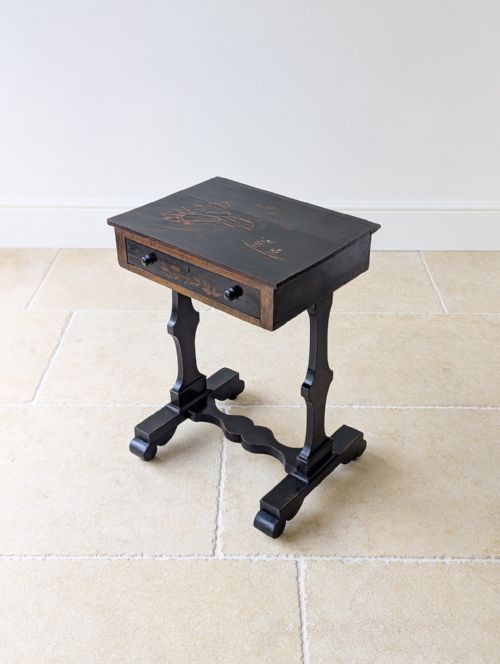
Visual richness is achieved through gold leaf, parcel-gilt detailing, and hand-applied paint, often set against black or dark grounds. Brass fittings occasionally appear on work tables and sewing tables to accommodate internal compartments and hinged lids.
Materials range from lacquer, wood, and papier-mâché to gold leaf, brass, and hand-applied paint.
What varies in quality
The refinement of the painted and gilt decoration separates standard production from finer examples, with superior pieces displaying crisp detail in figures and landscapes across the lacquer surface. The depth and smoothness of the lacquer finish itself indicate the labour invested by the maker.
Structural integrity and the retention of original components, such as tripartite bases, tilt mechanisms, and nesting configurations, dictate the standing of individual tables. The harmony between the painted top and its supporting stand remains a key indicator of original composition.
The Gilt Chinoiserie Occasional Tables Glossary
- Chinoiserie
- European artistic style reflecting Chinese and East Asian motifs, characterised by painted landscapes, pavilions, and figures. This decoration defines the surface aesthetic of every table listed.
- Occasional table
- Small, movable table designed for specific, intermittent uses such as serving wine, holding lamps, or displaying objects. The category includes wine tables, side tables, and lamp tables.
- Nest of tables
- Set of graduated tables designed to fit neatly beneath one another when not in use. They appear frequently in nineteenth-century and Edwardian listings.
- Tilt top
- Table top mounted on a hinge mechanism that allows it to pivot into a vertical position. This design enabled tables to stand flat against walls to save space.
- Papier-mâché
- Composite material made from paper pulp mixed with binders, pressed into moulds, and dried to form rigid surfaces. It provided a smooth base for lacquer and paint on trays and tables.
- Parcel-gilt
- Partial application of gold leaf or gilt paint to highlight specific decorative elements against a contrasting ground. It accents the borders and motifs of black lacquer surfaces.
Gilt Chinoiserie Occasional Tables: Frequently Asked Questions
How do I use a nest of tables?
These sets of four tables slide apart to provide extra surface space for drinks or books around a room. When entertaining finishes, they stack neatly back into a single footprint.
They function well beside sofas or armchairs where floor space is limited. The graduated sizes allow flexibility depending on how many surfaces are needed at once.
Where should I place a tilt-top table?
Tilt-top tables suit corners or empty wall spaces where their decorated surfaces can be admired in the vertical position. When pivoted flat, they serve as occasional tables for lamps or decorative objects.
Positioning them away from direct heat sources protects the lacquer and wood from warping. Their compact size makes them adaptable to both large drawing rooms and smaller studies.
What is a work table used for?
Work tables and sewing tables were originally designed to hold needlework, threads, and small crafting tools within integrated compartments or under-boxes. Today, they serve as bedside tables or compact side surfaces with hidden storage.
Their hinged lids and internal sections offer practical organisation for small household items. They combine decorative lacquerwork with functional enclosed space.
How do I tell Regency tables apart from Edwardian ones?
Regency tables, dating from the early nineteenth century, typically feature ebonised wood, sabre legs, or robust tripartite bases with refined parcel-gilt Chinoiserie. Edwardian interpretations, appearing around nineteen ten, often utilise lighter construction and varied nest configurations.
Examining the underlying timber, construction joints, and the style of the painted decoration helps distinguish between the original period and later revivals. Both periods embrace the black lacquer and gold aesthetic but execute the forms differently.