



Vintage Stacking Side Tables
Vintage stacking side tables offer versatile multi-tier surfaces that slide together neatly when floor space is at a premium.
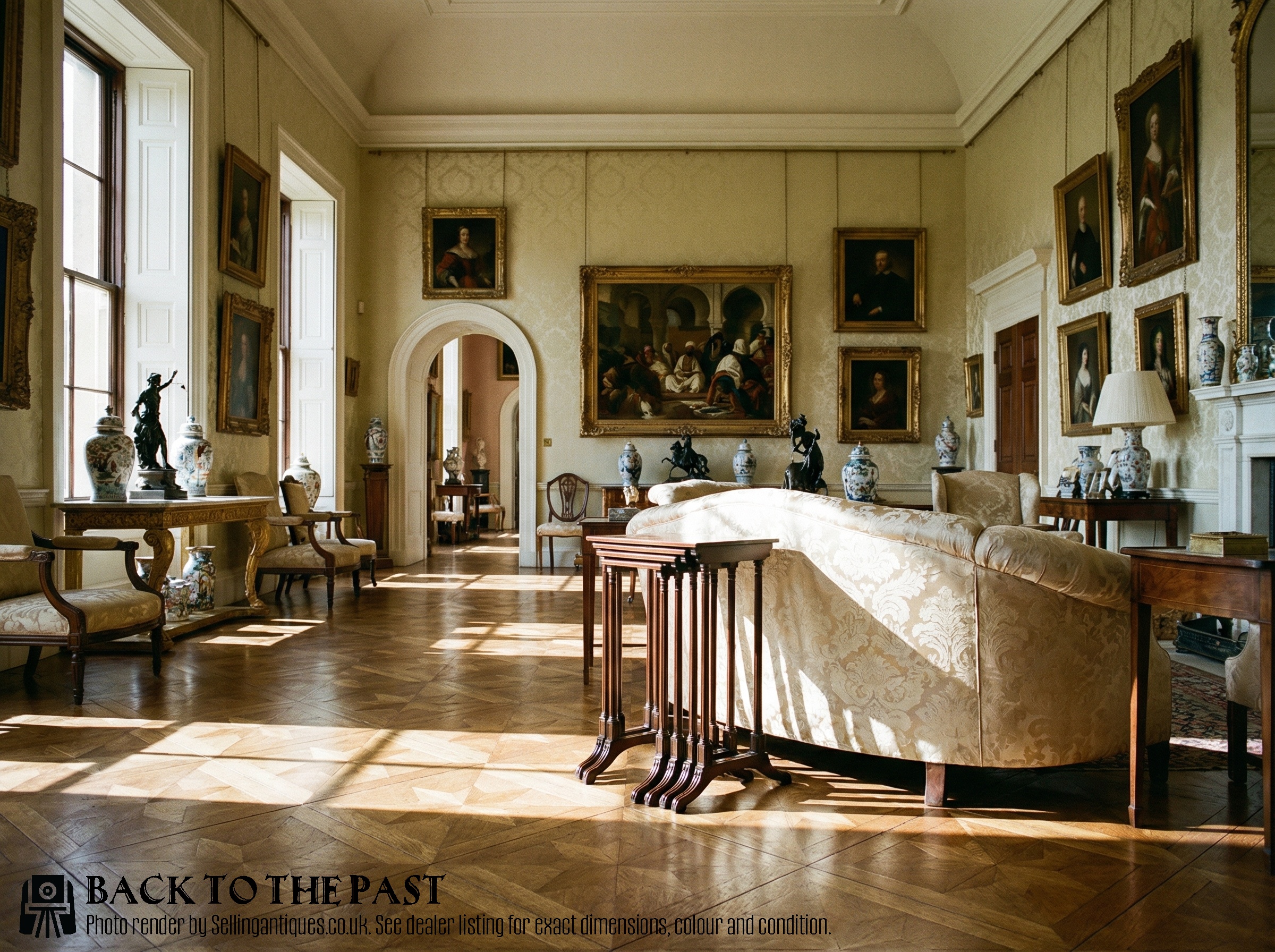
Vintage Stacking Side Tables
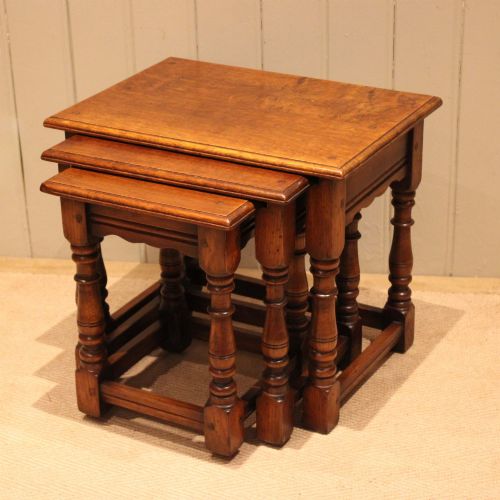
Vintage stacking side tables, also known as nests of tables, provide graduated tiers that slide smoothly beneath one another. Buyers search for these pieces to gain multiple occasional surfaces without cluttering a room.
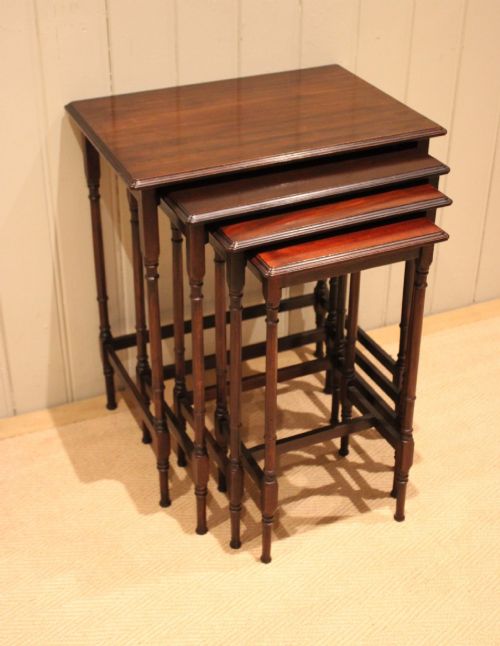
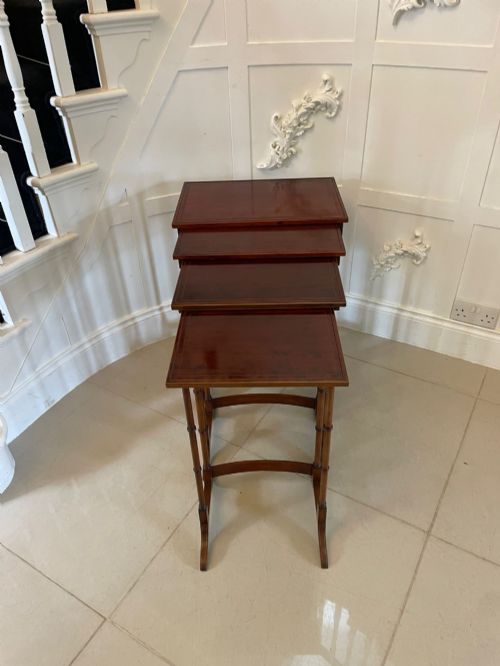
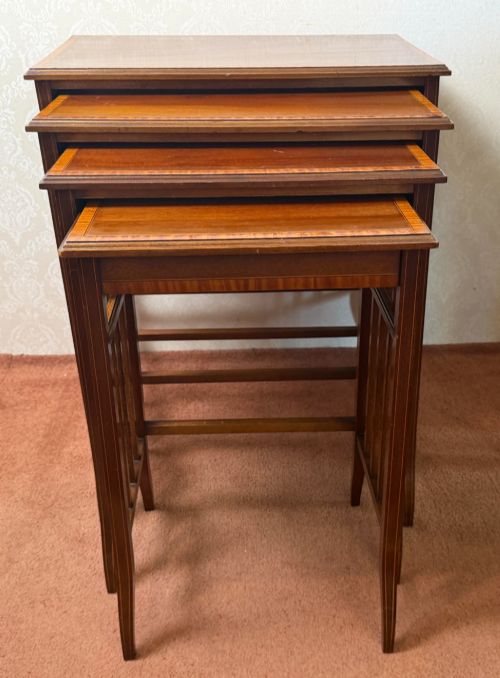
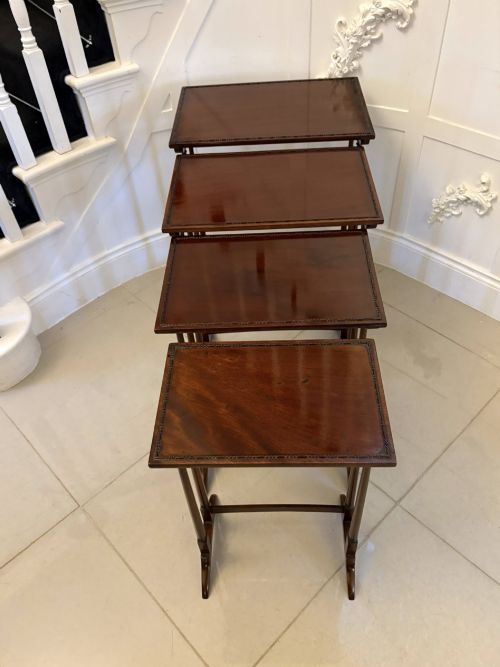
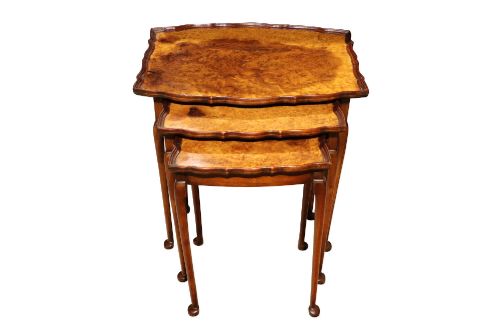
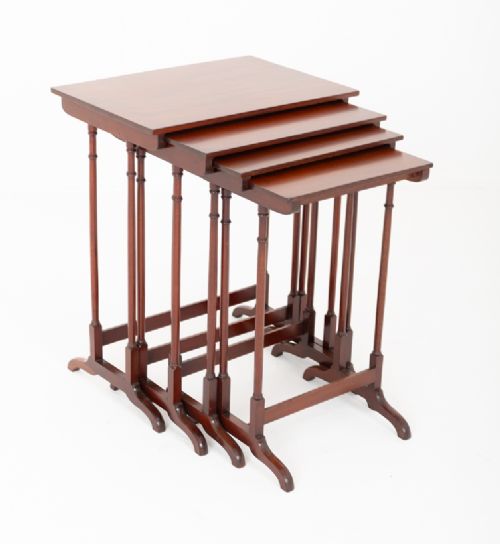
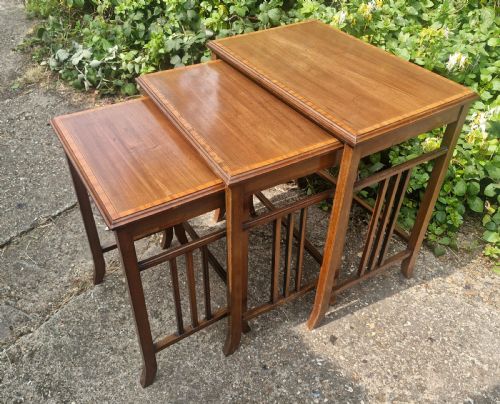
Edwardian mahogany examples with inlaid details dominate the selection, alongside sets in walnut, oak, and rosewood. Forms range from simple three-table sets to larger quartetto arrangements of four or five pieces.
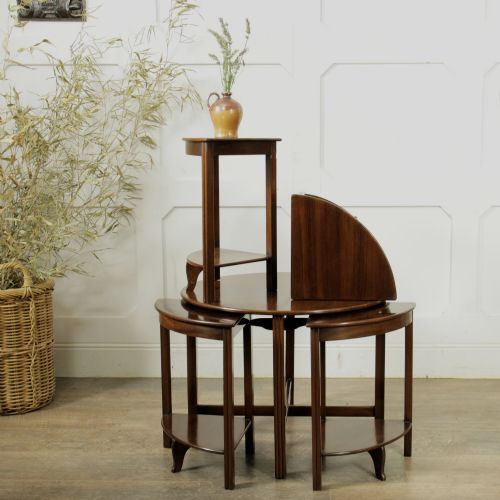
Origins stretch from English workshops to French studios and Indian makers, incorporating styles from Art Deco and Chinoiserie to Regency Revival. The primary form remains a set of graduated surfaces designed to stack flush.
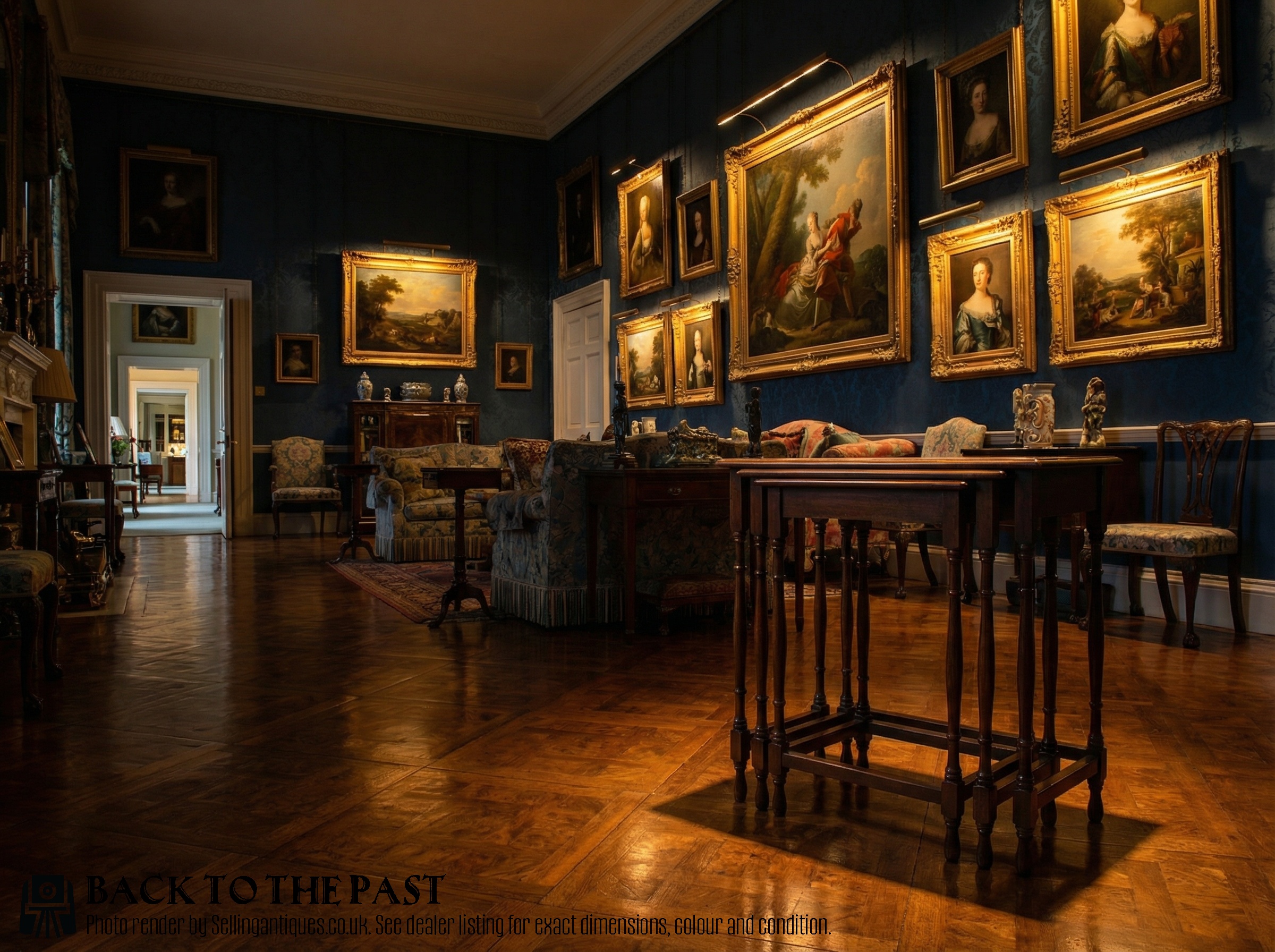
How they were made
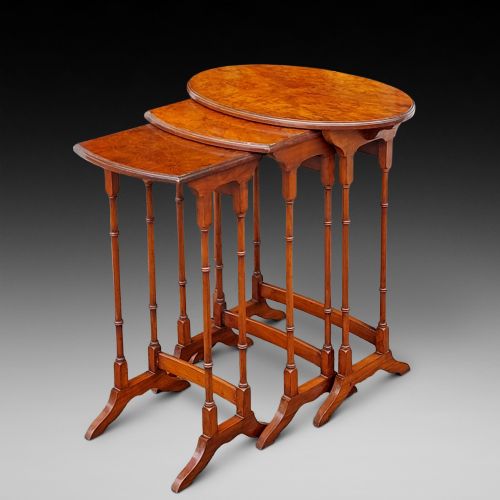
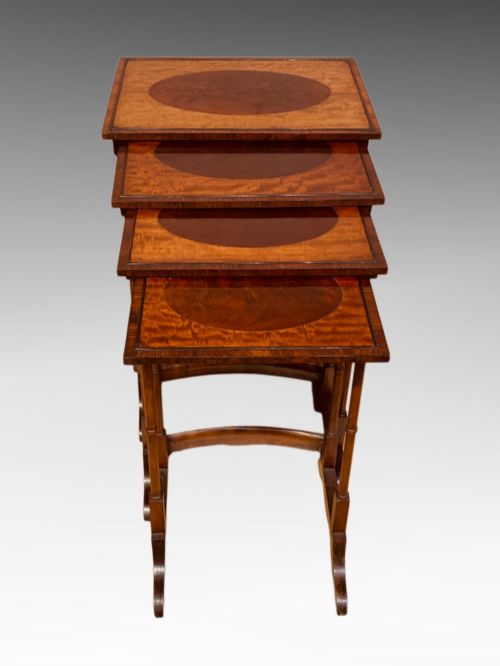
Cabinetmakers utilised dense timbers such as mahogany, walnut, rosewood, and oak, often applying burr veneers or satinwood crossbanding to the main surfaces. Frames rely on solid joinery to support the weight of graduated tiers sliding repeatedly into place.
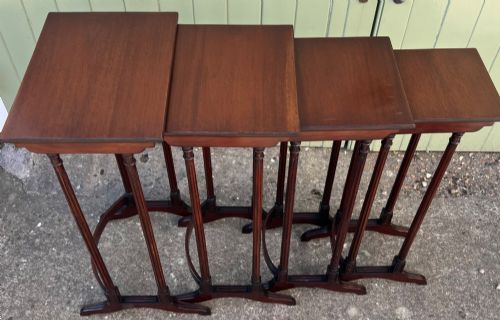
Decorative techniques include intricate floral marquetry, brass inlay, embossed leather inserts, and hand-painted Chinoiserie lacquer. Legs vary from square tapered uprights to carved supports, reflecting the prevailing style of each period.
Vintage Stacking Side Tables Retail Price Guide 2026
Typical asking prices for vintage stacking side tables among the pieces listed under this phrase on Sellingantiques today, from the lower quarter to the upper quarter. They describe what is for sale here now, not the wider market.
What varies in quality
The refinement of the timber selection dictates the overall calibre, particularly where matched burr walnut or figured mahogany veneer defines the top surface. Superior sets display meticulous grain continuity across the graduated tiers when viewed together.
The precision of the framework determines how smoothly each table slides into its neighbour without sticking or wobbling. Finer examples integrate delicate inlay work, hand-carved details, or specialised materials like brass and embossed leather without structural bulk.
Émile Gallé·Heal's
The Vintage Stacking Side Tables Glossary
- Quartetto
- A set of four tables designed to nest together. This term frequently appears in Edwardian and nineteenth-century listings.
- Crossbanding
- A strip of veneer applied to the border of a tabletop with the grain running perpendicular to the centre. It creates a contrasting visual frame.
- Marquetry
- Decorative patterns formed by fitting together small pieces of coloured wood veneer. Artisans use this technique to render floral or geometric motifs.
- Chinoiserie
- European imitation of traditional Chinese artistic styles, often featuring lacquered finishes and gilded motifs. It appears on selected twentieth-century tables.
- Satinwood
- A durable, yellowish tropical timber prized for its lustrous sheen and pale hue. Craftsmen use it for fine stringing and inlay accents.
Vintage Stacking Side Tables: Frequently Asked Questions
What is a quartetto nest?
A quartetto nest consists of four tables that graduate in size to slide neatly beneath the largest one. This arrangement was particularly popular during the Edwardian period for entertaining.
Each smaller table fits precisely into the frame of the next size up, allowing four distinct surfaces to occupy the floor space of just one small table.
How do I date these tables?
Dating relies on timber choices, leg profiles, and decorative motifs characteristic of periods like the Edwardian era, Art Deco, or the nineteenth century. Inlaid satinwood and tapering legs often point to Edwardian production.
Art Deco sets show cleaner geometric lines and exotic woods like Indian rosewood, while earlier nineteenth-century examples tend towards heavier proportions in mahogany or oak.
Are these tables sturdy enough for daily use?
Most vintage nests utilise solid hardwood frames designed to withstand regular placement of cups, books, and lamps. However, the smaller tables are necessarily lightweight to allow easy lifting and stacking.
Careful handling ensures the joints remain tight, particularly on sets featuring delicate legs or intricate crossbanding.
Where should I place a nest of tables?
These pieces excel beside sofas or armchairs where guests require extra surface area for drinks or books. When not in use, the stacked tables tuck against a wall or in a corner to preserve floor space.
They also function well as individual bedside stands or paired lamp tables when unstacked around a room.