




English Nest Tables
English antique nest tables offer compact practicality, slipping together neatly when floor space matters and separating easily for tea.
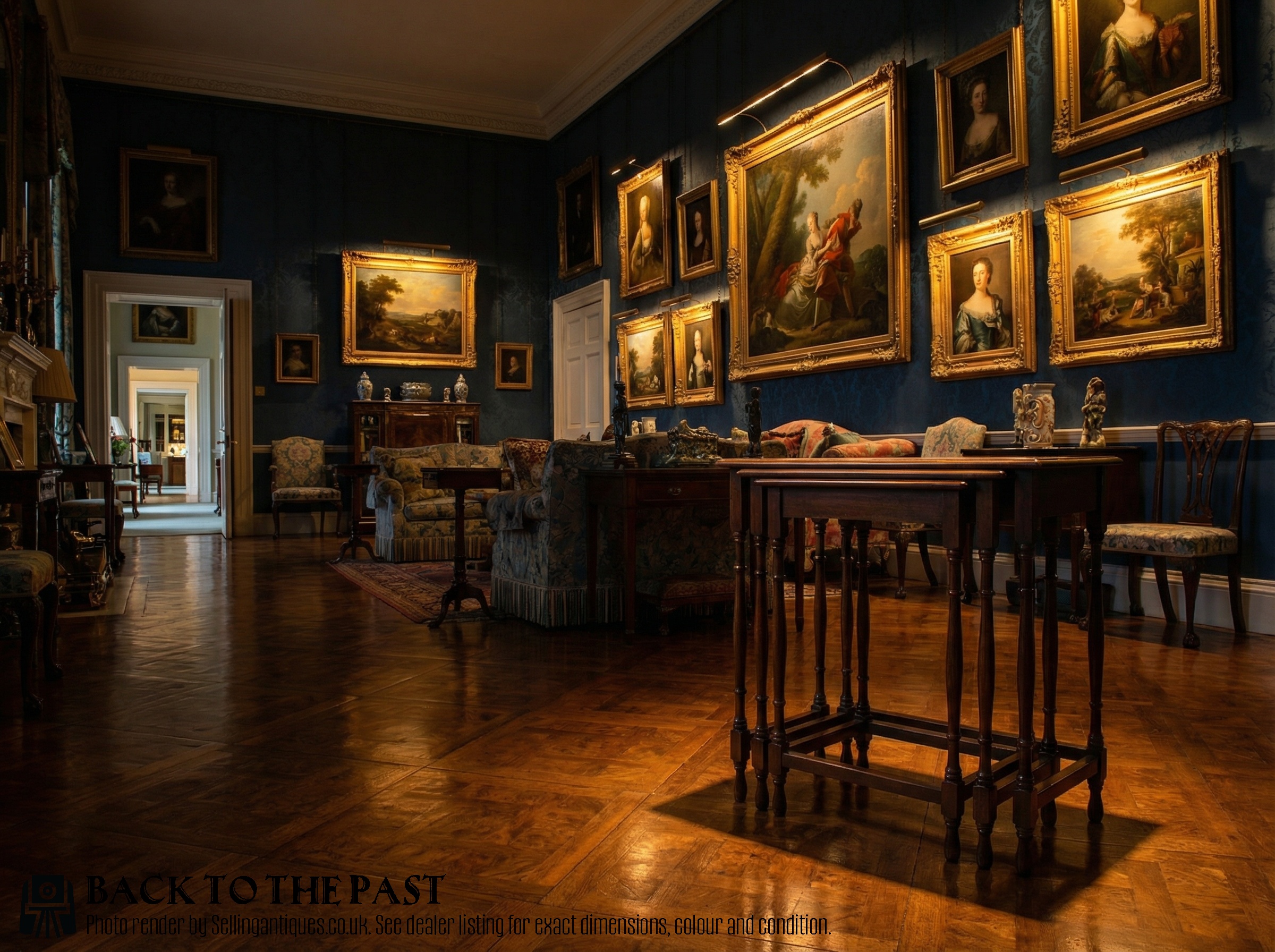
English Nest Tables
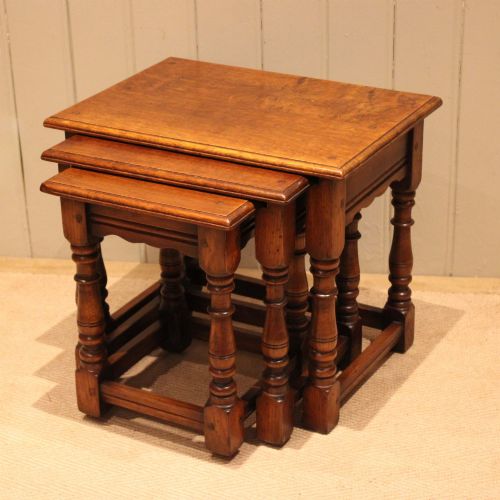
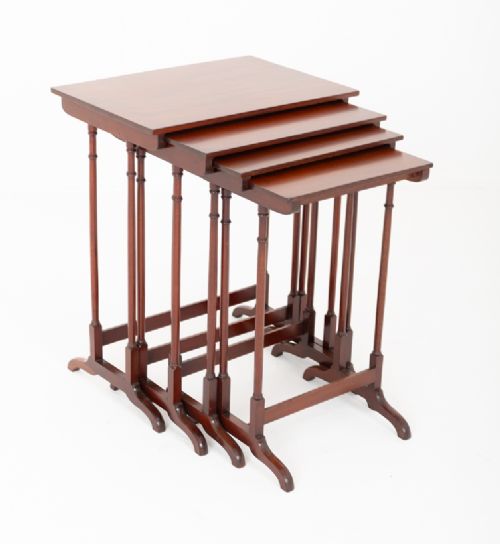
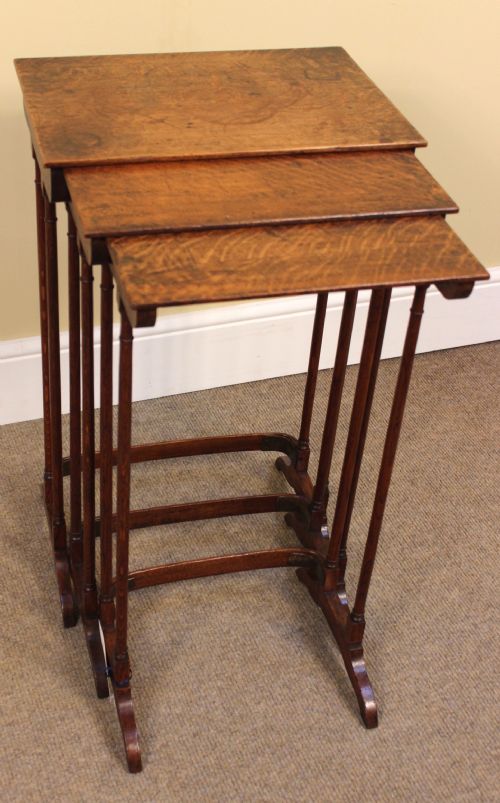
English antique nest tables comprise sets of graduating side or occasional tables designed to fit one beneath another. When searching for english antique nest tables, buyers encounter formats ranging from sets of three to quartetto sets of four tables.
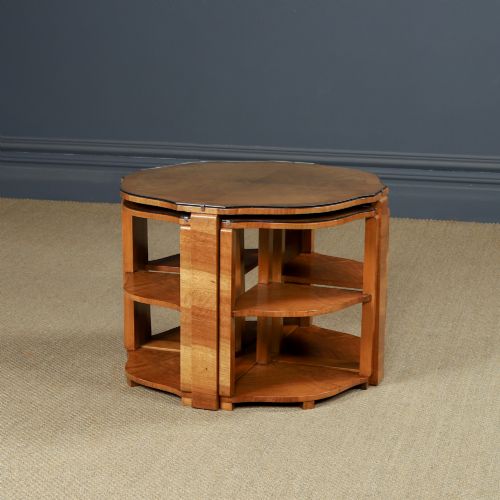
The pieces appearing here span the Edwardian period, the Regency era, and the early twentieth century including the nineteen-twenties and nineteen-thirties. Formats include round top coffee tables, occasional tables, and occasional lamp tables utilised around sitting rooms.
Edwardian examples frequently employ mahogany or oak, often featuring leather uppers or inlaid details. Regency rosewood sets and later walnut iterations also appear across the selection.
Materials and Construction
Cabinetmakers utilised solid timbers and veneers including mahogany, oak, walnut, and rosewood. Secondary woods and boxwood stringing frequently support the primary surfaces, while specific Edwardian variants incorporate leather upper panels.
Turning and joinery techniques secure the graduated legs and frames so each smaller table slides smoothly into the recess of the next. Glass inserts and carved burr walnut surfaces appear on select twentieth-century variants.
Some Edwardian tables came fitted with leather tops so owners could write short notes without fetching a desk.
Defining Quality
Quality rests upon the selection of timber veneers and the precision of the graduating frame tolerances. Finer sets display carefully matched mahogany grain, flame mahogany patterns, or rosewood figures across all tiers.
Structural integrity in the joints and the smooth action of nesting separate standard production pieces from finer cabinetwork. Detail work such as boxwood inlay and leather upper surfaces elevate the finish of individual sets.
Waring and Gillow
The English Nest Tables Glossary
- Quartetto
- A matched set of four nesting tables originating from the Regency period or later revivals. These sets traditionally graduate in size to slide completely under the largest table.
- Occasional table
- A small, movable table intended for temporary use around a room. These pieces function as lamp, wine, or coffee tables within sitting spaces.
- Boxwood
- A dense, pale wood utilised for stringing and fine inlay lines on furniture surfaces. Craftsmen employ it to create contrasting borders on mahogany and walnut tops.
- Flame mahogany
- A decorative veneer cut from timber fork junctions to produce a flame-like grain pattern. This figuring appears frequently on Edwardian occasional surfaces.
English Nest Tables: Frequently Asked Questions
What is a quartetto table set?
A quartetto set consists of four graduating tables designed to nest together. These sets date from the Regency era through Edwardian revivals.
Each smaller table fits completely beneath the frame of the next larger one, saving floor space when not in use.
How were nest tables used originally?
Victorians and Edwardians utilised these tables for serving tea, holding lamps, or placing books near seating. Servants moved the individual tiers around the room as guests required.
When tea concluded, the tables stacked back into a single compact footprint.
What woods appear most frequently?
Mahogany and oak dominate the selection across Edwardian and nineteenth-century examples. Walnut and rosewood also feature prominently in finer sets.
Specific pieces incorporate decorative veneers like flame mahogany or burr walnut.
How do I distinguish Edwardian sets from Regency originals?
Regency pieces date from the early nineteenth century, frequently utilising rosewood and classical proportions. Edwardian pieces date from the early twentieth century and often show revival styles.
Construction details and secondary timbers help clarify the manufacturing era of each set.