




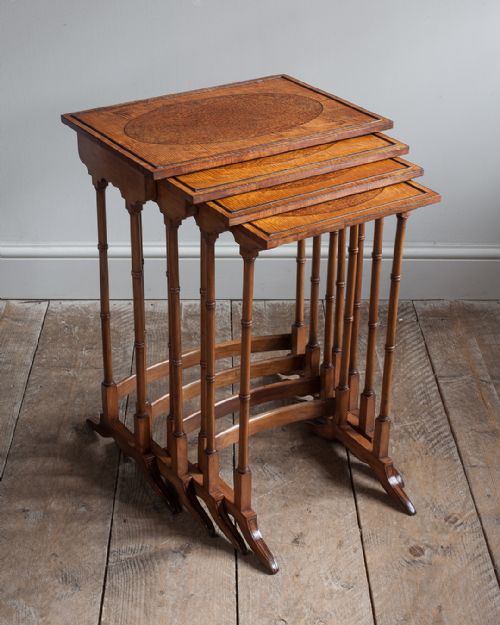


Stacked Coffee Tables
Stacked coffee tables antique pieces deliver multiple tier utility in compact designs, offering graduated surfaces that slide neatly away when floor space matters.
Stacked Coffee Tables
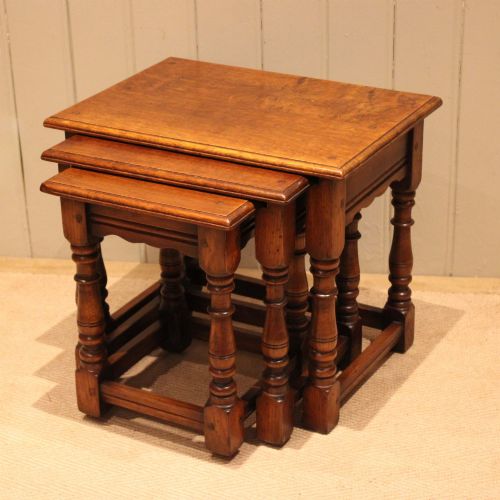
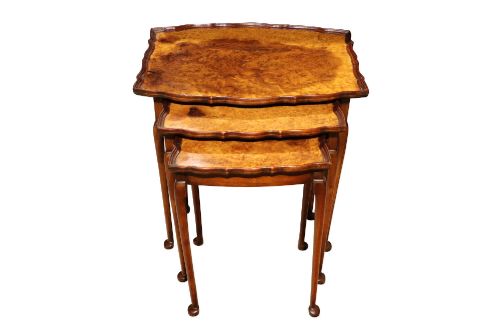
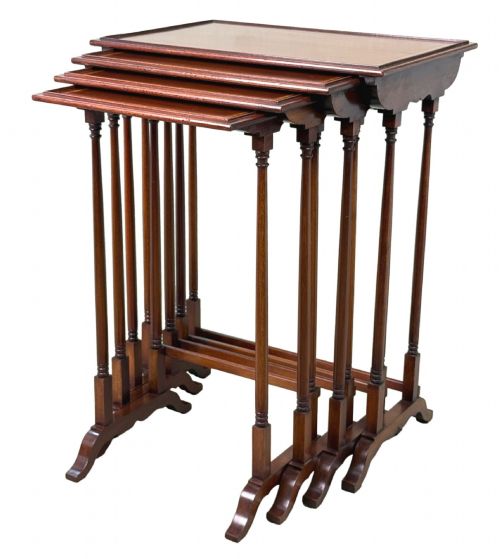
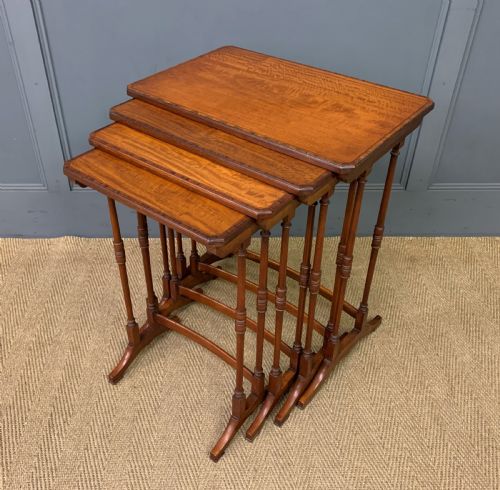
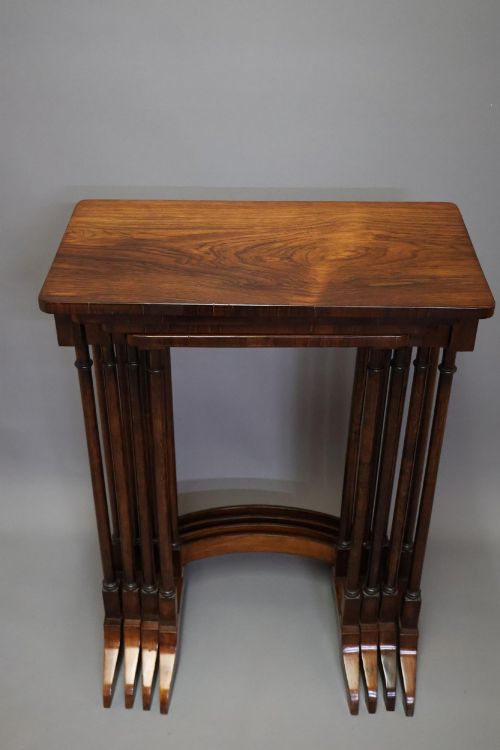
Stacked coffee tables antique objects primarily appear as nests of tables, taking the form of sets containing three, four or five graduated pieces designed to slide underneath one another. Buyers seeking these items encounter configurations originating across the nineteenth century, the Edwardian era, and through the 1920s and 1930s.
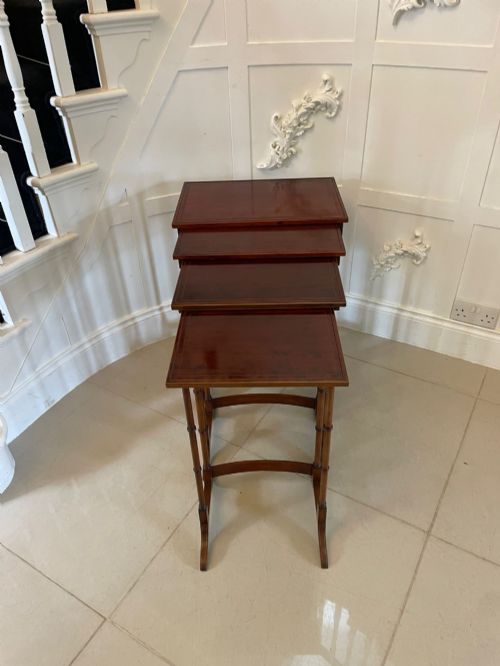
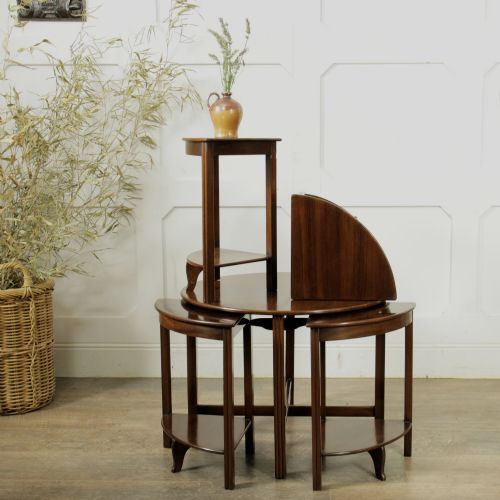
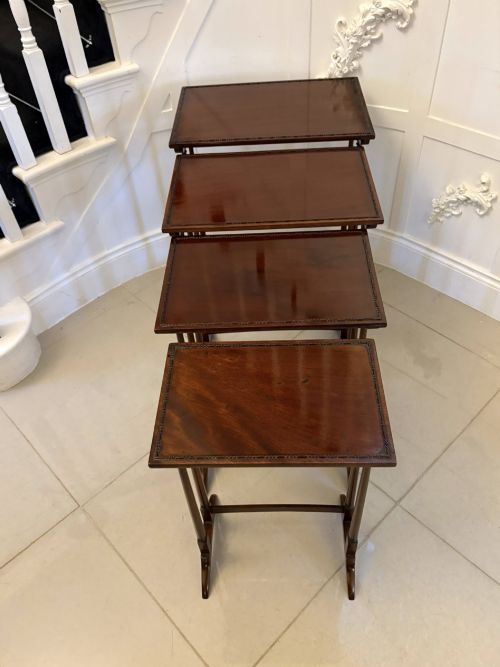
The Edwardian period and the nineteenth century dominate the available selection, frequently presenting as mahogany quartetto sets alongside walnut, satinwood, and oak examples. Styles range from English Country and Regency adaptations to Chinoiserie and Chinese Oriental designs, incorporating circular, oval, and shaped tops.
Materials and Construction
Cabinet makers utilised dense hardwoods such as mahogany, walnut, rosewood, and oak, often pairing structural timbers with contrasting veneers like satinwood for decorative inlay work. Certain pieces incorporate specialised finishes, utilising embossed leather top surfaces, lacquered panels, or hand-painted Chinoiserie decoration.
The construction relies on graduated sizing that allows smaller tables to clear the aprons and legs of the next largest tier. Joinery techniques secure slender legs, occasionally united by stretchers, while maintaining the lightweight portability essential for occasional stacking.
Listings demonstrate that mahogany remains the most prevalent primary timber, accompanied by walnut, satinwood, oak, and rosewood.
Defining Quality
The calibre of timber selection dictates visual merit, separating plain utility pieces from examples featuring figured mahogany, burr walnut, or finely figured satinwood. The crispness of inlay work, stringing, and applied carving distinguishes standard workshop production from finer cabinet making.
Structural integrity across all tiers indicates superior craftsmanship, particularly in the precision of the slide mechanism where tables fit together without binding or excessive clearance. Well-executed sets maintain stability and uniform alignment whether deployed across a room or stacked in a single column.
Heal's
The Stacked Coffee Tables Glossary
- Quartetto
- A matched set of four stacking tables designed to nest inside one another. This term appears frequently in nineteenth century and Edwardian cataloguing.
- Inlay
- A decorative technique where contrasting woods or materials are inserted into recessed cavities on the surface. Satinwood and ebony frequently provide contrast against a mahogany ground.
- Chinoiserie
- European imitation of Chinese and East Asian artistic traditions. It often involves painted or lacquered decoration depicting figures, landscapes, or floral motifs.
- Parquetry
- Geometric mosaic woodwork formed by small veneer pieces fitted together. French walnut examples regularly employ this technique on the primary surface.
- Occasional table
- A small, light table intended for intermittent use around a room rather than a permanent stationary position.
Stacked Coffee Tables: Frequently Asked Questions
What is a quartetto nest of tables?
A quartetto nest comprises exactly four tables proportioned to slide sequentially beneath the largest primary surface. Makers designed them for versatile entertaining.
During the Victorian and Edwardian periods, these sets functioned as portable tea or side tables that occupied minimal floor space when stored.
How do I identify an Edwardian nest?
Edwardian nests typically display lighter timbers like satinwood inlay, slender tapered legs, and refined proportions characteristic of the early twentieth century.
Cabinet makers of this era frequently drew inspiration from earlier Regency and Sheraton designs while maintaining practical stacking dimensions.
Were these tables used as coffee tables originally?
Historical interiors utilised these tiers primarily as occasional, tea, or lamp tables rather than low central coffee tables. Lower heights emerged in later decades.
The graduated scaling allowed occupants to pull individual tiers out for drinks or needlework before returning them to a stacked column.
What timbers were used most often?
Mahogany served as the predominant timber across nineteenth century and Edwardian workshops, prized for stability and rich grain. Walnut, oak, and satinwood appear regularly.
Exotic hardwoods and decorative veneers like burr walnut or rosewood distinguished more ambitious commissions intended for formal reception rooms.