


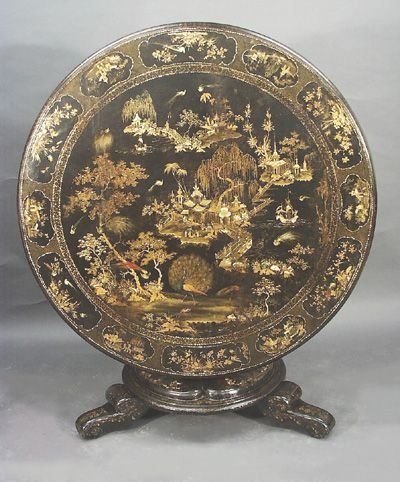
Gilded Black Accent Table
These gilded black accent table pieces bring dark lacquer and bright leaf together to anchor a room with real presence.
Gilded Black Accent Table
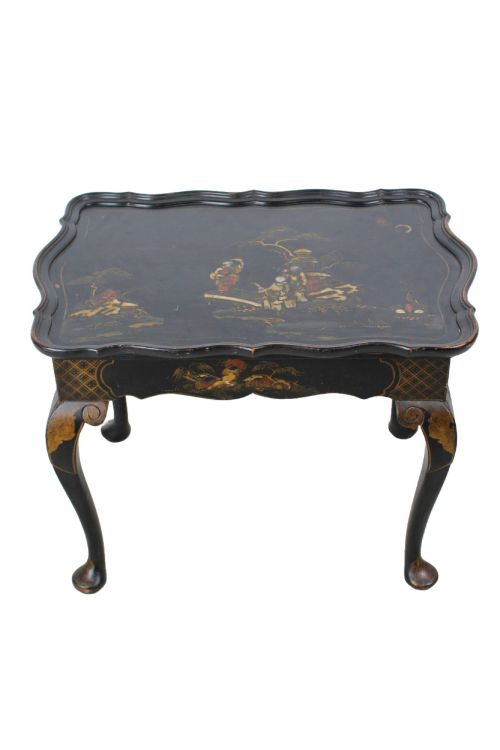
A gilded black accent table combines dark lacquer or ebonised wood with gold leaf highlights to create a striking surface for a room. Buyers seek these pieces for their ability to introduce strong contrast and historic character into an interior.
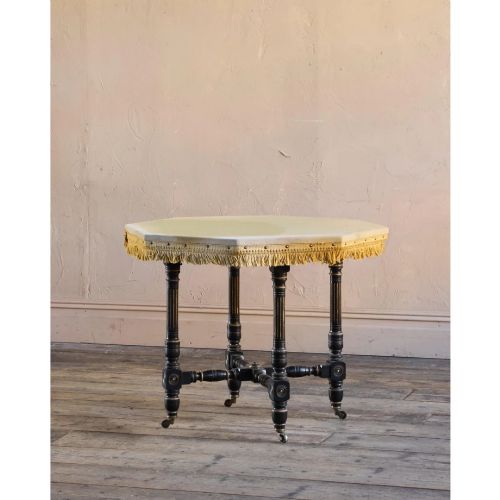
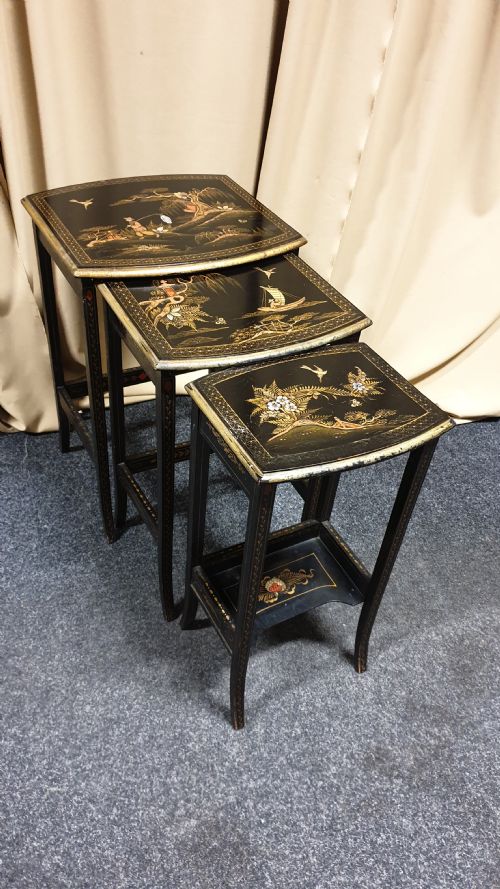
The pieces on this page span the eighteenth through the twentieth centuries, taking forms such as occasional tables, nests of tables, centre tables, coffee tables, side tables, and table lamps. Chinoiserie and Aesthetic Movement interpretations appear frequently alongside Victorian, Edwardian, and Venetian Rococo examples.
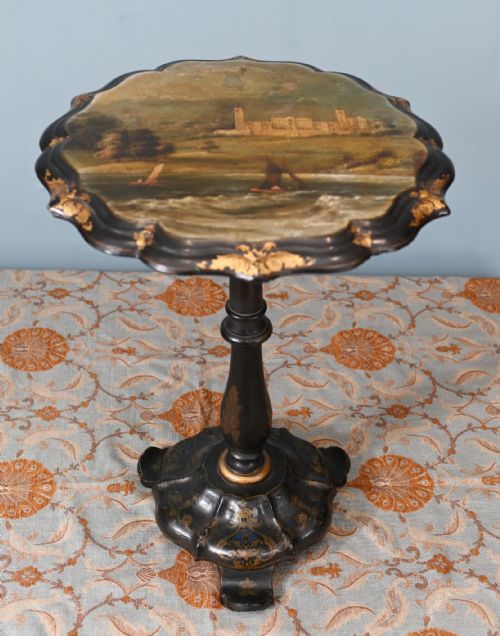
Makers and workshops of the nineteenth century utilised japanning and lacquer techniques to emulate Asian imports, producing tray tops, tilt-top tables, and nested sets. The selection ranges from compact lamp bases to substantial centre tables linked to historic houses.
Materials and construction
Makers relied on wood, including ebonised timber, finished with black lacquer and applied gold leaf or gilt. Hand-painted ornamentation frequently defines the surface, particularly on Chinoiserie pieces.
Secondary elements involve brass hardware, fabric details, and boulle-work inlays that punctuate the dark surfaces. Tables range from multi-tiered nest structures to pedestal designs and heavy centre tables.
Queen Victoria's Osbourne House makes an appearance in the archive of past pieces, linking domestic history directly to the painted side tables of the era.
Assessing quality and execution
Depth of finish and restraint in gilding separate finer examples from simpler production. Hand-painted details show varying degrees of precision, from careful figural work to simpler motifs.
Structural integrity of the joints, stability of nests, and the preservation of original lacquer surfaces govern desirability. The handling of the ebonised or lacquered ground dictates the visual weight of each piece.
Hindley and Sons
The Gilded Black Accent Table Glossary
- Chinoiserie
- European decorative style reflecting Chinese artistic influences. It employs motifs of figures, pagodas, and landscapes rendered in gold on black lacquer.
- Ebonised wood
- Timber treated to resemble ebony. Makers used this dark finish as a base for gilt highlights in nineteenth-century furniture.
- Japanning
- European imitation of Japanese and Chinese lacquerwork. The technique involved layered varnishes cured and polished by hand.
- Boulle-work
- Inlay technique combining tortoiseshell and brass. It appears on select nineteenth-century tables alongside lacquer surfaces.
- Tilt-top table
- Table with a top that pivots on a central pillar. This form allowed convenient storage against a wall when not in use.
Gilded Black Accent Table: Frequently Asked Questions
What is a gilded black accent table?
These pieces comprise small tables and lamps finished in black lacquer or ebonised wood with gold leaf highlights. They serve functional and decorative roles in traditional and eclectic interiors.
Origins stretch from the eighteenth to the twentieth century, encompassing styles such as Chinoiserie, Aesthetic Movement, and Venetian Rococo.
How do I style a black lacquered table?
The dark finish and reflective gilt details allow these tables to stand out against neutral walls or anchor busier colour schemes. They function effectively beside seating or as lamp tables.
Pairing them with softer textures or warm lighting balances the deep visual weight of the black lacquer.
How do I date an antique black lacquer table?
Dating relies on construction methods, wood types, and stylistic indicators such as Edwardian restraint or Victorian ornamentation. Examining the wear on the lacquer and gilding also aids assessment.
Pieces range from eighteenth-century Spanish lamps to Edwardian and Victorian multi-tiered tables.