


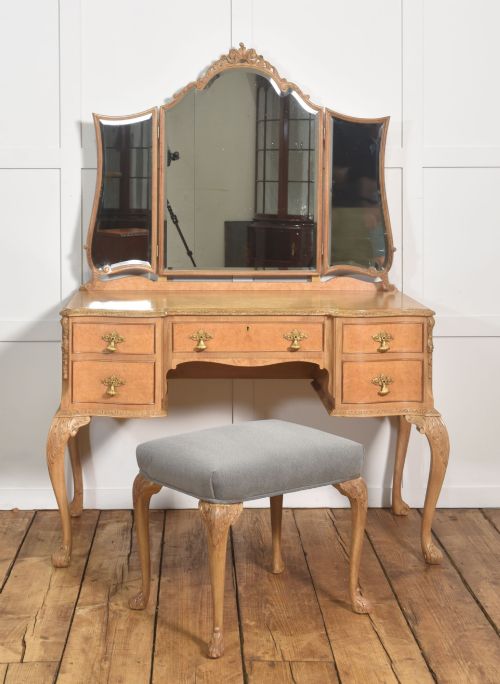
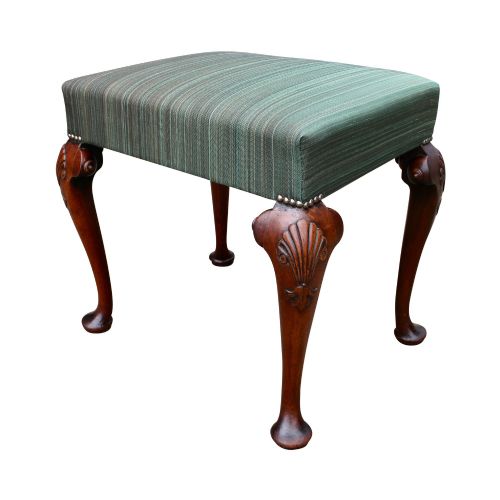
Queen Anne Cabriole Table
These pieces of queen anne cabriole table bring fluent curves and rich cabinet timbers into a room, shaped for both writing and display.
Queen Anne Cabriole Table
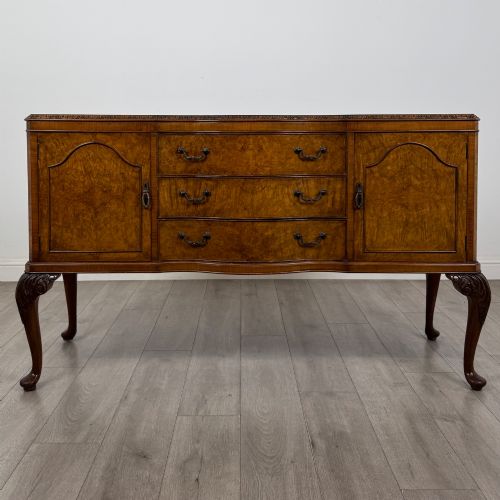
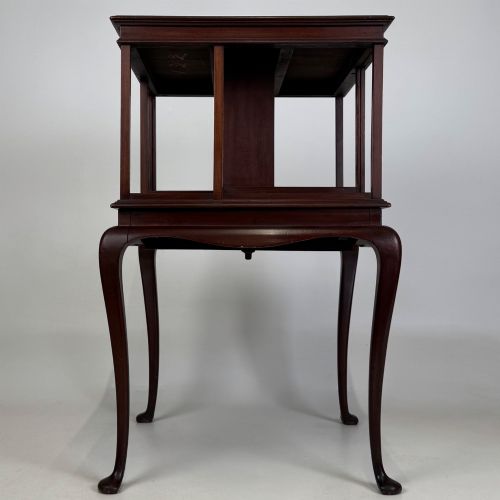
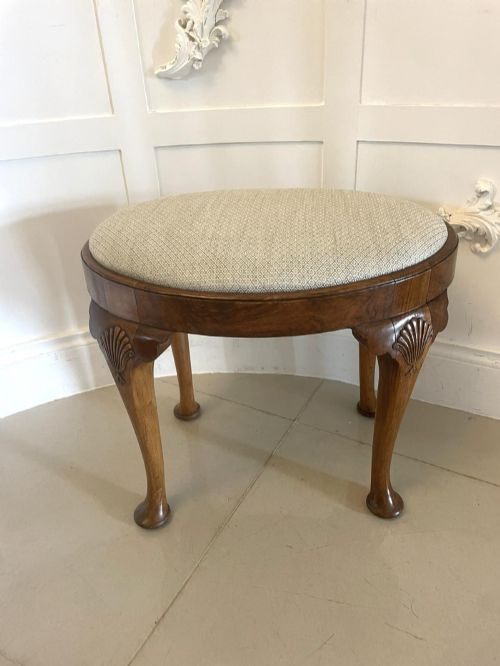
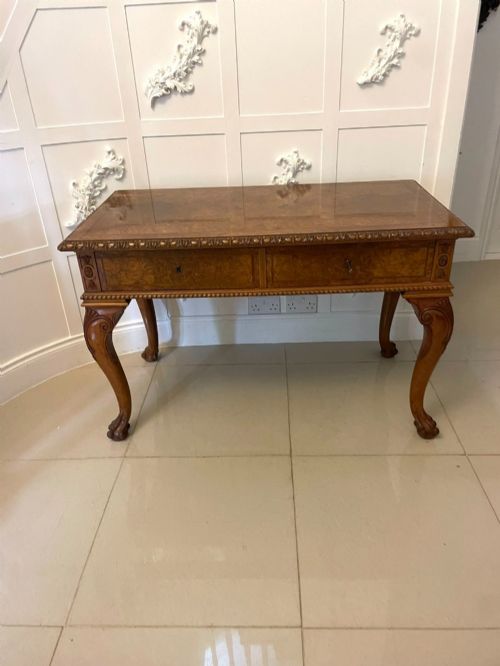
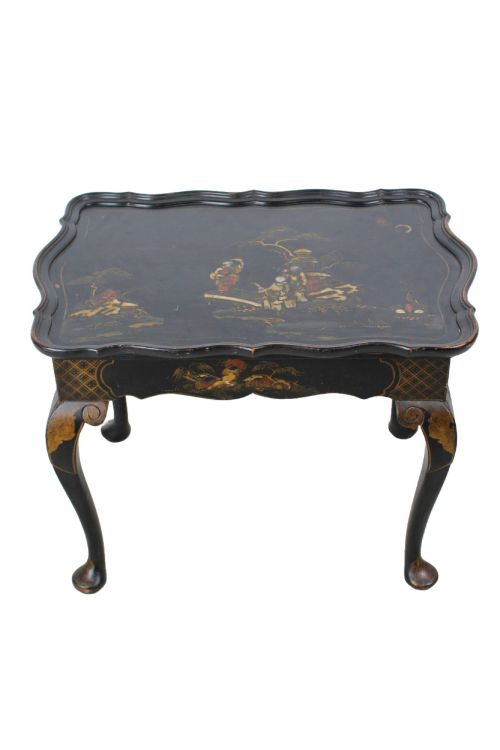
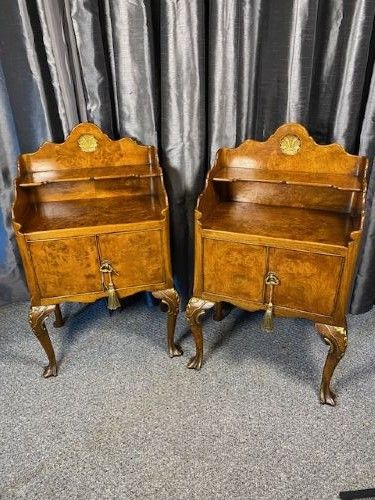
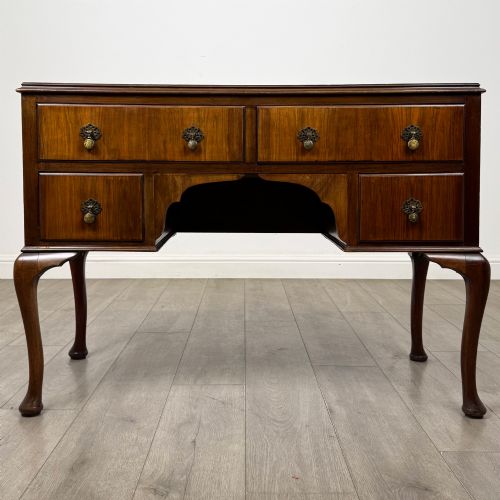
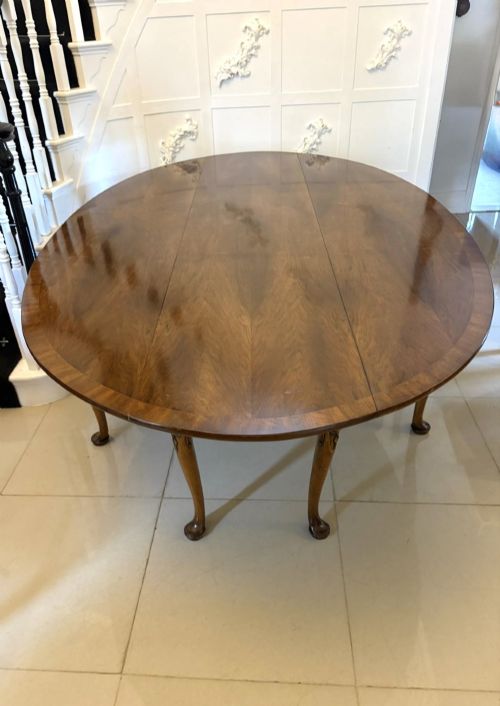
A queen anne cabriole table centres on the distinctive outward-curving leg that tapers to a pad or foot, defining forms from side tables to writing desks. These pieces span original 18th-century examples alongside later revivals from the Edwardian era and the early twentieth century.
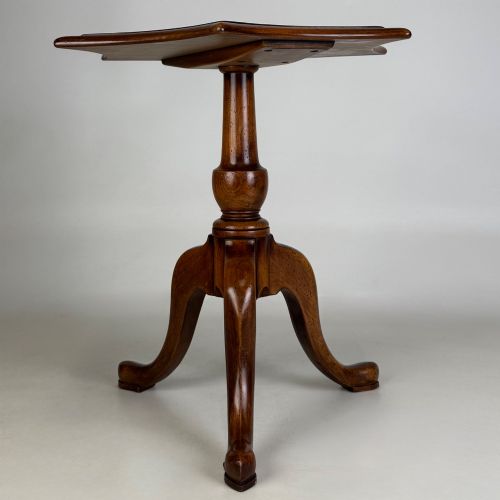
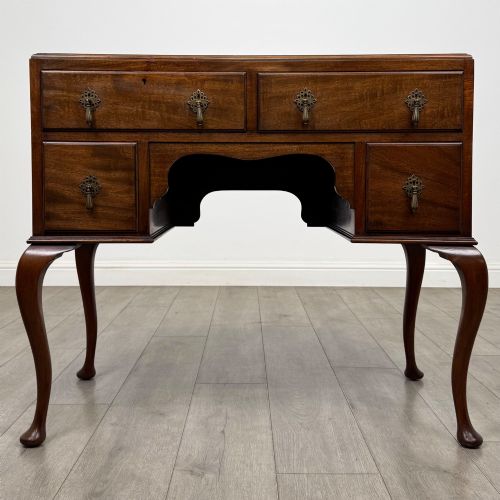
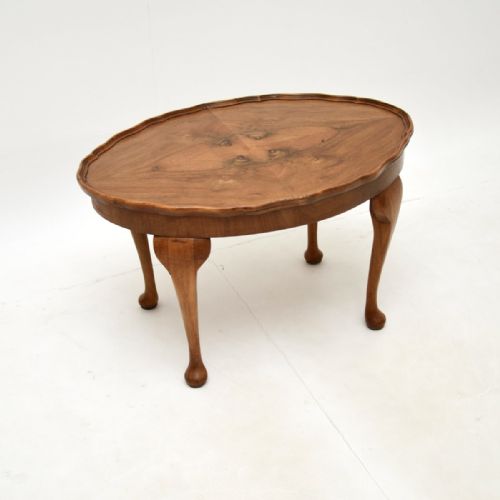
The form stretches across lowboys, console tables, coffee tables, and desks, reflecting how cabinetmakers adapted the graceful silhouette for diverse domestic uses over centuries. Walnut and oak dominate the early periods, while later revivals often employ burr walnut veneer to catch the light.
Buyers meet original Georgian and George I pieces alongside Edwardian revivals and 1920s interpretations that faithfully replicate the proportions of the earlier era. The aesthetic relies entirely on the fluid transition from knee to foot without heavy horizontal bracing.
How they were made
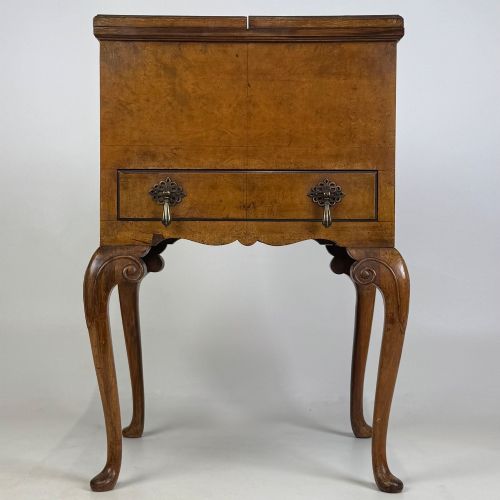
Cabinetmakers constructed these tables using solid oak or walnut for carcases and frames, frequently applying burr walnut veneer to tabletops and drawer fronts to create rich figured patterns. Secondary timbers such as oak lined the drawers, while brass handles and leather writing inserts completed the functional surfaces.
The signature cabriole leg was typically cut directly from solid timber rather than attached, requiring substantial stock to achieve the curving knee and tapering foot. Joinery relied on traditional mortise and tenon joints to withstand the outward thrust of the curved legs.
Listings span original 18th-century oak and Georgian pieces alongside 1920s burr walnut revivals and Edwardian Chinoiserie variations.
What varies in quality
Quality rests in the conviction of the carving and the selection of the timber, particularly where figured burr walnut veneer is matched across a top. Finer examples show crisp execution in the shoulders of the cabriole legs and careful timber selection that avoids jarring grain mismatches.
Proportion dictates success in these pieces, separating confident workshop production from stiff revivals. The graduation of the leg curve and the subtlety of the pad foot reveal the hand of a more accomplished maker.
Wylie & Lochhead Glasgow·Maple & Co
The Queen Anne Cabriole Table Glossary
- Cabriole leg
- A furniture leg that curves out at the knee and inward at the ankle, finishing in a pad or foot. This form mimics the natural shape of an animal's leg.
- Lowboy
- A small kneehole dressing table or side table with drawers, typically raised on tall cabriole legs. These pieces first appeared in the early 18th century.
- Burr walnut
- A highly figured wood grain taken from the wart-like growths on walnut trees. Cabinetmakers prized it for decorative veneered surfaces.
- Pie crust
- A carved, raised decorative moulding along the circular edge of a table top resembling pastry work. It is frequently found on occasional and coffee tables.
- Kneehole desk
- A compact desk featuring a central recessed space for the user's legs flanked by pedestals of drawers. They became popular during the early 18th century.
Queen Anne Cabriole Table: Frequently Asked Questions
How do I identify a true period piece?
Original pieces from the 18th century display hand-cut joinery, timber shrinkage appropriate to age, and wear patterns consistent with centuries of use. Revival pieces often show machine tooling or standardisation in the veneer matching.
Examining the underside and drawer linings reveals the construction methods and tool marks left by the original cabinetmaker.
Were these always used as desks?
The form served multiple domestic purposes including dressing, serving, and general writing depending on the height and configuration of drawers. Lowboys specifically functioned as dressing tables or side serving surfaces.
Later revival pieces frequently adapted the traditional frame heights to serve as coffee tables or modern writing desks.
How should I care for walnut veneer?
Walnut surfaces benefit from stable room humidity and protection from direct sunlight to prevent the timber and veneer from drying out. Regular dusting with a soft, dry cloth preserves the polished finish.
Occasional application of appropriate wax feeds the timber without building up a heavy, cloudy film.
What defines the cabriole shape?
The profile draws inspiration from classical animal forms, featuring a convex arch at the knee that flows into a concave sweep down to the foot. This design distributes weight without requiring stretcher rails between the legs.
Master cabinetmakers refined this silhouette to create a sense of lightness despite the solid timber construction.