


Lacquered Tray Top Table
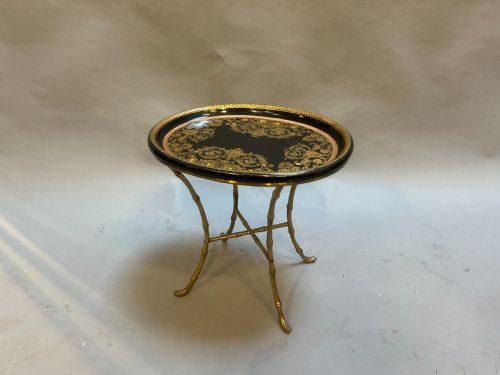
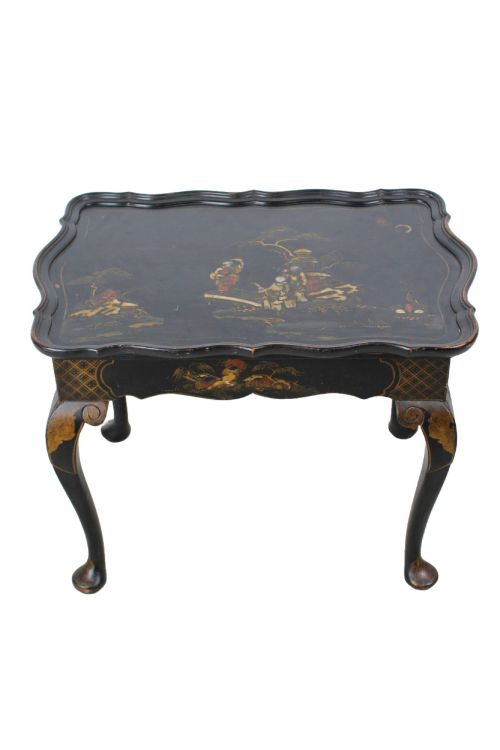
A lacquered tray top table brings hand-painted Chinoiserie and deep gloss finishes into a sitting room.
Lacquered Tray Top Table
When you search for a lacquered tray top table, you are looking at occasional tables, coffee tables, side tables, and tray tables designed with a removable or fixed surface. These pieces appear across several periods, including the Regency era, the Victorian period, and the Edwardian epoch.
The version you are most likely to meet on this page combines lacquered wood, papier-mâché, or ebonised timber with intricate hand-painted decoration. Many examples lean into Chinoiserie motifs, showcasing distinct regional interpretations from English workshops to Anglo-Indian cabinets.
Such items function effectively as coffee tables or low side tables in contemporary interiors, offering a portable serving surface atop a dedicated stand. The combination of a raised gallery edge and a decorated panel defines the form across all listed examples.
How they were made
Makers built these tables using papier-mâché, ebonised timber, walnut, and standard lacquered wood, often mounting the flat surfaces onto separate folding or fixed wooden stands. The primary structure relies on traditional joinery to support the substantial weight of dense papier-mâché or solid wood trays.
Surfaces received multiple coats of dark lacquer, finished with hand-painted details and occasional gilt highlights to create the characteristic reflective sheen. Tole metal surfaces also appear, painted and sealed to mimic the depth of traditional lacquer work.
Listings feature items spanning the Regency, Victorian, and Edwardian periods, constructed from lacquered wood, papier-mâché, and ebonised timber.
What varies in quality
The distinction between ordinary and exceptional pieces lies in the crispness of the hand-painted detailing and the depth of the lacquer finish. Superior examples display meticulous brushwork within their Chinoiserie scenes, whereas simpler pieces rely on basic stencilled or rubbed decoration.
Construction integrity of the supporting stand marks another divergence, as sturdy turned or bamboo-style legs matched correctly to the tray elevate the piece. The preservation of the original gilt and lacquer surface without heavy restoration dictates the standing of an individual table.
The Lacquered Tray Top Table Glossary
- Chinoiserie
- European artistic interpretation of Chinese and East Asian decorative styles, prominent in the painted scenes on these tabletops. This aesthetic defined much of the ornamentation applied during the Victorian and Edwardian periods.
- Papier-mâché
- Composite material made from paper pulp or layers of paper bound with glue, pressed and dried to form strong, lightweight trays. It provided a smooth, stable ground for heavy lacquering.
- Tole
- Painted or enamelled sheet metal, frequently utilised for trays mounted onto stands during the Regency period. This material offered durability alongside a fine surface for detailed artwork.
- Ebonised
- Timber treated with a chemical stain or black finish to imitate expensive ebony. This dark ground contrasts sharply with gilt and polychrome lacquer painting.
- Tray top
- Raised border surrounding the edge of the tabletop designed to prevent items from sliding off. The gallery is either integrated into the board or constructed from separate mouldings.
Lacquered Tray Top Table: Frequently Asked Questions
What is a lacquered tray top table?
These pieces combine a decorative serving tray with a supporting stand, functioning as low tables in a room. They originate from periods including the Regency, Victorian, and Edwardian eras.
The surfaces typically feature dark lacquer and hand-painted details, most notably Chinoiserie scenes showing figures, landscapes, or floral motifs.
How were these tables used originally?
The portable nature of the top allowed servants to carry refreshments to guests before mounting the tray onto a folding or fixed base. Over time, the form transitioned into a permanent fixture for displaying objects or serving tea.
Today, they serve primarily as coffee tables or accent pieces in reception rooms, maintaining their dual heritage of utility and ornament.
How do I care for lacquer furniture?
Protect the polished surface by avoiding direct sunlight, excessive heat, and moisture, which can damage the old varnish or paint. Dust gently with a soft, dry cloth without applying modern chemical polishes.
Use coasters under glasses and protect the raised edges from knocks, as papier-mâché and aged timber require gentle handling to preserve their finish.
How do I identify a Victorian piece?
Victorian examples often utilise dense papier-mâché for the tray component, sometimes combined with mother-of-pearl inlay alongside the hand-painted gold details. The stands are typically heavier and reflect the revival styles popular during the nineteenth century.
In contrast, Edwardian pieces frequently lean towards lighter Chinoiserie frames on slender wooden legs, reflecting a brighter aesthetic preference.