




Gilt Chinoiserie Low Table
A gilt chinoiserie low table brings painted narrative and metallic sheen to a room, offering a functional surface rooted in theatrical decorative traditions.
Gilt Chinoiserie Low Table
A gilt chinoiserie low table combines low proportions with surface ornamentation inspired by European interpretations of East Asian motifs. These surfaces function as coffee tables and occasional tables within modern sitting rooms.
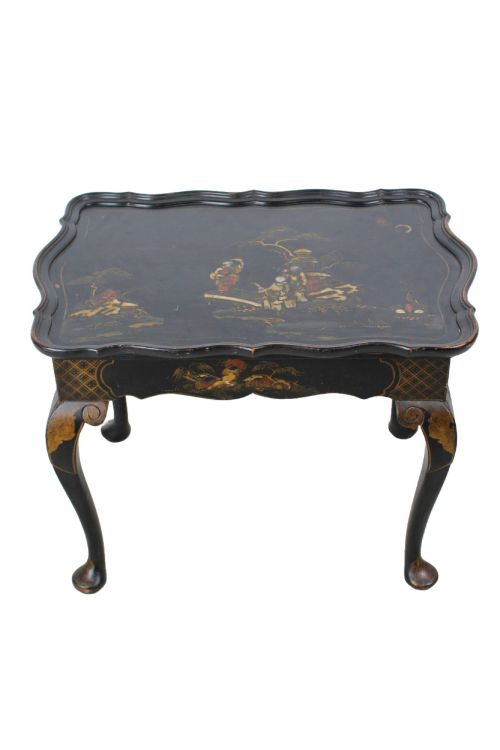
The pieces on this page appear in forms such as tray tables, circular coffee tables, and rectangular trays mounted on folding or fixed stands. Tray tables often feature removable tops once used for serving.
Origins span the Edwardian era, the nineteenth century, and the early twentieth century, alongside mid-century interpretations. Makers utilise styles ranging from Regency style and Edwardian chinoiserie to Chinese chinoiserie.
How they were made
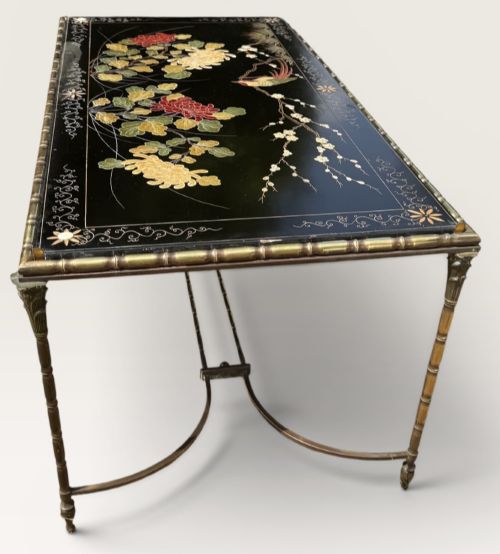
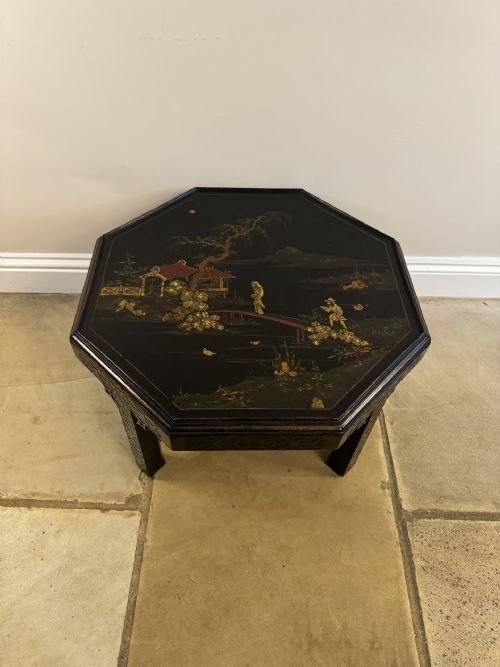
Makers construct these low tables using wood, lacquered wood, and papier-mâché as the primary structural bases. Surfaces receive layers of lacquer before artists apply gilt paint and raised relief detail to delineate figures, pavilions, and landscapes.
Metal components such as brass appear on mounts, hinges, or carrying handles attached to tray tops. Inlaid elements like soapstone occasionally contribute texture and contrasting colour to the decorated panels.
Listings feature pieces spanning the nineteenth century, the Edwardian period, and the nineteen thirties, constructed from lacquered wood, brass, and papier-mâché.
What varies in quality
Quality depends upon the depth of the lacquer surface and the precision of the gilding. Skilled hands render figures and foliage with fine line work and layered relief, whereas simpler examples rely on flat painted decoration.
The integrity of the underlying woodwork and the fit of a removable tray onto its stand dictate the structural stability of the piece. Tables with integrated stands and substantial timber frames present greater durability over decades of daily use.
Maison Bagues
The Gilt Chinoiserie Low Table Glossary
- Chinoiserie
- European decorative style imitating Chinese and East Asian artistic traditions. This aesthetic manifests in motifs of pagodas, exotic birds, and figures in garden landscapes.
- Gilt
- Application of gold leaf, paint, or powder to create a metallic surface finish. On these tables, gilding highlights the pictorial scenes against dark lacquer grounds.
- Lacquer
- Durable resin finish applied in multiple coats and polished to a smooth sheen. Traditional versions provide a deep, glossy background for painted details.
- Papier-mâché
- Composite material made from paper pulp mixed with glue and pressed into moulds. Makers utilise this substance for lightweight, rigid tray tops.
- Tray top
- A removable surface featuring raised edges designed to contain objects during service. These trays rest upon separate folding or rigid wooden stands.
Gilt Chinoiserie Low Table: Frequently Asked Questions
What is a gilt chinoiserie low table?
A gilt chinoiserie low table is a low-standing surface decorated with metallic paint and Asian-inspired motifs. These pieces function primarily as coffee tables in contemporary living spaces.
Designs draw on historical styles from the nineteenth and early twentieth centuries, translating serving trays and occasional tables into permanent low furniture.
How were tray tables used historically?
Tray tables served practical functions for carrying and presenting beverages or food within domestic interiors. The raised edges prevented items from sliding off during transit.
Once brought to the sitting room, the removable tray was placed upon a folding or fixed wooden stand to create a temporary or permanent surface.
How do I care for a lacquered surface?
Llacquered and gilt surfaces require gentle maintenance using a soft, dry cloth for dusting. Avoid chemical cleaners and moisture, which can damage the delicate varnish and gold paint.
Placing coasters beneath cups and protecting the top from direct heat sources preserves the decorative finish over time.
How do I distinguish Edwardian pieces?
Edwardian examples often exhibit lighter proportions and refined painted details reflecting early twentieth-century revival tastes. These pieces frequently utilise Edwardian chinoiserie or specific tray top configurations.
Materials commonly feature lacquered wood combined with brass hardware characteristic of the period around nineteen hundred to nineteen ten.