




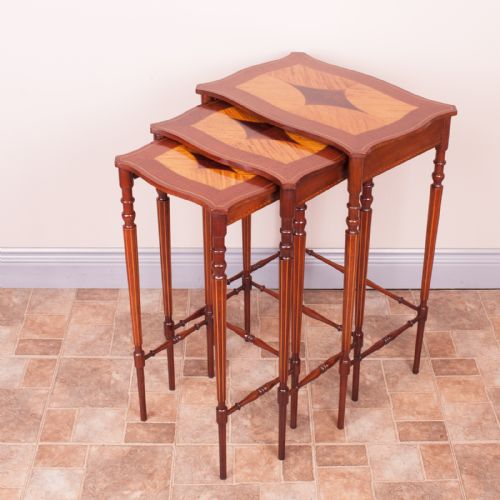


Sheraton Style Nesting Tables
Sheraton style nesting tables bring together light timbers and classic neoclassical lines, offering a practical surface set that tucks away neatly when not in use.
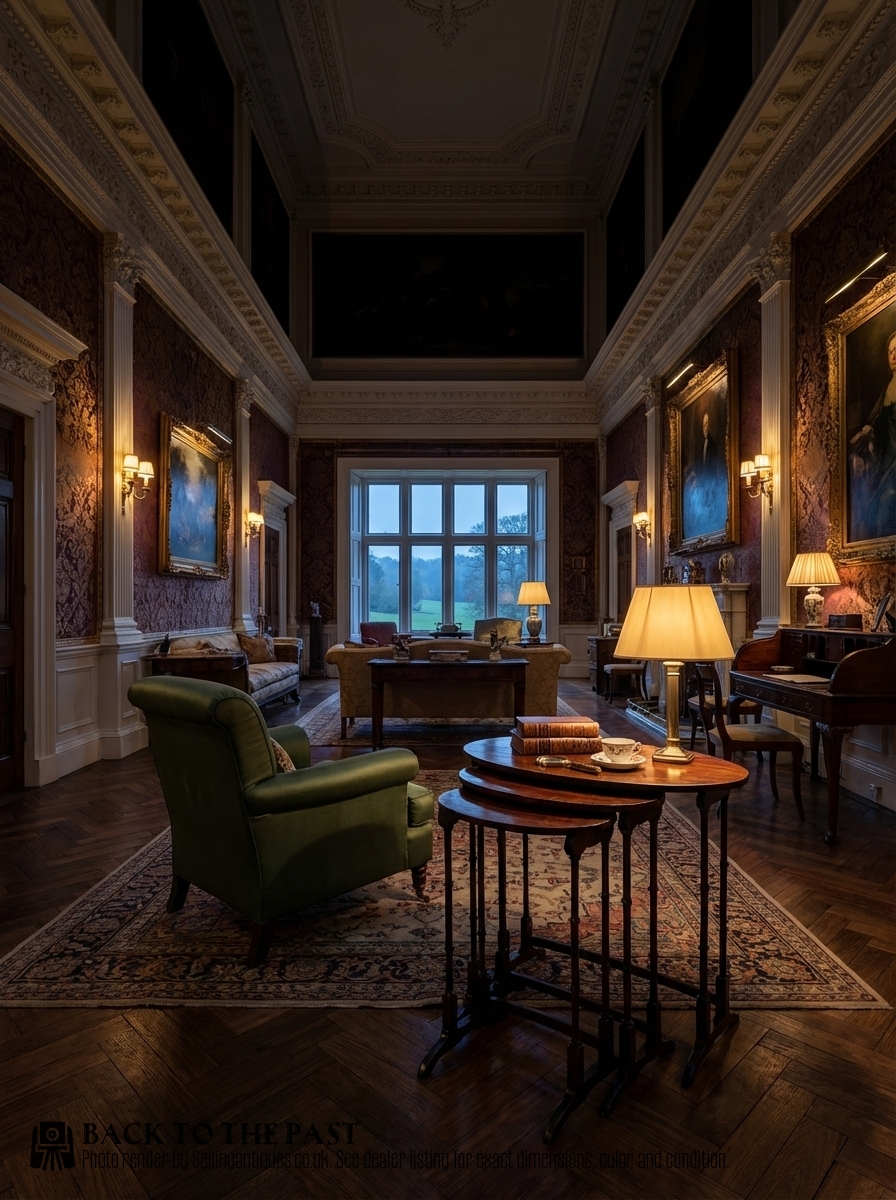
Sheraton Style Nesting Tables
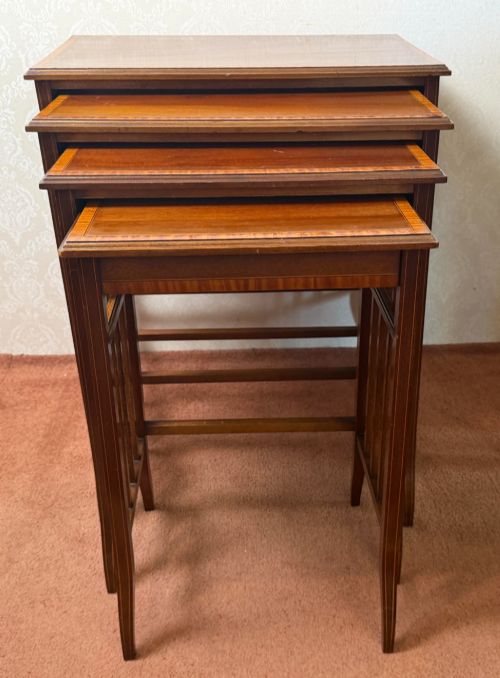
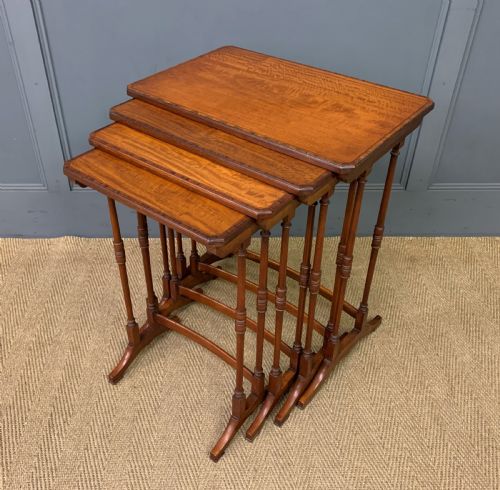
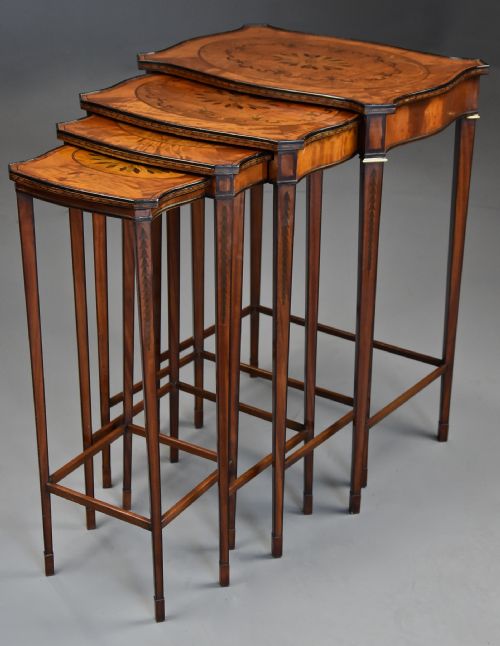
When you search for Sheraton style nesting tables, you encounter sets of graduated tables designed to slide beneath one another, predominantly originating from the Edwardian period and the nineteenth century. These multi-tiered pieces appear in forms such as standard nests of three or four, quartetto sets, and occasional serpentine or kidney shapes.
Makers and cabinetmakers of these eras produced them for versatile domestic use, serving as lamp, coffee, wine, or side tables that occupy minimal floor space. The form relies on slender supports and clean profiles to maintain lightness in a room.
Materials and construction
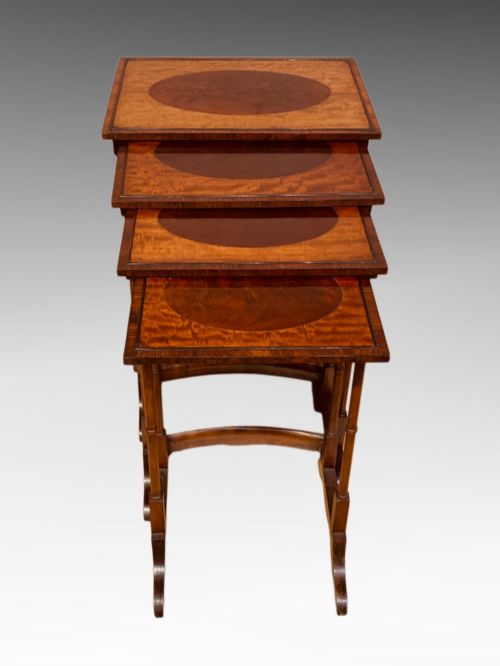
Cabinetmakers constructed these tables using solid timber and veneers, relying primarily on mahogany as a stable structural base. Satinwood and boxwood provide contrasting tones for decorative stringing and cross-banding along the edges.
Inlay techniques define the surface enrichment, utilising fine stringing and geometric or floral motifs set into the primary wood. Joinery focuses on slender frames and square tapered legs that support the graduated tiers without adding bulk.
Materials documented across the page include solid mahogany, satinwood veneer, boxwood stringing, and rosewood inlay.
Distinctions in craftsmanship
Quality reveals itself in the precision of the timber selection and the crispness of the inlay work. Finer examples display carefully matched satinwood cross-banding and precise boxwood stringing that follows the contours of the top precisely.
Structural refinement separates standard production from superior pieces, particularly in the smoothness of the sliding action and the rigidity of the tapered legs. The depth of the timber grain and the subtlety of the serpentine or kidney curves also indicate higher standards of workshop execution.
The Sheraton Style Nesting Tables Glossary
- Quartetto
- A set of four graduated tables designed to nest together. This term appears frequently in Edwardian and nineteenth-century descriptions.
- Satinwood
- A durable, lustrous yellow timber utilised for veneers and decorative panels. It provides a bright contrast against darker woods like mahogany.
- Cross-banding
- A border technique where veneer strips run perpendicular to the main grain. It frames the perimeter of the table top.
- Stringing
- Very thin lines of contrasting wood inlaid into channels on the surface. This technique outlines drawers, legs, and tabletops.
- Serpentine
- A gentle undulating curve curving outward and inward. It adds fluid movement to the edges of table tops.
Sheraton Style Nesting Tables: Frequently Asked Questions
What is a quartetto nest?
A quartetto nest refers specifically to a set of four tables that scale down in size to fit one beneath another. Makers designed them for ease of storage in nineteenth-century and Edwardian sitting rooms.
They function as a matched suite where each piece maintains the same stylistic vocabulary, from tapered legs to inlaid borders.
How were these tables used originally?
These tables served as mobile furniture pieces for tea, reading, or holding small decorative items. Servants or residents could easily pull out individual tiers as guests arrived.
When not in use, the entire group stacked into the footprint of the largest single table, saving valuable floor space.
Are all these tables Sheraton period?
Most pieces listed under this style date from the Edwardian era or the late Victorian period, reflecting a revival of eighteenth-century neoclassical designs. True eighteenth-century examples are exceptionally scarce.
Edwardian cabinetmakers adopted these classical proportions and inlay motifs to satisfy contemporary demand for lighter, elegant furniture.