
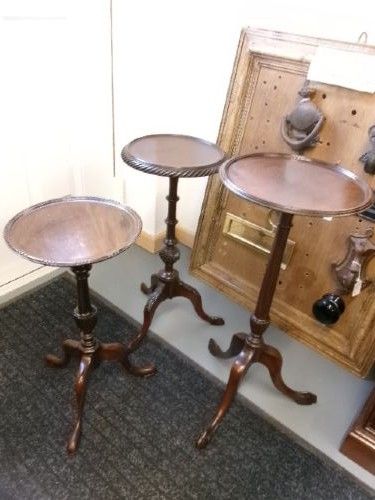


Antique Trio Tables
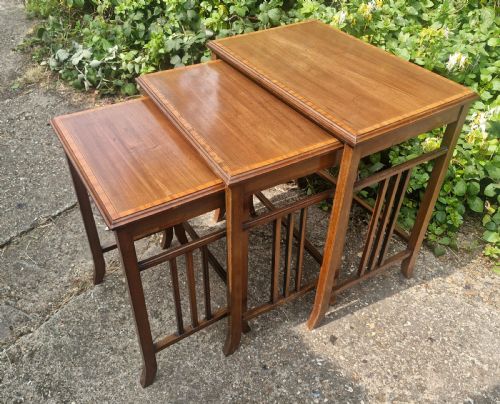
Antique trio tables group three graduated surfaces together into a single footprint, offering versatile display space that tucks neatly away.
Antique Trio Tables
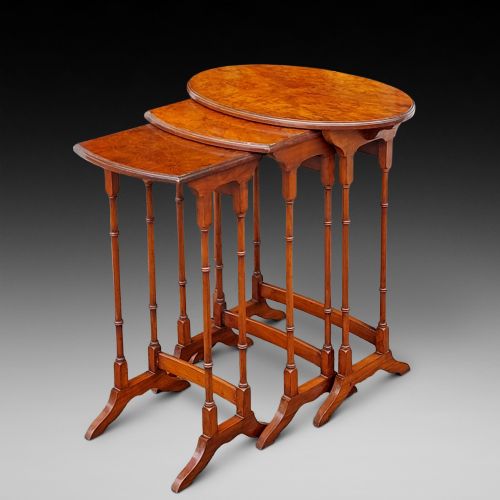
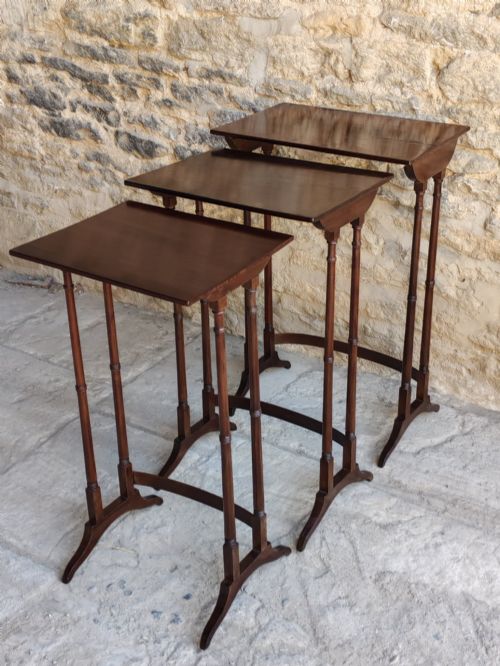
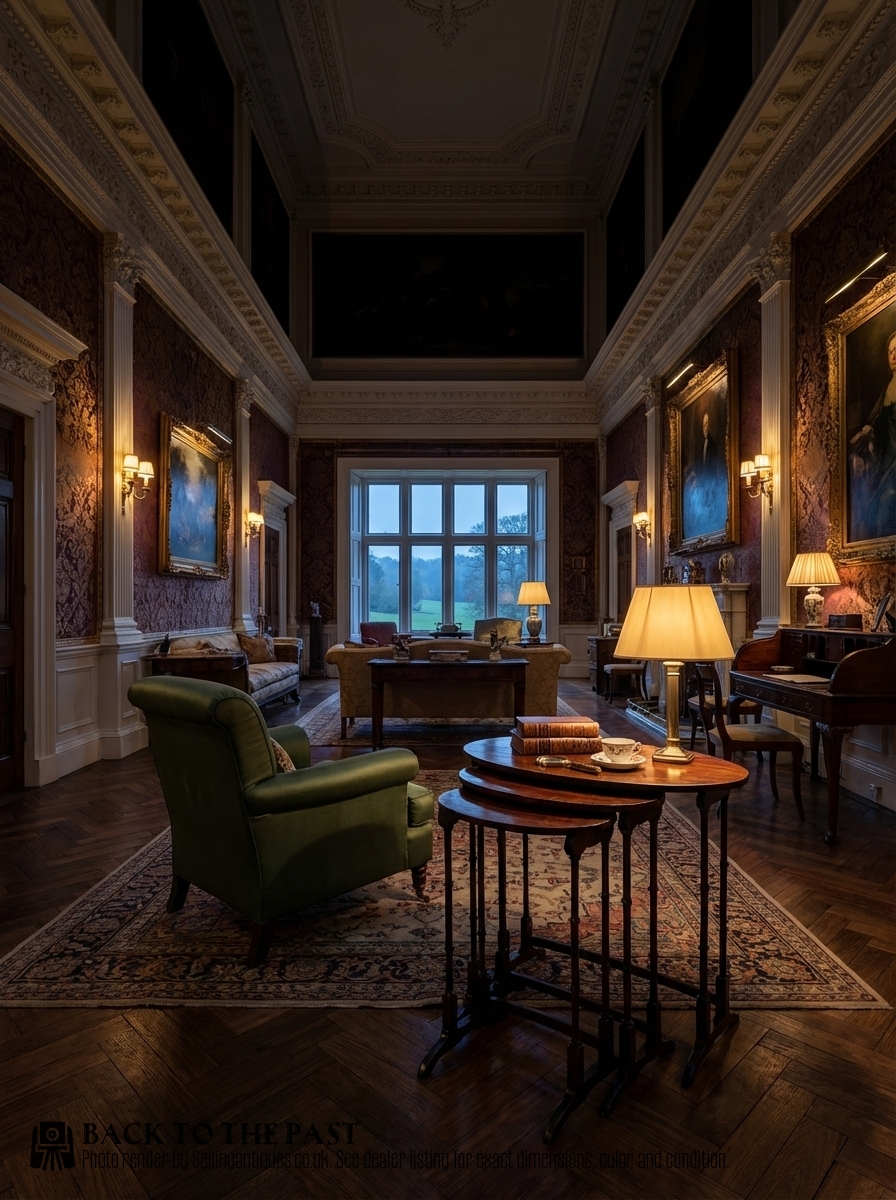
Antique trio tables, frequently known as nests of tables, consist of sets of three graduated occasional tables designed to slide one beneath the other. Buyers encountering this selection will most commonly find mahogany and rosewood examples from the Edwardian period and the nineteenth century.
The primary form is a set of three rectangular or oval side tables, though occasional variants include wine tables, glass or leather inset tops, and barley twist supports. Origins stretch from Georgian workshops through Victorian interpretations to Edwardian and early twentieth century production.
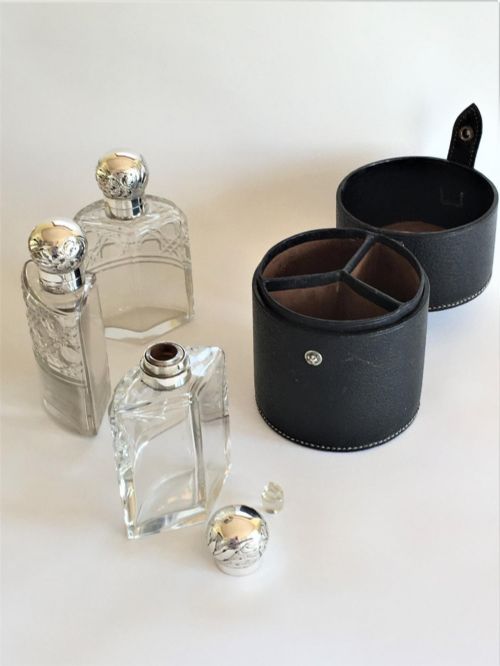
While the standard form dominates, the archive and current listings show occasional variations such as travelling scent bottle trios, salt cellars, and mirror sets sharing the designation. The core search remains focused on stacking side and lamp tables utilised for flexible room layouts.
Materials and construction methods
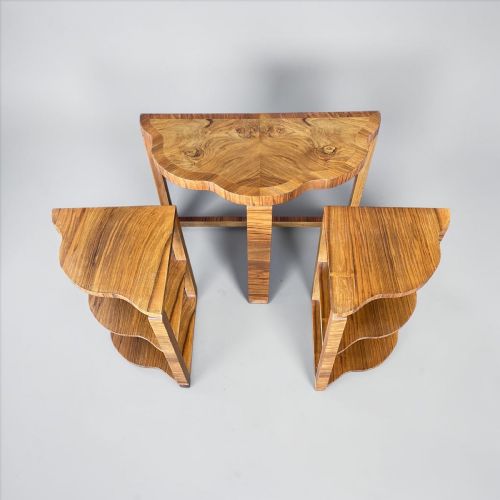
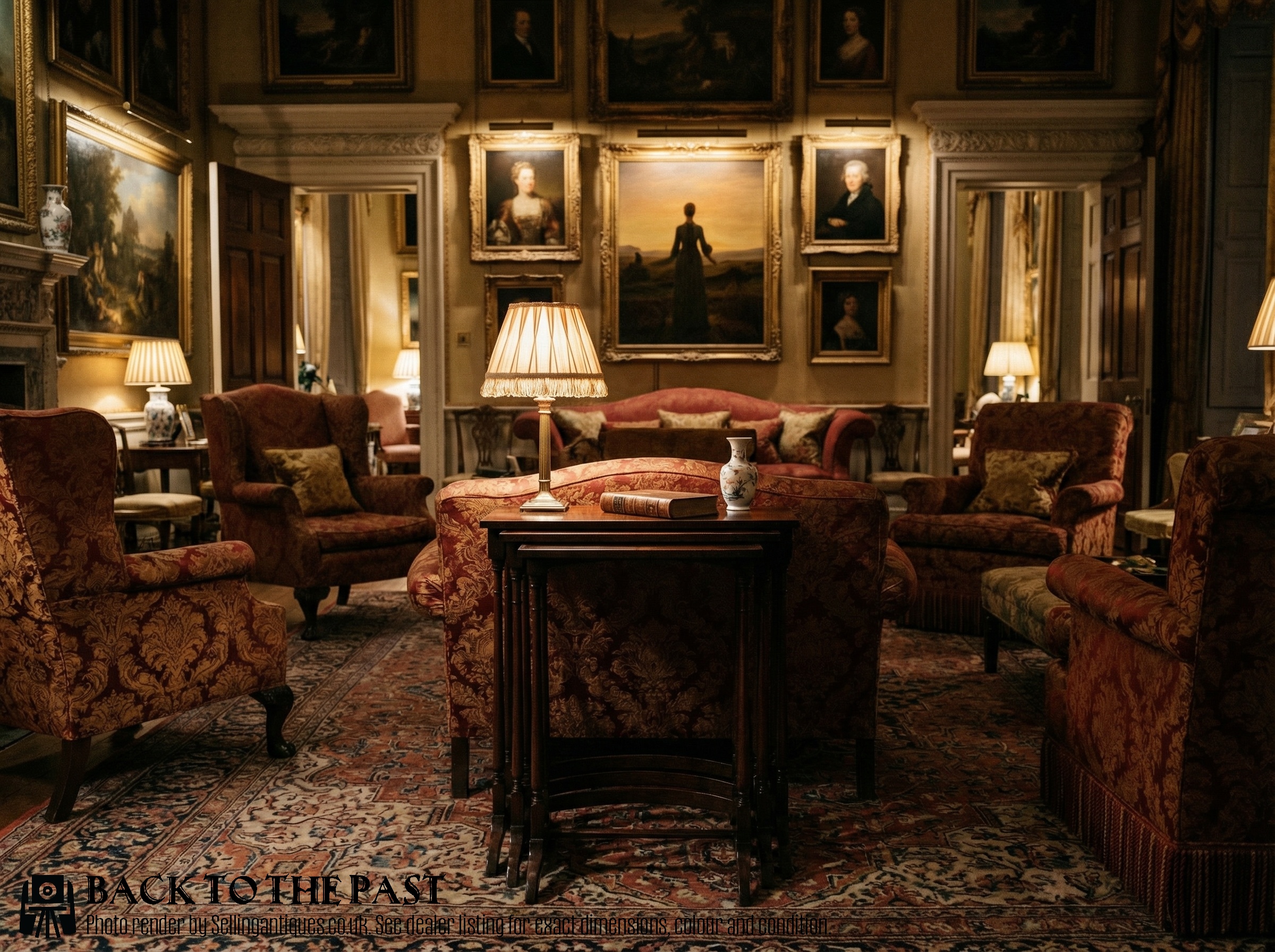
Cabinetmakers constructed these tables predominantly in timbers such as mahogany, rosewood, oak, and walnut, frequently applying satinwood, amboyna, or burr walnut veneers to primary surfaces. Inlaid decoration, shaped tops, and embossed leather inserts appear across nineteenth and early twentieth century examples.
Structural framing relies on traditional joinery to support the graduated sizes required for nesting, with turned legs, tapered supports, and barley twists providing stability. Makers selected dense hardwoods to withstand the repeated friction of sliding tables in and out of the main frame.
Listings feature trio tables spanning the Georgian, Regency, Victorian, and Edwardian periods, constructed in mahogany, rosewood, oak, and walnut.
Assessing quality in trio tables
Quality rests upon the selection of timber veneers and the precision of the graduated framing, where finer pieces display seamless matching across all three surfaces. Superior examples integrate subtle inlay work, well-figured mahogany or rosewood, and robust structural joinery that maintains smooth sliding action.
Simpler workshop output relies on plain timber and straightforward turned supports without decorative stringing or complex shaping. The distinction lies in the crispness of the carpentry and the visual balance of the set when stacked together.
W&C Wilkinson London
The Antique Trio Tables Glossary
- Nest of tables
- A set of graduated tables designed to slide underneath one another to save floor space. They function as occasional, lamp, or side tables in sitting rooms.
- Graduated
- Describing a set where each item decreases in scale proportionally. In trio tables, this allows the smaller surfaces to fit entirely beneath the largest.
- Inlay
- A decorative technique where contrasting materials such as satinwood or lighter timbers are inserted into recesses within the primary wood surface. This creates geometric patterns or floral motifs.
- Barley twist
- A turned wooden column carved into a helical, screw-like spiral shape. This decorative support appears frequently on oak and mahogany tables from the late nineteenth and early twentieth centuries.
- Occasional table
- A small, movable piece of furniture designed for specific, intermittent use rather than permanent placement. Trio tables serve this function by being pulled out when guests arrive.
Antique Trio Tables: Frequently Asked Questions
What is an antique trio table?
An antique trio table is a set of three graduated occasional tables designed to stack beneath one another. They provide multiple surfaces for lamps or drinks while occupying the floor space of a single small table.
Cabinetmakers produced these sets primarily in mahogany, rosewood, and oak during the Georgian, Victorian, and Edwardian eras. The design allows the smaller tables to slide smoothly into the frame of the largest.
How were trio tables used historically?
Historically, these tables served as flexible furniture for drawing rooms and parlours, pulled out to hold tea cups, books, or lamps as needed. Their stacking nature made them practical for entertaining in homes with limited space.
When not in use, the smaller tables remained tucked away beneath the main surface. This offered convenience without cluttering the room.
How do I date an antique nest of tables?
Dating relies on timber selection, construction techniques, and stylistic markers such as inlay or leg turning. Georgian and Regency examples typically feature rosewood or solid mahogany with clean lines, while Edwardian versions often incorporate satinwood inlay and lighter framing.
Mid-nineteenth century pieces often display denser rosewood construction or Victorian walnut finishing. Examining the underside and joinery helps confirm the period of manufacture.
Can I use trio tables as coffee tables?
Trio tables function well as flexible side or lamp tables rather than a single large coffee table due to their height and graduated sizing. Arranging them around a room provides multiple surface points for drinks and decorative items.
Separating the three tables allows them to serve different seating areas simultaneously. Pushing them back together restores the compact stacked arrangement.