




Edwardian Trio of Tables
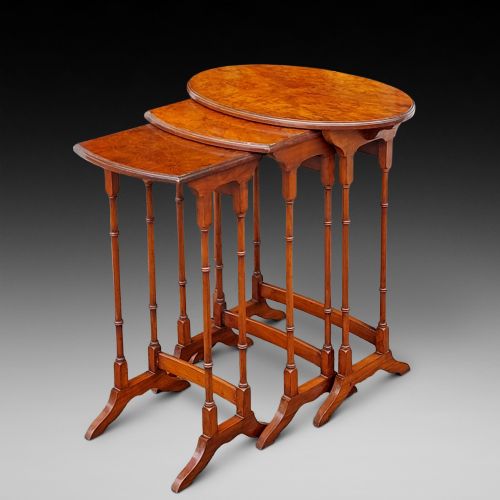
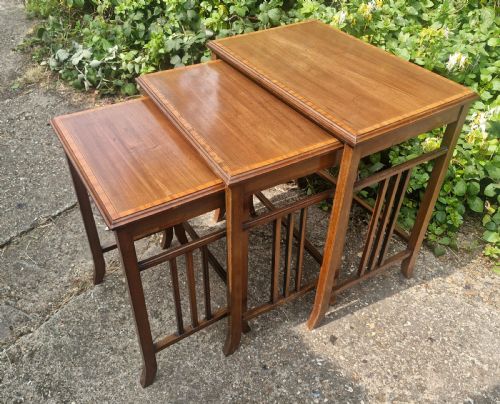
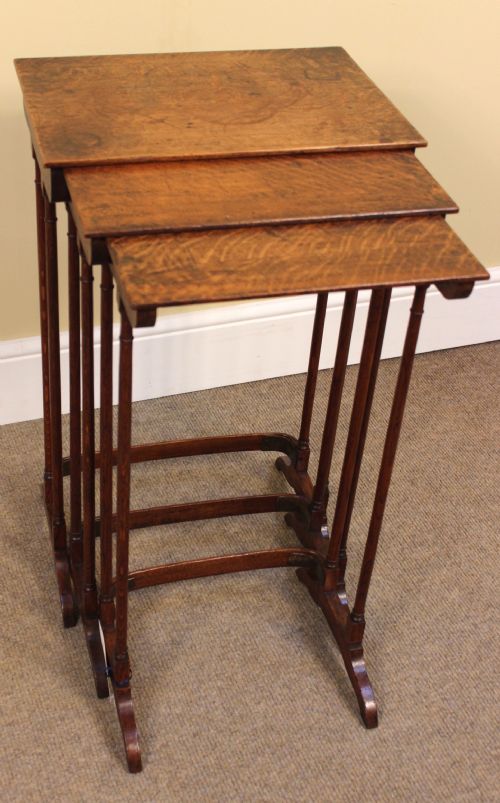
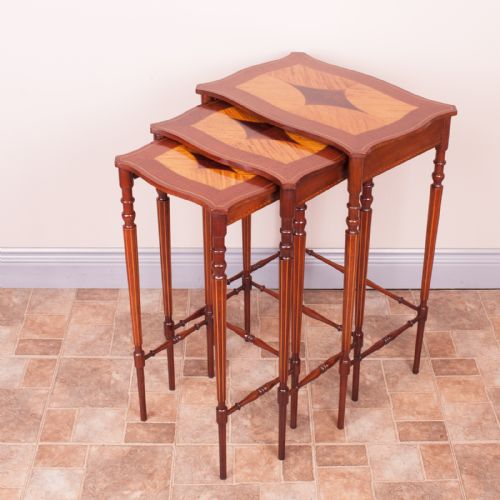
These edwardian trio of tables are interlocking nests designed for small spaces, offering flexible surface area when entertained.
Edwardian Trio of Tables
An edwardian trio of tables most commonly appears as a graduating set of three nesting surfaces designed to slide neatly beneath one another. These pieces serve primarily as occasional or side tables within a drawing room or parlour.
The form spans the Edwardian period alongside late Victorian and early twentieth-century examples, frequently constructed in forms that prioritise space-saving utility without sacrificing elegance.
What varies in quality
The standard of timber selection and the precision of the graduating frame fit distinguish standard output from finer workshops. Superior pieces display crisp inlay work and stable joints across all three descending units.
Heavier timbers like burr walnut or detailed satinwood detailing elevate the visual presence, whereas simpler oak or plain mahogany examples focus purely on domestic utility.
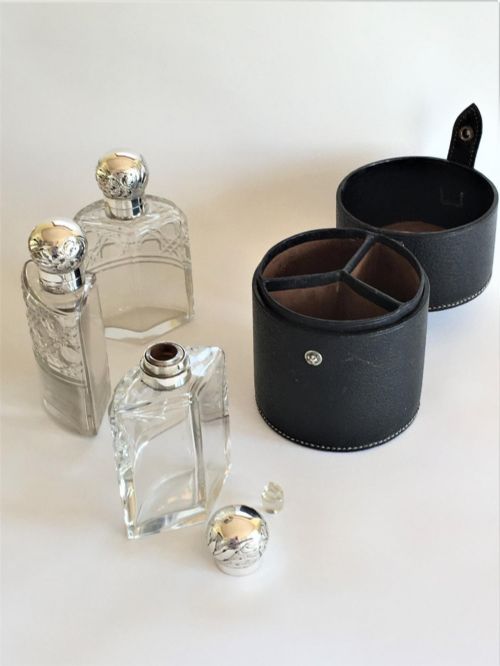
One unexpected traveller among the furniture is a cased silver cologne bottle trio sharing the exact same collective noun.
The Edwardian Trio of Tables Glossary
- Nest of tables
- A set of graduated tables designed to fit one beneath another to save floor space. They are deployed when extra surface area is required.
- Inlay
- A technique where pieces of contrasting timber, such as satinwood, are inserted into the primary wood surface to create decorative patterns. This ornament defines much of the period aesthetic.
- Occasional table
- A small, movable table intended for temporary use in a room. These pieces are easily repositioned beside seating.
- Barley twist
- A carved wooden support shaped in a spiral twist resembling barley sugar. It appears frequently on the legs of tables from this era.
Edwardian Trio of Tables: Frequently Asked Questions
How do I use a nest of tables?
These tables slide apart to provide separate surfaces for drinks or books when guests visit. When not in use, they stack together to occupy the floor space of a single small table.
Position them beside armchairs or sofas where flexible surface area proves useful during daily routines.
Are all these tables from the Edwardian period?
While the majority date from the Edwardian era, the selection includes pieces spanning from the late nineteenth century into the nineteen-twenties. Revival styles also influence the construction dates found in the listings.
Inspect the timber grain and secondary woods to help ascertain the specific manufacturing period of an individual set.
What woods were commonly used?
Mahogany remains the predominant timber found in these sets, frequently enhanced with contrasting stringing or satinwood inlay. Walnut, burr walnut, and oak also appear regularly across the different styles.
Selected examples incorporate specialised materials such as embossed leather top inserts or glass.
How do I care for polished wood surfaces?
Maintain the polish by dusting regularly with a soft, dry cloth and avoiding placement near direct heat sources or strong sunlight. Apply quality beeswax periodically to nourish the timber grain.
Protect the tops from moisture by using coasters beneath glasses and cups.