


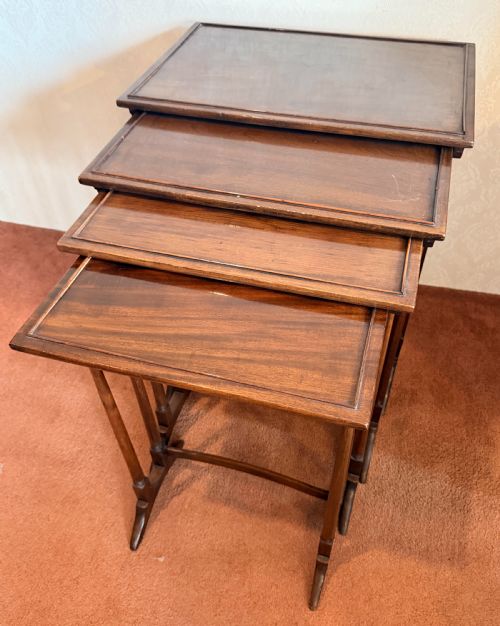
Edwardian Nesting Side Tables
Edwardian nesting side tables offer a practical tiered surface in mahogany, satinwood, and walnut, designed to slide neatly away when space demands clarity.
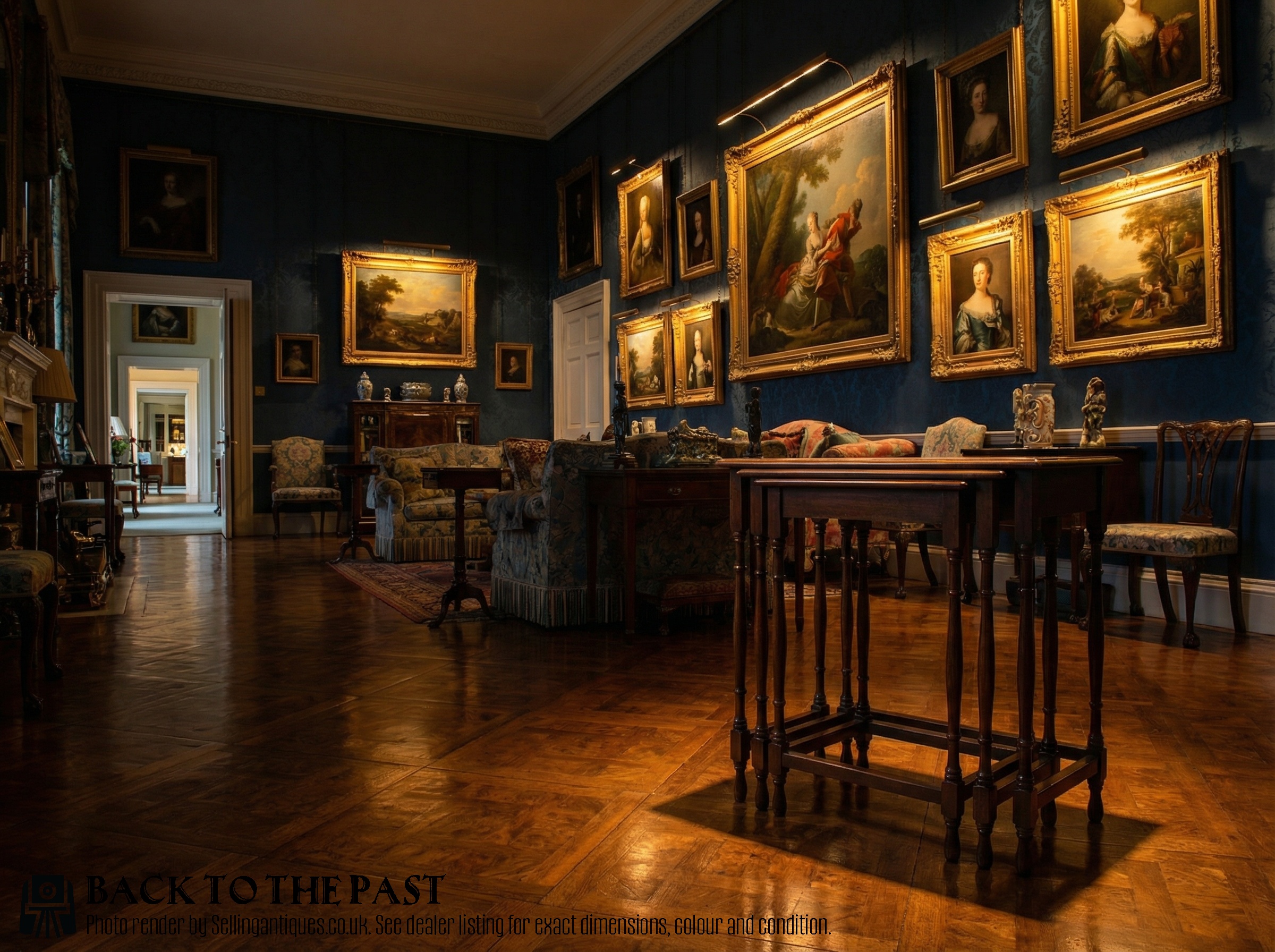
Edwardian Nesting Side Tables
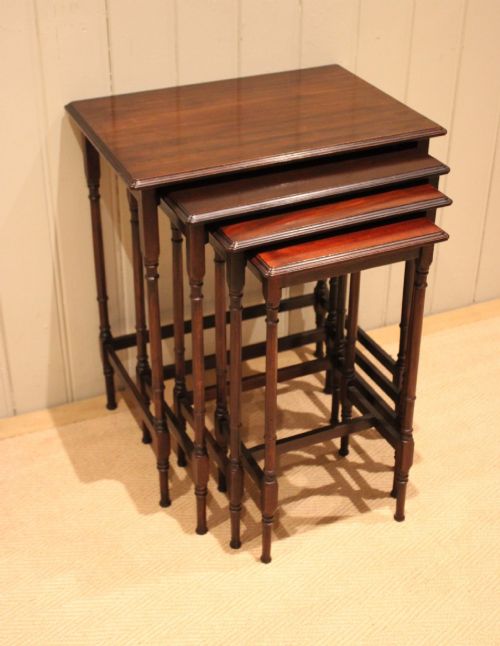
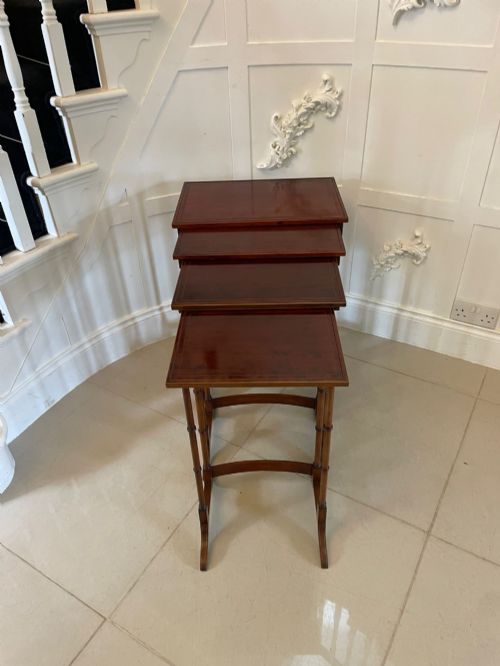
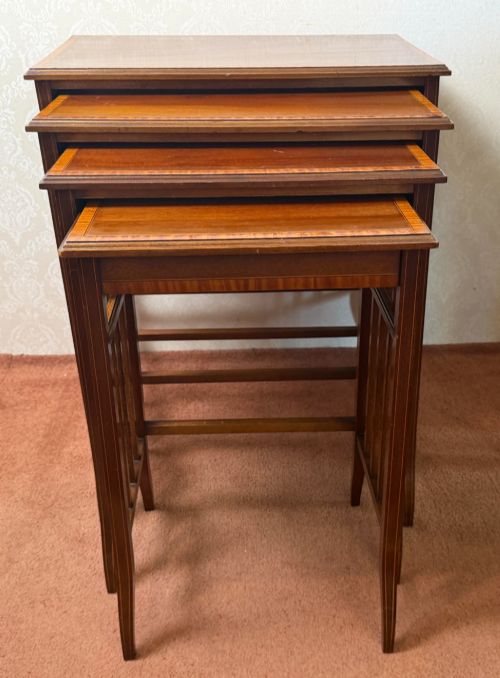
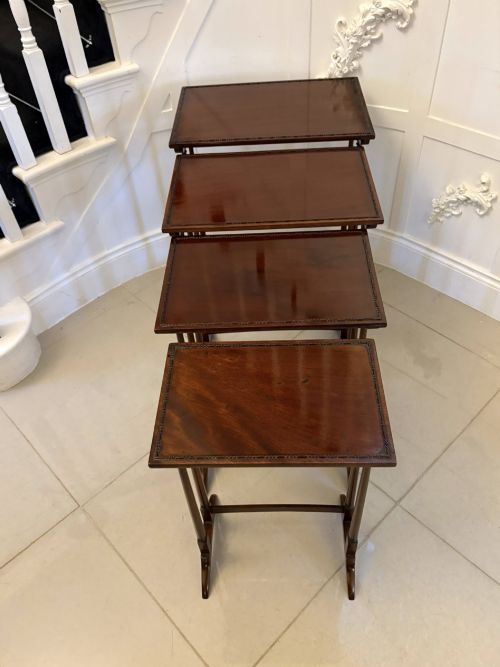
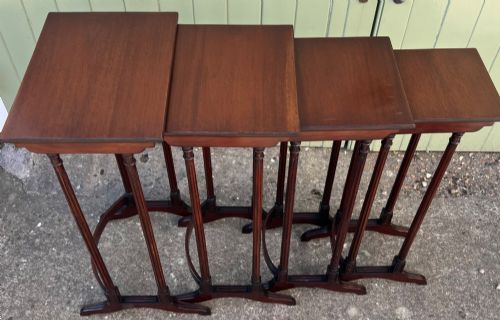
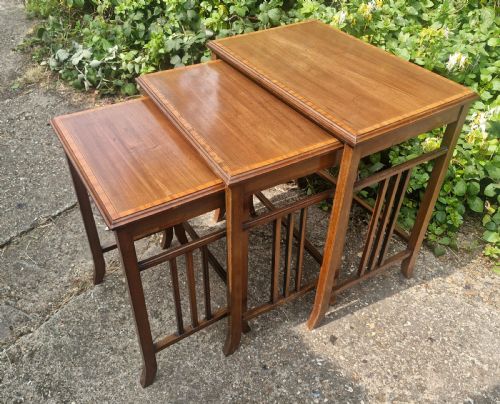
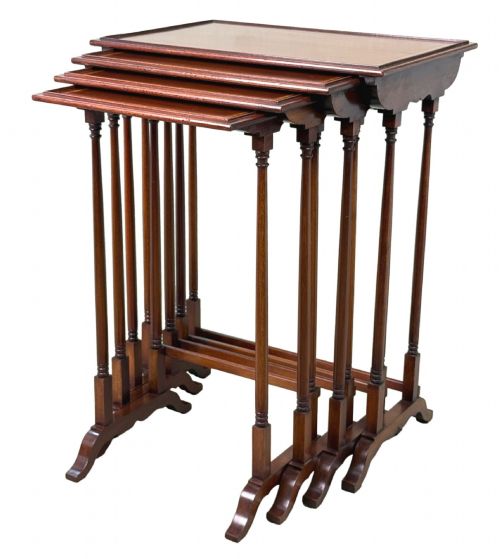
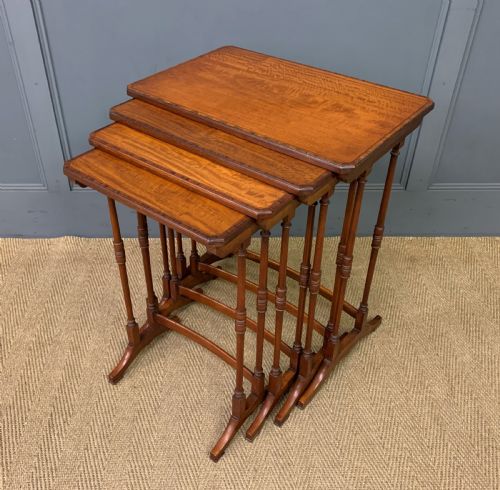
Edwardian nesting side tables bring multiple surfaces together in a compact footprint, appearing most frequently in sets of three or four as quartetto tables from the Edwardian period. These pieces also span the late Victorian era, the nineteenth century, and into the nineteen-twenties and thirties, drawing upon Sheraton revival styles, Georgian influences, and Chinoiserie decoration.
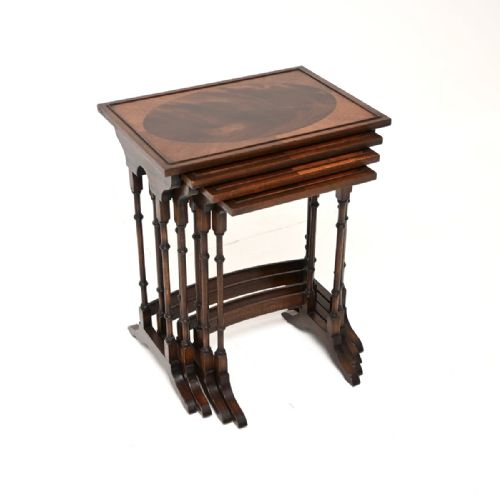
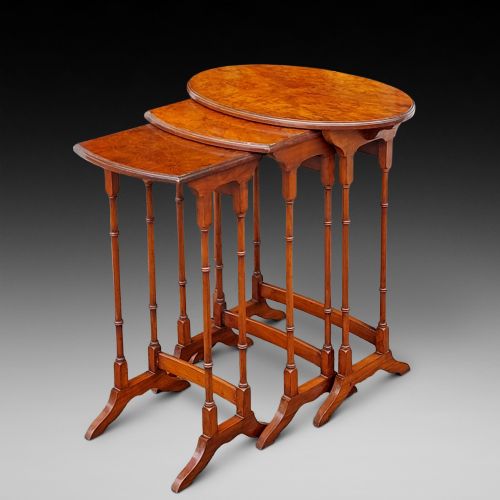
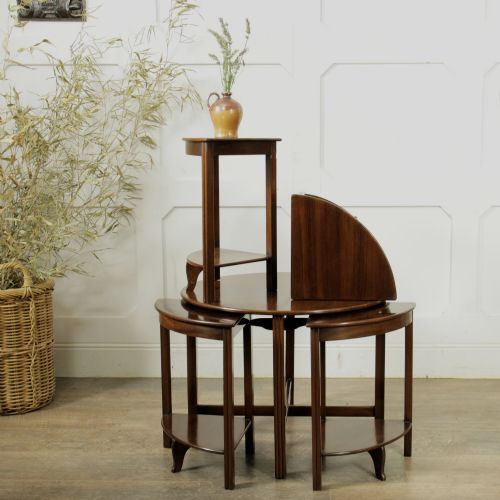
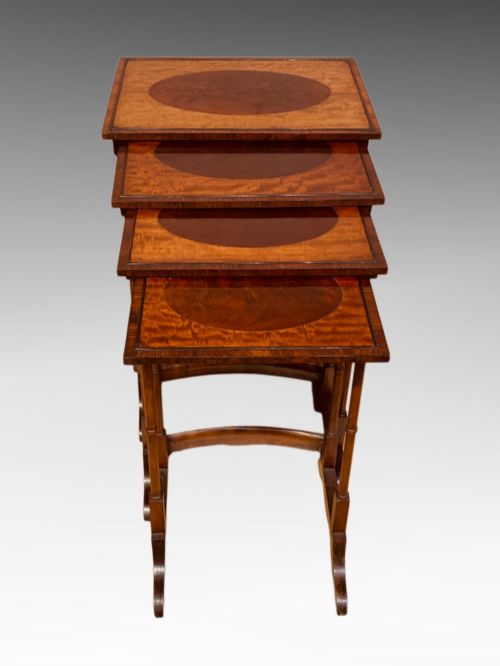
The primary forms include rectangular sets with square tapered legs, circular tables, and serpentine shapes. Walnut, mahogany, satinwood, oak, and rosewood form the main timber choices, often enhanced by boxwood stringing, cross banding, and inlaid details.
Gradations of Quality
Quality rests in the crispness of the timber figuring, the precision of the satinwood or boxwood inlay, and the accuracy of the graduating fit. Superior examples maintain structural integrity across the smallest under-tier without showing wobble or excessive looseness in the joints.
Finer sets display thoughtful detailing such as serpentine fronts, finely turned supports, or hand-painted Chinoiserie decoration, separating standard utility pieces from high-status drawing room furniture.
Some sets included up to five tiny tables, meaning a family could host tea without anyone ever having to stretch for a biscuit.
The Edwardian Nesting Side Tables Glossary
- Quartetto
- A set of four graduating tables designed to fit neatly one inside another. The term appears frequently in Edwardian and nineteenth-century cataloguing.
- Cross banding
- A decorative border of veneer laid with the grain running perpendicular to the main panel. This technique frames the top surface of finer mahogany and satinwood tables.
- Stringing
- Thin lines of contrasting wood inlaid into the surface of furniture. Boxwood stringing is common on Edwardian inlaid mahogany pieces.
- Serpentine
- A gently undulating curved line forming the edge of a table top. It requires skilled carpentry to execute cleanly on smaller occasional pieces.
Edwardian Nesting Side Tables: Frequently Asked Questions
What is a quartetto nest of tables?
A quartetto nest consists of four tables that scale down in size to slide completely beneath the largest one. They were designed for drawing rooms where space was at a premium.
Cabinetmakers built them so the smallest table rests at the very bottom, keeping the footprint identical to a single small side table when stored.
How do I date an Edwardian nest?
Edwardian nests typically date between nineteen hundred and nineteen ten, though the style overlaps with late Victorian and nineteen-twenties production. Look at the timber choice, inlay style, and leg shape to determine the exact era.
Satinwood cross banding and delicate boxwood stringing point strongly towards the Edwardian Sheraton revival period, whereas simpler oak or walnut sets often lean towards the nineteen-twenties or thirties.
Can these tables be used daily?
These tables function well for holding drinks or small lamps, provided the joints remain tight. The smaller tiers are inherently lighter and less robust than the main table.
Care should be taken when sliding the tables in and out to avoid scratching the polished surfaces or straining the slender legs.
What woods were used for these sets?
Mahogany remains the most common timber found in these listings, often paired with satinwood or inlaid boxwood details. Walnut, rosewood, oak, and lacquered finishes also appear across different styles.
Exotic veneers like satinwood were reserved for finer drawing room pieces, while mahogany served both standard and high-quality production.