
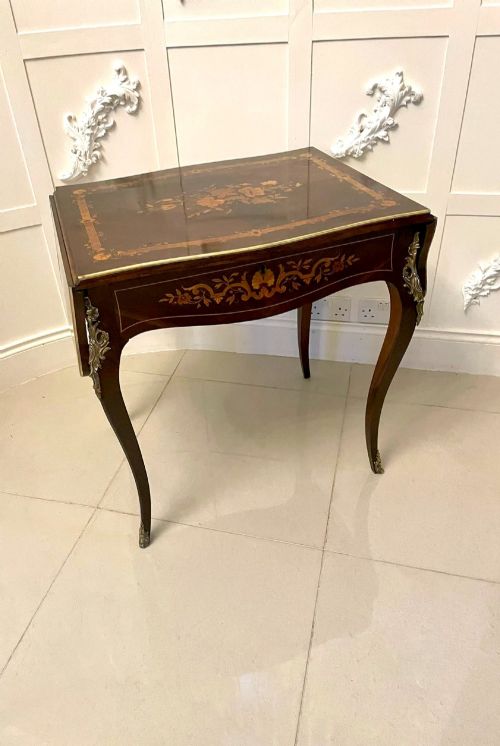
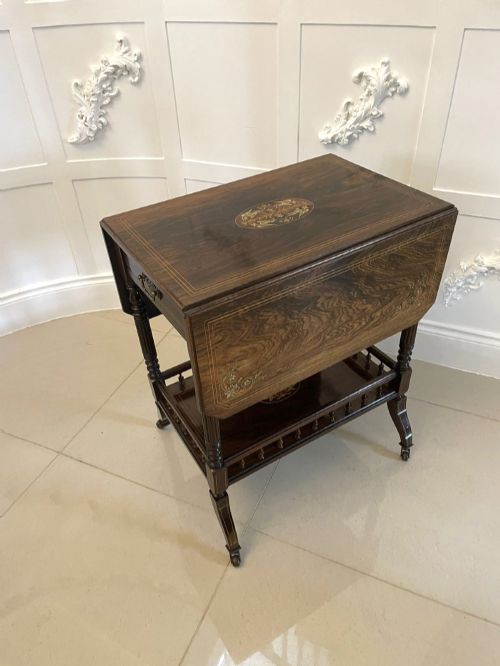
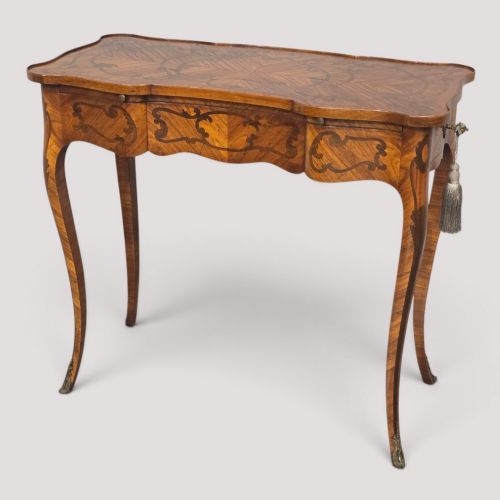
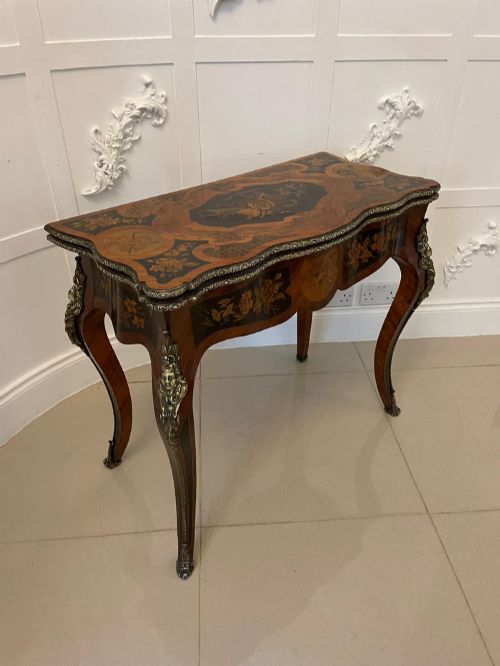

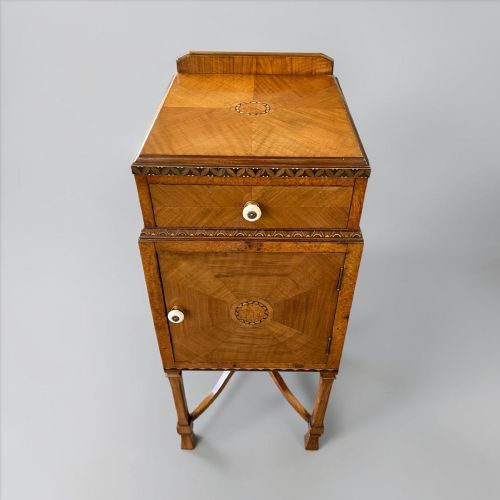
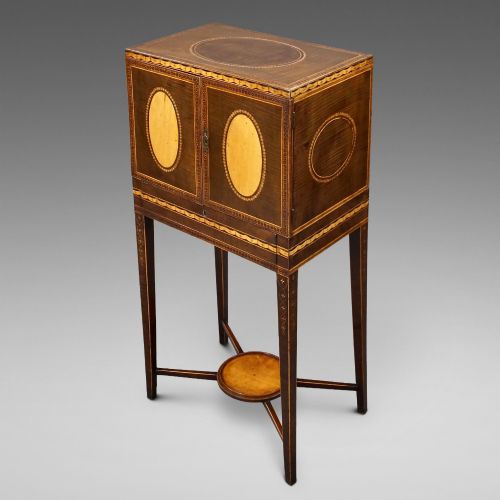
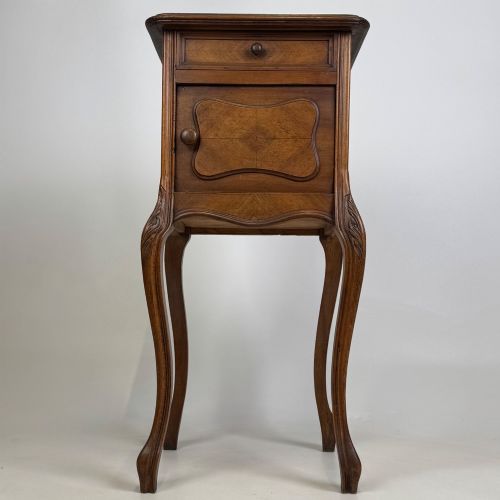
Brown Marquetry Side Table
A brown marquetry side table brings intricate wood inlay and rich tones into a room, serving as a striking accent surface.
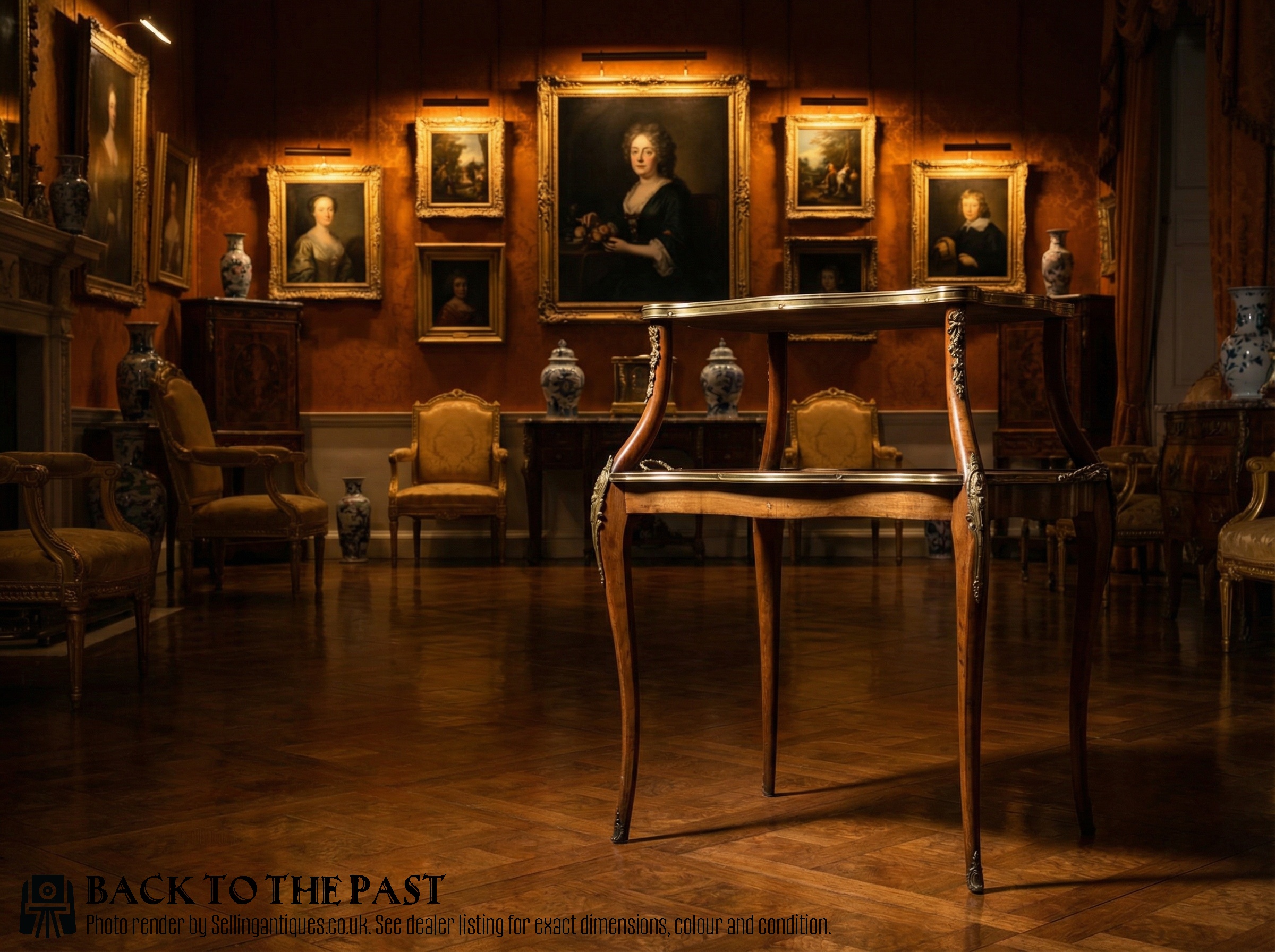
Brown Marquetry Side Table
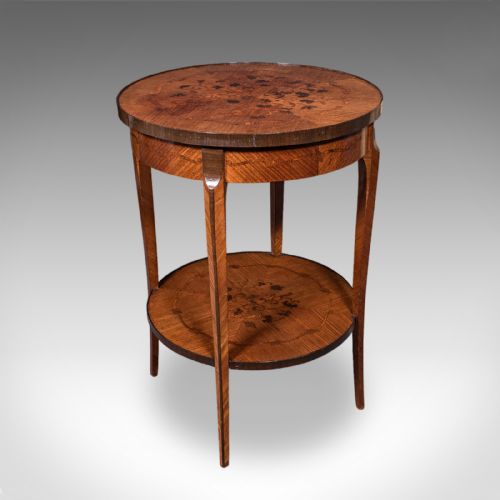
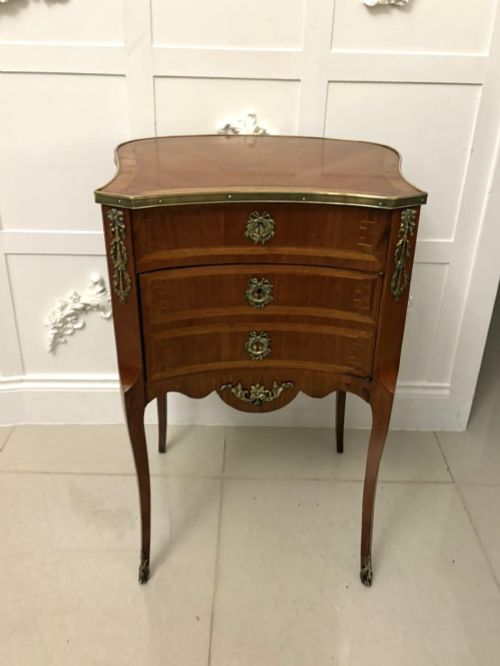
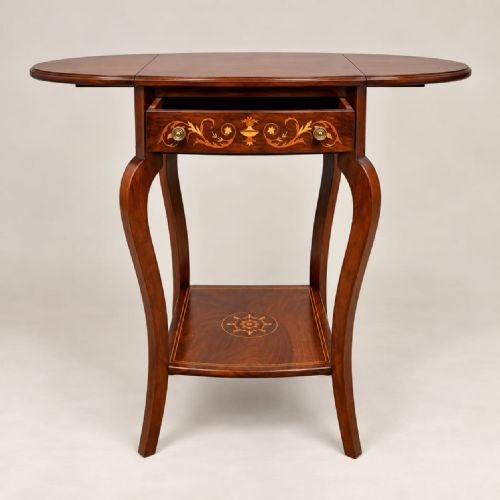
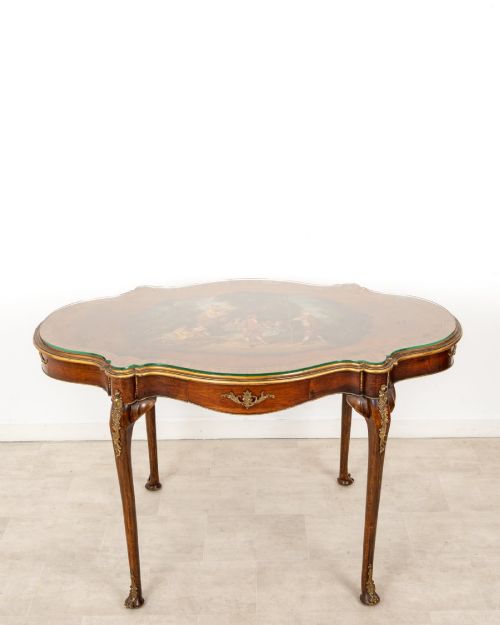
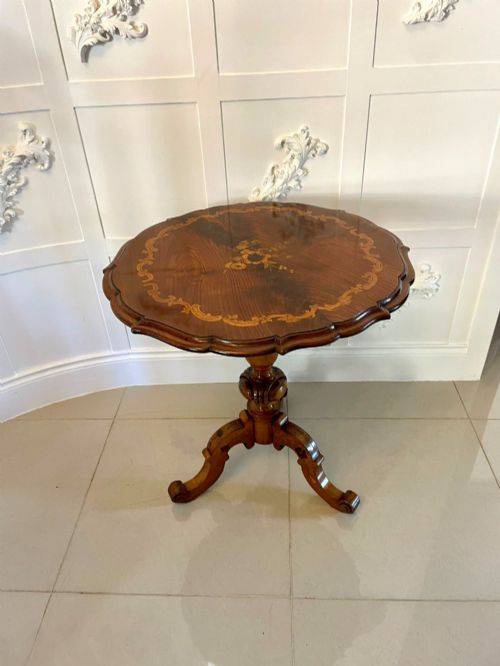
A brown marquetry side table combines patterned wood veneers with a compact footprint designed for placement beside seating or against walls. The listings show forms ranging from occasional and centre tables to writing desks and bedside cabinets.
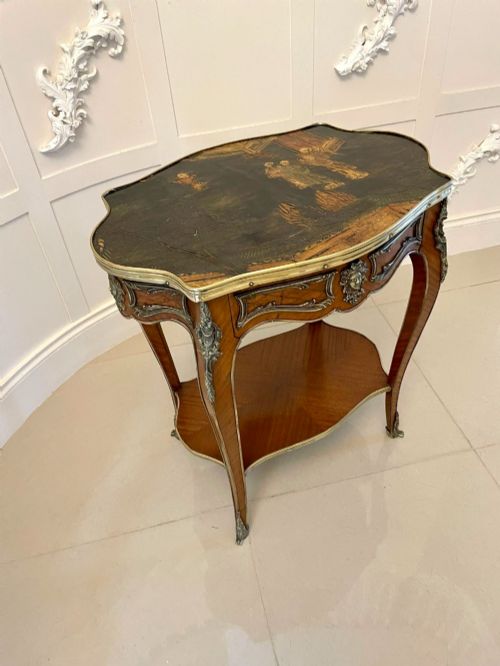
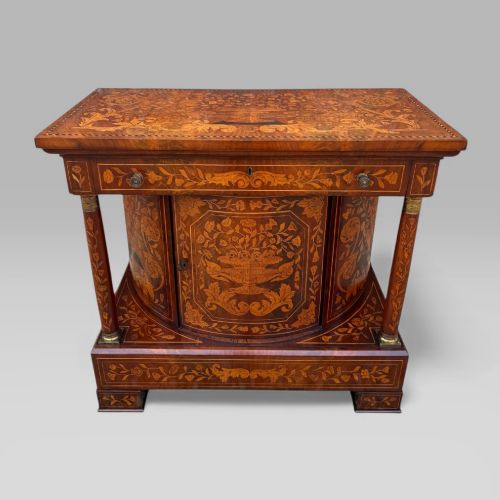
Most examples hail from the nineteenth and early twentieth centuries, spanning Victorian, Edwardian, and Art Deco periods, alongside eighteenth-century Dutch and English output. French revival styles strongly influence the selection, often bringing shaped outlines and elaborate mounts.
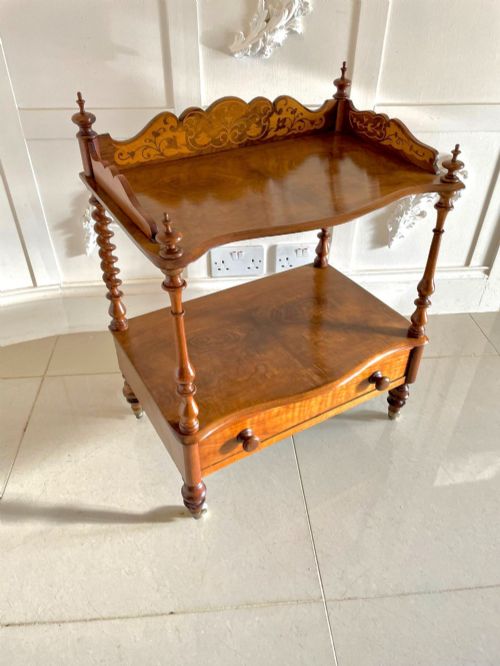
Makers and workshops across England, France, and Italy produced these pieces to function as ornamental yet practical furniture. Buyers encounter variations including drop-leaf surfaces, games tables, and tiered stands.
Materials and construction methods
Craftsmen built these tables using foundational timbers like mahogany, walnut, and rosewood, applying contrasting veneers of satinwood, kingwood, and fruitwood for the decorative inlay. Marquetry patterns were meticulously hand-cut and fitted into the surface ground.
Many French pieces incorporate cast or gilt ormolu mounts to highlight structural curves, while others utilise marble tops for durability and colour contrast. Joinery techniques relied on traditional framing to support the veneered panels without warping.
Brown Marquetry Side Table Retail Price Guide 2026
Typical asking prices for brown marquetry side table among the pieces listed under this phrase on Sellingantiques today, from the lower quarter to the upper quarter. They describe what is for sale here now, not the wider market.
Walnut, mahogany, and rosewood dominate the primary timbers across these listings, paired with intricate floral and geometric marquetry.
Assessing craftsmanship and depth
Quality rests upon the precision of the veneer work and the complexity of the botanical or geometric pictorial designs. Sharp alignment in the contrasting wood tones separates master marquetry from simpler production.
The choice of secondary woods and the refinement of the cast bronze or ormolu mounts indicate the original workshop tier. Heavier timber selection and balanced proportions throughout the legs and aprons distinguish finer examples.
François Linke·Tehan
The Brown Marquetry Side Table Glossary
- Marquetry
- Decorative veneer work assembled in patterns or pictorial scenes using various coloured woods. It differs from simpler inlay by covering the entire surface in fitted pieces.
- Ormolu
- Gilded bronze mounts and decorative trimmings applied to furniture. It adds metallic contrast to wooden surfaces.
- Veneer
- A thin slice of figured wood applied over a stable secondary timber base. This technique allows intricate grain patterns without risking the stability of solid exotic wood.
- Serpentine
- A furniture front or table edge curving gently inward then outward. This undulating shape requires advanced woodworking skill.
- Sutherland table
- A narrow drop-leaf table with hinged flaps that fold down almost vertically. It is designed to save space when not in use.
Brown Marquetry Side Table: Frequently Asked Questions
Where should I place a brown marquetry side table?
These tables fit well beside sofas, armchairs, or in hallways where their inlaid tops remain visible. Their compact dimensions make them useful as lamp tables or decorative stands.
Because many are finished on all sides as freestanding centre tables, they can also float away from walls in the middle of a room.
How do I care for antique wood veneer?
Keep inlaid tables away from direct sunlight and heat sources to prevent the veneers from drying out and lifting. Regular dusting with a soft cloth preserves the polished finish.
Avoid using modern chemical sprays, opting instead for traditional beeswax applied sparingly when the wood appears dry.
What is the difference between marquetry and inlay?
Marquetry covers the entire surface with an assembled mosaic of veneers forming a picture or pattern. Inlay involves cutting recesses into a solid wood background and fitting pieces into those cavities.
Both techniques appear across the listed tables, often combined to embellish tops and drawer fronts.
How can I date a marquetry table?
Dating relies on combining stylistic markers, construction methods, and timber types. Victorian and Edwardian examples often feature machine-sawn secondary woods, whereas eighteenth-century pieces show hand-tool marks.
Revival periods like Louis XV often emulate older designs but utilise nineteenth-century hardware and joinery standards.