
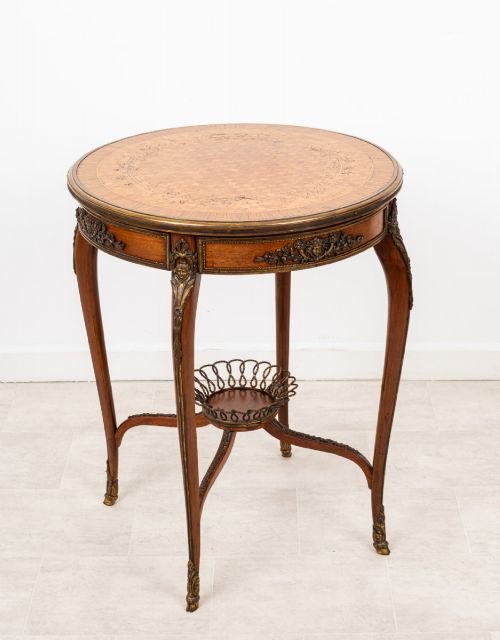

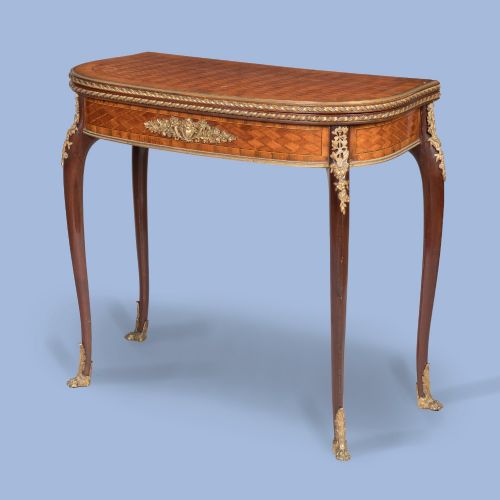
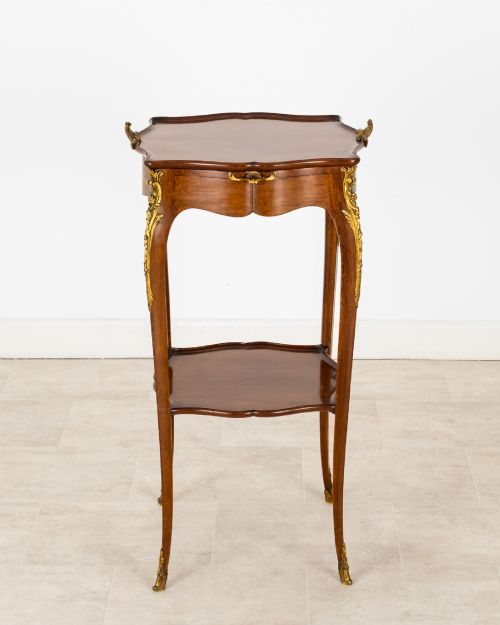
French Marquetry Accent Table
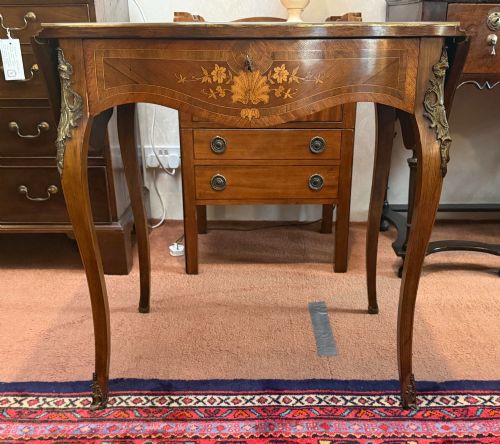
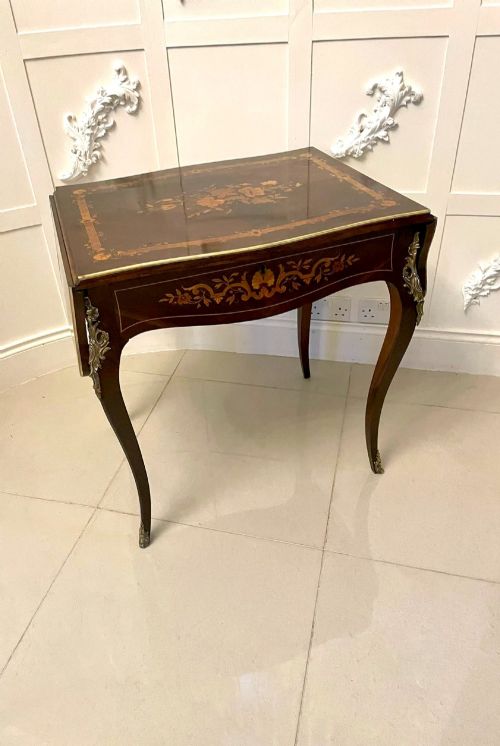
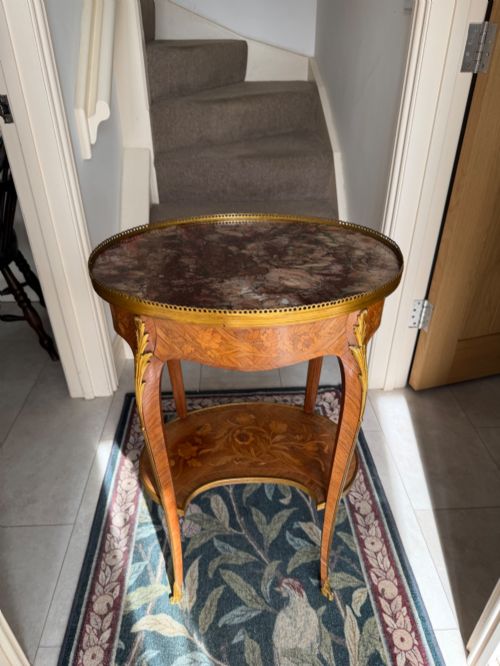
A french marquetry accent table brings intricate floral veneers and gilded mounts into a room, serving as a decorative surface for lamps or objects.
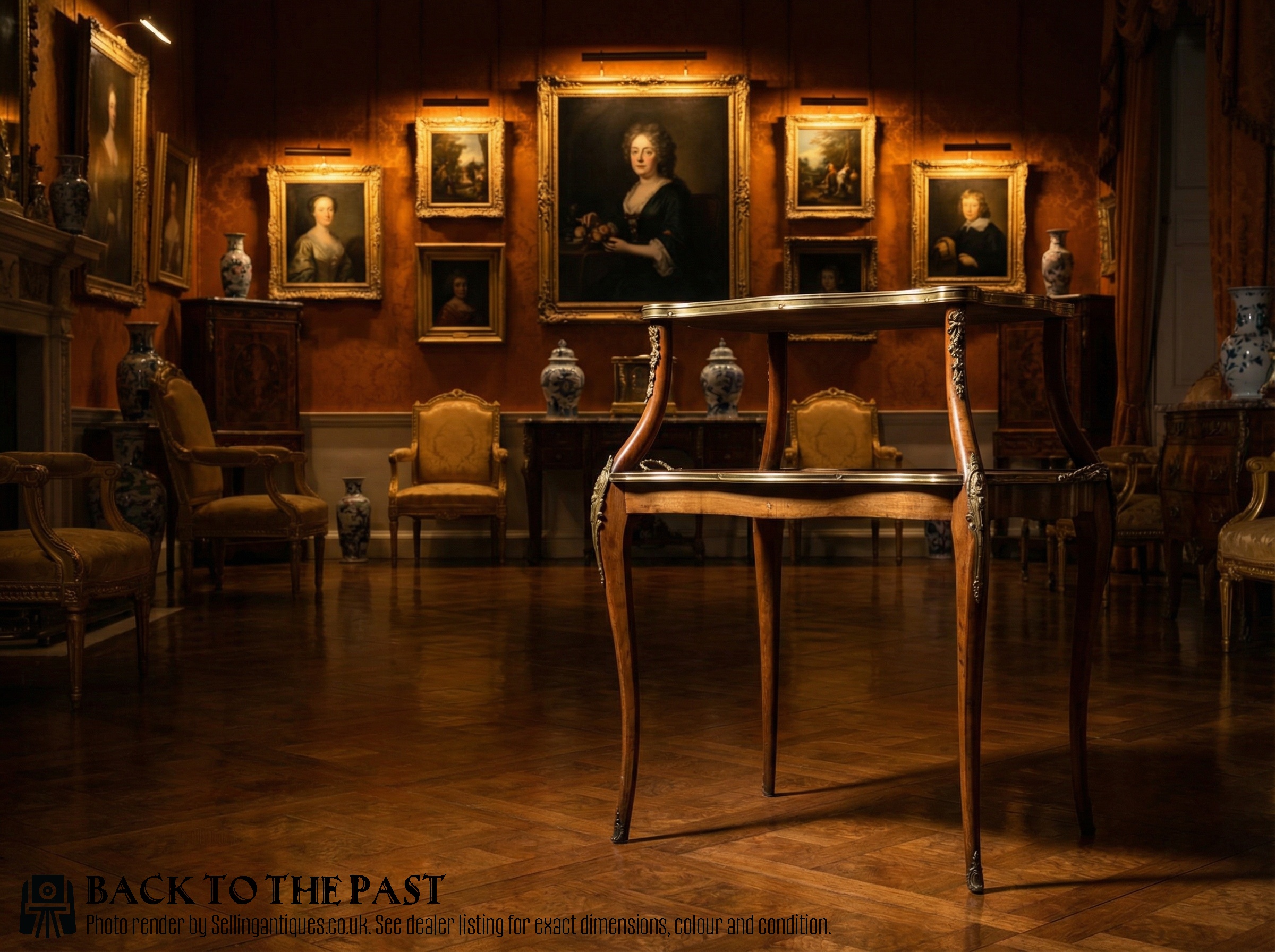
French Marquetry Accent Table
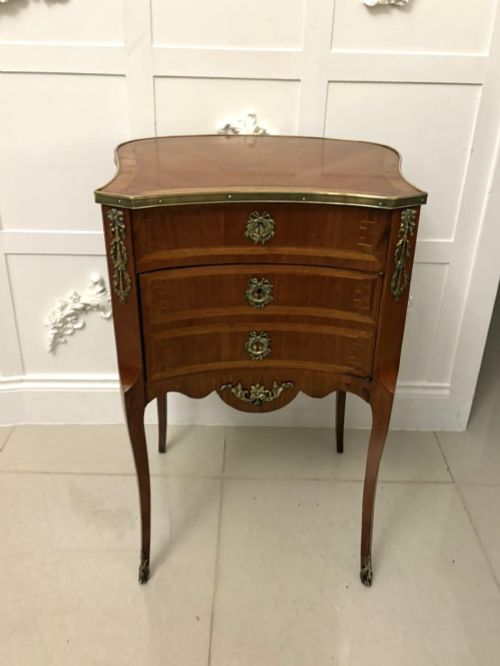
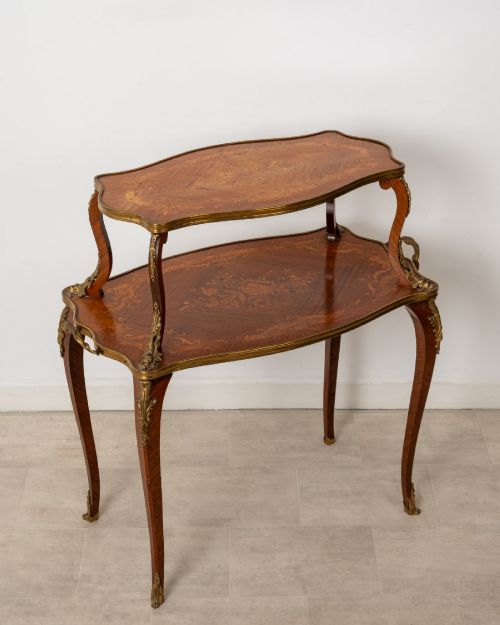
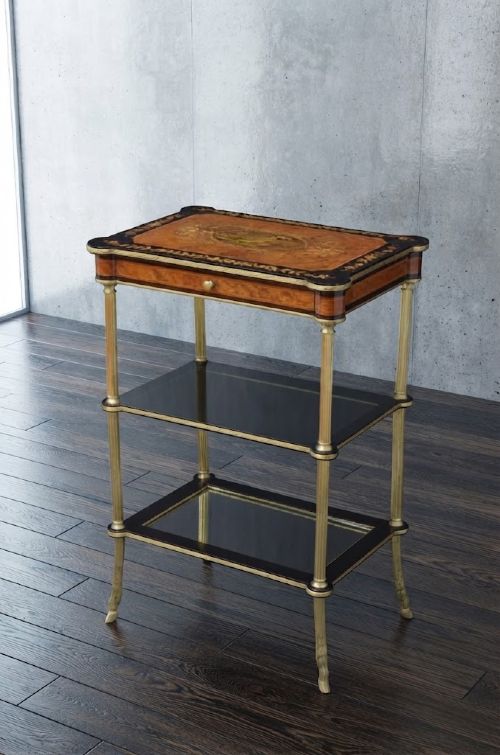
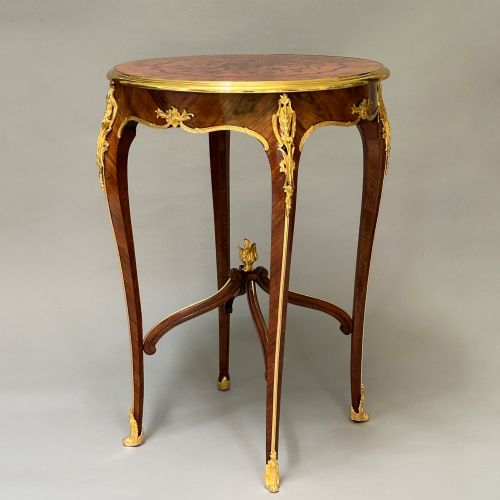
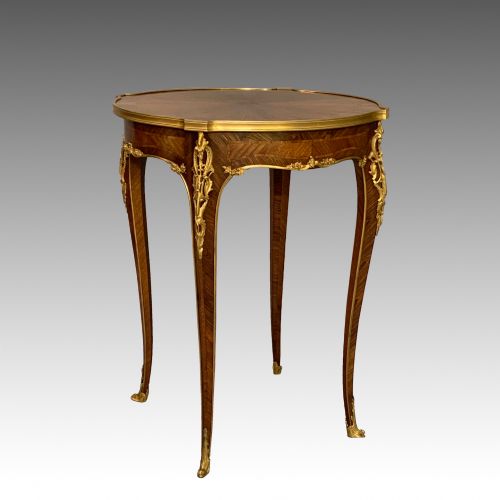
When searching for a french marquetry accent table, you will encounter diverse occasional forms dating primarily from the nineteenth century, including side tables, lamp tables, and two-tier étagères. These furnishings embody revival aesthetics such as Louis XV and Louis XVI styles, alongside Napoleon III designs.
The assortment on this page spans simple walnut and mahogany occasional pieces to grander freestanding centre tables and card tables with detailed floral and geometric inlays. Most examples originate from French workshops and retail houses active between eighteen fifty and nineteen ten.
How they were made
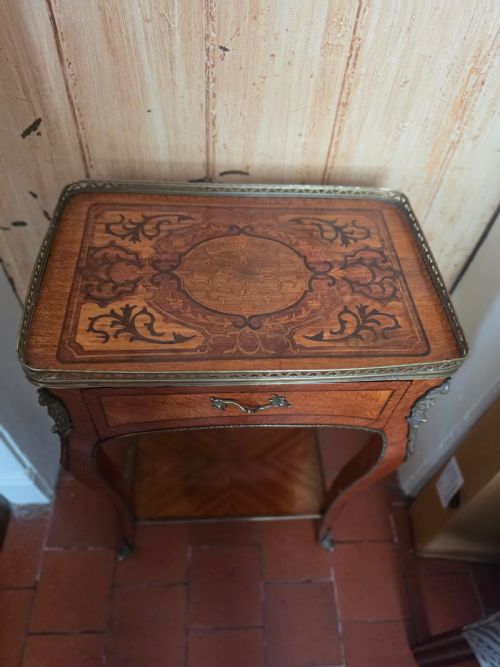
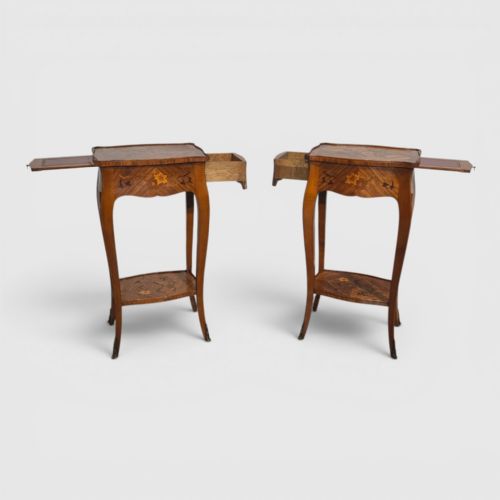
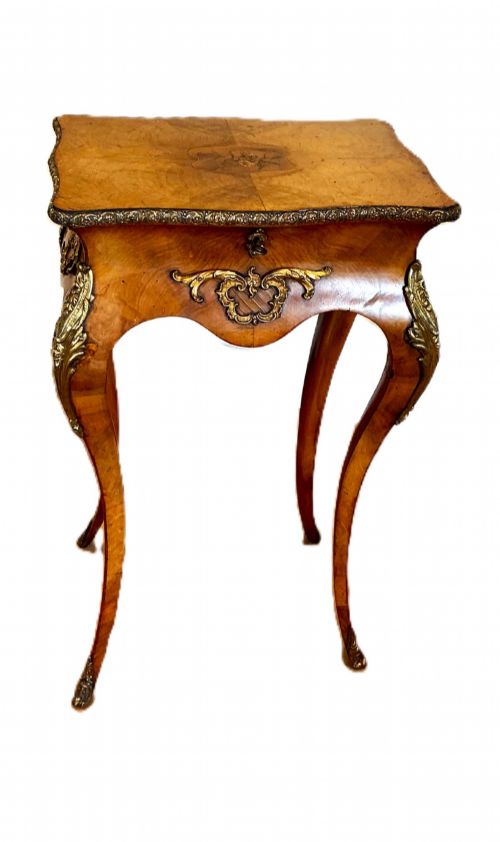
Cabinetmakers constructed these tables using native and exotic hardwoods like kingwood, rosewood, walnut, and mahogany, upon which complex pictorial veneers were painstakingly cut and fitted. Individual timber sections are arranged to create contrasting grains and tones across the tops and shelves.
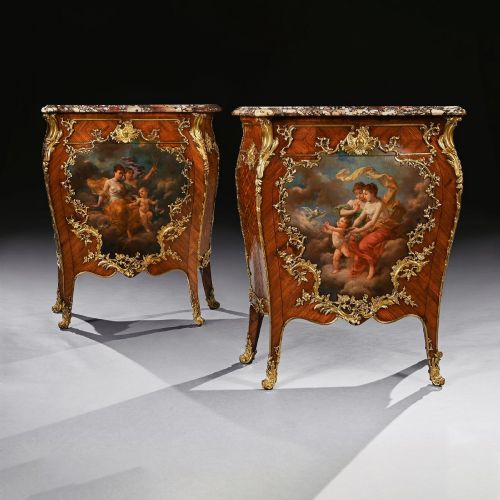
Ornate cast ormolu and gilt-bronze mounts are applied to corners, edges, and legs, often secured with small brass screws to accent the organic curves of the woodwork. Marble inserts frequently top the circular and rectangular surfaces, providing a durable and cool resting place.
Several tables here arrive with tiny hidden drawers designed for love letters, proving that nineteenth-century gossip required dedicated joinery.
What varies in quality
The distinction between standard commercial output and exhibition quality lies in the depth and precision of the marquetry cutting, where superior pieces utilise a wider palette of contrasting timbers to achieve genuine shading and perspective. Finer examples also feature heavier, more crisply chased ormolu mounts rather than light, mass-produced brass alternatives.
Structural integrity and the selection of secondary woods inside drawers and beneath tabletops indicate the care taken during manufacture. Workshops known for high-end cabinetmaking employed thicker veneers and sturdier carcases that withstand environmental changes better than lighter, derivative pieces.
Joseph-Emmanuel Zwiener·François Linke·Émile Gallé·Millet·Edwards & Roberts·A Hugnet Paris
The French Marquetry Accent Table Glossary
- Marquetry
- A decorative technique applying pieces of veneer to a structure to form ornamental patterns or pictures. This method defines the decorative tops of these tables.
- Ormolu
- A metallic alloy resembling gold, used as a surface finish for bronze mounts and decorative ornaments. It highlights the structural contours of the furniture.
- Kingwood
- A dense, heavily figured tropical timber prized for its rich purple-brown colour and contrasting dark streaks. It is frequently employed as the primary veneer on finer tables.
- Étagère
- A piece of furniture consisting of open shelves for displaying small objects. These tiered tables often incorporate inlaid decoration across multiple levels.
- Guéridon
- A small French table supported by one or more central columns or legs. This form appears frequently in round occasional formats.
French Marquetry Accent Table: Frequently Asked Questions
How do I style a french marquetry accent table?
These tables work well beside a sofa or in a hallway, offering a decorative surface that does not overwhelm a room. Keep objects placed on top minimal to allow the wood veneers to remain visible.
Because the surfaces feature detailed pictorial inlays, avoid placing heavy or damp items directly onto the polished wood without protective pads.
Are these tables sturdy enough for daily use?
Most nineteenth-century occasional pieces are structurally sound for holding lamps, books, or small decorative items. However, their slender legs and intricate veneer work mean they require gentle placement away from heavy traffic.
Avoid dragging these tables across floors, as the joints and decorative mounts can loosen under lateral strain when moved.
How do I distinguish Louis XV style from Louis XVI style?
Louis XV style pieces are characterised by flowing, asymmetrical curves, cabriole legs, and elaborate rococo ormolu mounts. The overall silhouette appears organic and rounded.
Louis XVI style tables feature straight, tapered legs, geometric symmetry, and neoclassical detailing like fluting or ribbon twists, reflecting a more restrained aesthetic.
What is the difference between a centre table and a side table?
A centre table is finished on all sides and designed to stand free in the middle of a room rather than pushed against a wall. They often feature elaborate marquetry visible from any angle.
Side tables are generally built to sit flush against a wall or beside seating furniture, sometimes featuring flat backs or single drawers.