




Vintage French Parlour Table
A vintage french parlour table brings continental elegance to a room, offering compact utility and refined period detail.
Vintage French Parlour Table
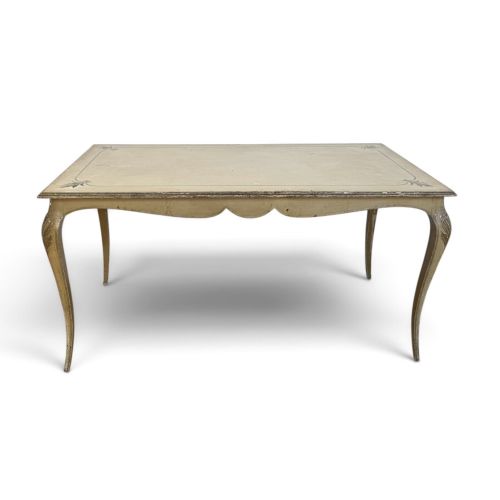
A vintage french parlour table encompasses small occasional, centre, and side tables originating from France across the nineteenth and twentieth centuries. These pieces serve functional roles in reception rooms and parlours while displaying distinct regional and historical revival designs.
The selections encountered on this page typically span the periods from the eighteen-eighties through to nineteen-forty. They emerge in styles such as Louis XV revival, Louis XVI style, and Napoleon III, reflecting historicist tastes of their respective eras.
Common forms include round coffee tables with marble inserts, occasional tables in kingwood, and square or rectangular side tables. Walnut, mahogany, and painted wood dominate the framework of these domestic furnishings.
Materials and construction
Cabinetmakers utilised hardwoods such as walnut, mahogany, and kingwood as the structural foundation for these tables. Marquetry inlay, brass banding, and silver inlay frequently decorate the surfaces, showing precise woodwork techniques.
Many designs incorporate inset marble tops paired with bronze or ormolu ornaments, brass mounts, and gilt finishes. These contrasting metallic and stone elements require specialist assembly to secure heavy tops to wooden frames.
Periods represented span from the mid-nineteenth century through to the nineteen-forties.
Assessing quality and execution
Quality reveals itself in the crispness of the bronze or ormolu mounts and the precision of the marquetry patterns. Finer examples display hand-chiselled detailing on metal elements rather than cast uniformity.
The choice of timbers and the integrity of the joinery distinguish higher-grade pieces from simpler commercial output. Selected veneers, such as figured walnut and kingwood, indicate careful material sourcing by the cabinetmaker.
Maple and Co Paris
The Vintage French Parlour Table Glossary
- Ormolu
- Gilded bronze used for decorative mounts on furniture. It provides a bright metallic contrast against dark timbers like mahogany and walnut.
- Marquetry
- The art of applying pieces of veneer to a structure to form decorative patterns. Craftsmen use varied woods to create pictorial or geometric designs.
- Kingwood
- A dense, richly figured timber native to Brazil, often utilised in French cabinetmaking. Its distinct grain makes it popular for luxury occasional tables.
- Louis XV Revival
- A nineteenth-century design movement inspired by the rococo style of the mid-eighteenth century. It is characterised by curved lines, cabriole legs, and asymmetrical ornamentation.
Vintage French Parlour Table: Frequently Asked Questions
Where should I place a parlour table?
These tables suit reception rooms, hallways, or living spaces where they function as surfaces for lamps, clocks, or decorative objects. Their compact footprint allows them to fit beside seating arrangements without dominating the floor plan.
Because many feature finished tops in marble or polished wood, positioning them away from direct heat sources helps preserve the timber and stone surfaces over time.
How do I identify the period of a table?
Dating relies on observing stylistic markers, construction methods, and materials used in the framework. Pieces referencing Napoleon III or Louis XV revival often date from the nineteenth century, whereas cleaner geometric lines point towards early twentieth-century production.
Examining the underside and joints provides further clues regarding machine assistance versus hand-tool execution during manufacture.
Are marble tops original to these tables?
Marble inserts are common on round coffee tables and occasional tables from this tradition, serving as durable surfaces for daily use. The stone is typically rebated directly into the wooden frame to sit flush with the surrounding moulding.
Matching the thickness and veining of the marble to known period examples helps confirm its authenticity relative to the base structure.
How do I care for polished wood and ormolu?
Routine maintenance involves dusting with a soft, dry cloth to prevent particulate accumulation on delicate surfaces. Avoiding moisture and commercial silicone polishes protects the original patina of the timber.
Ormolu mounts require gentle cleaning without abrasive agents to maintain their metallic lustre without stripping the underlying gilding.