




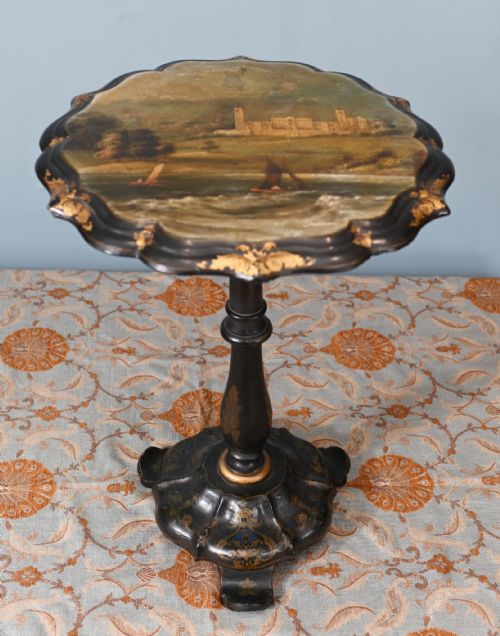
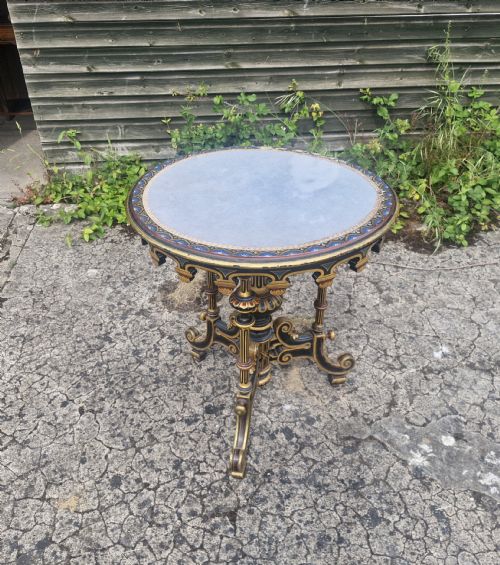


Black Gilt Accent Table
A black gilt accent table brings dark surfaces and metallic detail to a room, ranging from Chinoiserie lacquered surfaces to Regency and Victorian forms.
Black Gilt Accent Table
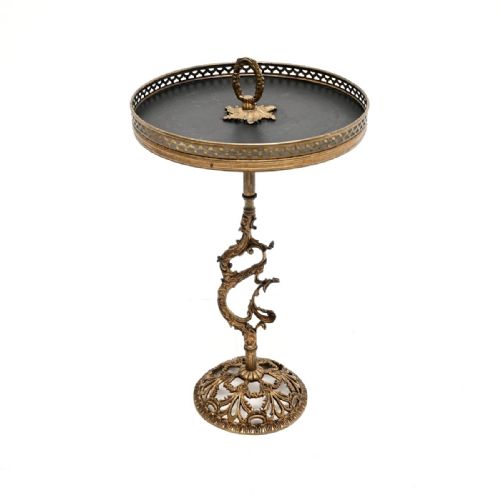
A black gilt accent table covers a diverse group of occasional furniture designed to catch the eye through dark finishes and metallic highlights. When exploring a black gilt accent table, buyers encounter forms ranging from compact side tables and coffee tables to nests of tables, work tables, and wine tables.
The pieces span multiple periods, with examples originating from the eighteenth century, the nineteenth century, and early decades of the twentieth century. English Sheraton, Regency, Victorian, and Edwardian interpretations sit alongside French Neoclassical and Louis XV styles.
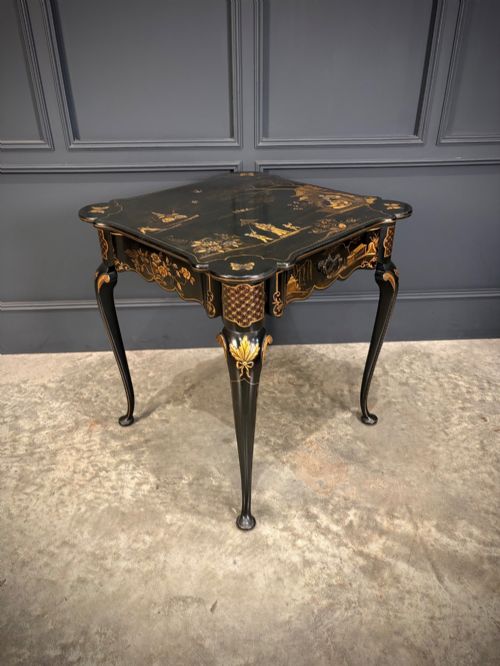
Lacquered surfaces, painted decoration, and ebonised wood define the physical presence of these items. Makers applied gold leaf and gilt accents to create contrast against the dark background of wood, papier-mâché, and lacquer.
Materials and construction
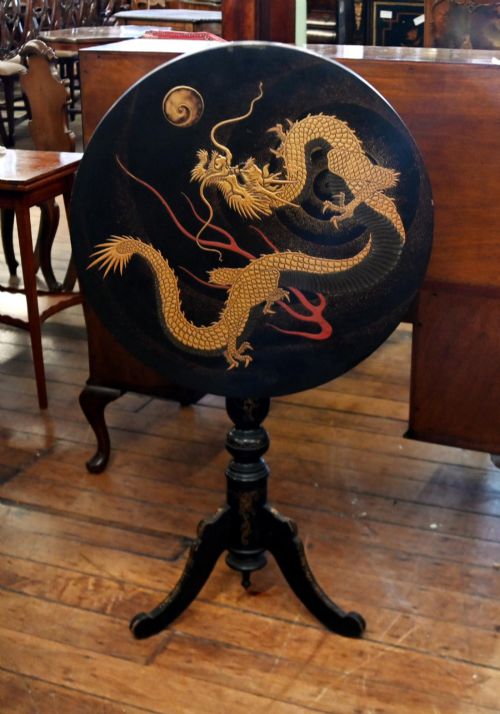
Wood serves as the primary structural foundation, frequently treated with ebonisation or finished in black lacquer to achieve a dark, reflective base. Artisans incorporated papier-mâché for specific forms like tilt-top tables, providing a smooth substrate for painted scenes.
Gilt and gold leaf provide the decorative metallic contrast, applied by hand to mouldings, edges, and raised motifs. Surface decoration often includes hand-painted Chinoiserie scenes, complemented in certain instances by mother-of-pearl inlay or brass mounts.
Black Gilt Accent Table Retail Price Guide 2026
Typical asking prices for black gilt accent table among the pieces listed under this phrase on Sellingantiques today, from the lower quarter to the upper quarter. They describe what is for sale here now, not the wider market.
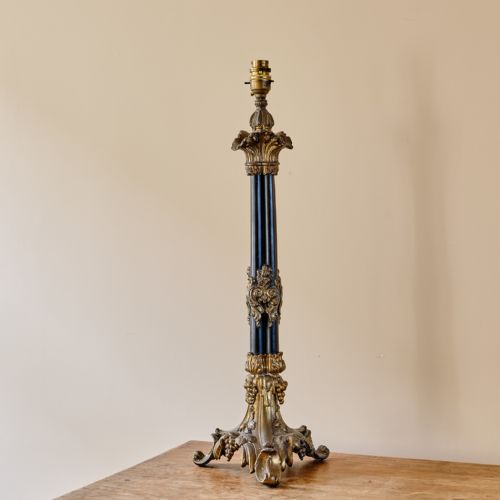
Listings feature wood, lacquer, gilt, gold leaf, fabric, brass, ebonised wood, and paint across side tables, coffee tables, work tables, and lamp tables.
Assessing quality
Quality rests upon the execution of the surface decoration and the precision of the joinery beneath. Hand-painted Chinoiserie and detailed lacquer work separate standard production from finer examples.
The integrity of the gilt application and the preservation of the original black finish dictate the visual strength of a piece. Finer items retain crisp details in their gold leaf work and stable structural frames across legs, pedestals, and tripartite bases.
The Black Gilt Accent Table Glossary
- Chinoiserie
- European decorative style reflecting Chinese artistic influences, frequently seen in gold-painted motifs on black lacquer surfaces. This style dominated various periods from the eighteenth century onwards.
- Ebonised
- Wood treated with a dark stain or finish to imitate expensive ebony. It forms the dark structural foundation for many gilt-accented pieces.
- Lacquer
- A durable resin finish applied in multiple layers and polished to a smooth sheen. It creates the characteristic glossy dark background typical of Asian-inspired European tables.
- Papier-mâché
- A composite material made from paper pulp or layers of paper bound with glue, pressed and dried into shape. It provided a stable surface for painted and inlaid occasional tables.
- Boulle-work
- Elaborate inlay technique utilising tortoiseshell and brass, appearing on select decorative lacquer tables. This method adds rich texture to the dark surfaces.
Black Gilt Accent Table: Frequently Asked Questions
Where do I place a black gilt accent table?
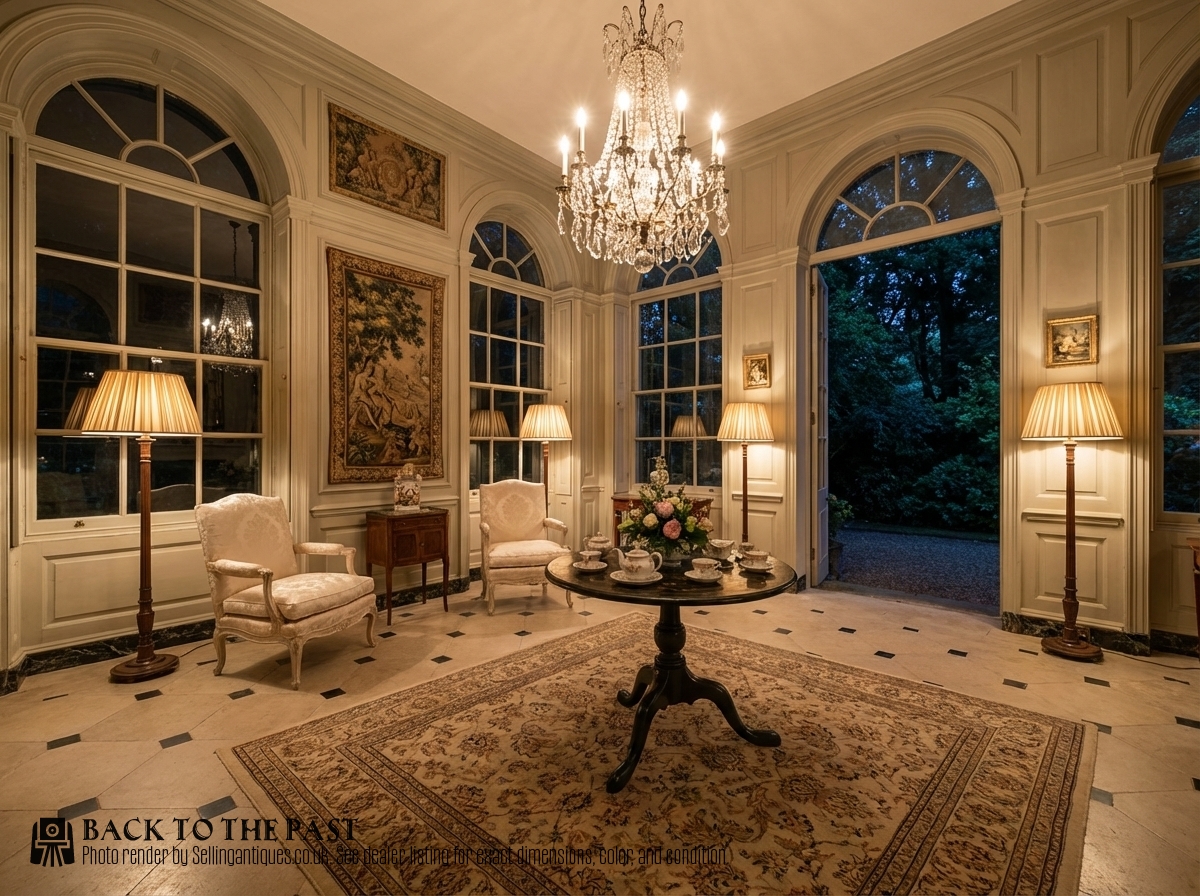
These tables function well beside seating or as standalone surfaces in reception rooms and hallways. Their dark finishes and metallic details draw the eye without overwhelming surrounding furniture.
Matching the period style of the table with the room helps integrate the piece. A Regency or Sheraton example suits traditional settings, while ebonised Edwardian or later pieces adapt easily to eclectic interiors.
How do I care for lacquered and gilt surfaces?
Dusting gently with a soft, dry cloth prevents the accumulation of particles on delicate painted details and gold leaf. Avoid harsh chemical cleaners and excessive moisture.
Keep these tables away from direct sunlight and heat sources to protect the lacquer finish from cracking or fading over time. Wax polishes are generally unnecessary on modern lacquer and should be used with caution.
What is the difference between Chinoiserie and Regency styles?
Chinoiserie relies on whimsical landscapes, figures, and botanical motifs painted in gold on black lacquer. It emphasises decorative narrative and surface pattern.
Regency style focuses on classical proportion, structural restraint, and architectural lines, sometimes incorporating painted neoclassical pedestal designs or classical motifs.
Are these tables sturdy enough for daily use?
Most occasional tables, side tables, and coffee tables from these periods are built for light decorative use rather than heavy loads. Occasional surfaces hold lamps, drinks, or small decorative objects securely.
Tilt-top tables and nests of tables require careful handling when repositioning or separating individual sections. Checking the stability of the base or legs ensures safe daily placement in a room.