





Chinoiserie Tripod Table
A chinoiserie tripod table brings hand-painted lacquer, gilt motifs and three-legged mobility into a room with striking visual authority.
Chinoiserie Tripod Table
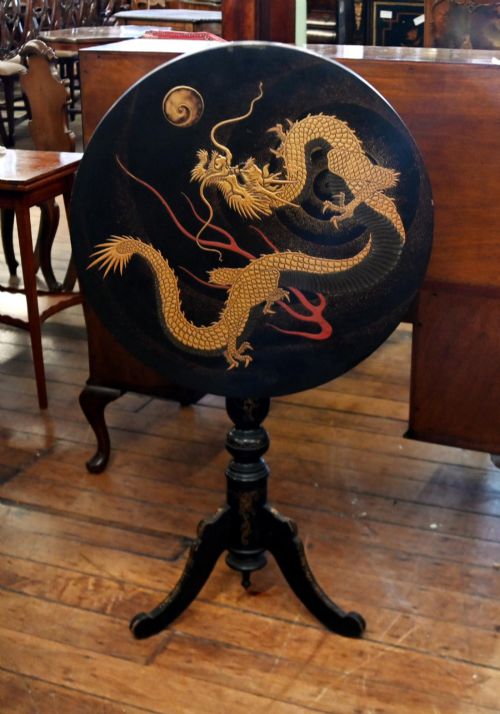
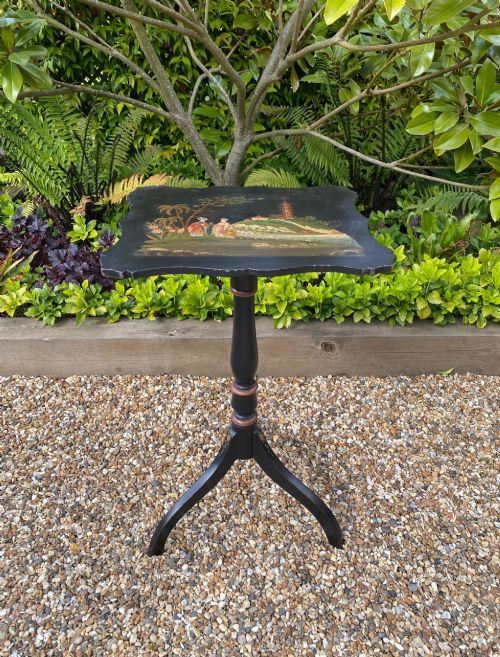
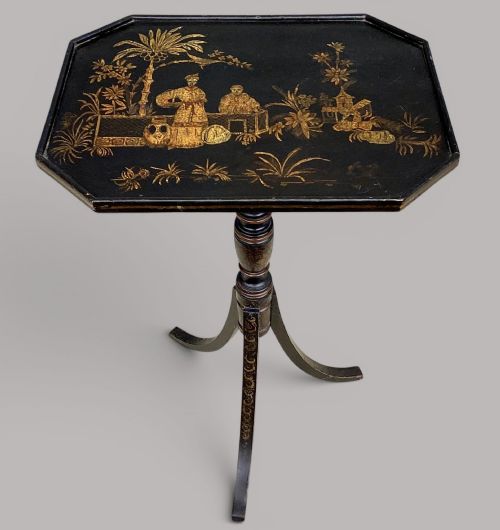
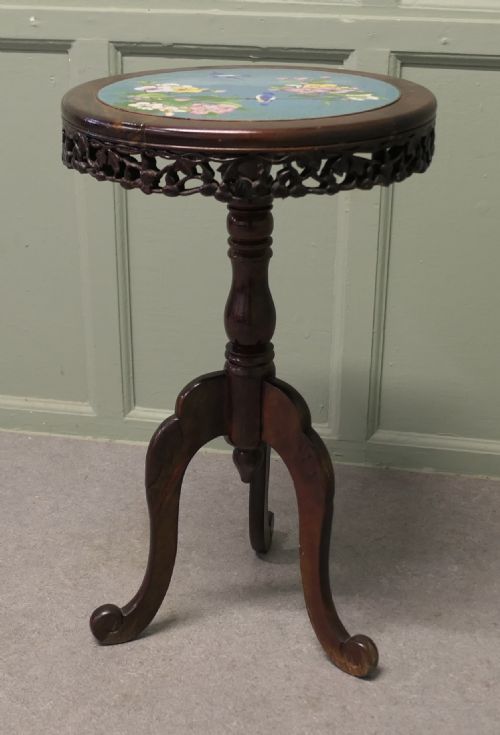
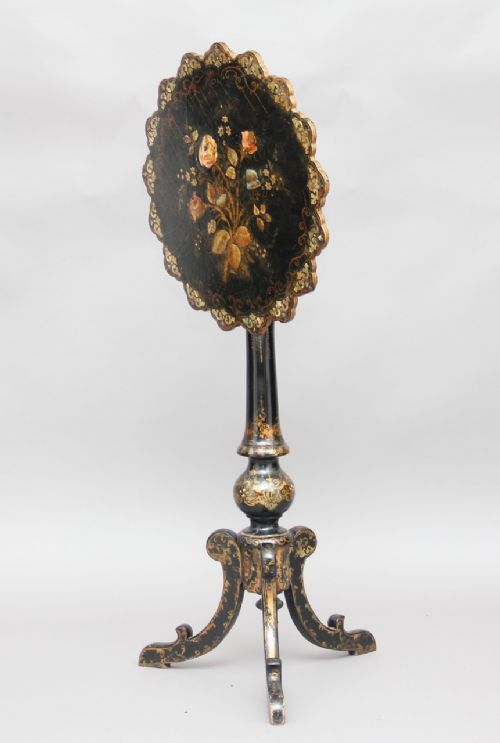
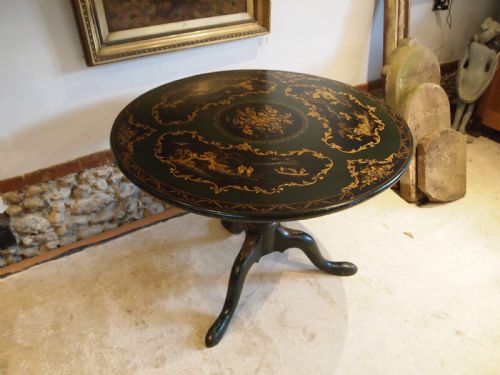
A chinoiserie tripod table combines a raised wooden top with a three-legged pedestal base, ornamented in decorative styles inspired by Chinese and East Asian art. When searching for a chinoiserie tripod table, buyers encounter forms ranging from compact wine tables and tilt-top occasional tables to torcheres and side tables.
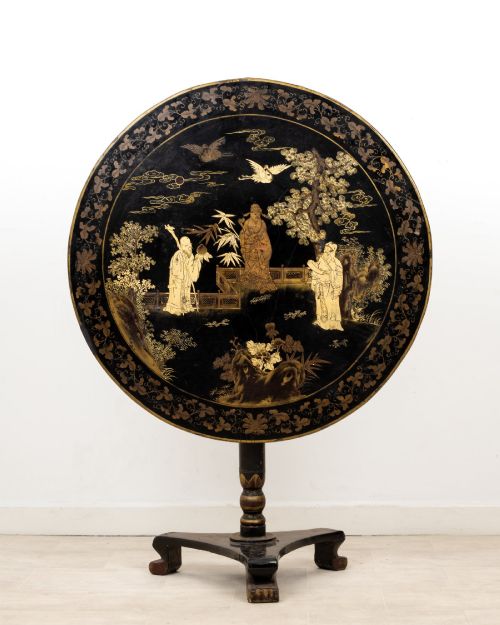
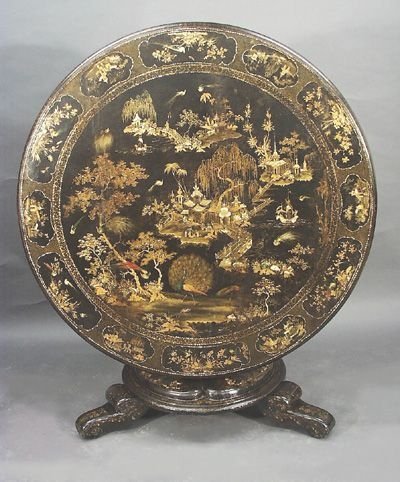
The versions most frequently met on this page span the Georgian, Regency, Victorian, and Edwardian periods, alongside early 20th-century revivals. Black and vermilion red lacquered surfaces dominate the selection, often enriched with hand-painted figures, landscapes, birds, and flowers in gold leaf or polychrome pigments.
Materials and construction methods
Construction relies primarily on seasoned woods such as hardwood, ebonised timber, and rosewood, sometimes shaped into papier-mâché or tilt-top mechanisms. Cabinetmakers turned central pedestals and shaped tripartite or tripod legs to support circular or tray tops.
Surface decoration involves traditional japanning and lacquer techniques, building up layers of paint and varnish before applying gold leaf and fine hand-painting. Certain pieces integrate carved hardwood frames with inset marble tops or cloisonné elements.
Chinoiserie Tripod Table Retail Price Guide 2026
Typical asking prices for chinoiserie tripod table among the pieces listed under this phrase on Sellingantiques today, from the lower quarter to the upper quarter. They describe what is for sale here now, not the wider market.
Several tables feature birds and flowers painted so finely they might outlast the teacups once set upon them.
Judging the quality of the finish and form
Quality rests heavily on the depth and execution of the lacquer work, where hand-painted details display superior brushwork, perspective, and layering compared to transfer-printed or hurried decoration. The integration of parcel gilt and the preservation of original pigment determine the visual impact.
Structural integrity of the tripod base and the stability of the tilt-top mechanism dictate everyday usability. Finer examples maintain crisp carving on the legs and pedestal turnings, aligning period cabinetmaking standards with artistic execution.
Gillows
The Chinoiserie Tripod Table Glossary
- Japanning
- European imitation of East Asian lacquerwork, created using layers of varnish and heat-cured finishes. It became a defining technique for decorating 18th- and 19th-century furniture.
- Tilt-top
- A tabletop hinged to the central pillar so it can pivot vertically when not in use. This mechanism allowed tables to be stored flat against a wall.
- Tripod base
- A pedestal support resting on three splayed legs. This design prevents rocking on uneven floors.
- Parcel gilt
- The practice of applying gold leaf selectively to specific raised details or carved highlights on a painted surface. It provides contrast against black or coloured lacquer.
- Torchiere
- A tall, slender stand designed originally to hold a candle or torch. In later periods, it functioned as a display surface for decorative objects.
Chinoiserie Tripod Table: Frequently Asked Questions
What is a chinoiserie tripod table?
It is a small movable table supported by three legs, decorated with European interpretations of Chinese art.
These pieces typically function as wine tables, side tables, or occasional tables.
How do I spot a tilt-top mechanism?
Look beneath the tabletop for a wooden or brass catch that releases the surface to pivot upright.
This feature allowed makers to save space in period drawing rooms.
Are all these tables antique?
The selection spans from the Georgian and Regency eras through the Victorian and Edwardian periods up to the early 20th century.
Revival pieces from the 1900s and 1910s sit alongside earlier originals.
How do I care for lacquer surfaces?
Dust gently with a dry, soft cloth and keep the timber away from direct sunlight and moisture.
Harsh chemical polishes can damage the delicate gold leaf and varnish.