



Rococo Style Low Table
These rococo style low table selections bring swirling, asymmetrical nineteenth and early twentieth-century French and Italian elegance straight to a modern drawing room.
Rococo Style Low Table
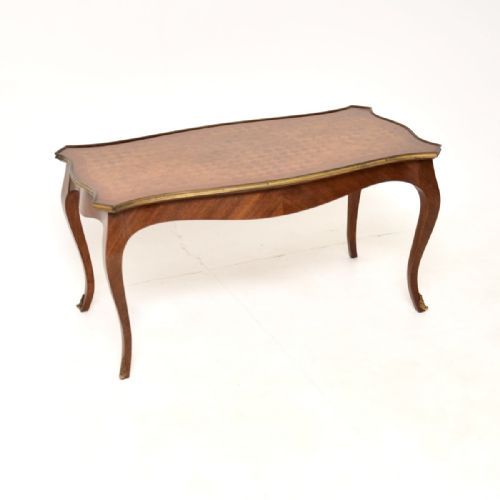
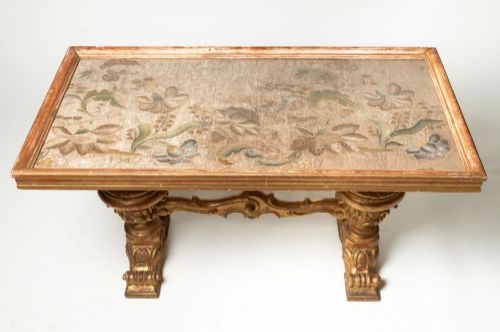
Makers and manufacturers from the nineteenth century onwards adapted traditional forms such as the Louis XV style, Régence, and Italian Baroque into lower formats suitable for modern living. Walnut, giltwood, and mahogany form the structural backbone of these pieces, often finished with elaborate carving or parquetry.
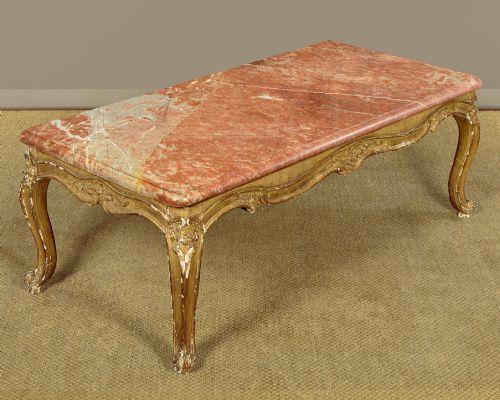
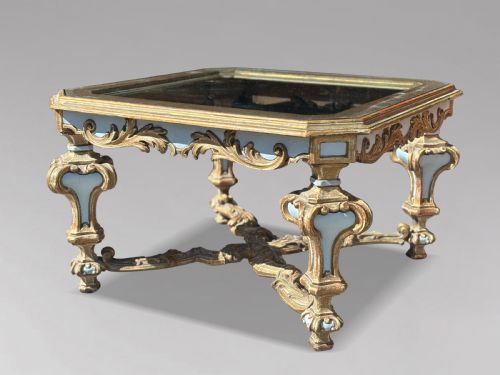
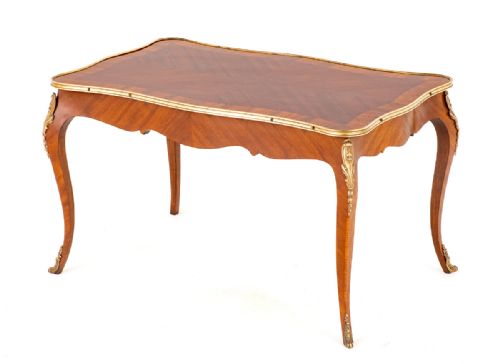
Buyers will encounter rectangular, square, and circular tables alongside variations featuring marble tops, brass mounts, and inlaid wood. Origins span French, Italian, and Dutch workshops, reflecting diverse regional interpretations of the aesthetic.
Materials and construction
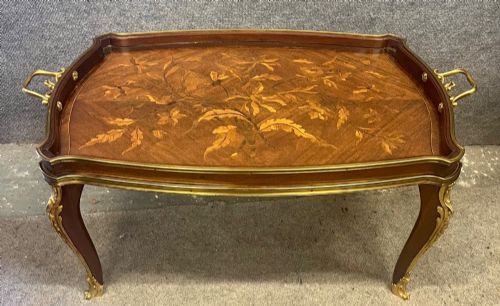
Cabinetmakers utilised timber frames of walnut, mahogany, satinwood, and pine, frequently applying intricate marquetry and parquetry veneers to tabletops. Giltwood and ormolu mounts provide the characteristic metallic sheen associated with the revival periods.
Stone and glass integration appears regularly, with polished marble slabs fitted directly into wooden frames. Surface treatments range from clear polish on figured walnut to painted finishes, black lacquer, and gold and silver gilding.
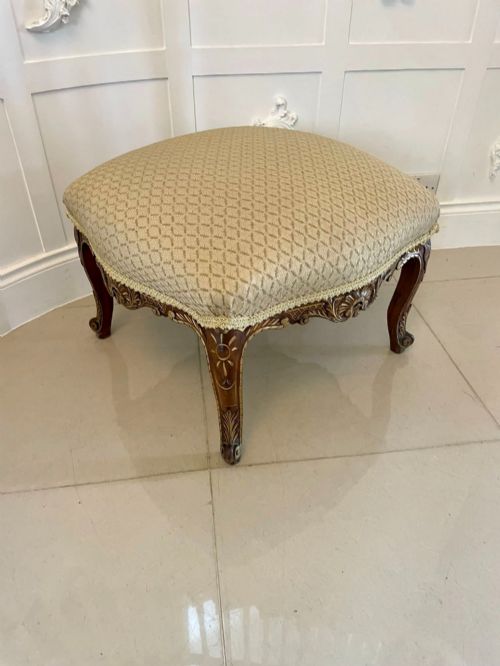
Several window seats and footstools have crossed the boundary to serve double duty as low coffee tables.
Evaluating craftsmanship and execution
The distinction between standard production and superior work lies in the depth and crispness of the hand-carved details on the wooden frames and cabriole legs. Finely figured walnut veneers and precise parquetry patterns demand greater skill from the cabinetmaker than plain painted or lacquered surfaces.
The integration of heavy materials like marble and ormolu requires robust structural joinery to maintain stability across low proportions. Superior pieces demonstrate seamless alignment between metal mounts, stone tops, and wooden chassis.
B Battioli Varese
The Rococo Style Low Table Glossary
- Ormolu
- Gilded bronze mounts applied to furniture. This technique creates decorative highlights on corners and legs.
- Marquetry
- Fitted pieces of wood veneer forming decorative pictures or geometric patterns. Artisans use contrasting timbers to create visual depth.
- Parquetry
- Geometric mosaic woodwork used for flooring and tabletops. It relies on symmetrical repeating shapes.
- Cabriole leg
- A furniture leg that bends outward and then tapers inward. It typically ends in a carved foot inspired by organic forms.
- Giltwood
- Wood carved and treated with gold leaf or gold paint. This finish produces a brilliant metallic appearance.
Rococo Style Low Table: Frequently Asked Questions
What is a rococo style low table?
These pieces are low furniture formats, primarily coffee tables and occasional tables, styled after eighteenth-century decorative movements. They draw heavily on French and Italian revival designs from the nineteenth and early twentieth centuries.
Characterised by curved lines, ornamental carvings, and occasional gilt or marble finishes, they bring historic European aesthetic traditions into contemporary interior spaces.
How do I date a rococo style low table?
Dating relies on examining the timber species, construction methods, and secondary woods used beneath the surface. Pieces on this page span the Victorian era, the nineteenth century, and early twentieth-century decades up to the 1930s.
Revival furniture often adopts earlier design motifs while utilising machine-cut elements or twentieth-century hardware that help narrow down the production period.
Are marble top low tables practical?
Marble tops offer a solid, heat-resistant surface that handles daily use in a reception room effectively. The stone adds considerable weight, which helps keep low tables stable on carpets or wooden flooring.
Care involves wiping spills promptly to prevent staining, particularly on porous or older marble varieties paired with wooden bases.
Where should I place a low table?
These tables function well as central coffee tables in drawing rooms or sitting areas where their decorative tops remain visible. Smaller occasional tables and adapted stools fit beside armchairs or against walls as plant stands.
Their distinct profiles make them focal points that complement both traditional period rooms and eclectic modern interiors.