


1930s Louis XV Table
A 1930s louis xv table brings curved rococo lines and French revival elegance into a modern room without losing practical function.
1930s Louis XV Table
When you search for a 1930s louis xv table, you encounter revival pieces spanning bedside cabinets, dining furniture, and console tables. These forms borrow heavily from eighteenth-century French design, characterised by serpentine fronts, cabriole legs, and asymmetrical ornamentation.
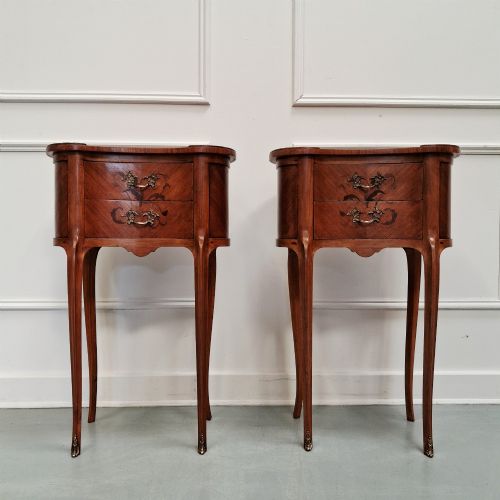
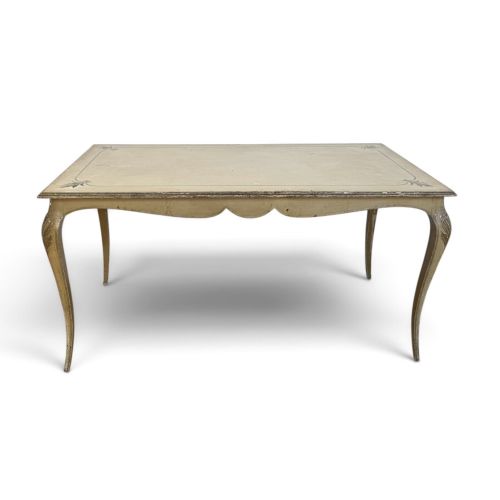
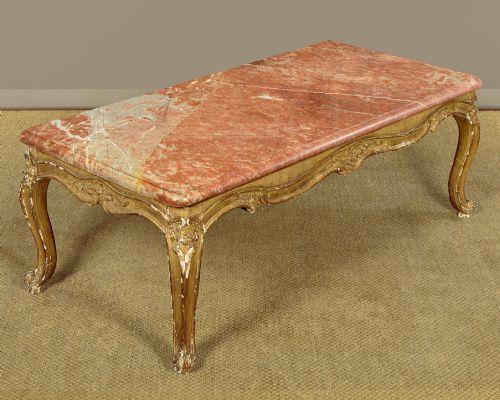
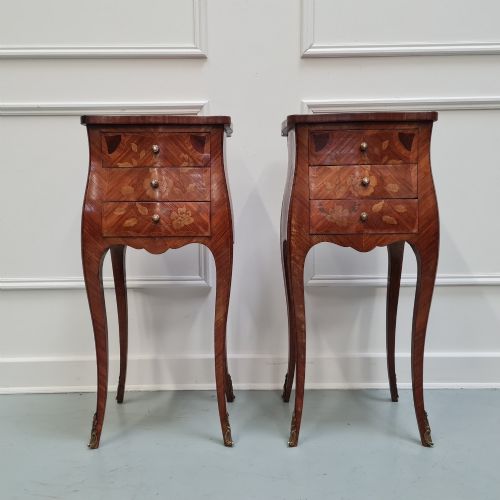
The versions most commonly met on this page include pairs of bedside tables, marble-topped coffee tables, and drawer-leaf dining tables. Makers of the interwar period leaned into French Rococo revival and provincial styles, adapting classical proportions for smaller domestic spaces.
Objects span several functional types, from small kidney-shaped nightstands to larger centre tables finished in paint, gilding, or polished veneers. Each piece reflects the enduring appeal of Louis XV aesthetics during the early twentieth century.
Materials and construction methods
Workshops utilised a range of native and exotic timbers, notably kingwood and walnut, alongside oak and softer painted woods. Artisans applied complex parquetry and marquetry patterns to table tops and drawer fronts, demonstrating high levels of cabinet-making skill.
Surface decoration frequently involved gold leaf, giltwood, and painted finishes, often paired with contrasting marble tops and cast brass mounts. Drawer-leaf mechanisms and serpentine rails required precise carpentry to achieve the fluid curves demanded by the style.
The selection includes specialised forms such as kidney-shaped nightstands and desks alongside standard dining and coffee tables.
Assessing quality and craftsmanship
The distinction between standard production and finer examples lies in the handling of the wood and the execution of the carving. Superior items feature hand-cut marquetry, substantial marble inserts with clean bevels, and finely cast brass hardware rather than stamped metal.
Structural integrity also separates the grades, visible in the seamless joining of cabriole legs and the smooth operation of drawers in bedside cabinets and desks. Painted and gilded finishes show depth and careful layering in better examples, avoiding flat or uniform coloration.
The 1930s Louis XV Table Glossary
- Cabriole leg
- A furniture leg that curves outward and then tapers inward, mimicking an animal's limb. This form is central to the Louis XV style.
- Marquetry
- Decorative veneer work arranged in pictorial or geometric patterns on a wooden surface. Craftsmen cut thin slices of various timbers to create these designs.
- Serpentine
- A shape characterised by a waving edge, curving outward then inward. It appears frequently on the fronts of bedside tables and commodes from this era.
- Giltwood
- Wood that has been coated with gold leaf or a gold-coloured substance. This finish highlights the carved details on frames and table edges.
- Parquetry
- A geometric mosaic of wood pieces used for decorative floors and table tops. Walnut and other timbers are cut precisely to form repeating patterns.
1930s Louis XV Table: Frequently Asked Questions
What is a 1930s louis xv table?
These are revival pieces produced in the 1920s and 1930s that imitate the ornate, curved aesthetics of eighteenth-century French furniture. They include dining tables, coffee tables, and bedside cabinets.
Craftsmen drew upon French Rococo and provincial styles, applying traditional techniques to create functional furniture for twentieth-century homes.
Where were these tables used?
They served various domestic roles, functioning as centre tables in reception rooms, extension tables in dining spaces, or small bedside stands. Their decorative nature made them suitable for visible areas of the home.
Smaller variants like kidney-shaped nightstands and compact desks were designed for bedrooms and boudoirs.
How do I care for marble tops?
Marble surfaces require regular cleaning with a damp cloth and mild, non-acidic soap to prevent staining. Avoid placing citrus or acidic liquids directly onto the stone.
Polishing with a suitable stone wax helps maintain the sheen and protects the surface from minor scratches.