


Parcel Gilt Centre Table
A parcel gilt centre table brings striking gilded highlights to a room, catching the light across diverse periods from Regency to the twentieth century.
Parcel Gilt Centre Table
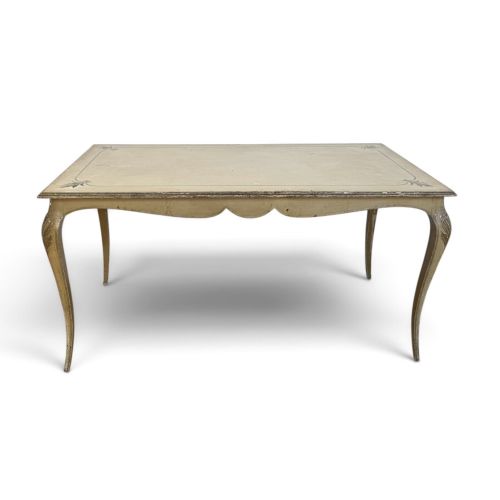
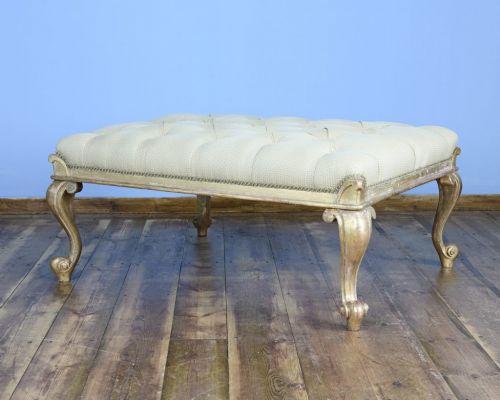
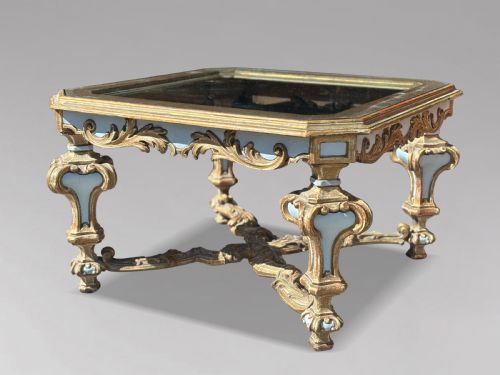
A parcel gilt centre table sits proudly in the middle of a room, serving as both a functional surface and a dramatic focal point. When you search for a parcel gilt centre table, you encounter forms ranging from grand Regency rosewood designs to Italian painted baroque coffee tables and French revival stands. These pieces operate primarily as freestanding tables, side tables, sofa tables, or even footstools, drawing the eye with their selective gilding.
The selections span distinct historical eras, with Regency examples appearing alongside nineteenth-century mahogany pieces, Victorian works, and later twentieth-century interpretations. You are just as likely to find a marble-topped Venetian style coffee table as you are to discover a Georgian footstool. Each item utilises partial gilding to accentuate carved details, creating contrast against dark woods or painted surfaces.
How they were made
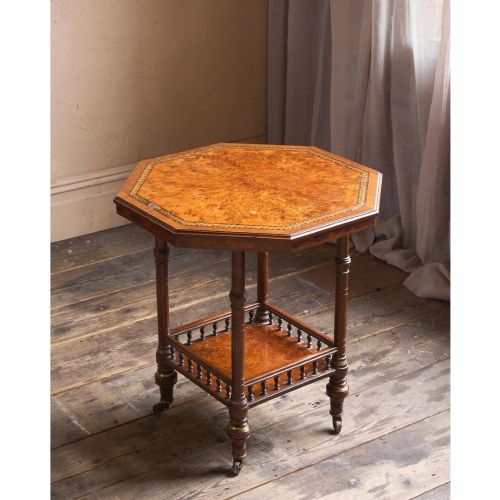
Craftsmen built these tables using timber foundations such as rosewood, mahogany, walnut, and amboyna veneer, often applying rich wood grains beneath the finish. Selected areas then received gold leaf or paint to create the signature parcel gilt effect against ebonised or painted wood bodies. Marble tops also appear frequently, adding weight and a cool stone surface to the wooden frames.
Joinery and carving techniques varied by period, from the sweeping curves of French Louis XV revival pieces to the architectural lines of Regency and William IV furniture. Workshops applied gold leaf meticulously to raised carvings, mouldings, and feet, ensuring the gilded portions caught the ambient light of a drawing room or hall.
Some nineteenth-century makers evidently decided that a footstool deserved just as much grand parcel gilding as a stately drawing room table.
What varies in quality
The depth and crispness of the carved ornamentation dictate much of the visual distinction between examples. Tables featuring hand-carved mahogany or detailed ebonised work with precise gold leaf application demonstrate superior craftsmanship compared to simpler painted surfaces. The choice of secondary woods and the selection of fine veneers, such as amboyna or figured rosewood, elevate a piece significantly.
Structural integrity and the preservation of the original parcel gilt surfaces determine the long-term standing of each table. Pieces retaining their original marble tops and untouched gilding hold greater historical coherence, reflecting the original workshop standards of makers like Gillows or Wilkinsons of Ludgate Hill.
Gillows·Wilkinsons of Ludgate Hill
The Parcel Gilt Centre Table Glossary
- Parcel gilt
- Woodwork or metalwork that is partially gilded with gold leaf, leaving portions of the underlying wood, paint, or ebonised finish exposed to create contrast. This technique highlights specific carved details or mouldings.
- Centre table
- A freestanding table designed to be viewed from all sides, traditionally placed in the middle of a room rather than against a wall. These often served practical purposes in hallways, libraries, or principal drawing rooms.
- Amboyna veneer
- A highly prized decorative wood veneer derived from the burl of the amboyna tree, known for its rich, speckled grain pattern. It frequently appears on high-end nineteenth-century side and centre tables.
- Giltwood
- Timber that has been coated with a thin layer of gold leaf or gold paint. In antique furniture, it provides a luminous decorative finish that reflects candle or window light.
- Ebonised
- Wood finished to resemble ebony, typically achieved by staining dark hardwoods or fruitwoods. It provides a stark, dark backdrop that makes parcel gilt highlights stand out sharply.
Parcel Gilt Centre Table: Frequently Asked Questions
Where did they put a centre table?
These tables stood proudly in the middle of a room, vestibule, or large hallway rather than being pushed against a wall. They functioned as central display surfaces for lamps, books, or decorative objects.
In larger houses, a centre table often anchored the seating arrangement in a drawing room or served as a welcoming piece in an entrance hall.
How do I spot Regency style?
Regency design draws heavily on neoclassical motifs, featuring clean architectural lines, dark woods like rosewood, and restrained parcel gilt ornamentation. Look for classical proportions and disciplined use of brass inlays or carved details.
Pieces from this era often balance heavy timber frames with refined, elegant supports and precise gilded highlights.
What is parcel gilding?
Parcel gilding is a decorative technique where only specific parts of an object receive gold leaf, while the rest of the surface shows painted wood, stain, or ebonisation. This creates a striking visual contrast between the gilded highlights and the dark or coloured body.
Craftsmen used this method to draw the eye to carved mouldings, feet, and decorative borders.
Can I use one as a coffee table?
Many historical centre tables and side tables adapt well to modern living spaces as coffee tables, provided the height and scale suit your seating. Tables with marble tops offer a durable surface that handles daily use with ease.
Their decorative bases and gilded details bring an element of traditional craftsmanship into a contemporary sitting room.