



Rosewood Drop Flap Table
A rosewood drop flap table brings rich grain and practical folding leaves into a room, spanning periods from Regency to Edwardian.
Rosewood Drop Flap Table
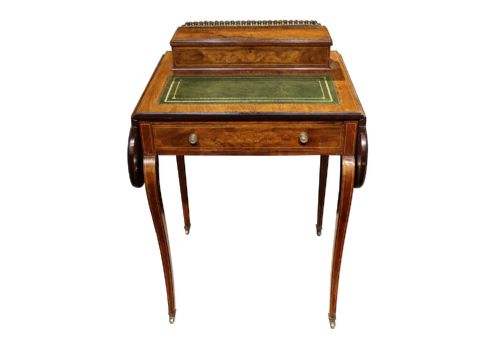
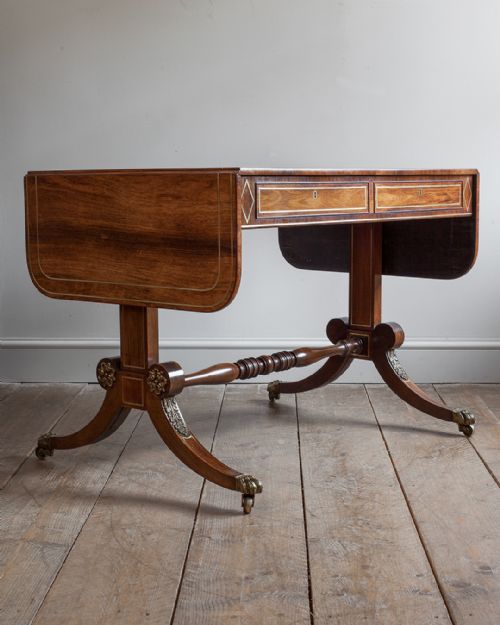
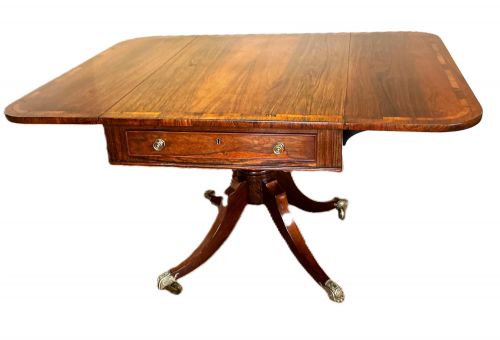
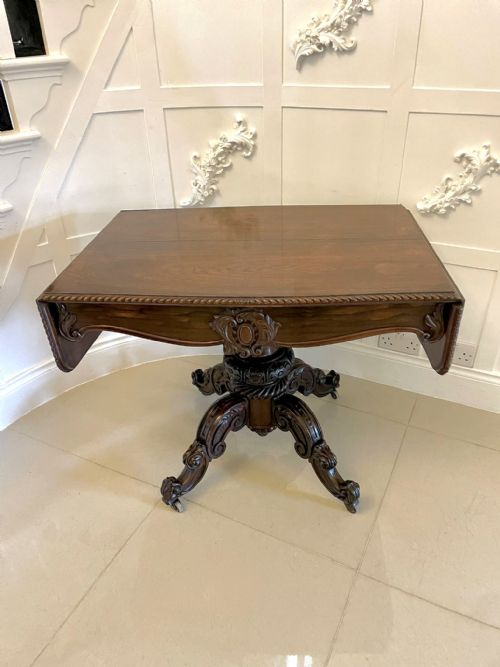
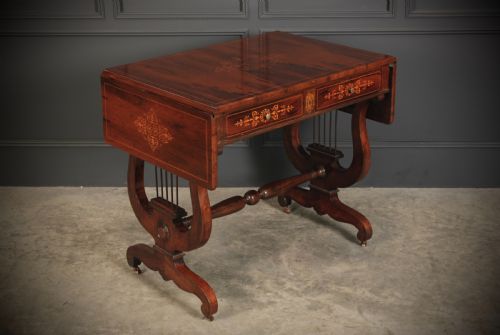
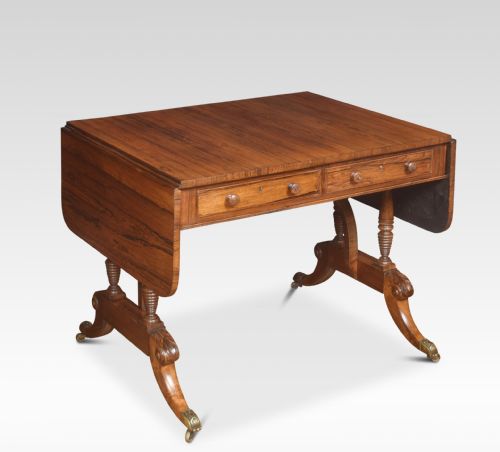
A rosewood drop flap table is a versatile surface designed with hinged leaves that lower when space demands and rise when needed. You will find these pieces largely split between sofa tables, writing tables, and occasional tables spanning the Regency, Victorian, and Edwardian eras. The form adapts readily to domestic use, offering extended top space in compact footprints.
The Regency period delivers formal sofa tables with twin pedestals, while Victorian and Edwardian examples lean towards games, sewing, and writing desks with fitted interiors. Crossbanding in mahogany or satinwood often frames the primary rosewood timber, adding visual contrast to the drop leaves.
Makers such as Gillow and James Mein appear in the record alongside French provincial interpretations and simpler occasional tables. Buyers encounter pieces ranging from grand library desks to small lamp tables suited for bedside or parlour placement.
How They Were Made
Cabinet makers utilised dense rosewood timbers, frequently applying veneers over secondary woods to create smooth, figured tabletops. Crossbanding in lighter woods like boxwood or satinwood defined the edges of the drop flaps and tabletops.
Inlay work, including marquetry and satinwood details, enriched the surfaces of later Edwardian and Victorian pieces. Brass fittings, castors, and parcel gilding completed the structural and decorative elements of Regency and William IV formats.
The listings demonstrate a strong presence of Regency and Edwardian pieces, utilising rosewood, mahogany, satinwood, and boxwood inlay.
What Varies in Quality
Quality rests heavily on the depth of the rosewood grain and the precision of the crossbanding and inlay work. Superior examples show seamless alignment when the drop flaps are raised, with stable hinges and well-fitted interior drawers.
Cabinetwork attributed to known workshops or bearing maker stamps commands attention for its structural integrity and refined carving. Lesser pieces rely on simpler construction without secondary timber framing or intricate marquetry.
James Mein·Gillow
The Rosewood Drop Flap Table Glossary
- Drop flap table
- A table featuring hinged leaves on either side that lower or rise to adjust surface area. This mechanism defines the primary form found across Regency and Edwardian variants.
- Sofa table
- A rectangular occasional table traditionally placed in front of a sofa, equipped with drop leaves and often twin pedestals. These tables frequently incorporate drawer storage.
- Crossbanding
- A strip of veneer applied to the border of a tabletop, run at right angles to the central grain. This technique frames the rosewood surface with contrasting timber such as mahogany.
- Sutherland table
- A narrow drop leaf table with exceptionally wide flaps that fold down almost vertically. It is designed to take up minimal space when closed.
- Marquetry
- Decorative patterns formed by fitting together small pieces of coloured veneer into wood surfaces. Edwardian and Victorian makers utilised this to ornament tabletops and friezes.
Rosewood Drop Flap Table: Frequently Asked Questions
How do I use a drop flap table in a modern room?
Keep the leaves dropped against a wall as a console or side table until extra surface area is required. Raise the flaps when hosting guests or needing a temporary desk.
Position the piece away from direct heat sources to protect the rosewood veneer and prevent timber movement.
What is the difference between a sofa table and a drop leaf table?
Sofa tables traditionally feature two pedestals or end supports and were built long and narrow to sit behind or beside seating furniture. Standard drop leaf or occasional tables often rely on four legs or a central column.
Both utilise folding flaps, but sofa tables frequently include functional drawers beneath the top.
How can I tell a Regency rosewood table from a Victorian one?
Regency models lean towards architectural lines, brass paw feet, and bolder rosewood grains with less surface ornamentation. Victorian and Edwardian examples often introduce marquetry, satinwood inlay, and carved pedestals.
Examining the secondary woods and construction joints helps confirm the period of manufacture.
Are these tables suitable for daily writing use?
Writing tables and lady's writing desks within this group feature fitted interiors and stable surfaces designed for correspondence. Occasional and sofa tables can serve the same purpose if the drop flaps lock securely into place.
Utilising a blotter protects the antique rosewood finish from ink or daily wear.