

Regency Carved Pedestal Table
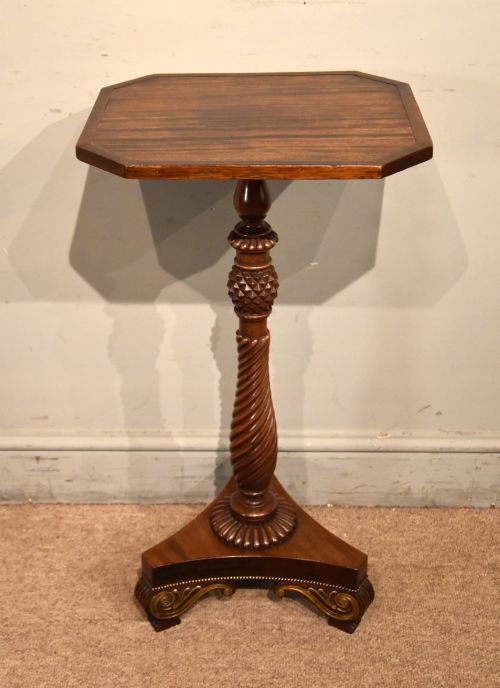
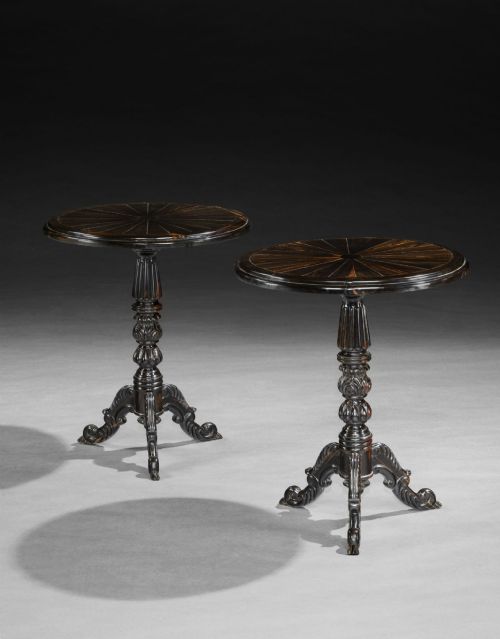
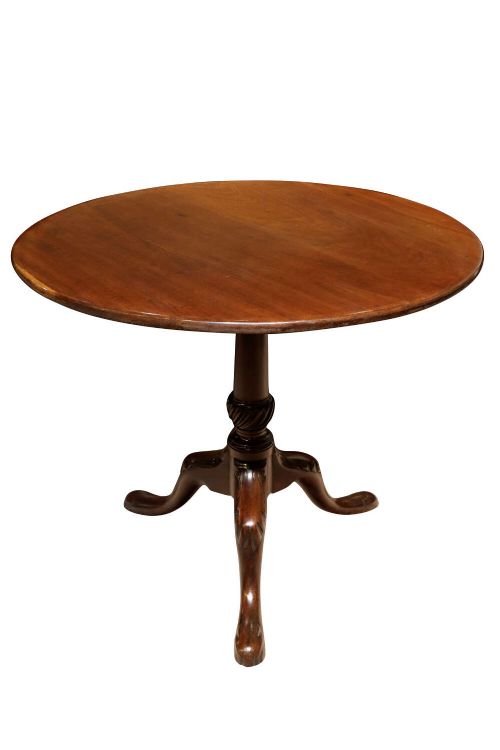
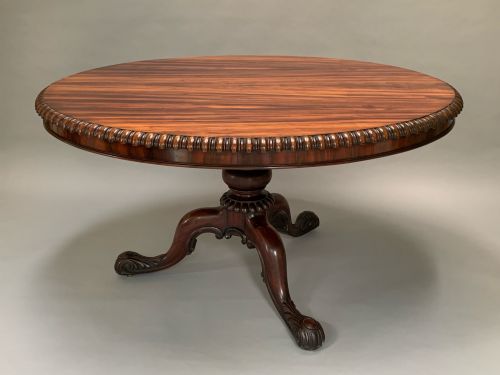
A regency carved pedestal table brings monumental rosewood and mahogany forms into a room, offering clever folding leaves and solid central columns.
Regency Carved Pedestal Table
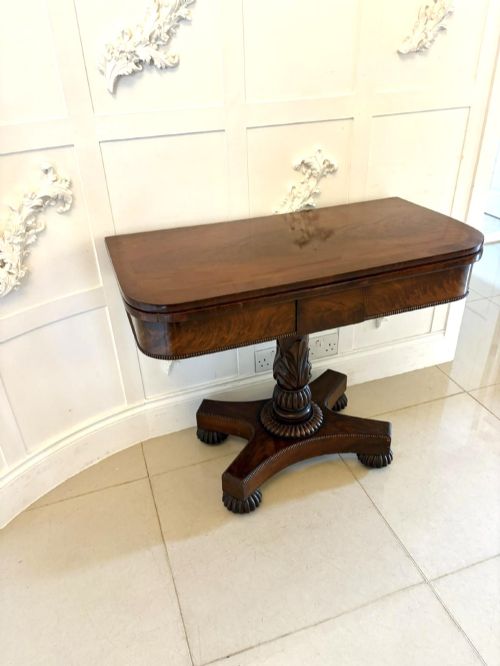
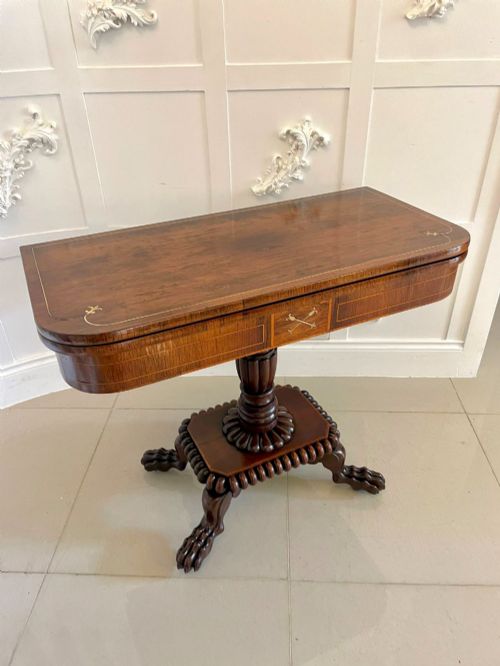
A regency carved pedestal table encompasses forms designed for dining, card playing, breakfasting, and library use during the early nineteenth century. These pieces emerge from periods spanning the Regency proper, George IV, and William IV eras, alongside later revivals.
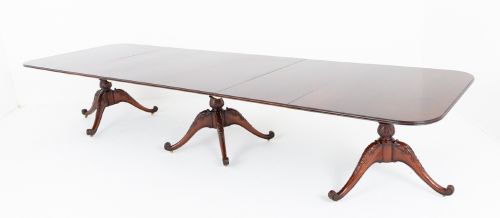
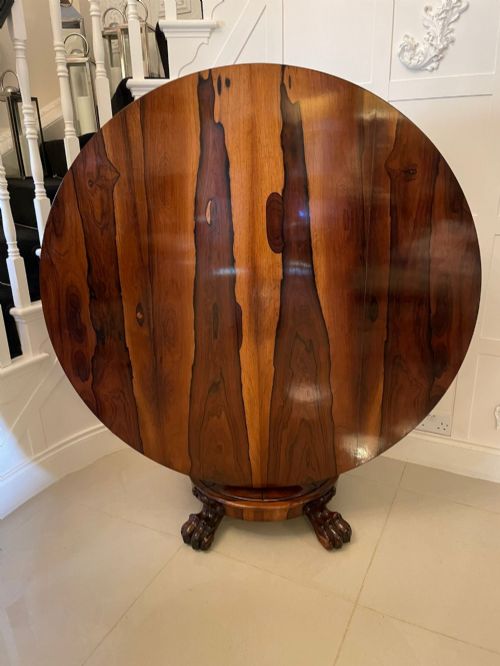
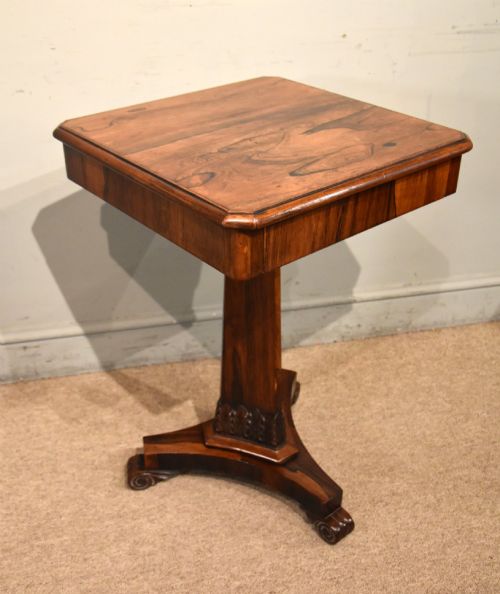
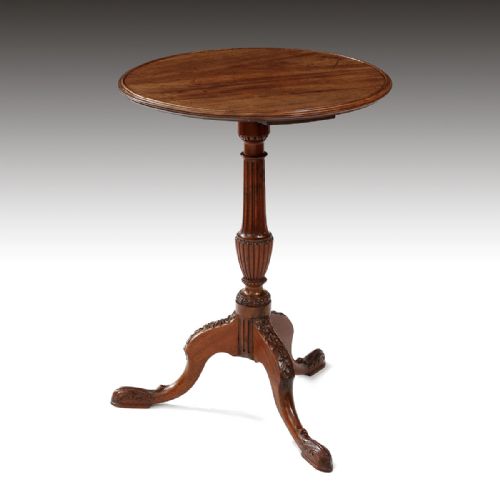
Dining and breakfast variants dominate the larger formats, supported by heavy central columns resting on triform or quadruped platform bases. Smaller examples include Pembroke, card, and occasional tables fitted with tilt tops or swivel surfaces.
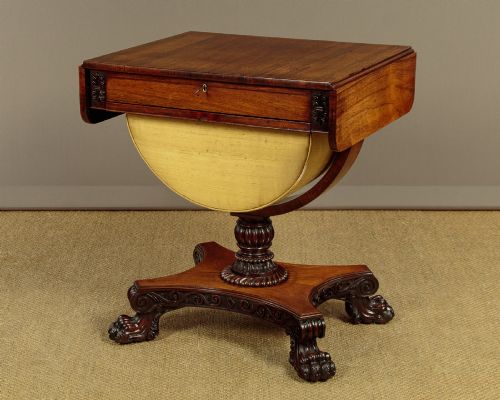
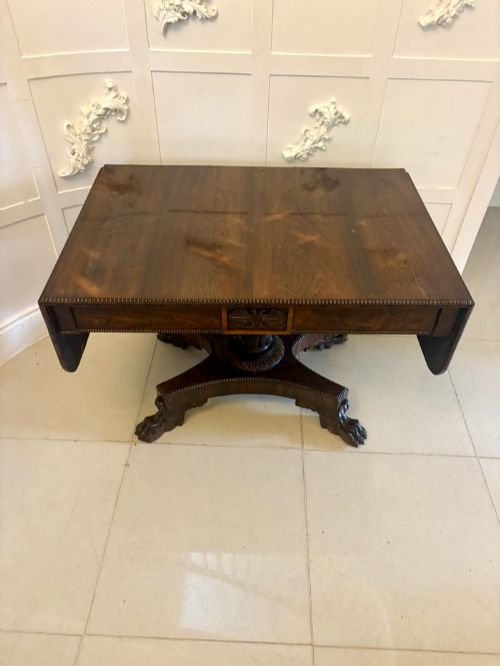
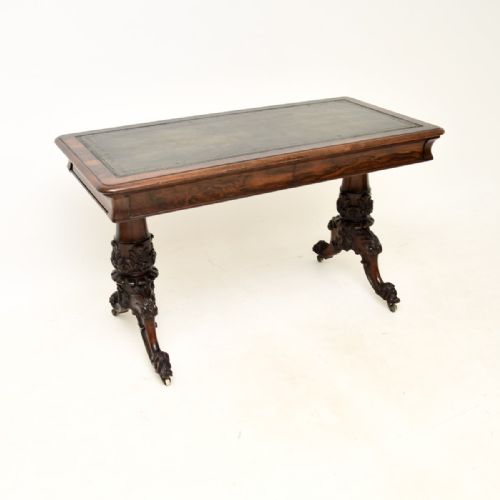
Makers often utilised rosewood and mahogany as primary timbers, frequently incorporating brass inlay, leather inserts, and intricate carved details upon the pedestals and feet. The grouping also includes occasional Edwardian and twentieth-century interpretations replicating these earlier forms.
Distinguishing quality
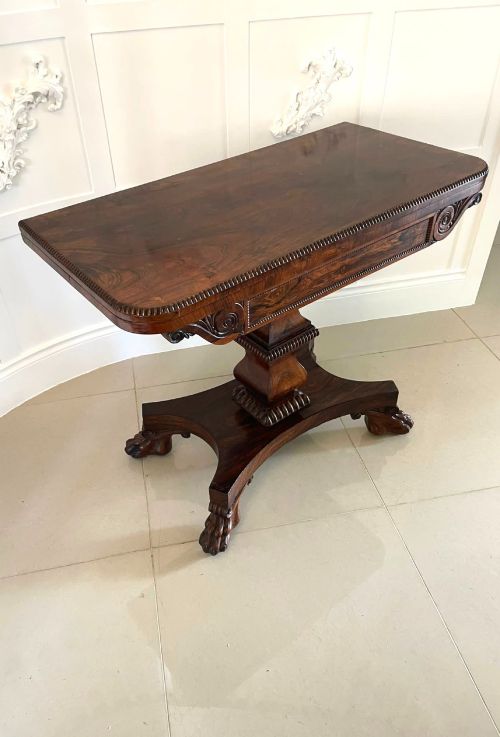
Superior examples display crisp, deeply articulated hand-carving on the central columns and feet, whereas lesser pieces rely on simpler turned posts or shallow moulding. The choice of timber grain, particularly highly figured rosewood veneers and matched mahogany top panels, distinguishes finer cabinet work from utilitarian production.
Structural integrity rests upon the joinery connecting the pillar to the platform base and the precision of mechanisms in pivoting card tables or tilting breakfast tops. Original brass castors, intact brass stringing, and stable subframes indicate higher standards of original manufacture.
Object forms span dining, centre, card, occasional, drum, and writing tables alongside specialised pieces like teapoys and work tables.
Gillows·Peters of Genoa
The Regency Carved Pedestal Table Glossary
- Triform base
- A three-sided platform or foot arrangement supporting the central pedestal column. This design provides stability for circular breakfast and centre tables.
- Tilt-top
- A hinged table surface that tips vertically when not in use. This mechanism allowed large dining and breakfast tables to be stored against walls.
- Card table
- A folding table designed for gaming, featuring a hinged top that opens to reveal a baize or leather-lined playing surface. Many incorporate a concealed well for storing counters.
- Drum table
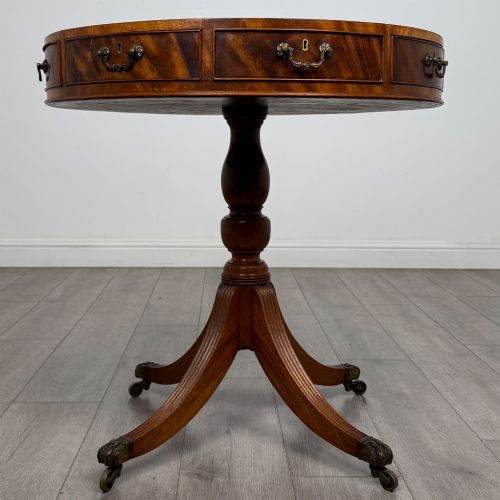
- A circular library table with a deep frieze containing alternating drawers and dummy drawers. They typically stand upon a single central pillar.
- Teapoy
- A small box or chest mounted on a pedestal stand, designed for storing loose tea leaves. They often feature internal caddies and compartments.
Regency Carved Pedestal Table: Frequently Asked Questions
What is a pedestal table?
A pedestal table is a freestanding item supported by a single central column rather than four corner legs. This central shaft typically rests on a weighted platform or radiating feet.
Such construction allows diners or sitters to place chairs around the perimeter without leg interference. These pieces appear in numerous formats including dining, breakfast, and library tables.
How do I date these tables?
Dating relies on observing timber choices, leg configurations, and carving styles characteristic of specific reigns and periods. The use of dense rosewood with brass inlay often points toward the Regency or William IV eras.
Later Victorian and Edwardian pieces frequently replicate these forms with subtle differences in proportion and internal construction. Secondary woods and fastener types further clarify the timeline.
Are tilt-top tables stable?
Tilt-top tables utilise a secure wooden block and brass catch mechanism to lock the surface in a horizontal position during use. When properly maintained, this joint provides a firm and level tabletop.
The tilting function was originally intended for space-saving storage rather than daily adjustment. Checking the pivot block ensures the mechanism remains sound.