


Brown Rosewood Centre Table
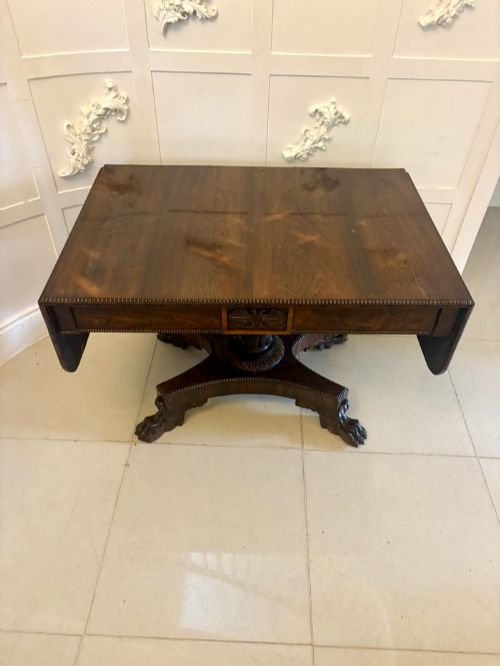
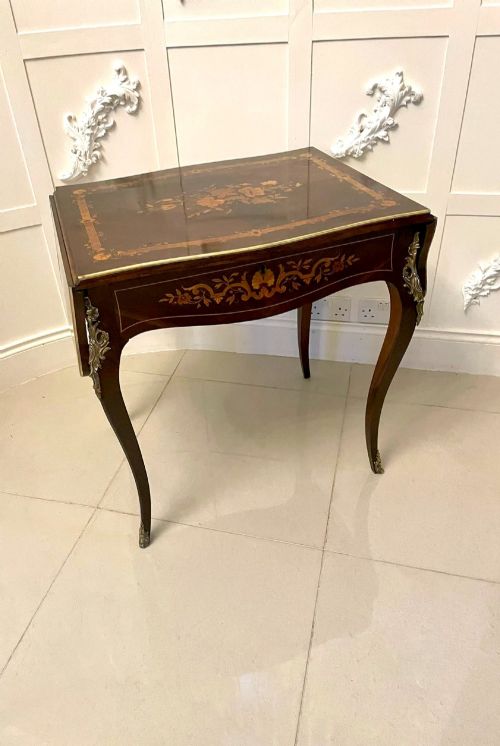
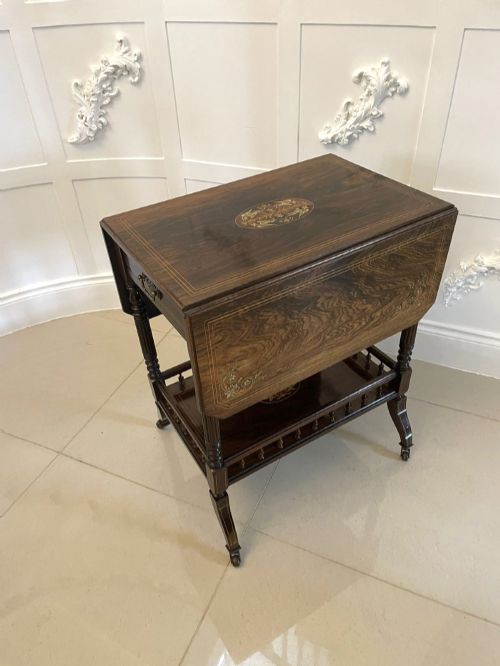
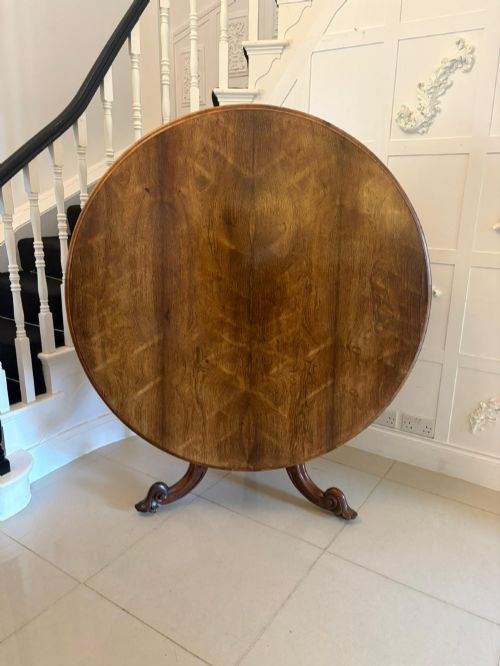
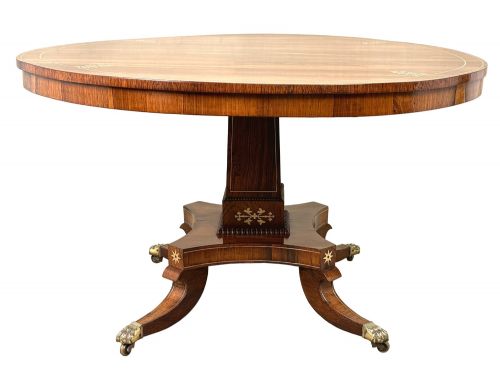
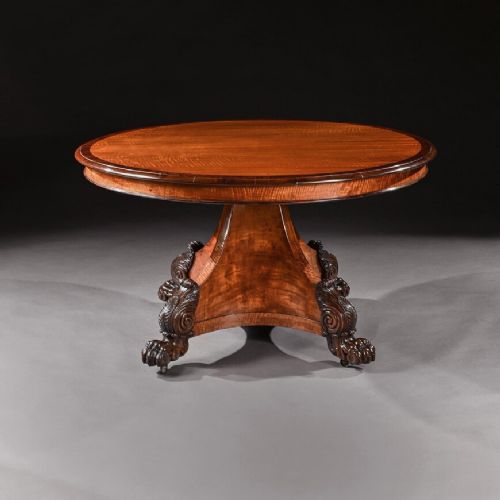
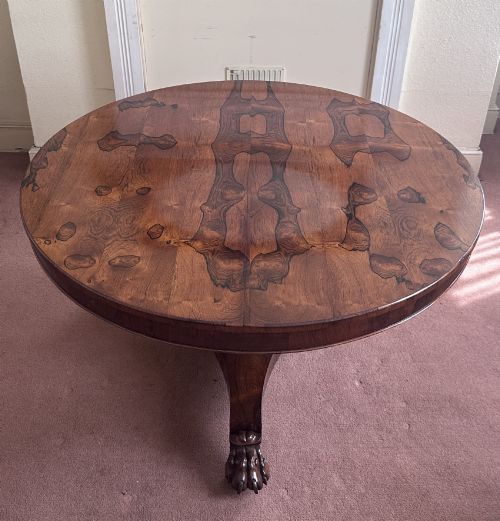
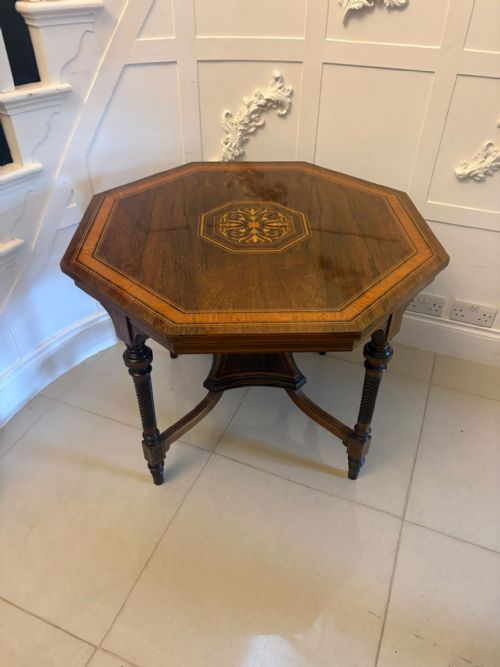
A brown rosewood centre table stands free in a room, offering rich timber grain and polished surfaces designed for display.
Brown Rosewood Centre Table
A brown rosewood centre table is a freestanding piece designed to sit in the middle of a room rather than against a wall. The examples on this page span several periods, with Regency, William IV, and Victorian designs appearing most frequently alongside French and Anglo-Indian variants.
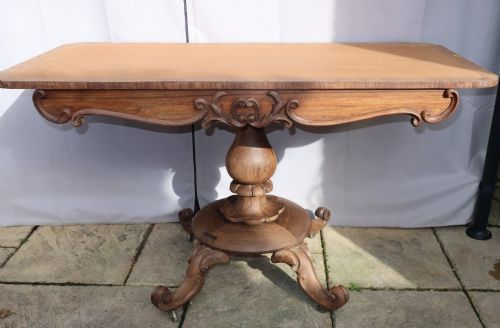
These pieces function as dining tables, breakfast tables, library tables, and occasional tables, often featuring circular, octagonal, or rectangular tops supported by central pedestals or carved legs. The form evolved to anchor large reception rooms and display decorative objects on polished timber.
Materials and construction
Cabinet makers utilised dense tropical rosewood, frequently applying it as a veneer over secondary timbers to create rich, dark brown surfaces with distinctive grain patterns. Timber selection often included contrasting secondary woods such as satinwood, fruitwood, and goncalo alves.
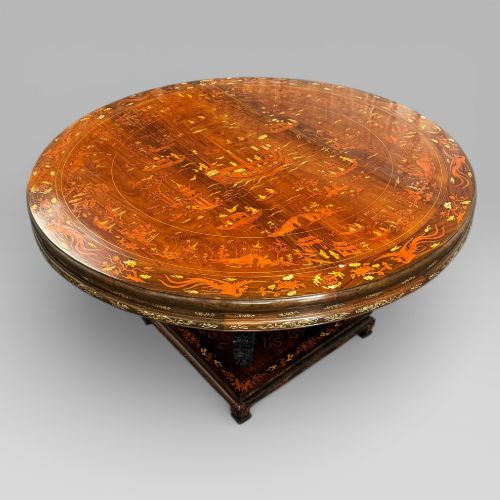
Decoration relied on precision brass inlay, ormolu mounts, mother of pearl, and intricate marquetry panels set into the table top. Pedestals frequently incorporated carved wooden columns resting on tripartite or quadruped platform bases with concealed castors.
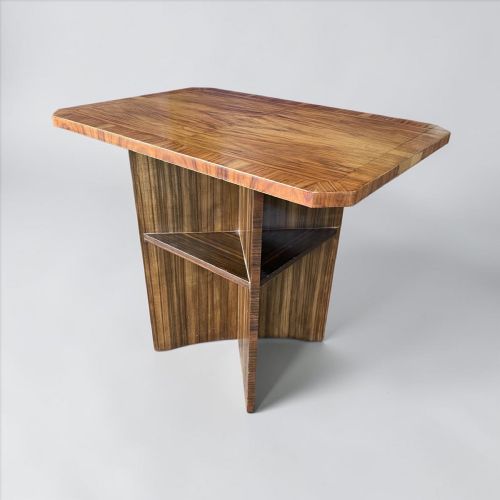
Listings feature multiple periods including Regency, Victorian, William IV, and Art Deco, constructed from rosewood, mahogany, satinwood, and brass.
Distinctions in quality
Quality rests in the crispness of the timber carving and the precision of the brass or marquetry inlay work. Finer examples display continuous grain matching across expansive table tops and robust underlying structural joinery.
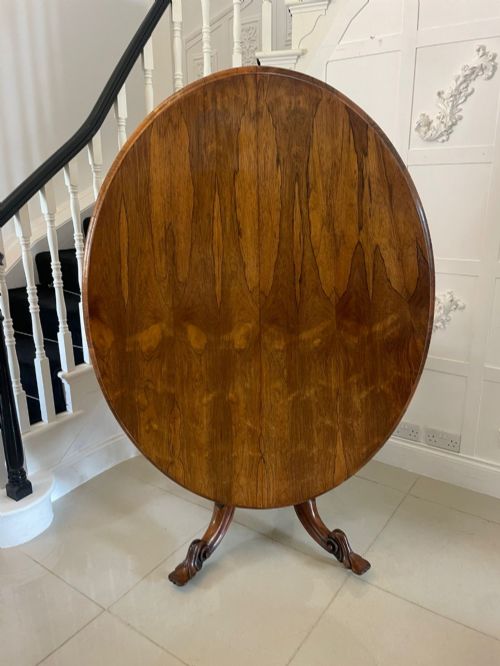
Makers known for exceptional cabinet work achieved superior proportions and stability, particularly on heavy tilt-top mechanisms and large pedestal bases.
Edwards & Roberts·Peters of Genoa·James Winter of Wardour Street·Gillows of Lancaster
The Brown Rosewood Centre Table Glossary
- Centre table
- A freestanding table finished on all sides so it can stand away from walls in the middle of a room. These pieces form the focal point of a large interior.
- Tilt-top table
- A table with a hinged top that folds flat when not in use to save floor space. The mechanism allows the surface to tilt vertically.
- Marquetry
- Decorative patterns formed by fitting together thin veneers of different coloured woods, brass, or shell. Craftsmen arrange these elements to create floral or geometric motifs across the table top.
- Ormolu
- Gilded bronze mounts applied to furniture for decorative effect. Found on French pieces to accent the corners and legs.
- Satinwood
- A durable hardwood with a lustrous yellowish grain used for contrasting inlay and stringing. It provides a bright visual contrast against dark rosewood.
Brown Rosewood Centre Table: Frequently Asked Questions
Where should a centre table go?
Place a brown rosewood centre table in the middle of a large room where people can walk around it freely. It serves as a natural focal point for lighting and decorative objects.
Ensure there is sufficient clearance around the edges for chairs and movement, allowing the freestanding design to be viewed from every angle.
How do I care for rosewood?
Keep rosewood furniture away from direct sunlight and heat sources to prevent the timber from drying out and the polish from fading. Regular dusting with a soft cloth maintains the natural lustre.
Avoid using silicone-based polishes, opting instead for occasional applications of traditional beeswax to nourish the antique grain.
What is a tilt-top mechanism?
A tilt-top mechanism uses a hinged block and catch beneath the table surface allowing the top to pivot upright. This historic design enabled large dining tables to be stored against walls when rooms needed to be cleared.
Check that the brass catch and pivot pins operate smoothly without excessive play in the joint.
How do I date a table?
Examine the construction methods beneath the top, looking at joint types, screw heads, and secondary woods used in the framing. Regency and William IV pieces often display heavier pedestal bases and bold brass inlay.
Victorian examples frequently introduce more elaborate carving, marquetry, and varied timber combinations such as goncalo alves or satinwood.