




Bronze Religious Icon
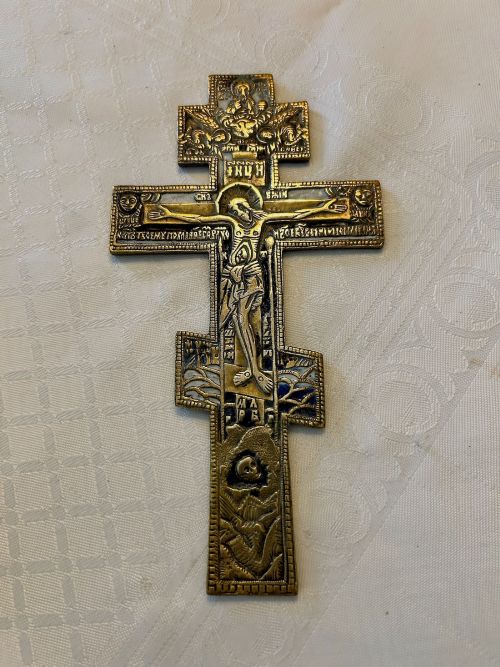
A bronze religious icon is a sacred image cast in metal to carry devotion, whether through the poised stance of a Hindu deity or the detailed enamel work of an Orthodox cross.
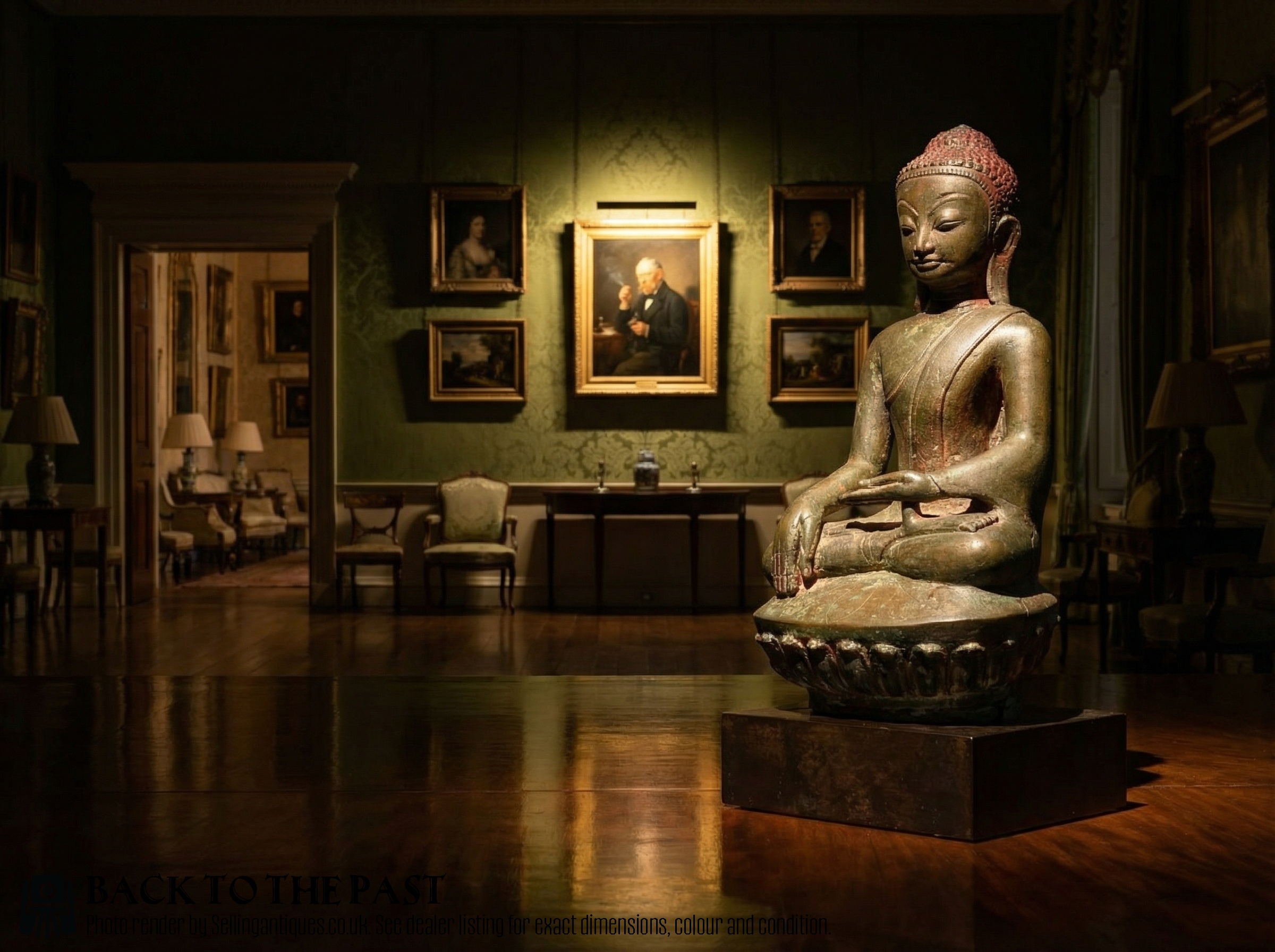
Bronze Religious Icon
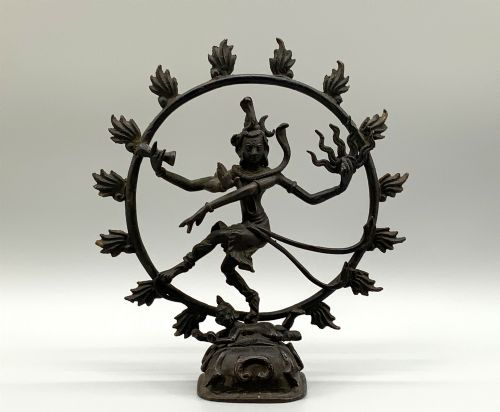
A bronze religious icon brings together centuries of sacred art, spanning regional traditions from Southeast Asia to Eastern Europe. When you search for a bronze religious icon, you encounter a range of forms including standing Buddhas, dancing figures of Shiva, portable travel triptychs, and altar crosses.
The majority of pieces met on this page belong to the nineteenth century, alongside earlier examples from the sixteenth, seventeenth, and eighteenth centuries, plus occasional pre-sixteenth century Javanese bronzes. These objects serve as physical focal points for prayer, meditation, and domestic worship across multiple faiths.
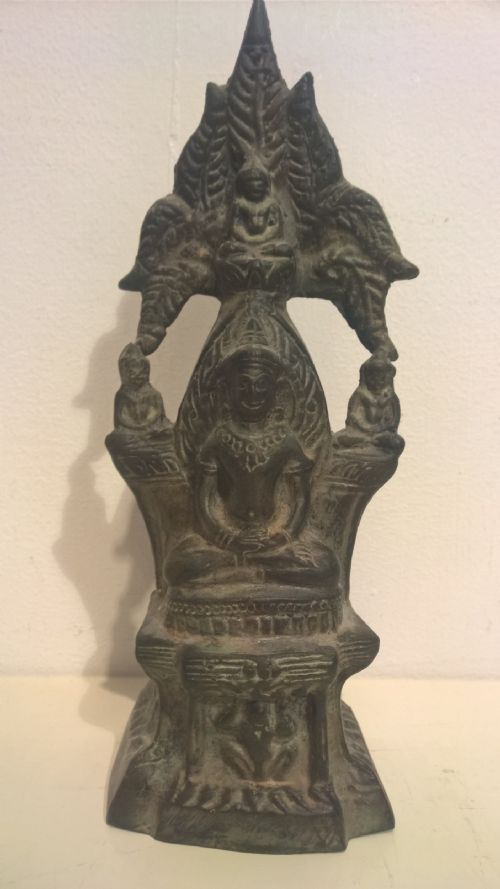
Origin styles vary widely, encompassing Russian Orthodox folding panels, South Asian cast figures, Thai Buddhas in the Bhumisparsha mudra, and Javanese classical representations of deities like Vishnu and Mahadeva Shiva.
Materials and casting methods
Many of these sacred figures and crosses are produced using bronze, copper alloy, and brass, often enriched with gilt metal or polished solid bronze. Artisans also incorporate materials such as wood and tempera, particularly in painted Russian icon panels mounted with silver and gilt.
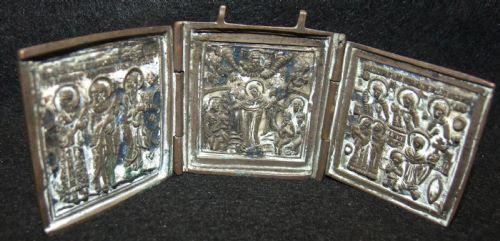
Enamel work frequently appears on nineteenth-century Orthodox crosses and folding triptychs, adding strokes of blue or other colours to the metal surface. Casting techniques range from traditional lost-wax methods for Asian deities to solid metal casting for portable travel pieces.
One outlier piece brings a touch of twentieth-century outsider art into the mix with a primitive mother and child sculpture.
Distinctions in craftsmanship and survival
Quality in these sacred pieces rests on the crispness of the cast and the preservation of fine details, such as facial expressions, hand gestures, and drapery folds. Earlier works or those from accomplished regional workshops display greater anatomical command and expressive depth.
The survival of original surface treatments, including gilding, enamel inlay, and tempera paint on wood panels, determines the integrity of the piece. Lesser examples suffer from heavy wear, lost components, or clumsy later repairs that obscure the original maker's hand.
The Bronze Religious Icon Glossary
- Bhumisparsha mudra
- The earth-touching gesture depicted in Buddhist art, where the right hand reaches down to touch the ground as a witness. This posture signifies enlightenment and steadfastness.
- Orthodox cross
- A specific multi-barred Christian cross associated with Eastern Orthodox traditions, frequently rendered in metal with enamel detailing. It often incorporates specific theological inscriptions and symbolism.
- Triptych
- A three-panelled folding icon hinged centrally, designed for portable devotion and travel. These pieces protect the sacred imagery inside when closed.
- Nataraja
- The depiction of the Hindu god Shiva as the cosmic dancer performing the Ananda Tandava. This dynamic form symbolises the cycle of creation, preservation, and destruction.
- Gilt bronze
- Metal objects treated with a thin layer of gold applied to the bronze surface. This technique enhances the visual splendour of sacred figures.
Bronze Religious Icon: Frequently Asked Questions
How do I date a bronze religious icon?
Dating relies on stylistic markers, regional casting characteristics, and the specific iconography associated with particular centuries. Comparison with documented pieces from traditions like Ayutthaya or Russian Orthodox workshops helps narrow the period.
Material analysis and the presence of secondary elements like enamel or tempera also guide the assessment of age.
Where were these icons placed originally?
These sacred objects served multiple environments, from grand temple altars and domestic shrines to portable use during travel. Folding triptychs and small crosses were carried by travellers for personal prayer on journeys.
Larger figures occupied dedicated religious spaces where devotees offered daily reverence.
How should I care for a bronze icon?
Bronze and copper alloy surfaces require minimal intervention, generally needing only gentle dusting with a soft, dry cloth. Avoid chemical cleaners or metal polishes that strip away patinas and accumulated age.
Pieces incorporating wood or tempera panels need stable humidity and protection from direct sunlight to prevent warping or paint flaking.
What is the difference between Asian and European icons?
Asian icons on this page typically take the form of cast bronze deities and Buddhas reflecting Hindu and Buddhist traditions. European examples lean towards Christian subjects, including Russian Orthodox crosses, triptychs, and painted wood panels.
Each tradition employs distinct materials, such as enamel for Orthodox metalwork and gilt bronze for Southeast Asian sculptures.