


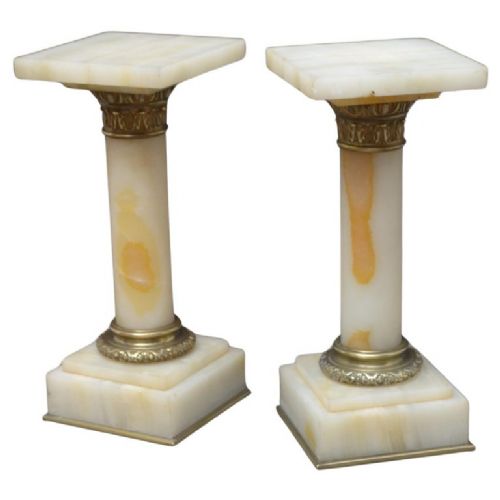


Bronze Pedestal Stand
A bronze pedestal stand brings architectural weight and classical polish to a room, lifting art or light off the floor.
Bronze Pedestal Stand
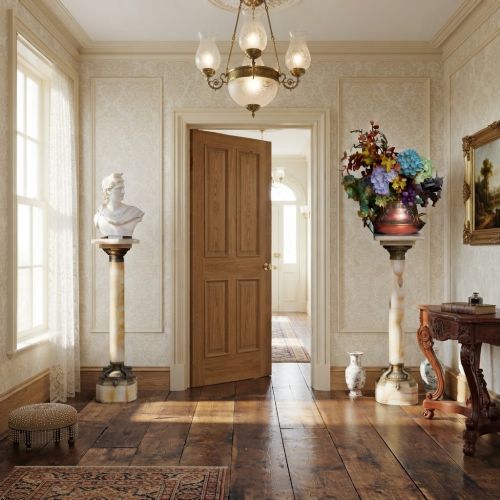
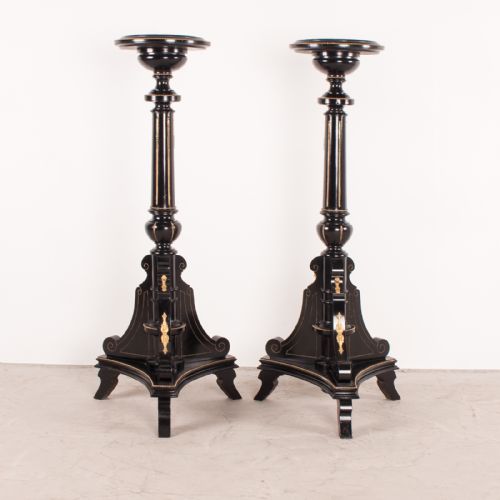
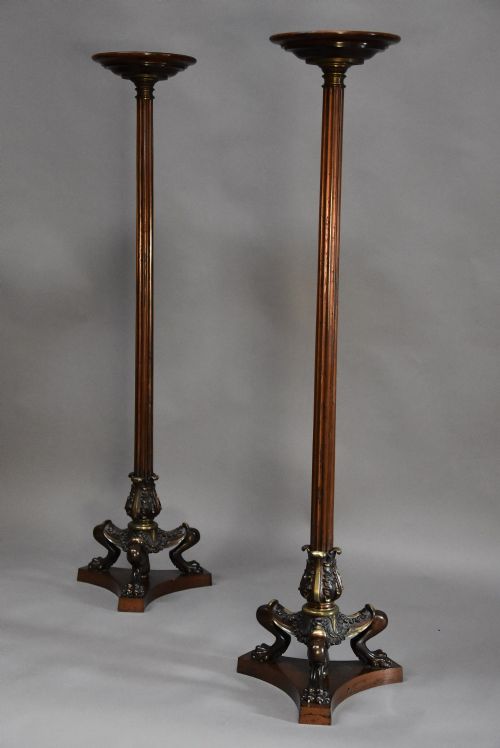
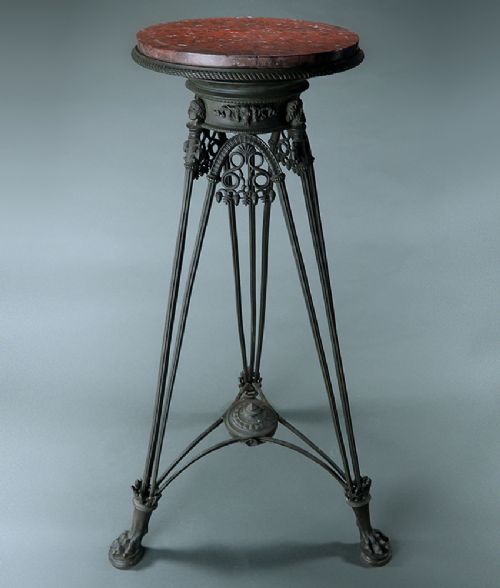
A bronze pedestal stand acts as a sturdy column, plinth, or torchiere designed to display urns, busts, lamps, and plants at eye level. Most examples encountered here date from the nineteenth century, drawing heavily on Neoclassical, French Empire, and Regency design vocabulary.
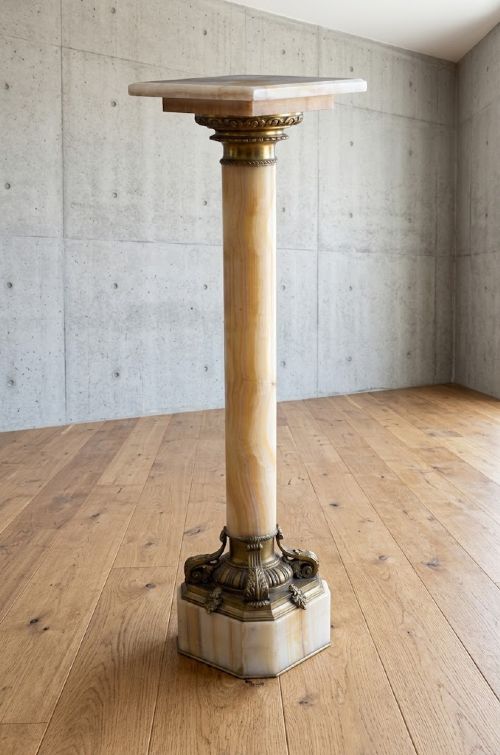
The form spans straightforward columnar shafts in marble and onyx with cast ormolu collars, alongside elaborate mahogany or kingwood stands fitted with gilt bronze mounts. Makers adapted classical architectural orders into domestic furniture intended to anchor drawing rooms and hallways.
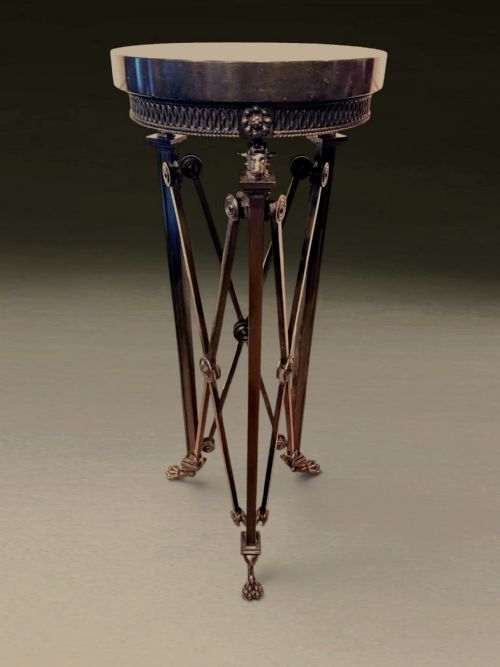
Buyers select these supports to elevate specific decorative objects or to serve as sculptural focal points in their own right. The selection includes paired torchieres, guéridons, and revolving display tables sharing heavy metal and stone construction.
What varies in quality
Quality rests on the crispness of the bronze chasing and the depth of the mercury gilding, where sharp relief and warm matte finishes outshine flat, chemical washes. Superior castings reveal deliberate hand-tooling under magnification rather than soft, blurred edges from worn production moulds.
The selection of materials dictates the upper tier, seen in flawless vert de Maurin marble, richly figured amboyna, and heavy gauge ormolu mounts rather than thin brass platings on softwood. Structural integrity at the joints and substantial baseline weight separate exhibition-grade furniture from lighter, domestic utility pieces.
Several columns feature revolving tops, presumably so an antique bust could occasionally look out a different window.
The Bronze Pedestal Stand Glossary
- Ormolu
- Gilt bronze produced by applying a mercury and gold amalgam to a cast bronze object and heating it until the mercury vaporised, leaving a durable golden skin. This technique creates a distinctive, rich matte lustre found on nineteenth-century mounts.
- Guéridon
- A small French table supported by one or more central columns, frequently topped with marble and mounted in bronze. The form originated in the seventeenth century and remained popular through the nineteenth-century revival periods.
- Torchiere
- A tall stand or floor lamp designed to hold a light source high above the ground. Nineteenth-century examples often employ classical column forms in marble, bronze, or carved timber.
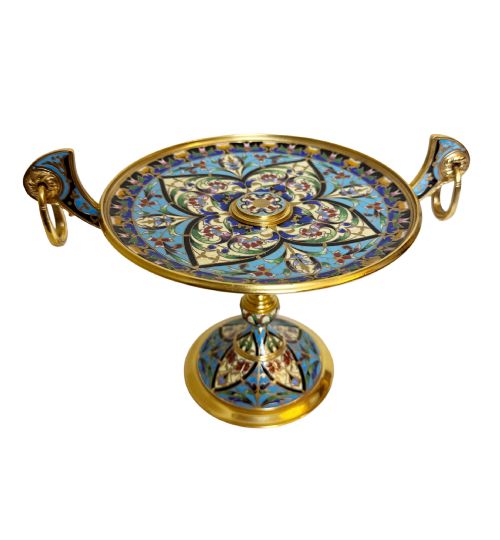
- Champlevé
- An enamelling technique where troughs or cells are hollowed out of a metal surface and filled with vitreous paste before firing. It appears frequently on nineteenth-century decorative bronze and tazzas.
Bronze Pedestal Stand: Frequently Asked Questions
What is a bronze pedestal stand used for?
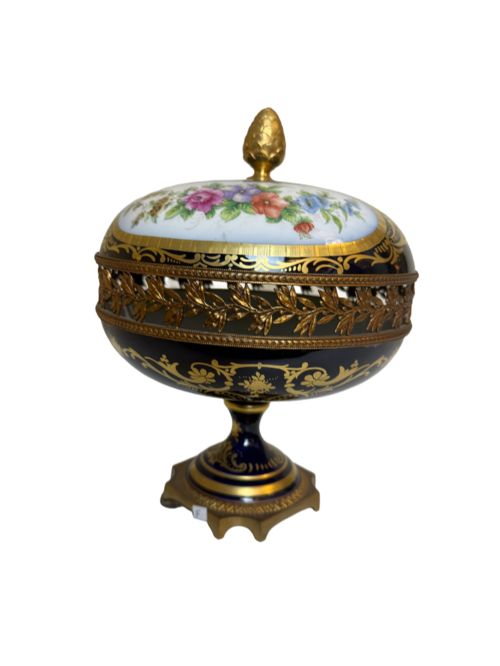
These pieces function primarily as elevated platforms for heavy decorative items, including marble busts, bronze urns, lamps, and large porcelain vessels. By lifting objects off the floor, they draw the eye upward and add architectural presence to empty corners or long corridors.
In period interiors, they also acted as independent sculptural statements that demonstrated the owner's taste for classical proportion. Today, collectors utilise them to showcase curated focal points within living spaces.
How do I identify a nineteenth-century piece?
Nineteenth-century stands typically display heavy bronze, ormolu, or brass elements combined with turned stones like onyx and marble, or dense hardwoods such as mahogany. Examining the construction methods underneath reveals hand-cut screws, pegged joints, and heavy casting sands that differ from modern manufacturing.
Stylistic cues also point to this era through revivals of Greek, Roman, and French Empire motifs. Makers frequently copied classical orders, incorporating caryatids, claw feet, and acanthus leaf chasing into domestic furniture.
Where should I place a pedestal in a room?
A pedestal looks best positioned in an empty corner, flanking a fireplace, or framing a double doorway where its vertical lines can balance surrounding furniture. Taller torchieres and columns work well with heavy urns or large sculptures that require unobstructed sightlines.
Because many designs feature finished surfaces on all sides, they can also stand away from walls as freestanding accents. Placement should account for the stability of the floor and the weight distribution of the object displayed on top.
How do I care for marble and bronze surfaces?
Bronze and ormolu require gentle dusting with a soft, dry brush to prevent dirt from settling into the recessed chasing. Moisture and chemical cleaning agents must be avoided, as they strip thin historic gilt layers and cause corrosion on the metal beneath.
Marble and onyx tops benefit from occasional wiping with a damp cloth followed by immediate drying, protecting the polished stone from acidic spills. Natural stone sealants can be applied sparingly to guard against staining without altering the historic finish.