


Regency Bronze Plinth
A regency bronze plinth brings classical antiquity and neoclassical weight to a room, combining heavy cast metal with polished stone bases.
Regency Bronze Plinth
When you search for a regency bronze plinth, you are looking at heavy metal figures, urns, or columns elevated on marble or stone bases. These pieces date primarily from the nineteenth century and the Georgian and Regency periods, channelling neoclassical and French Empire tastes.
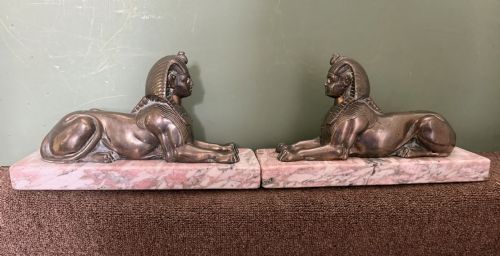
The versions you are most likely to meet on this page include bronze lions, greyhounds, sphinxes, and classical vases mounted upon marble plinths. Other forms span pedestals, candlesticks, and mantel clocks incorporating bronze elements on stone foundations.
Makers and sculptors of the era drew heavily on Grand Tour aesthetics and ancient motifs to create these decorative objects. The combination of dark cast metal and veined marble creates a striking contrast suited to period interiors.
How they were made
The supporting plinths utilise various marbles, including sienna marble and verde antico, alongside occasional wooden or plaster elements. Artisans shaped, turned, and polished these stone bases to complement the weight and colour of the bronze components mounted above them.
An imposing bronze lion keeps a permanent, unblinking watch from its polished marble block.
What varies in quality
The choice and execution of the stone plinth also determine grade, with richly veined marbles like sienna and verde antico outclassing plain or heavily repaired stone. The proportional harmony between the bronze subject and its marble base governs the visual balance of the piece.
Humphrey Hopper·Payne of London·Gianni Versace
The Regency Bronze Plinth Glossary
- Ormolu
- Gilt bronze produced by applying a finely ground high-carat gold-mercury amalgam to a bronze object before firing. This technique creates a rich, enduring golden surface finish.
- Verde Antico
- A dark green serpentine marble heavily veined with white calcite. It was prized in the nineteenth century for classical architectural and decorative bases.
- Grand Tour
- A traditional trip through Europe undertaken by upper-class young men to absorb classical art and culture. It fueled British demand for small bronzes and marble antiquities.
- Neoclassical
- An artistic movement drawing inspiration from the classical art and culture of ancient Greece and Rome. It dominates the design vocabulary of the Regency period.
Regency Bronze Plinth: Frequently Asked Questions
What periods do these bronze plinth pieces come from?
The pieces span the nineteenth century, encompassing the Georgian, Regency, and George IV eras. Many reflect neoclassical design influences popular during these times.
Some later nineteenth-century and turn-of-the-century interpretations also appear, continuing the neoclassical and Grand Tour traditions.
Which animals are commonly found on these marble bases?
Lions, greyhounds, and sphinxes frequently appear mounted upon marble plinths. These subjects reflect a fascination with classical mythology and ancient symbolism.
Sculptors rendered them in cast bronze, often pairing them with sienna or verde antico marble bases.
Where were these decorative objects displayed in a home?
They served as mantel ornaments, desk decorations, or focal points on tables and pedestals within formal rooms. Their compact size made them ideal for display on furniture tops.
Larger pedestal forms stood directly on the floor to elevate other works of art or architectural elements.
How do I care for bronze and marble together?
Dust the bronze gently with a soft, dry cloth and avoid harsh chemical cleaners that might strip the original patina. Marble requires simple dusting and protection from acidic spills that can etch the polished stone.
Checking that the metal fixings remain secure within the stone base helps prevent accidental separation of the heavy components.