
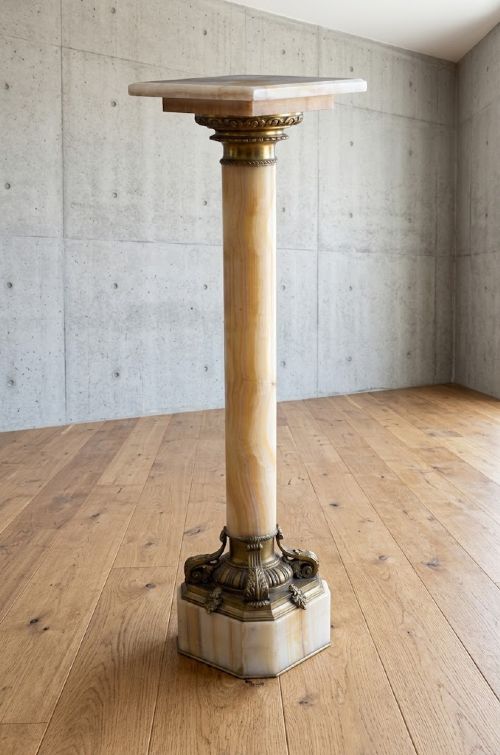


Bronze Bust Stand
These bronze bust stand pieces elevate portrait sculpture with classical dignity, offering the architectural height and stable platform your collection requires.
Bronze Bust Stand
You will most frequently encounter 19th Century examples on this page, reflecting periods from Regency neoclassical designs to Edwardian columns. The forms range from simple cylindrical shafts to elaborate pedestals with decorative metal collars.
Originating largely from French and British workshops, these objects serve as architectural furniture that integrates classical display methods into domestic interiors. They combine structural columns with decorative mounts to frame portrait heads properly.
Materials and construction
The primary structural forms utilise stones such as marble and onyx alongside timbers including walnut, mahogany, and kingwood. These materials provide the dense weight necessary to support heavy bronze or plaster sculptures securely without tipping.
Metalwork components rely on bronze, gilt bronze, ormolu, and brass to create decorative collars, mounts, and rotating mechanisms. Craftsmen cast and chased these metal elements to wrap around stone columns or frame wooden pedestals.
Current listings feature 19th Century, Edwardian, and 1950 periods using marble, ormolu, onyx, and various timbers.
Judging quality
Quality rests in the precision of the stone turning and the crispness of the ormolu or gilt bronze mounts. Finer examples display tightly fitted metal collars that match the exact contours of the underlying marble or onyx column.
The weight and stability of the base dictate the utilitarian success of the piece, as superior stands utilise solid marble or dense hardwoods. Details such as rotating top platforms and finely chased neoclassical motifs separate standard production items from exceptional workshop creations.
E. Laurent
The Bronze Bust Stand Glossary
- Ormolu
- Gilded bronze applied as a decorative mount to furniture and pedestals. This technique involves coating bronze with a mercury and gold amalgam before heating.
- Pedestal
- An architectural support used to elevate a sculpture, bust, or urn. It typically consists of a base, a central column, and a top platform.
- Neoclassical
- A style drawing inspiration from the classical art and culture of ancient Greece and Rome. It appears frequently in the clean lines and symmetrical mounts of these stands.
- Egyptian Revival
- An artistic style incorporating motifs from ancient Egypt, such as pharaohs, sphinxes, and symbolic ornamentation. This style often surfaces in sculptures and stands dating from the nineteenth and twentieth centuries.
Bronze Bust Stand: Frequently Asked Questions
What fits on a bronze bust stand?
These stands accommodate heavy portrait sculptures, bronze busts, plaster figures, and decorative urns. The top platform provides a stable surface designed to bear substantial weight.
Selecting a stand requires matching the diameter and weight capacity of the platform to the base of your specific sculpture.
How do I date a marble and ormolu stand?
Dating relies on examining the combination of materials, the style of the neoclassical or rococo mounts, and the turning methods of the stone. Nineteenth-century examples often feature hand-chased gilt bronze mounts paired with variegated marble.
Comparing the construction joints and the wear on the rotating mechanisms helps confirm the period of manufacture.
Where should I place a pedestal in a room?
Pedestals work best in corners, hallways, or focal points where a three-dimensional sculpture can be viewed from multiple angles. Rotating marble tops allow you to adjust the orientation of the bust easily.
Ensure the floor surface is entirely level to maintain stability because these stands carry significant stone and metal weight.
What is the difference between onyx and marble columns?
Onyx columns exhibit translucent banding and a warmer, glowing translucency when light hits the stone. Marble offers solid or veined opaque patterns with a dense, matte appearance.
Both materials provide the heavy mass required for secure sculpture display but create distinct visual textures.