
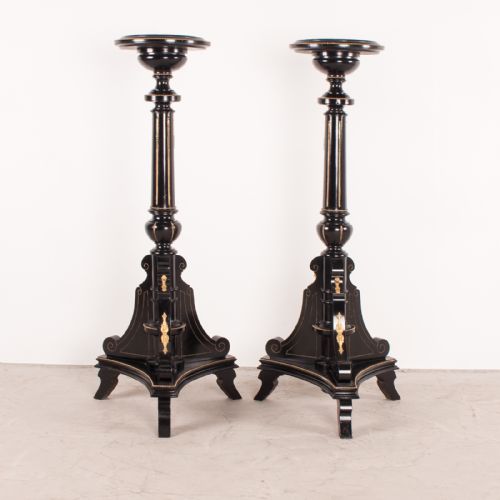




Tall Bronze Pedestal
A tall bronze pedestal elevates sculpture, light or foliage with distinct architectural presence and enduring metallic weight.
Tall Bronze Pedestal
A tall bronze pedestal encompasses substantial vertical supports and display columns encountered across nineteenth-century and early twentieth-century periods. When you search for a tall bronze pedestal, you discover diverse sculptural supports, torcheres, and columnar stands derived from French, Swedish, and Asian design traditions.
The selections on this page span from French Louis XV style ormolu grandfather clocks and jardiniere stands to Art Deco torcheres and Neoclassical floor lamps. These vertical pieces combine cast metal elements with materials such as ebonised wood, onyx, and kingwood to elevate display items effectively.
Materials and construction methods
Casting and assembly define these tall supports, utilising bronze, gilt bronze, ormolu, and brass combined with structural woods like ebonised timber and kingwood. Artisans shaped metal through traditional foundry methods, often integrating decorative enamel panels or polished stone columns to create sturdy vertical frames.
Makers applied intricate surface finishes including gilding and patination to metal components, while pairing them with carved root wood bases or turned wooden shafts. This multi-material construction balances the considerable weight of cast bronze with stable wooden or stone foundations.
A bronze eagle standing tall on a root wood base proves that nineteenth-century artisans enjoyed letting birds supervise the living room.
Distinctions in craftsmanship and design
Quality rests in the crispness of the metal casting and the precision of the chased surface details found on mounts and capitals. Superior examples display fluid articulation in revival styles such as Louis XV or Neoclassical, where decorative elements integrate harmoniously into the overall vertical structure.
The selection of secondary materials further separates standard production from finer work, visible in the choice of genuine onyx columns, dense kingwood veneers, or signed sculptural elements. Structural integrity and balanced proportions ensure the tall form remains stable while supporting heavy vases, clocks, or figures.
Gyoko
The Tall Bronze Pedestal Glossary
- Ormolu
- Gilt bronze ornamentation applied to furniture, clocks, and stands. This technique involves coating cast bronze in a gold amalgam.
- Torchere
- A tall ornamental stand designed to hold a light, lamp, or candelabrum. These elevated fixtures provide focused illumination and vertical interest.
- Jardiniere
- An ornamental stand or container intended for holding plants or flowers. They often feature decorative metalwork and waterproof liners.
- Neoclassical
- A style drawing inspiration from the classical art and culture of ancient Greece and Rome. It emphasises symmetry, restraint, and classical architectural motifs.
- Meiji Period
- A Japanese historical era spanning from 1868 to 1912. Metalwork and bronze casting from this time achieved exceptional technical refinement.
Tall Bronze Pedestal: Frequently Asked Questions
What items sit on a tall bronze pedestal?
These tall stands support heavy decorative objects including large vases, bronze sculptures, clocks, and potted plants. Their sturdy construction safely elevates display pieces to eye level within a room.
Collectors also utilise torcheres and floor lamp adaptations from this category to introduce ambient vertical lighting alongside sculptural display functions.
How do I identify French Louis XV style?
French Louis XV style pieces feature asymmetrical scrollwork, naturalistic floral motifs, and curved cabriole lines. Ormolu mounts and rich gilt bronze details frequently accent the structure.
This aesthetic prioritises ornate, flowing decorative elements rather than strict classical symmetry, often appearing on nineteenth-century clocks and jardiniere stands.
Where should I place a tall pedestal?
Position these vertical supports in corners, entryways, or flanking larger furniture pieces where they can command attention without obstructing pathways. Ensure the surrounding floor surface is level to maintain stability.
Pairing a tall bronze stand with adequate clearance allows the materials, whether patinated bronze, onyx, or ebonised wood, to be viewed from multiple angles.
How do I care for bronze and mixed materials?
Dust bronze and gilt surfaces gently with a soft, dry cloth to prevent the accumulation of dirt within chased details. Avoid harsh chemical cleaners that can strip patination or damage applied gilding.
For pieces combining metal with stone or wood, use appropriate specialist polish sparingly and protect wooden components from excessive moisture and direct sunlight.