



Bronze Column Pedestal
A bronze column pedestal brings classical proportion to a room, supporting urns or lighting with architectural authority.
Bronze Column Pedestal
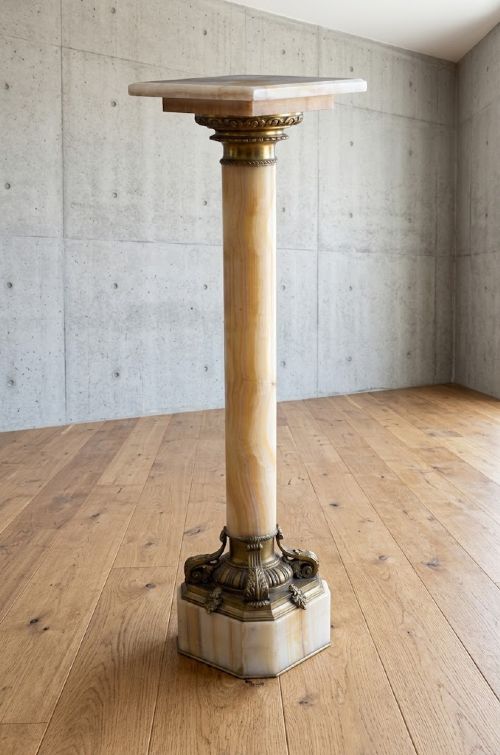
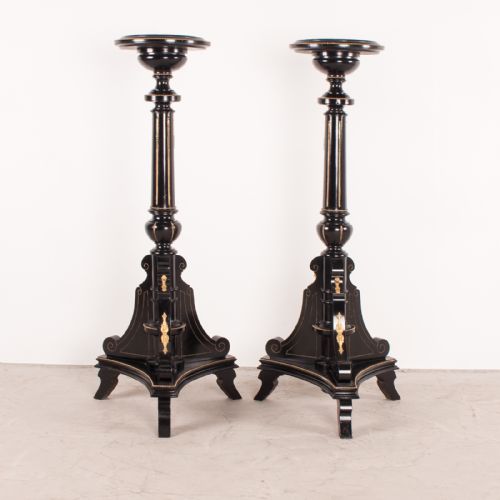
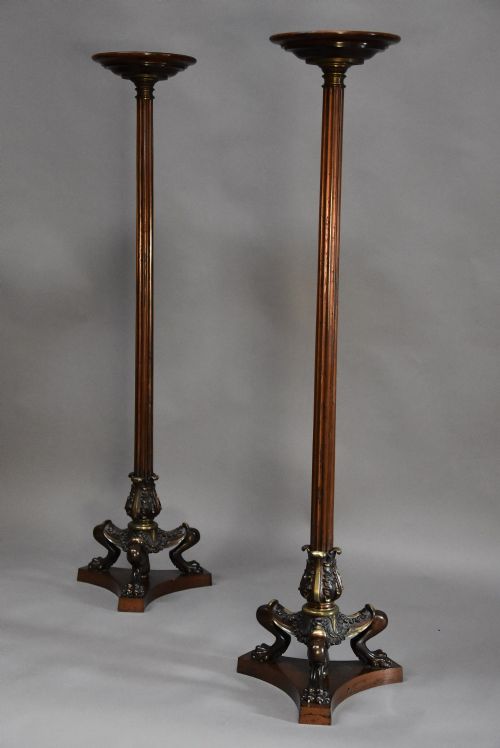
A bronze column pedestal provides a structured display point for sculpture, urns, or lamps within an interior. These pieces take the form of freestanding columns, torcheres, and tall stands designed to elevate objects of importance.
Most examples encountered here date from the nineteenth century, drawing heavily on Neoclassical, Regency, and French Empire design vocabularies. They combine vertical columns with decorative capitals and robust bases to anchor heavy display items.
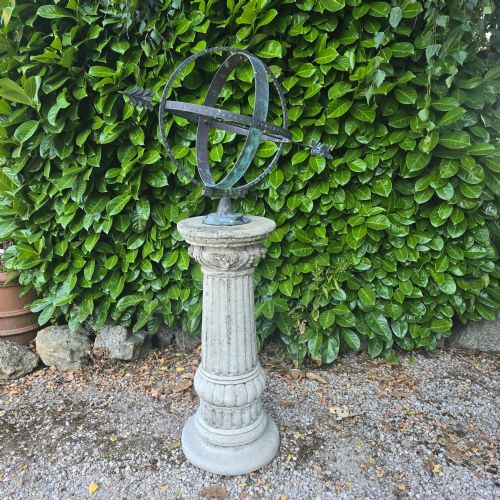
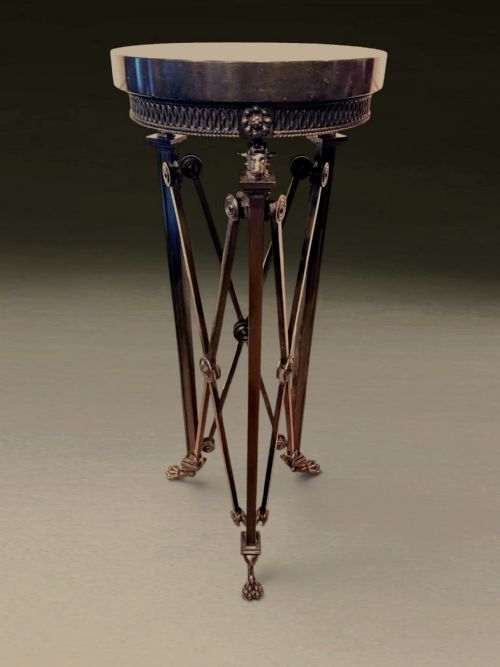
Makers frequently integrated contrasting materials into the structural column to create visual rhythm. Buyers meet pieces ranging from strict classical architectural columns to ornate stands featuring revolving tops or figural mounts.
What varies in quality
Quality rests in the crispness of the bronze casting and the depth of the chasing on mounts and collars. Finer pieces display sharp architectural enrichment that remains uniform across all sides.
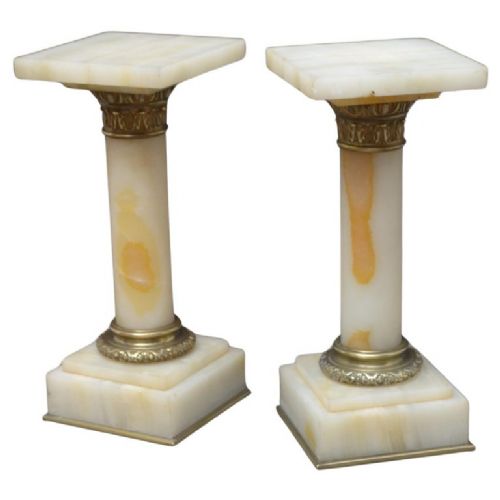
The selection and turning of the stone shaft dictate the piece's stability and visual gravity. Solid marbles and richly figured onyx elevate a piece above simpler timber or plaster constructions.
Some columns feature revolving marble tops, allowing an antique bust to rotate effortlessly into the light.
The Bronze Column Pedestal Glossary
- Ormolu
- Gilded bronze used for decorative mounts and collars. This technique was widely utilised across French Empire and nineteenth-century pieces.
- Torchere
- A tall stand or pedestal designed to carry a lamp or light source. These often feature slender columns suited for room corners.
- Neoclassical
- A style drawing on classical Greek and Roman architecture. It governs the proportions and column orders seen on many pedestals.
- Plinth
- The heavy base supporting a column or pedestal. It provides the necessary weight distribution for safe elevation.
- Capital
- The topmost member of a column, situated between the shaft and the load. These are frequently cast in bronze or ormolu with classical plant motifs.
Bronze Column Pedestal: Frequently Asked Questions
How do I style a pedestal?
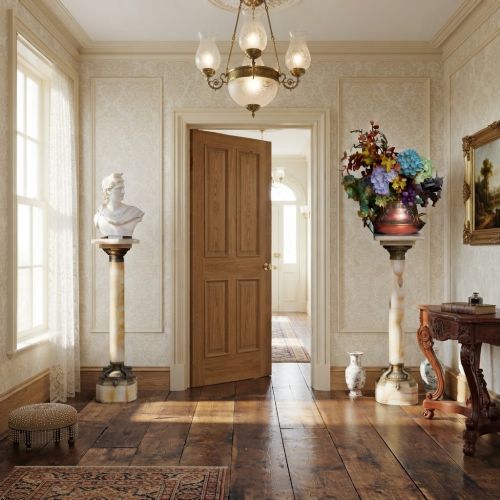
Place a bronze column pedestal in a corner or empty hallway to draw the eye upward and break up flat wall lines. Ensure the scale of the object placed on top matches the footprint of the capital.
Keep surrounding furniture low to let the vertical lines of the column dominate. They work particularly well carrying heavy bronze figures, marble busts, or decorative table lamps.
Are these pieces stable enough for heavy items?
Nineteenth-century examples incorporate substantial stone shafts and weighted metal bases designed specifically to carry heavy loads. Marble and bronze construction naturally provides a low centre of gravity.
Check that the floor surface is level before positioning a heavy marble or bronze piece. The weight distribution in traditional columns ensures secure display for statues and large urns.
What periods do these columns represent?
The majority of pieces originate from the nineteenth century, spanning Regency, French Empire, and Victorian eras. These periods saw a strong revival of classical Greek and Roman architectural forms.
Designers reinterpreted ancient column orders using contemporary foundry methods and luxury materials. Edwardian and later twentieth-century iterations continued this classical tradition with simplified lines.
How do I distinguish bronze from brass?
Bronze typically exhibits a warmer, deeper brownish-gold tone beneath patination, whereas brass tends toward a brighter, yellower metallic sheen. Bronze also allows for finer, sharper casting detail in decorative mounts and collars.
Weight offers another indicator, as solid bronze components feel considerably heavier than thin brass alternatives. Nineteenth-century makers reserved bronze for high-status mounts and structural elements.