

Brass Inlaid Writing Desk
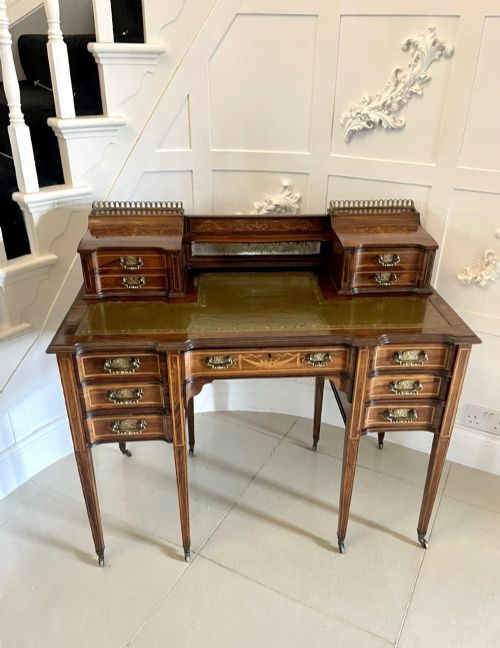
A brass inlaid writing desk brings together rich timbers and precise metalwork for a functional workspace with undeniable presence.
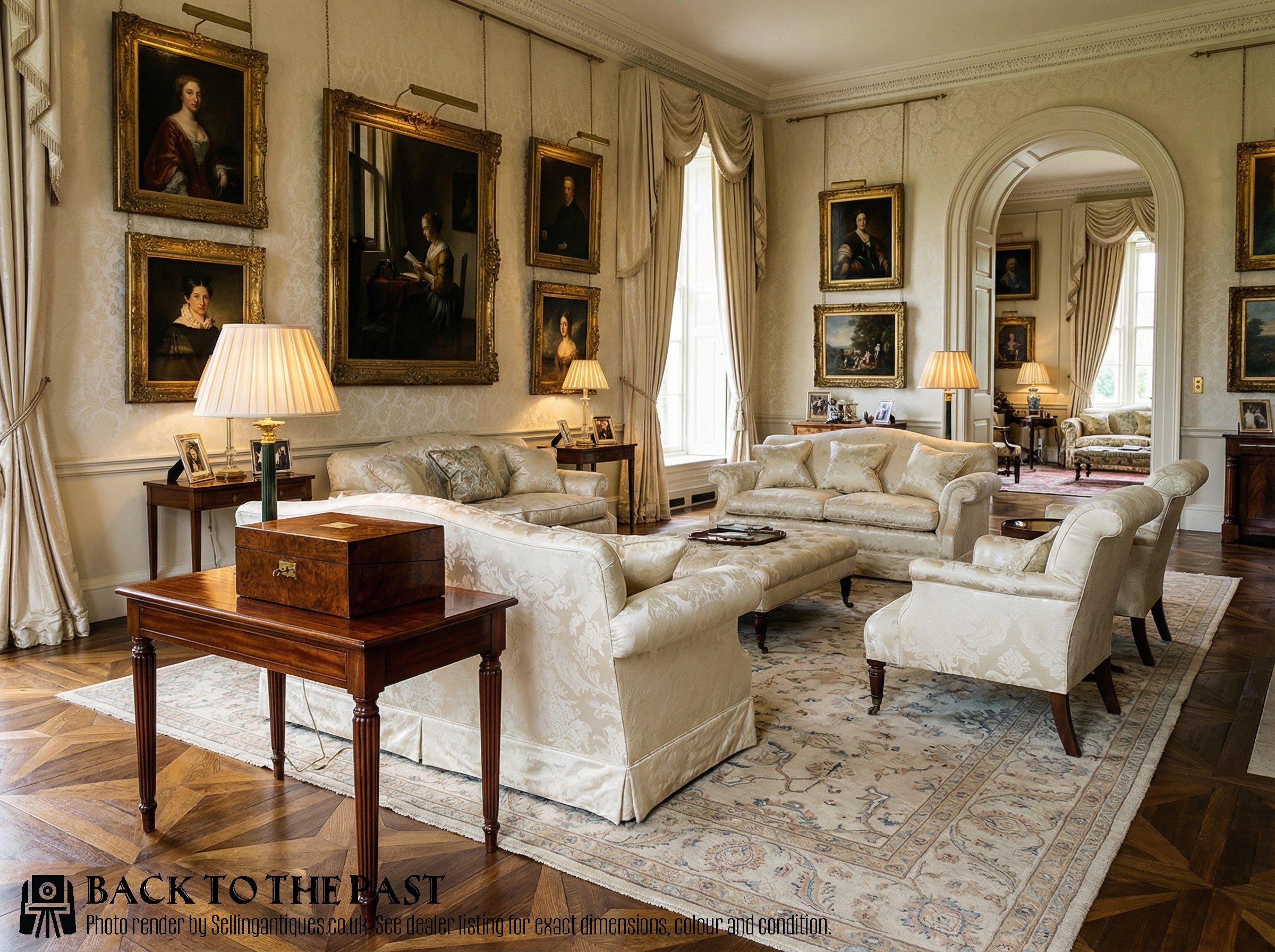
Brass Inlaid Writing Desk
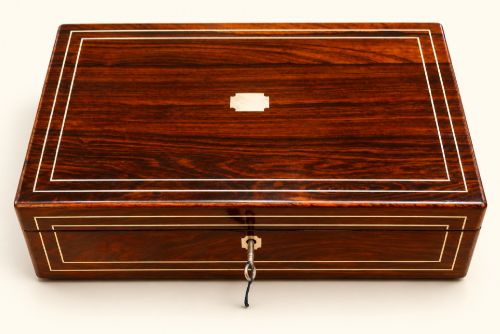
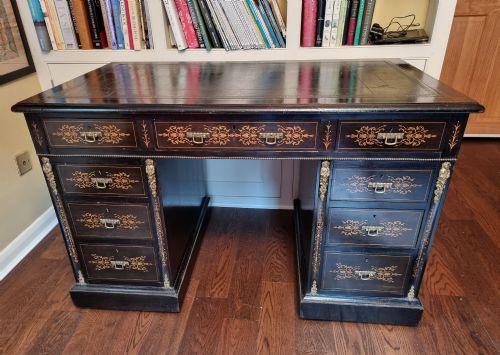
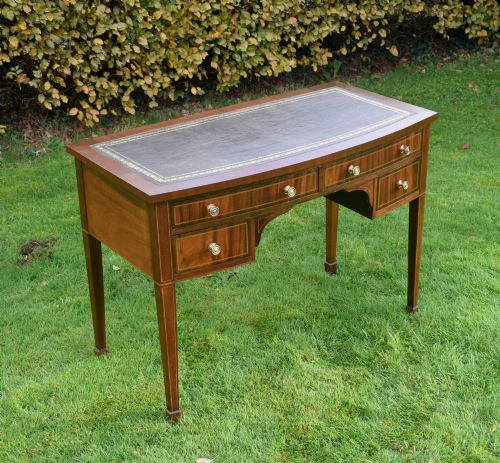
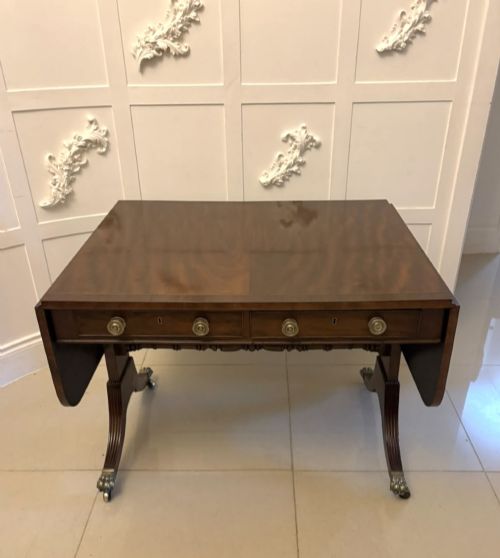
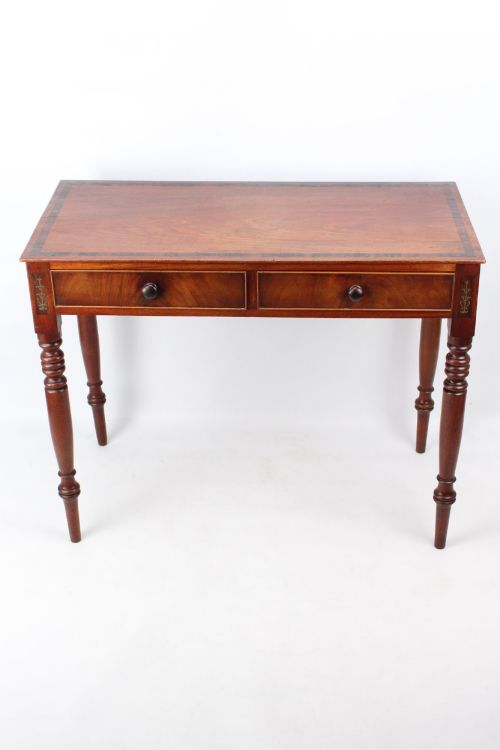
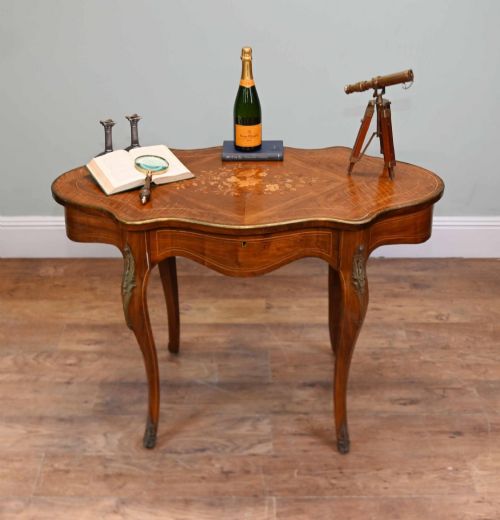
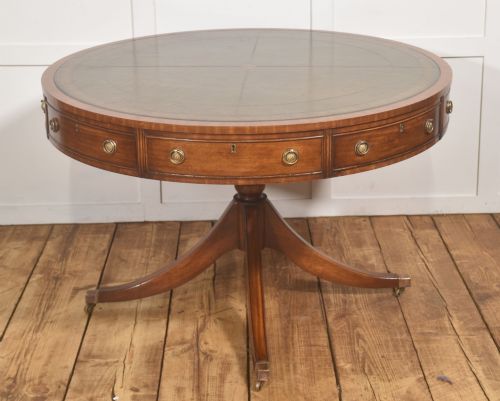
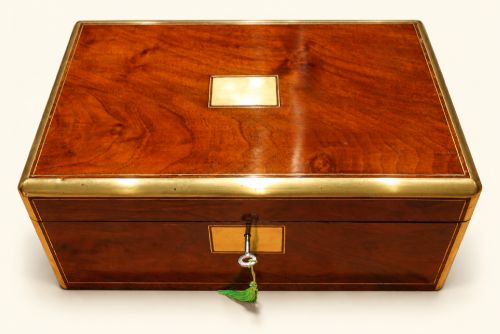
A brass inlaid writing desk encompasses a variety of forms designed for correspondence and study, ranging from compact campaign writing slopes to large freestanding pedestal tables. The pieces found here span the Georgian, Regency, Victorian, and Edwardian periods, reflecting changing domestic habits across more than a century of British and continental cabinet-making.
Mahogany and rosewood provide the primary foundations for these pieces, often enriched with contrasting veneers like satinwood, burr walnut, and ebonised timber. Many examples incorporate fitted interiors with small drawers and pigeonholes, while others utilise leather writing surfaces or hinged writing slopes.
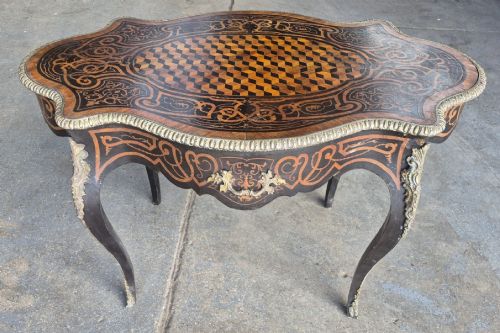
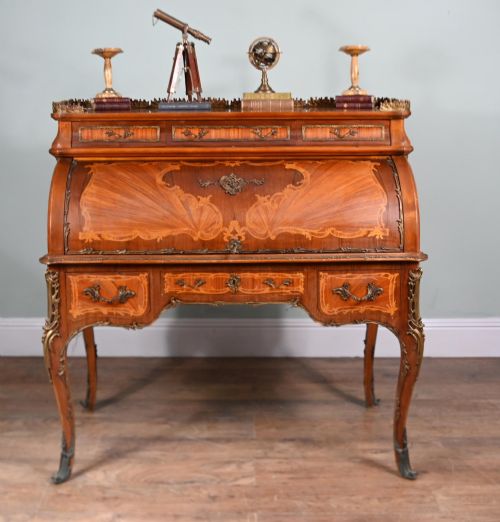
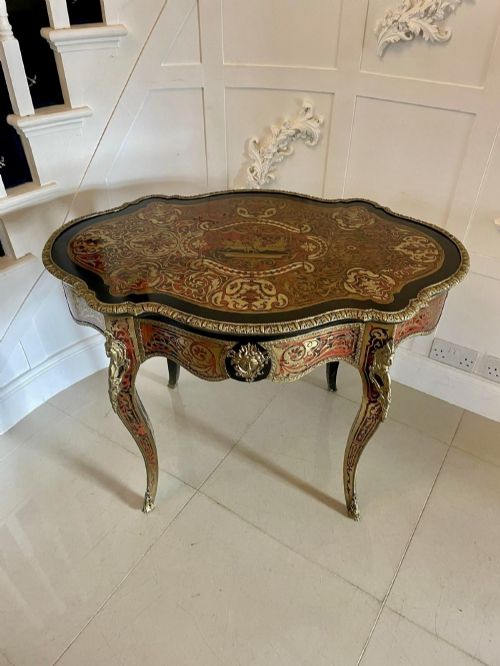
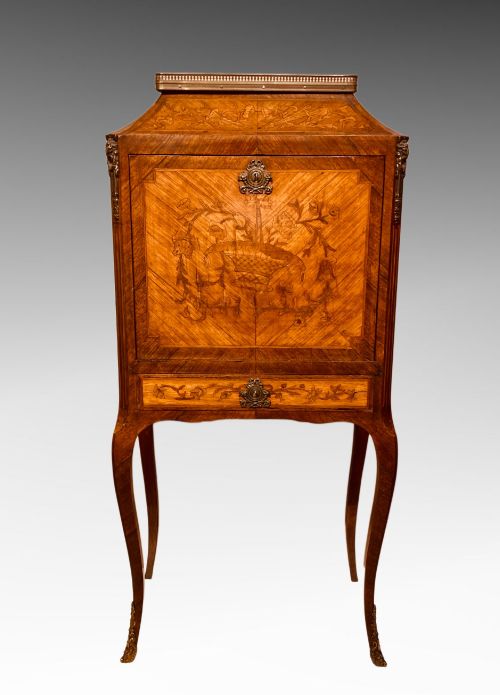
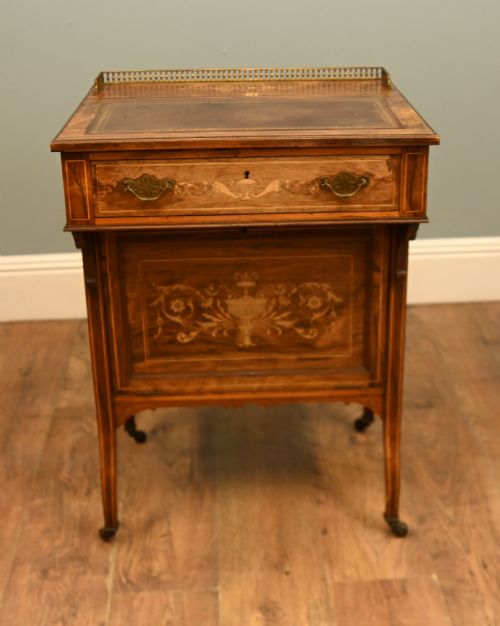
Continental pieces such as French Boulle work desks and bureau plat forms appear alongside English pedestal desks and lady's writing tables. This selection demonstrates how makers integrated brass inlay into diverse architectural styles, from the clean lines of the Regency period to the elaborate marquetry of the late Victorian era.
Materials and Technique
Cabinet-makers constructed the carcases of these desks from dense hardwoods like mahogany and rosewood, frequently applying finer decorative veneers to visible exterior surfaces. Solid timber framing provided the necessary stability for daily use, while secondary timbers such as pine or oak lined the interior drawers.
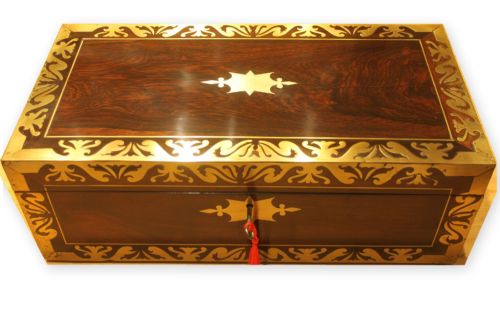
Brass inlay required precise hand-cutting of both the metal and the surrounding wood to achieve a flush, secure fit. Craftsmen often combined this metalwork with foliate cut brass, mother of pearl, or contrasting stringing to create geometric and floral motifs across the surface.
Brass Inlaid Writing Desk Retail Price Guide 2026
Typical asking prices for brass inlaid writing desk among the pieces listed under this phrase on Sellingantiques today, from the lower quarter to the upper quarter. They describe what is for sale here now, not the wider market.
Listings feature mahogany, rosewood, and satinwood most frequently as the primary timber choices for these desks.
Standards of Execution
The precision of the brass inlay work distinguishes standard utility pieces from exceptional cabinet-making. Finest examples show microscopic tightness in the fit of the metal into the timber, with no gaps or excessive filler visible along the margins.
Maple & Co.·Gillows Oxford Street Workshop·Edwards & Roberts·Collinson & Lock
The Brass Inlaid Writing Desk Glossary
- Brass Inlaid
- A technique where thin strips or cutouts of brass are embedded flush into the wooden surface of a piece of furniture to form decorative patterns.
- Writing Slope
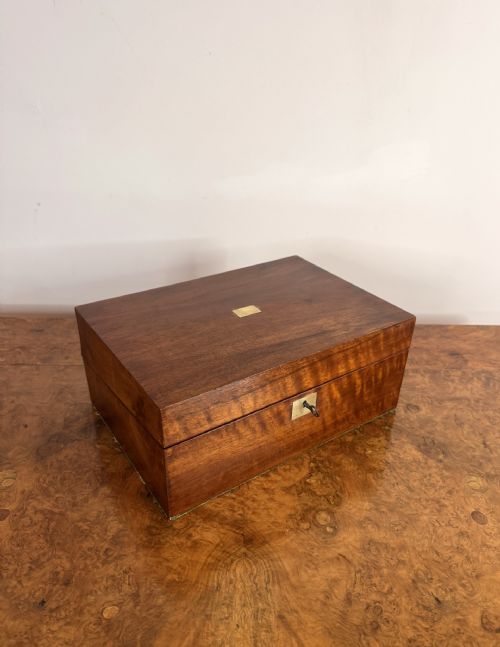
- A portable box with a slanted, hinged lid that opens to reveal a velvet or leather-lined writing surface and compartments for stationery.
- Carlton House Desk
- A distinctive form of writing desk featuring a curved superstructure of small drawers and pigeonholes wrapping around the back and sides of the writing surface.
- Boulle Work
- An elaborate form of marquetry consisting of tortoiseshell and brass inlaid together, named after the French cabinet-maker André-Charles Boulle.
- Campaign Desk
- A modular or folding piece of furniture designed for military officers on the move, typically featuring brass corners and flush recessed handles.
Brass Inlaid Writing Desk: Frequently Asked Questions
What is a brass inlaid writing desk?
A brass inlaid writing desk is a piece of antique furniture designed for correspondence that incorporates precision-cut brass ornamentation into its wooden surfaces. These desks utilise various timbers like mahogany, rosewood, and walnut as a dark ground for the bright metalwork.
Such pieces range from compact portable writing boxes to large pedestal desks and Carlton House tables. The brass work often takes the form of delicate stringing, foliate scrolls, or geometric borders across the top and drawer fronts.
How do I date a brass inlaid writing desk?
Dating relies on combining the overall architectural style, the secondary timbers used in drawer construction, and the specific motifs of the brass inlay. Georgian and Regency pieces tend to feature restrained linear brass stringing on mahogany or rosewood.
Victorian and Edwardian examples often display heavier or more elaborate Boulle work, marquetry, and kidney-shaped or cylinder forms. Consulting cabinet maker signatures or stamps, where present, provides further chronological clarity.
How were these desks used originally?
These desks served as the primary stations for reading, managing household accounts, and writing letters by hand before the advent of modern telecommunications. Many included specialised compartments for inkwells, sealing wax, pens, and private correspondence.
Portable versions like writing slopes allowed travellers and military officers to maintain their paperwork while away from a permanent residence. Fitted interiors ensured that all necessary stationery remained organised within a secure enclosure.
How do I care for a brass inlaid surface?
Maintaining these surfaces requires keeping them away from direct sunlight and extreme humidity changes that could cause the wood to expand and the brass to lift. Gentle dusting with a dry, soft cloth prevents particulate buildup without disturbing the delicate joints.
Occasional application of appropriate furniture wax helps nourish the surrounding timber without seeping underneath the metal inlay. Polishing the brass should be done sparingly and carefully to avoid staining the adjacent wood veneer.