




Burr Walnut Writing Box
A burr walnut writing box is a portable desk encased in richly figured timber, prized for its warm grain and fitted interior.
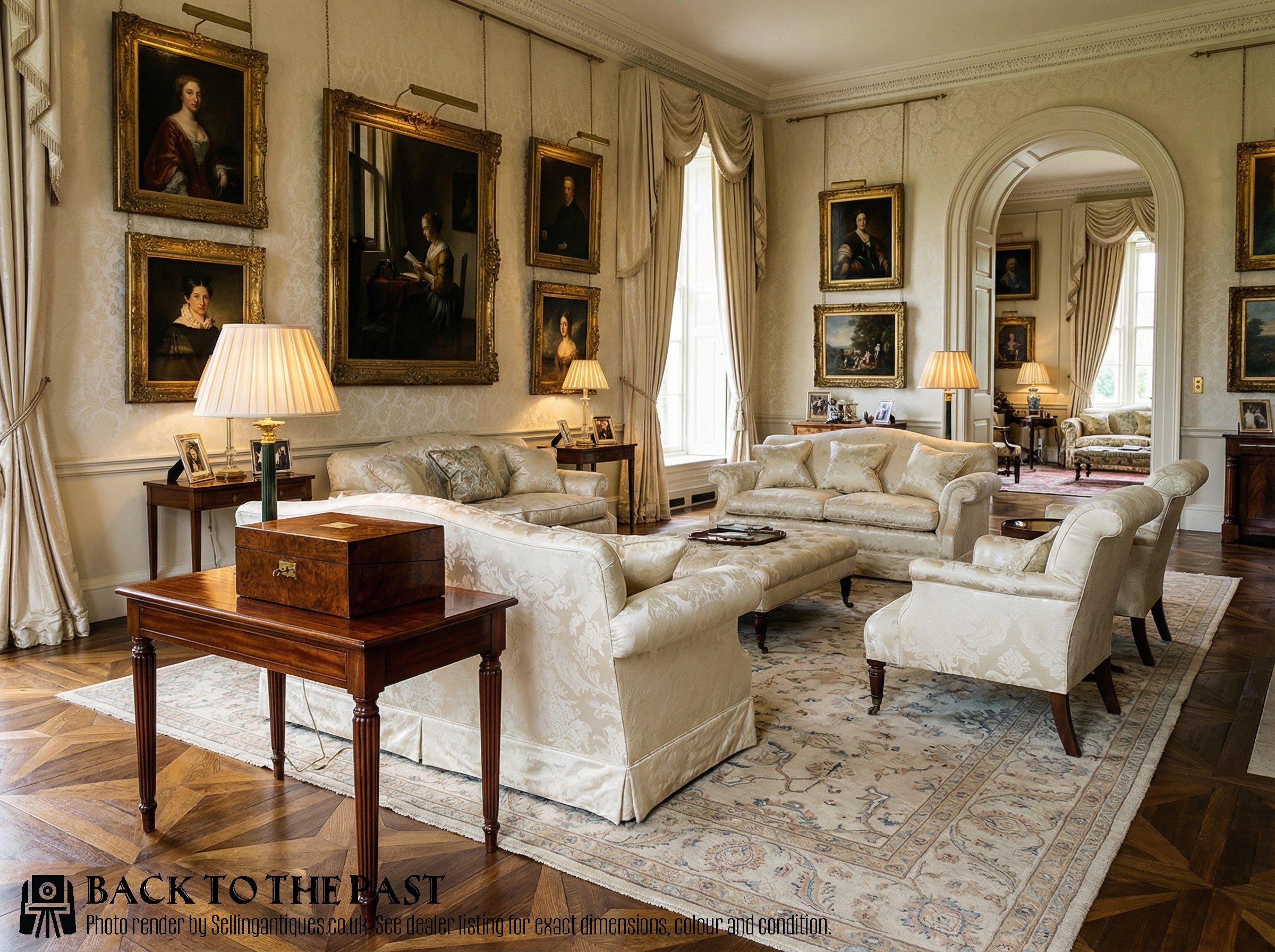
Burr Walnut Writing Box
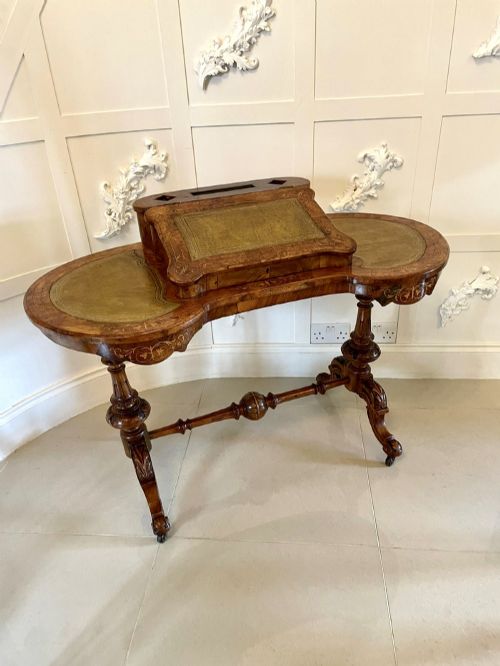
A burr walnut writing box combines portability with a sloping writing surface, appearing mostly in Victorian forms from the middle and latter half of the nineteenth century. These boxes serve as correspondence desks, stationery cabinets, and utility boxes designed for desktop use.
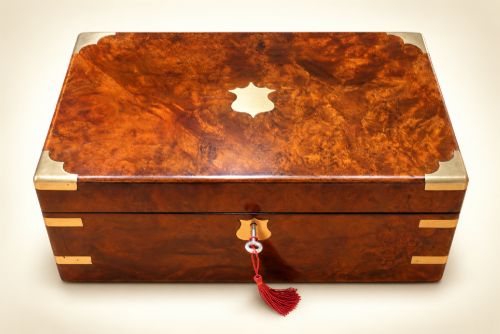
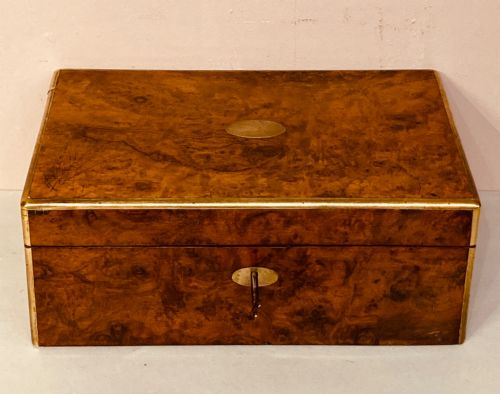
The version most commonly encountered on this page is the Victorian brass bound writing box, frequently featuring fitted interiors with secret drawers and velvet or leather writing surfaces.
Makers such as Mappin & Webb contributed to the range, alongside English cabinet makers producing campaign styles and parquetry inlaid pieces.
Materials and construction
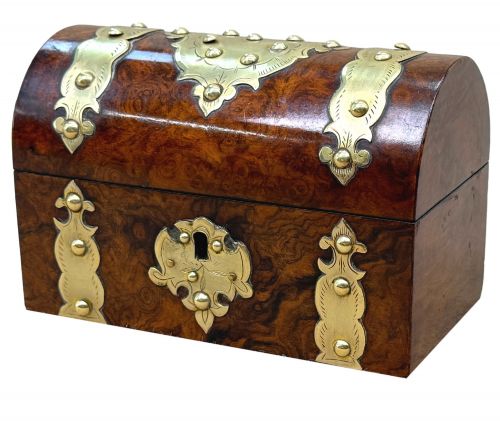
These boxes are constructed using timber veneers of burr walnut and figured walnut applied to a carcass, combined with solid walnut elements and brass mounts or corner banding.
Interiors utilise fitted compartments alongside leather or velvet panels for the writing slope, occasionally incorporating mother of pearl inlay, Tunbridge ware, and gilt brass mounts.
Burr Walnut Writing Box Retail Price Guide 2026
Typical asking prices for burr walnut writing box among the pieces listed under this phrase on Sellingantiques today, from the lower quarter to the upper quarter. They describe what is for sale here now, not the wider market.
Secret drawers tucked behind dummy panels required owners to push hidden wooden spring catches in precise sequences to reveal their private letters.
Standards of craftsmanship
The quality of a burr walnut writing box rests upon the liveliness of the burr walnut grain and the precision of the brass binding or inlay. Finer examples display harmonious grain matching across the lid and sides.
Internal complexity sets apart the range, where secret drawers, intact leather inserts, and original stationery dividers elevate the piece beyond a simple utility box.
Mappin & Webb
The Burr Walnut Writing Box Glossary
- Burr walnut
- A timber harvested from walnut tree growths, producing dense, swirling grain patterns highly valued for decorative veneer work on nineteenth century boxes.
- Writing slope
- A hinged box that opens to reveal an inclined surface covered in leather or velvet, designed for writing letters while seated at a desk.
- Campaign box
- A sturdy portable desk fitted with brass corners and side handles, built for transport during travel in the Victorian period.
- Brass bound
- A construction method where brass strips and corner pieces are fixed to the exterior edges of a wooden box to protect against heavy use.
- Tunbridge ware
- A form of decorative woodwork involving small mosaic wood tiles arranged to form geometric or pictorial patterns on box lids.
Burr Walnut Writing Box: Frequently Asked Questions
What is inside a writing box?
Inside, a writing box contains a sloping writing surface that folds down, flanked by compartments for inkwells, pens, and paper. Many examples include small hidden compartments or secret drawers.
Additional fittings often comprise removable trays and stationery slots designed to keep correspondence materials organised.
How do I date a burr walnut box?
Dating relies on construction methods, hardware styles, and materials recorded in the nineteenth century. Victorian pieces frequently incorporate brass banding and specific lock mechanisms.
Certain boxes carry maker marks or stamps from firms active during the mid to late nineteenth century.
Were these boxes used for travel?
Campaign styles and brass bound boxes were constructed for portability during travel. Their reinforced corners and sturdy locks protected contents on journeys.
Stationery cabinets and larger desktop boxes remained stationary on library tables rather than travelling.
How do I care for burr walnut wood?
Maintenance involves keeping the timber away from direct sunlight and excessive heat sources to prevent veneer cracking. Regular dusting with a dry cloth preserves the finish.
Leather and velvet writing surfaces benefit from gentle cleaning suited to antique textiles.