


Brass Inlaid Lap Desk
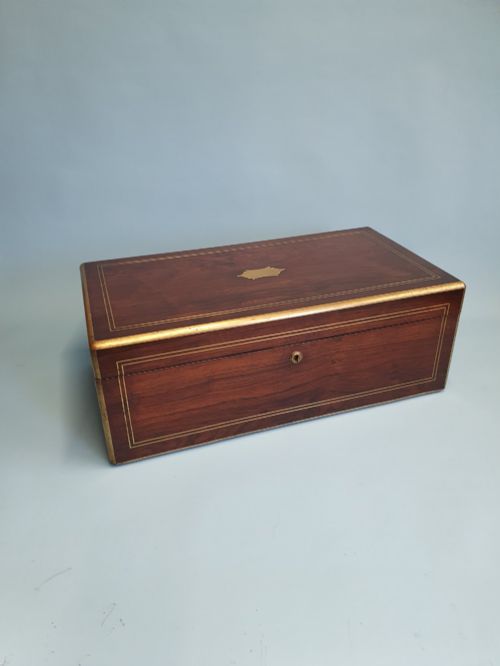
A brass inlaid lap desk offers a portable writing surface framed in rich timber and cut metal.

Brass Inlaid Lap Desk
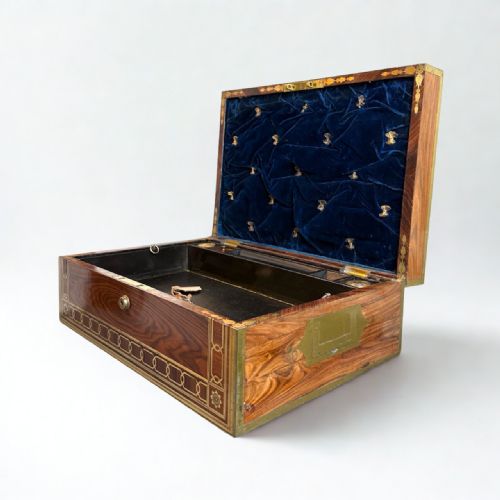
A brass inlaid lap desk is a portable writing box designed for correspondence while travelling or at home. These pieces open to reveal a sloping surface lined for writing, along with compartments for inkwells and pens.
Makers constructed these desks to be both decorative and functional furnishings for the study or the carriage. Many examples contain secret drawers concealed behind dummy partitions or inner panels.
How they were made
Cabinet makers utilised dense hardwoods such as rosewood, mahogany, walnut and coromandel as the primary carcase materials. These timbers were selected for their stability and figured grain patterns.
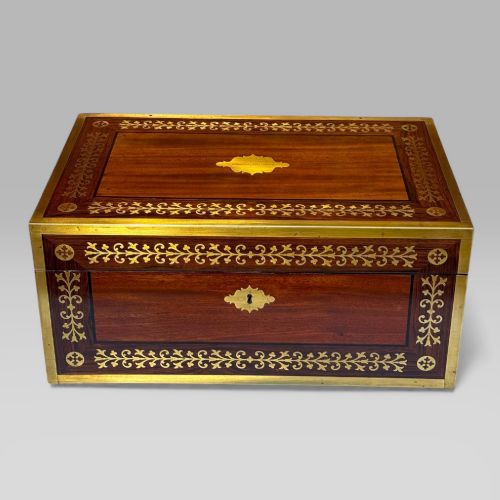
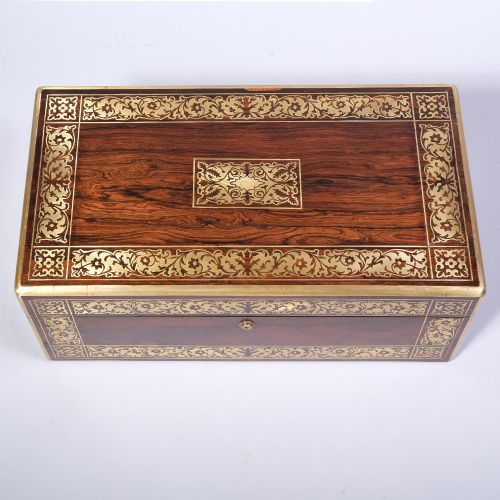
Brass work takes the form of flush inlay, stringing, corner brackets and bound edges fixed securely into the wood. Mother of pearl appears occasionally to accent the foliate cut metal designs.
Interior fittings included small turned pulls, velvet or leather writing surfaces, and brass locks by makers such as Bramah to secure private papers.
Military campaign models sometimes include hidden sovereign sections for storing gold coins alongside the ink.
What varies in quality
The standard of the brass inlay separates ordinary boxes from superior examples. Finely engraved or foliate cut brass requires immense precision to fit flush with the timber surface.
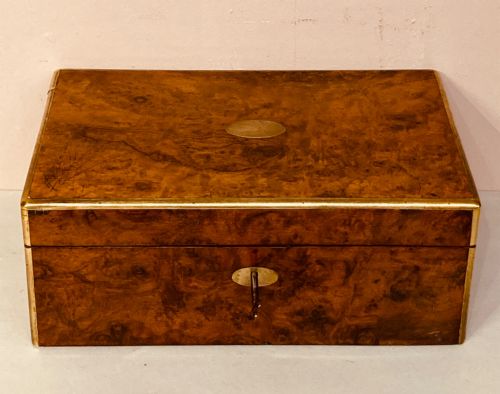
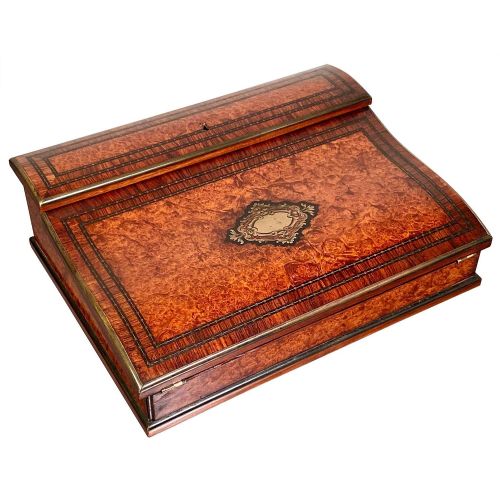
The choice of wood grain defines the visual appeal of the piece. Highly figured burr walnut, rosewood and coromandel command greater attention than plain mahogany.
Internal complexity and original hardware dictate distinction. Retained secret drawers, candle sconces, working Bramah locks and matching inkwells elevate a box significantly.
George Austin of Dublin
The Brass Inlaid Lap Desk Glossary
- Lap desk
- A portable box containing a sloped writing surface and stationery storage. It was designed to rest on the lap or a table.
- Campaign box
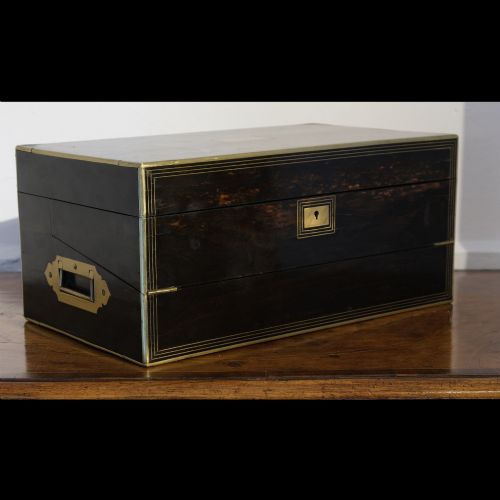
- A sturdy portable desk built for military use or travel. These often feature reinforced brass corners and flush carrying handles.
- Secret drawers
- Concealed compartments hidden behind false panels within the interior. They store sensitive papers or valuables.
- Bramah lock
- A high-security cylindrical lock patented in the late eighteenth century. It was commonly fitted to superior boxes.
- Stringing
- Thin lines of inlay set into the timber surface to form geometric borders. Brass stringing is typical of Regency pieces.
- Coromandel
- A dense, heavily figured exotic timber from Asia. It displays dark brown streaks against a pale fawn background.
Brass Inlaid Lap Desk: Frequently Asked Questions
How do you use a lap desk?
Place the box on a stable surface and release the catches to fold down the sloping writing lid. The interior provides space for paper, pens and ink.
Items stored inside remain secure when the lid is closed and locked. Many examples include dedicated slots for inkwells and small compartments for stamps.
How do you date a brass inlaid box?
Dating relies upon the timber choice, construction methods and the style of the brass inlay. Regency boxes frequently employ fine brass stringing in rosewood.
Victorian pieces often feature bolder burr walnut veneers with heavier brass corner mounts. Locks and hinges also offer clues to the period of manufacture.
Where were these desks made?
Most surviving boxes originate from English workshops and cabinet makers. Dublin workshops also produced notable examples during the nineteenth century.
Exotic woods arrived through international trade networks, allowing makers to craft pieces in London and regional centres.