



Officers Writing Slope
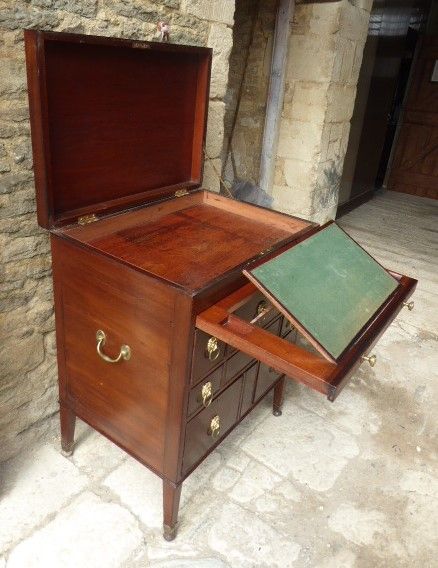
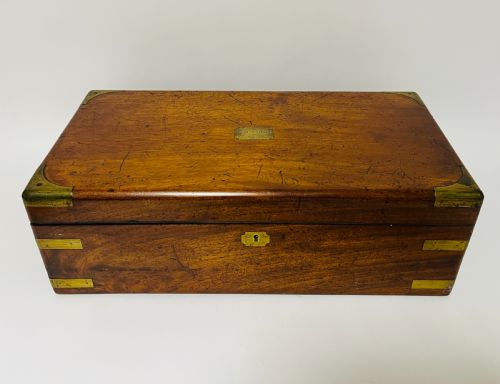
These officers writing slope pieces are portable mahogany and burr walnut desks built for travel, offering brass binding and fitted interiors for the field.
Officers Writing Slope
An officers writing slope is a portable desk designed for campaign use, folding compactly to transport correspondence and papers safely during military service. The versions met most often on this page date from the Georgian, Regency, and Victorian periods, reflecting the height of campaign furniture production.
Most examples take the form of a rectangular wooden box that opens to reveal a sloping writing surface lined with leather or baize. Compartments inside hold inkwells, pens, and stationery, keeping everything secure while on the move.
Makers constructed these pieces for officers who needed a stable workspace in tents or temporary quarters. The portable design ensured that personal letters and official documents travelled intact through rough conditions.
How they were made
Craftsmen built these slopes primarily in mahogany and burr walnut, selecting dense timbers that could withstand the knocks of military travel. Wood surfaces received careful polishing to bring out the natural grain while maintaining a durable finish.
Brass corners, straps, and flush-fitting handles reinforced the wooden carcase at vulnerable stress points. These metal mounts protected the edges from heavy impacts and gave the box structural rigidity.
Listings span the eighteenth and nineteenth centuries, incorporating Georgian, Regency, and Victorian periods with materials including mahogany, burr walnut, and brass.
What varies in quality
Quality rests on the precision of the cabinetwork and the grade of timber selected for the exterior. Superior pieces feature well-figured mahogany or burr walnut paired with heavy brass mounts that sit completely flush with the wood.
Internal arrangement and the quality of the fitted compartments also distinguish finer examples. Better slopes include secret drawers, matched inkwells, and neatly tooled leather or baize writing surfaces that show careful hand-finishing.
The Officers Writing Slope Glossary
- Campaign furniture
- Portable pieces designed for military officers on active service, featuring folding mechanisms, brass reinforcement, and compact dimensions. These items packed down efficiently for transport on horses or carts.
- Brass-bound
- A construction method where brass strips and corners protect the wooden edges of a box. This reinforcement prevented splitting during rough transit.
- Baize
- A coarse woollen fabric used to line the writing surfaces of desks and slopes. It provided a soft texture for writing without damaging paper.
- Burr walnut
- Timber taken from the gnarled growth of a walnut tree, prized for its swirling, decorative grain patterns. Cabinetmakers used it for high-status veneered surfaces.
Officers Writing Slope: Frequently Asked Questions
How did officers use them?
Officers placed the closed box on any available flat surface or their lap, then opened the hinged lid to reveal the sloped writing surface. This provided a stable platform for quill pens and paper in temporary quarters.
When packing up, the fitted interior secured all writing implements and loose papers inside the locked wooden case. This kept vital correspondence safe during marches.
How do I date a writing slope?
Dating relies on timber choices, brass hardware styles, and construction methods. Georgian and Regency pieces often show simpler brass work and solid mahogany, while Victorian examples frequently incorporate burr walnut veneers and more complex internal locking mechanisms.
Design shifts from plain military utility to more decorative finishes help place pieces across the eighteenth and nineteenth centuries.
Where were they made?
British cabinetmakers produced the majority of these slopes for military officers, often working in workshops in London or regional centres. Some variations originate from colonial postings, reflecting local timbers and craftsmanship.
Anglo-Indian pieces, for instance, utilise alternative woods while following the standard British campaign format required by serving officers.