



Wooden Portable Desk
A wooden portable desk offers a practical writing surface designed for travel across the Georgian, Victorian, and later eras.
Wooden Portable Desk
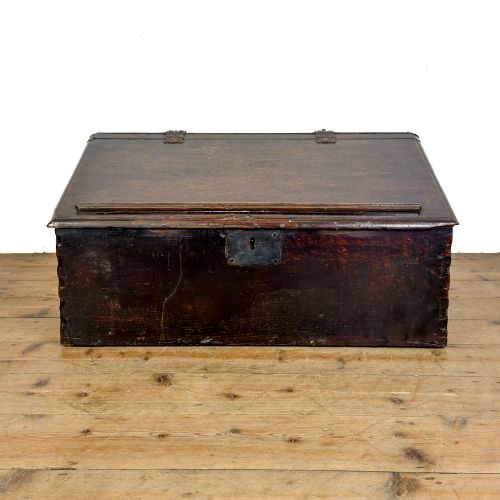
A wooden portable desk encompasses writing slopes, lap desks, and campaign boxes built for officers and travellers. These items fold or open to reveal fitted interiors designed to hold writing materials securely.
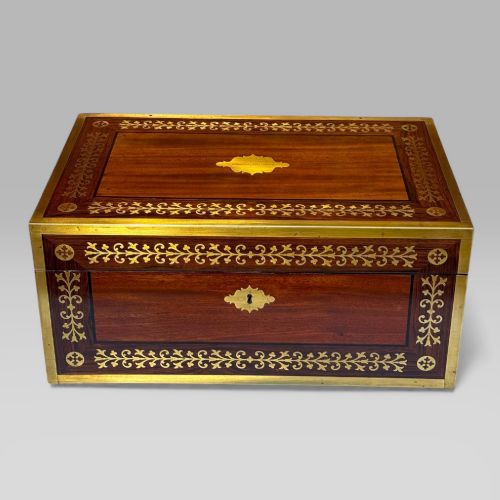
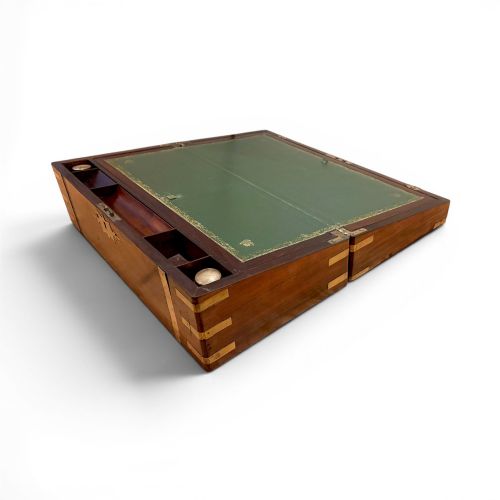
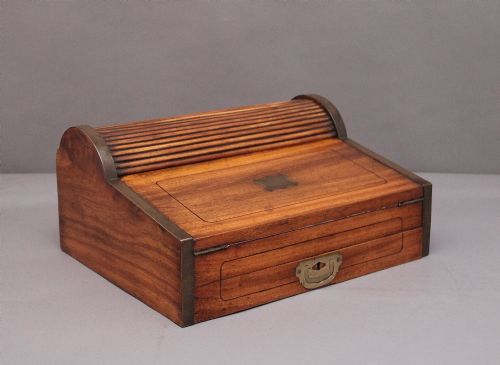
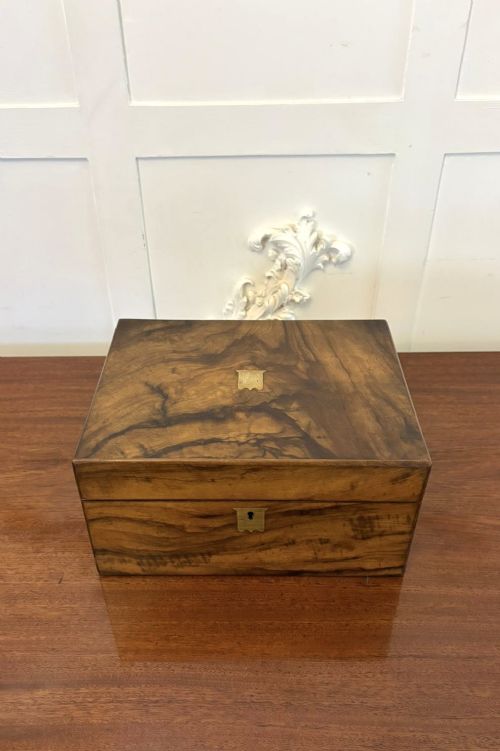
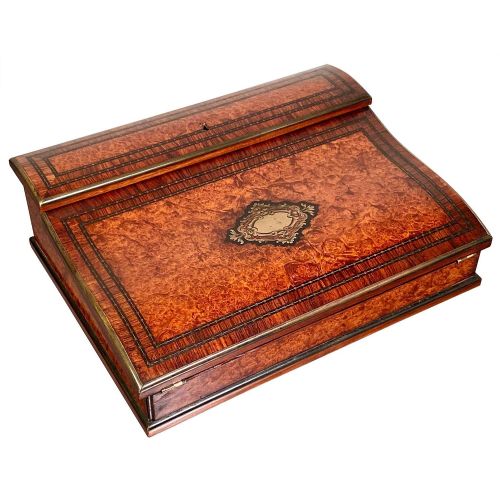
The version most commonly encountered on this page is the Victorian mahogany or walnut writing slope, frequently reinforced with brass binding and corner mounts. These boxes often house secret drawers and compartments for inkwells.
Originating across Georgian, Victorian, and early twentieth-century periods, these pieces range from simple campaign equipment to elaborate Anglo-Indian and French veneered boxes.
How they were made
Cabinet makers utilised dense hardwoods including mahogany, rosewood, walnut, coromandel, and camphor wood to withstand travel. These timbers were selected for stability and finished to highlight natural grain patterns.
Construction relied on brass reinforcement for edges and corners, protecting the wood from knocks during transit. Interiors incorporated fitted compartments, leather writing surfaces, and secure locks such as Bramah mechanisms.
Inlay work in brass, ivory, or lighter woods decorated exterior surfaces, particularly on Anglo-Indian and French examples. Folding mechanisms and hinges allowed heavy desks to compact into portable containers.
Some travel desks include secret compartments accessed only by removing inkwells or pressing hidden wooden spring buttons.
What varies in quality
The standard of a wooden portable desk depends on the choice of timber veneer and the precision of internal joinery. Figured walnut, pollard oak, and solid ebony indicate superior craftsmanship compared to plain utility timbers.
Hardware integration distinguishes finer pieces, seen in flush-fitting brass handles, high-security locks with working keys, and secret drawer mechanisms that operate smoothly. The complexity of fitted stationery compartments and original leather inserts also sets apart better examples.
J.C Vickery of London·Mappin & Webb
The Wooden Portable Desk Glossary
- Writing slope
- A portable box with a slanted lid that opens to provide a firm writing surface and interior storage. Many examples fold completely flat for travel.
- Campaign style
- Furniture designed for military officers on the move, characterised by robust construction, brass corners, and folding or dismantling elements.
- Bramah lock
- A high-security cylindrical lock invented in the late eighteenth century, commonly found on better-quality Victorian boxes and writing desks.
- Secret drawers
- Hidden compartments concealed behind false panels or activated by secret releases within the desk interior.
- Anglo-Indian
- Describing items manufactured in India during the British colonial period, often featuring dense timbers like ebony or camphor wood with intricate inlay.
Wooden Portable Desk: Frequently Asked Questions
What is a wooden portable desk?
A wooden portable desk is a hinged box designed to store writing materials and provide a sloping writing surface while travelling. These pieces range from military campaign chests to domestic lap desks.
Most examples open to reveal compartments for ink, pens, and paper, often featuring a lined writing flap that folds down towards the user.
How were campaign desks used?
Campaign desks were utilised by military officers, diplomats, and travellers on the move. They provided a stable workspace and secure storage for correspondence during expeditions.
Many incorporate brass corners and recessed handles designed to withstand rough handling and frequent transport across regions.
How do I date a writing slope?
Dating relies on timber choices, construction techniques, and hardware styles. Georgian and Regency pieces often feature simpler mahogany frames, while Victorian examples frequently employ burr walnut and elaborate brass binding.
Maker signatures, lock types such as Bramah mechanisms, and specific decorative inlays also help narrow down the period of manufacture.
What are secret drawers?
Secret drawers are concealed storage compartments built into the interior of writing boxes. They usually require a sequence of steps, such as removing a pen tray or pressing a hidden spring, to release.
Cabinet makers included these hidden spaces to protect valuables, private letters, and money during travel.
How do I care for antique wood?
Antique wood requires stable environmental conditions away from direct sunlight and excessive heat sources. Maintaining consistent humidity prevents timber from splitting and veneers from lifting.
Application of appropriate wax polish helps nourish the grain and preserve the historic finish without damaging the surface.